Dispersion quality directly influences whether a fluoropolymer surface remains smooth, uniform, and non-fouling. Well-dispersed additives and fillers remain distributed throughout the polymer matrix instead of forming separate phases or concentrated regions. This minimizes localized micro-defects, supports consistent surface morphology, and allows the fluoropolymer’s inherently low surface energy to deliver reliable non-stick, low-retention, and easy-cleaning performance.
The key insight: Fluoropolymer chemistry creates low adhesion, but dispersion quality determines whether the finished surface can consistently express that advantage. Poorly dispersed ingredients can create surface irregularities that trap residues, retain droplets, and compromise cleaning performance.
How Dispersion Controls Surface Smoothness
Preventing Phase Separation
Proper dispersion keeps additives and fillers uniformly distributed within the fluoropolymer matrix. Without it, ingredients can agglomerate or separate into localized domains with different hardness, shrinkage, or surface behavior.
These regions can develop into micro-voids, pits, raised particles, or weak interfaces during molding, machining, or service. Even when defects are too small to see easily, they can increase liquid retention and provide sites for contamination.
Maintaining Uniform Surface Morphology
A well-dispersed formulation produces a more consistent material structure from the bulk polymer to the finished surface. This supports uniform gloss, texture, wear behavior, and dimensional stability.
In laboratory components such as bottles, valves, tubing, fittings, and CNC-machined parts, surface uniformity matters because fluid contacts the entire internal pathway. A small number of irregular regions can affect drainage and cleaning even when most of the surface is smooth.
Selecting PTFE Particle Size
For granular PTFE, particle size also affects the final surface finish. Smaller particles generally produce smoother molded and machined surfaces, which is valuable for trace-analysis vessels and high-purity fluidic components.
Larger particles can improve powder flow and handling during compression molding, but they may provide a less refined surface. Material selection therefore involves balancing manufacturing processability against the surface finish required by the application.
Why Smoothness Improves Non-Fouling Performance
Reducing Places for Residues to Accumulate
A smooth, non-porous surface gives contaminants fewer physical locations in which to lodge. This reduces retention of reagents, biological material, particles, and trace analytes.
A rough or defect-rich surface can undermine the benefits of fluoropolymer chemistry by allowing material to remain mechanically trapped rather than chemically attached.
Improving Fluid Drainage
Low surface energy causes fluoropolymers to resist wetting, while a smooth surface helps liquid move across and away from the component. Together, these properties reduce droplet retention on vessel walls, tubing interiors, valves, and fittings.
Improved drainage supports higher liquid recovery and reduces the amount of residual sample left behind after dispensing or transfer.
Reducing Cross-Contamination
In ultra-trace work, even small retained droplets can affect the next sample. Smooth, uniformly dispersed fluoropolymer surfaces reduce both physical retention and the opportunity for analytes to absorb into or remain attached to the component wall.
This is particularly important for reagent bottles, storage vessels, fluidic tubing, and custom components used across multiple analytical cycles.
Supporting Easier Cleaning
A surface that does not retain droplets or particles can generally be flushed and cleaned more completely. The result is shorter cleaning effort, more reliable reuse, and lower risk that residues will carry into subsequent processes.
The benefit depends on the full system design, including geometry, flow path, cleaning chemistry, and operating procedure. Dispersion quality improves the material surface, but it cannot compensate for inaccessible dead legs or inadequate cleaning.
How Fillers Change Fluoropolymer Performance
Wear Reduction Without Eliminating Low Friction
Unfilled perfluoropolymers have extremely low friction but can exhibit relatively high wear. Properly selected fillers can substantially reduce wear while preserving much of the fluoropolymer’s low-friction behavior.
This is useful in dynamic seals, bearings, valves, and fluid-transfer components where repeated movement can generate particles or change the surface profile over time.
Filler Choice Affects Surface Stability
The filler structure and operating environment determine how the compound wears. Fibrous fillers such as glass fiber can wear more slowly than spherical fillers such as glass beads under moderate conditions.
Under high loads and velocities, thermally conductive fillers such as bronze or graphite can dissipate friction heat effectively. This helps limit thermal damage and preserve the functional surface during extended operation.
Common Filler Functions
Medium thermal carbon black can provide a balance of compression-set resistance and heat-aging performance in sealing rings. PTFE powders and graphite can improve wear resistance and reduce friction in dynamic applications.
Blanc fixe, or barium sulfate, can provide strong compression-set performance in non-black, color-coded seals. Surface-treated silica can improve tensile strength, flow behavior, and moisture resistance in specialized fluid-handling assemblies.
These benefits depend on uniform incorporation. A filler that improves bulk performance can still harm surface quality if it forms agglomerates or becomes exposed unevenly at the working surface.
The Role of Fluorine-Rich Surface Chemistry
Low Surface Energy Creates Non-Stick Behavior
Fluoropolymers naturally have extremely low surface energy because fluorine forms a dense, highly electronegative sheath around the carbon backbone. This produces hydrophobic, non-wetting behavior and a high water contact angle.
The resulting surface resists droplet adhesion, analyte retention, and buildup from many aggressive chemicals. This is the chemical foundation of fluoropolymer non-fouling performance.
Surface Segregation Can Increase Fluorine at the Interface
In fluorinated multi-block copolymers, longer fluorinated blocks and higher operating temperatures can promote migration of fluorine-rich domains toward the vapor interface. This increases fluorine concentration at the exposed surface and can further reduce liquid-vapor surface tension.
For fluid-handling components and trace-analysis vessels, that behavior can strengthen non-stick performance. It must still be considered alongside processing history, temperature, formulation, and long-term surface stability.
Dispersion Must Preserve Surface Chemistry
A fluoropolymer matrix may have excellent low-energy chemistry, but exposed additive-rich regions can create local differences in wetting, friction, and adhesion. Uniform dispersion helps maintain a consistent fluorine-rich surface rather than a patchwork of polymer-rich and filler-rich areas.
This consistency is important when a component must provide predictable fluid behavior across its entire interior surface.
Understanding the Trade-offs
More Filler Is Not Automatically Better
Fillers can improve wear, compression set, heat management, strength, and processing behavior. However, excessive loading or poor distribution can increase surface roughness, create defects, or expose particles that disturb fluid flow.
The correct formulation is therefore application-specific. A static reagent container may prioritize purity and smoothness, while a dynamic valve seal may require greater wear resistance.
Mechanical Durability Can Conflict With Surface Purity
A filled compound may last longer mechanically than an unfilled fluoropolymer, but filler wear can generate particles under severe service conditions. Those particles may be unacceptable in high-purity or trace-analysis systems.
Components exposed to high velocity, load, or repeated cycling require evaluation for both wear life and particle generation.
Processing Conditions Matter
Molding, machining, thermal exposure, and finishing can all affect the final surface. Poor processing can reveal agglomerates, create voids, or produce a rough texture even when the original compound was well formulated.
Quality assessment should therefore examine the finished component rather than relying only on the resin or compound specification.
Non-Fouling Does Not Mean Universal Immunity
Low surface energy strongly reduces adhesion, but it does not prevent every substance from depositing. Particulates can be mechanically trapped, viscous materials can remain after evaporation, and incompatible contaminants can accumulate in damaged or poorly designed areas.
Geometry, cleaning method, fluid composition, temperature, and surface damage remain important variables.
Making the Right Choice for Your Goal
A practical selection should consider surface finish, chemical exposure, mechanical cycling, temperature, and contamination limits together.
- If your primary focus is maximum smoothness and low sample retention: Use a highly uniform, low-defect fluoropolymer formulation and favor smaller PTFE particle sizes when the manufacturing process permits.
- If your primary focus is dynamic wear resistance: Select a properly dispersed filler system matched to the load, velocity, and thermal conditions, then verify that wear particles remain acceptable for the fluid-handling environment.
- If your primary focus is trace-analysis purity: Prioritize non-porous surfaces, consistent fluoropolymer-rich chemistry, minimal filler exposure, and finished-part testing for retention and extractables.
- If your primary focus is long-term sealing performance: Balance filler-enhanced compression-set and heat-aging resistance against surface roughness, friction, and possible particle generation.
- If your primary focus is rapid cleaning and drainage: Specify a smooth, uniform internal surface with low surface energy and eliminate geometries that create stagnant zones or retained droplets.
The most reliable non-fouling fluoropolymer component combines intrinsically low surface energy with disciplined dispersion, appropriate particle size, and a formulation matched to its service conditions.
Summary Table:
| Factor | Impact on Surface Smoothness | Impact on Non-Fouling |
|---|---|---|
| Dispersion Quality | Prevents agglomerates and defects, maintains uniform morphology | Reduces sites for residue accumulation, improves drainage |
| PTFE Particle Size | Smaller particles yield smoother surfaces | Supports low retention and easier cleaning |
| Filler Type and Loading | Excessive or poorly dispersed fillers increase roughness | Exposed filler particles can trap contaminants |
| Surface Chemistry | Consistent fluorine-rich surface preserves low energy | Enhances non-stick, low-retention behavior |
| Processing Conditions | Poor molding/machining creates defects | Voids and roughness compromise cleanability |
Elevate your lab's precision and reliability with KINTEK's high-performance fluoropolymer labware, exclusively crafted from PTFE and PFA. Our superior dispersion control ensures smooth, non-fouling surfaces for trace analysis, fluid handling, and custom components. Contact us today to discuss your application and experience the KINTEK difference
Related Products
- Custom PFA Pear Shaped Flask High Purity Corrosion Resistant Labware Custom Molded Fluoropolymer Flask Glass Replacement Solution
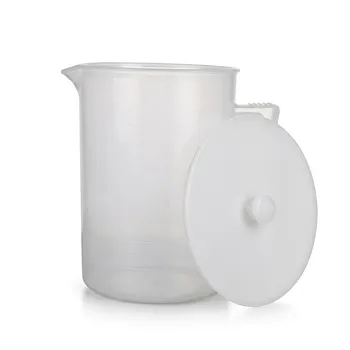
- High Purity PFA Beaker with Handle and Large Capacity Washable Soak Basket Multi Spec Teflon Laboratory Labware
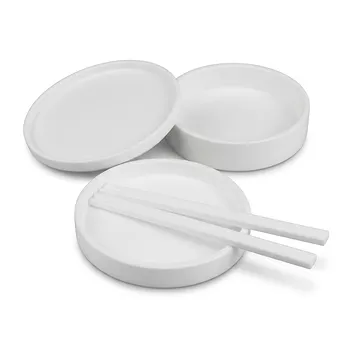
- Custom PTFE Petri Dish 200mm High Purity Corrosion Resistant Low Background Laboratory Ware
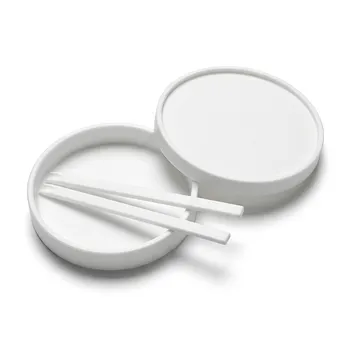
- Custom Polytetrafluoroethylene PTFE Petri Dishes 60mm Corrosion Resistant Low Background Labware
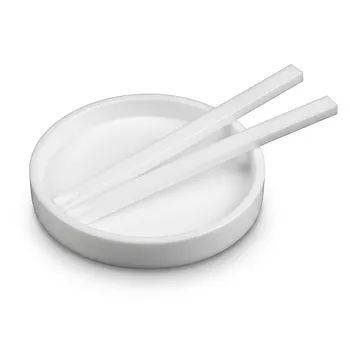
- Custom PTFE Petri Dish 120mm Diameter Corrosion Resistant Low Background High Purity Labware
People Also Ask
- What are the chemical compatibility boundaries of PFA fluoropolymer labware, and how can PFA surfaces be treated for adhesive bonding? Learn safe usage and bonding methods.
- How does end-group stabilization during PFA polymer synthesis influence purity? Achieve Ultra-High Purity & Reliability in Lab Components.
- Why Use PFA Labware for MnFe2O4/rGO Precursors? Ensure Stoichiometric Precision and Purity
- What are the primary properties of PFA for high-performance labware? Achieve ultra-trace purity & thermal stability.
- Why is PFA labware recommended for CuBi2O4? Protect high-purity precursors and ensure semiconductor bandgap accuracy.