Perfluorinated polymers perform well at low temperature because their molecular architecture combines a chemically protected backbone with carefully controlled chain mobility. Strong carbon-fluorine bonds and fluorine shielding provide exceptional resistance to acids, bases, solvents, and reactive fluids, while flexible structures containing ether linkages can maintain a very low glass transition temperature. In laboratory tubing, vessels, and seals, this combination helps preserve chemical purity, mechanical compliance, and leak resistance across demanding temperature ranges.
The key design principle is balance: fluorination protects the polymer from chemical attack, while backbone flexibility determines whether it remains usable and resilient during cooling, thermal cycling, and cryogenic service.
How Molecular Structure Controls Performance
Fluorine Creates a Protective Chemical Barrier
In polymers such as PTFE and PFA, carbon atoms are surrounded by tightly bound fluorine atoms. This fluorinated sheath limits access to the carbon backbone and reduces the opportunities for chemical reactions with the surrounding fluid.
The absence of carbon-hydrogen bonds also improves resistance compared with partially fluorinated polymers. As a result, perfluorinated materials are suitable for contact with many aggressive acids, bases, organic solvents, oxidizing reagents, and reactive gases.
Strong C-F Bonds Support Thermal and Chemical Stability
The carbon-fluorine bond is exceptionally strong, and fluorine has low polarizability. Together, these characteristics help prevent chemical attack, degradation, and contamination during demanding laboratory operations.
This does not make every perfluorinated polymer universally compatible with every chemical or temperature. Pressure, exposure time, concentration, mechanical stress, and processing history still affect service life.
Fully Fluorinated Chains Reduce Contamination Risk
High-purity PTFE and PFA formulations can provide very low extractables and minimal sample interaction. Their low surface energy also reduces adhesion, which helps limit residue retention in fluid transfer lines and reaction equipment.
Additive-free grades are especially important in trace analysis, semiconductor processing, and other applications where elemental leaching or decomposition products could compromise results.
Why Chain Flexibility Matters at Low Temperature
Ether Linkages Increase Rotational Mobility
Fluoropolymers containing ether linkages have greater backbone mobility because the ethereal oxygen permits easier local motion within the chain. This is particularly important in perfluoropolyethers, where flexible repeating structures can produce glass transition temperatures below -100°C.
A low glass transition temperature means the material remains in a rubbery or flexible state at temperatures where less mobile polymers would become brittle or lose compliance.
Linear Chains Usually Remain More Mobile
Linear repeating structures generally allow greater rotational freedom than structures containing bulky, branched trifluoromethyl groups. Bulky CF3 side groups can obstruct chain rotation and restrict the molecular movements needed to accommodate cooling.
The result is a structural trade-off: increasing rigidity or steric bulk may improve certain properties, but it can reduce low-temperature flexibility and increase the risk of embrittlement or loss of sealing force.
Low-Temperature Performance Depends on the Polymer Family
PFPEs, PTFE, PFA, and FFKM do not behave identically. PFPEs are especially notable for extremely low-temperature flexibility, while PTFE and PFA provide highly stable solid components with excellent chemical resistance but may have different crystallinity, creep, and mechanical behavior.
Therefore, a material should be selected using its actual low-temperature mechanical data rather than its fluorine content alone.
Effects on Laboratory and Fluid Transfer Equipment
Tubing Must Preserve Flexibility and Flow Integrity
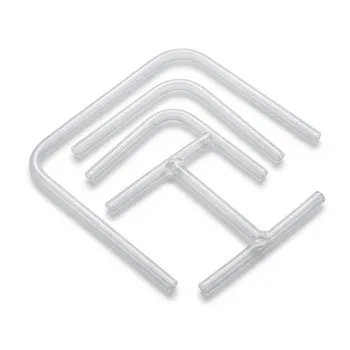
Flexible fluoropolymer tubing must resist cracking, kinking, and loss of dimensional stability during cooling. A mobile chain structure helps the tubing accommodate contraction and repeated thermal cycling without becoming excessively rigid.
For fluid transfer, chemical resistance must be considered alongside permeation, pressure rating, wall thickness, bend radius, and fitting design. A chemically inert tube can still fail if it is mechanically overloaded or improperly supported.
Seals Depend on Continued Mechanical Compliance
Sealing components must maintain contact pressure as temperature changes. Flexible fluoropolymer or perfluoroelastomer structures can conform to mating surfaces and compensate for small dimensional changes, helping prevent leaks.
In cryogenic or thermally cycled equipment, the relevant question is not simply whether the polymer survives exposure. It must also retain enough elasticity, compression recovery, and dimensional stability to continue sealing.
Machined Components Benefit from Low Surface Energy
Custom-machined fluoropolymer parts such as valve seats, vessel liners, guides, and sealing components benefit from low friction and low surface adhesion. These properties can reduce sticking, residue retention, and wear during repeated fluid handling.
The same low surface energy that limits contamination can make bonding, coating, and some joining operations more difficult. Component geometry and assembly method therefore remain important.
High-Purity Systems Need Controlled Formulations
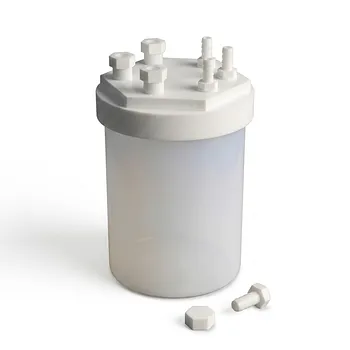
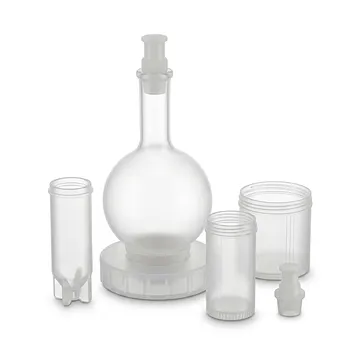
PFA and selected PTFE grades are commonly used where chemical purity, low extractables, and thermal endurance are required. Their performance is valuable in digestion vessels, reagent containers, analytical tubing, and semiconductor fluid systems.
Material grade, manufacturing cleanliness, and surface conditioning can be just as important as the base polymer. Contamination may originate from processing, fittings, lubricants, or cleaning procedures rather than from the fluoropolymer itself.
Understanding the Trade-offs
Chemical Inertness Does Not Eliminate Mechanical Limitations
Perfluorinated polymers can resist chemical attack while still suffering from creep, cold flow, wear, or deformation under sustained load. PTFE is particularly known for low friction and broad chemical resistance, but its mechanical response under pressure must be designed carefully.
Reinforced grades, backup rings, suitable wall thicknesses, or alternative fluoropolymer families may be necessary when dimensional stability is critical.
Flexibility Can Reduce Rigidity
A highly flexible chain generally improves low-temperature compliance, but it may provide less stiffness and load-bearing capability. A component designed only for chemical resistance may deform under pressure or fail to hold a precise shape.
The correct material is therefore determined by the combined requirements for flexibility, stiffness, pressure, temperature, and chemical exposure.
Thermal Limits Are Application-Specific
Perfluorinated polymers generally offer high thermal stability, but their useful operating range is not defined by degradation temperature alone. Melting behavior, crystallinity, dimensional change, seal recovery, and mechanical strength may become limiting before chemical decomposition occurs.
Long exposure, rapid thermal cycling, vacuum, and mechanical stress can also change performance. Qualification testing should reproduce the actual service conditions.
Compatibility Claims Need Verification
Statements such as “resistant to all chemicals” are too broad for engineering decisions. Strong oxidizers, reactive fluorinating environments, molten alkali metals, radiation, elevated pressure, or unusual solvent conditions may require specific compatibility data.
A defensible selection process checks manufacturer data and, for critical systems, tests the finished component with the actual fluid, temperature, pressure, and exposure duration.
Making the Right Choice for Your Goal
The most reliable selection process treats molecular flexibility and chemical resistance as connected but separate design criteria.
- If your primary focus is cryogenic flexibility: Favor polymer structures with high backbone mobility, particularly ether-linked architectures, and verify glass transition temperature, compression recovery, and thermal-cycling data.
- If your primary focus is aggressive chemical service: Select a fully fluorinated grade such as PTFE or PFA after checking compatibility against the specific reagent, concentration, temperature, and exposure time.
- If your primary focus is leak prevention: Evaluate low-temperature compliance, creep, compression set, fitting geometry, and dimensional stability together rather than choosing solely by chemical resistance.
- If your primary focus is trace-analysis purity: Use high-purity, controlled-formulation components and assess extractables, leachables, surface cleanliness, and manufacturing practices.
- If your primary focus is precision-machined equipment: Balance low friction and chemical inertness against stiffness, cold flow, tolerances, and the loads applied during operation.
Perfluorinated polymers deliver their strongest performance when fluorine-provided chemical protection is matched with a chain structure capable of retaining the required mobility, strength, and sealing behavior at the intended temperature.
Summary Table:
| Polymer | Key Structural Feature | Low-Temperature Performance | Chemical Resistance |
|---|---|---|---|
| PTFE | Linear, highly crystalline | Good; can become brittle at very low temps | Excellent, broad resistance |
| PFA | Contains perfluoroalkoxy side chains | Excellent; lower crystallinity than PTFE | Excellent, similar to PTFE |
| PFPE | Ether linkages, flexible backbone | Exceptional; very low Tg (<-100°C) | Excellent, but limited mechanical strength |
| FFKM | Perfluoroelastomer | Good; maintains elasticity | Excellent, but limited to specific grades |
Ensure your lab's reliability with KINTEK's precision-crafted PTFE/PFA components. From flexible tubing to custom-machined parts, our fluoropolymer solutions excel in low-temperature and aggressive chemical environments. Leveraging our end-to-end CNC machining and high-purity materials, we deliver leak-free, contamination-free performance for your most demanding applications. Contact us today to optimize your fluid handling systems and maintain sample integrity—get in touch with our experts!
Related Products
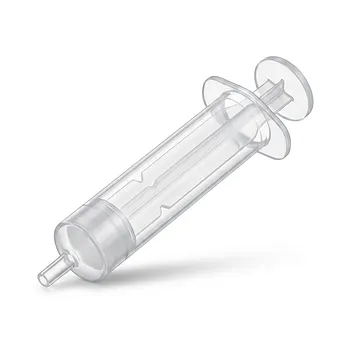
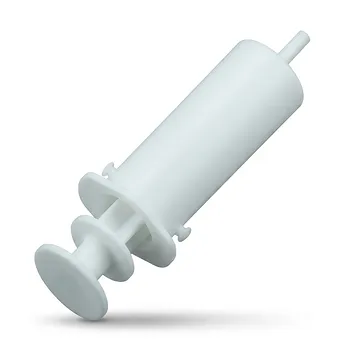
- Corrosion Resistant PFA Syringe Translucent Visual Fluoropolymer Labware 10ml Chemical Handling Tool
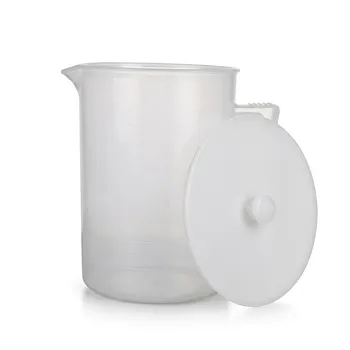
- High Purity PFA Beaker with Handle and Large Capacity Washable Soak Basket Multi Spec Teflon Laboratory Labware
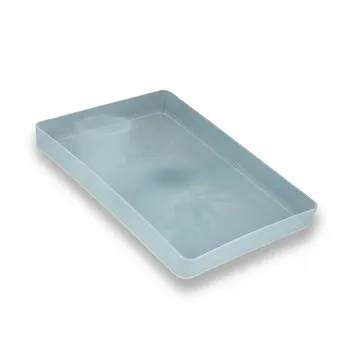
- Customizable PFA Square Tray Corrosion Resistant High Temperature Large Petri Dish Electrolytic Cell
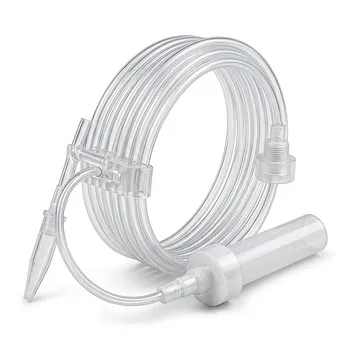
- Custom PFA Tubing 1/4 Inch High Purity Corrosion Resistant Fluoropolymer Tube with Welding and Machining Services
- Corrosion Resistant High Purity PFA Valve and Weldable Transparent Tubing for Semiconductor Fluid Transfer
People Also Ask
- How does the incorporation of comonomers such as perfluoropropyl vinyl ether (PPVE) alter the molecular structure and processing characteristics of TFE-based fluoropolymers like PFA compared to standard PTFE?
- Why do PFA fluoropolymer laboratory products offer different melt-processability and structural toughness compared to standard PTFE labware?
- PFA vs FEP: Which is Better for High-Temperature Lab Equipment?
- How does the removal of C8 (APFO) processing aids impact the chemical purity of solid fluoropolymer laboratory tools and fluid handling products? Discover the key benefits of C8-free PTFE, PFA, and FEP for trace analysis and high-purity applications.
- How does increasing fluorine content affect the physical and chemical performance of fluoropolymer laboratory supplies and components?