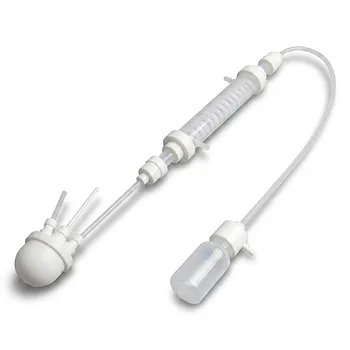
Removing C8 (APFO) processing aids improves confidence in the chemical purity of solid fluoropolymer laboratory tools and fluid-handling products. Historically, APFO was used during the manufacture of PTFE, PFA, and FEP, but finishing solid-phase products removed the vast majority of it, leaving only minute residual levels, typically on the order of a few parts per million. Modern C8-free manufacturing replaces APFO with alternative surfactant technologies, reducing the risk of residual C8 contamination while preserving the fluoropolymer’s chemical inertness and high-temperature performance.
The practical impact is greater control over trace contamination. Modern solid fluoropolymer products are manufactured without APFO, while legacy products generally contained only small residual amounts after processing. For sensitive laboratory and fluid-handling applications, selecting current C8-free materials provides the strongest basis for consistent chemical purity and regulatory alignment.
Why APFO Was Used in Fluoropolymer Manufacturing
APFO Supported Polymerization
APFO was historically used as a polymerization surfactant in the aqueous emulsion production of fluoropolymers such as PTFE, PFA, and FEP. It helped control the polymerization process but introduced an environmental and chemical-residual concern.
C8 Persistence Created Regulatory Pressure
APFO belongs to the broader family of perfluorinated compounds associated with environmental persistence and bioaccumulation concerns. These concerns drove global manufacturers to phase out APFO and adopt replacement surfactant technologies.
The Processing Aid Was Not the Finished Product
APFO was used during polymer synthesis, not intended to remain as a functional ingredient in the finished laboratory tool or fitting. Subsequent processing and finishing steps substantially reduced its presence in solid fluoropolymer products.
How Removal Changes Chemical Purity
Solid Products Already Had Low Residual Levels
Machined laboratory ware, tubing, fittings, digestion vessels, and similar solid-phase products underwent finishing steps that removed the vast majority of APFO. Historically, residual levels were therefore generally minute, on the order of a few parts per million, rather than representing a substantial fraction of the material.
Modern Production Removes the C8 Source
With current C8-free manufacturing, APFO is no longer used as the processing aid for newly produced fluoropolymer materials. This removes the original source of C8-related residuals and improves control over the material’s chemical history.
Lower Residual Risk Supports Sensitive Workflows
For trace analysis, chemical digestion, sample preparation, and high-purity fluid transfer, even very small contaminants can affect confidence in results. C8-free production minimizes the possibility that APFO-related residues will contribute to extractables or background contamination.
What This Means for Laboratory and Fluid-Handling Products
Chemical Inertness Is Retained
Replacing APFO does not fundamentally change the defining performance of PTFE, PFA, or FEP. Properly manufactured products continue to provide strong chemical resistance, low reactivity, and high-temperature capability.
Product Purity Becomes More Consistent
C8-free surfactant systems support more consistent control of residual processing chemicals across production batches. This is particularly relevant when products are used with aggressive reagents or in procedures requiring low analytical backgrounds.
Regulatory Alignment Improves
The transition supports compliance with environmental expectations governing persistent fluorinated processing aids. Procurement teams can therefore specify modern C8-free materials to reduce regulatory and supply-chain uncertainty.
Understanding the Trade-offs
C8-Free Does Not Mean Contaminant-Free
Removing APFO eliminates one specific processing-aid concern. It does not guarantee that every product has zero extractables, because contamination can also arise from other raw materials, manufacturing equipment, cleaning steps, packaging, or handling.
Legacy Products Require Separate Evaluation
Products manufactured before the industry transition may have been produced using APFO-based technology, even though solid-product finishing reduced residual concentrations substantially. For critical applications, the relevant product lot, manufacturing date, supplier declaration, and extractables data should be reviewed.
Alternative Surfactants Still Require Quality Controls
Replacement technologies, including non-C8 surfactant systems, address the APFO issue but still require appropriate manufacturing controls. A supplier’s C8-free statement should be considered alongside cleanliness specifications, analytical testing, and application-specific compatibility data.
Product Form Matters
The low-residual profile described for finished solid products should not automatically be applied to every fluoropolymer form. Dispersion products historically retained higher fractions of processing aids, so their purity assessment requires different evidence and testing.
How to Apply This to Your Project
The most reliable decision combines the material’s manufacturing status with evidence suited to the application.
- If your primary focus is trace analytical purity: Specify modern C8-free PTFE, PFA, or FEP products and request extractables or cleanliness data for the intended chemicals and operating conditions.
- If your primary focus is environmental and regulatory compliance: Obtain a supplier declaration confirming that APFO was not used in the relevant manufacturing process and verify the product’s manufacturing timeframe.
- If your primary focus is chemical and thermal performance: Confirm that the replacement surfactant technology has not changed the product’s documented chemical resistance, temperature rating, or mechanical specifications.
- If your primary focus is qualification of existing inventory: Treat legacy and current products separately, documenting lot history and performing application-specific contamination testing where trace-level results are critical.
Choosing current, well-documented C8-free fluoropolymer products provides the clearest path to high chemical purity without sacrificing the performance expected from PTFE, PFA, or FEP.
Summary Table:
| Aspect | Impact of C8 Removal |
|---|---|
| Residual APFO Levels | Eliminated at the source; minimal risk of C8-related residues. |
| Chemical Purity | Improved consistency; lower extractables for sensitive workflows. |
| Performance | Maintains chemical resistance, inertness, and high-temperature stability. |
| Regulatory Compliance | Aligns with environmental standards for persistent fluorinated aids. |
| Legacy Products | May still contain trace APFO; require separate evaluation. |
| Quality Control | Relies on alternative surfactant systems and supplier declarations. |
Ensure your lab achieves the highest purity standards with KINTEK's C8-free PTFE and PFA products. Our advanced manufacturing eliminates APFO residuals while preserving superior chemical and thermal performance. Contact us today to discuss your custom requirements and benefit from our end-to-end CNC machining capabilities. Contact us now to get a quote and experience unmatched reliability.
Related Products
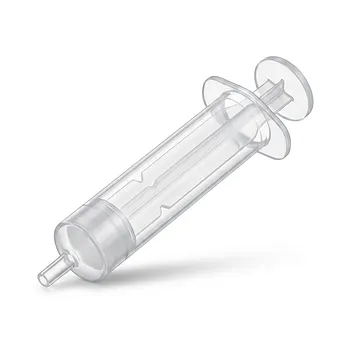
- Corrosion Resistant PFA Syringe Translucent Visual Fluoropolymer Labware 10ml Chemical Handling Tool
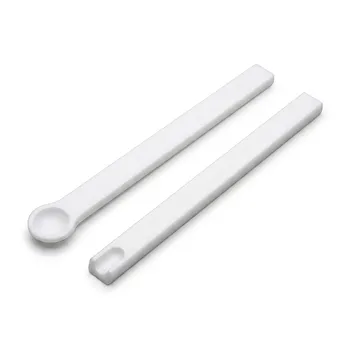
- Corrosion Resistant PTFE Sampling Cup Custom Fabricated PTFE Sampling Scoop Laboratory Fluoropolymer Sampling Tools
- Corrosion Resistant PTFE Sampling Spoon for High Purity Solid Powder Reagent Handling and Laboratory Chemical Transfer
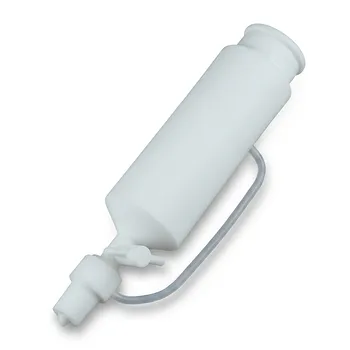
- Custom PTFE Flask 250ml High Purity Fluoropolymer Laboratory Vessel for Chemical Research
- Custom PTFE Double Headed Lab Spatula Chemical Resistant Non Stick Pharmaceutical Grade Fluoropolymer Sampling Tool
People Also Ask
- How does the incorporation of comonomers such as perfluoropropyl vinyl ether (PPVE) alter the molecular structure and processing characteristics of TFE-based fluoropolymers like PFA compared to standard PTFE?
- Why do PFA fluoropolymer laboratory products offer different melt-processability and structural toughness compared to standard PTFE labware?
- PFA vs FEP: Which is Better for High-Temperature Lab Equipment?
- How does increasing fluorine content affect the physical and chemical performance of fluoropolymer laboratory supplies and components?
- Which material characteristics make fluoropolymers suitable for lithium-ion battery separators, and how do fluoropolymer laboratory supplies support separator performance testing?