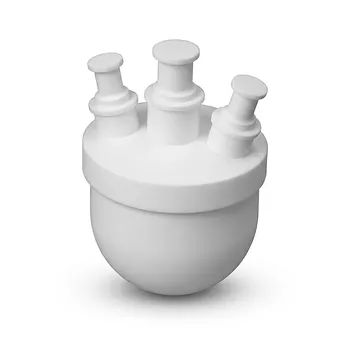
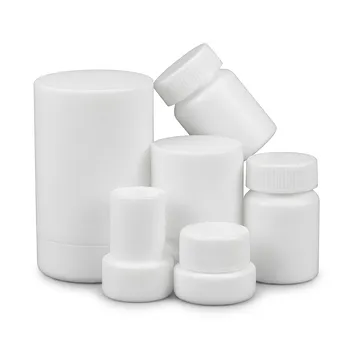
Solvent class determines both what can dissolve and how safely it can move through fluoropolymer equipment. Nonpolar hydrocarbons and many halogenated solvents are generally well tolerated by fully fluorinated materials such as PTFE and PFA, while polar aprotic solvents, ketones, esters, ethers, amines, and hot carbonate solvents can cause swelling or dissolution in less resistant fluoropolymers. The result affects not only chemical compatibility, but also dimensional stability, seal integrity, flow behavior, contamination risk, and safe operating temperature.
The key distinction is between chemical resistance and complete material compatibility: PTFE and PFA provide broad resistance, but fluoropolymer grade, solvent polarity, temperature, exposure time, component geometry, and the presence of elastomeric seals must all be evaluated together.
Why Solvent Chemistry Controls Fluoropolymer Compatibility
Polarity influences solvent power
Solvent polarity describes how unevenly electrical charge is distributed within a molecule. Polar solvents interact strongly with polar or hydrogen-bonding materials, whereas nonpolar solvents preferentially dissolve nonpolar organic substances.
This matters because different solvent classes have different abilities to penetrate, swell, plasticize, or dissolve polymer chains. The greater the interaction between the solvent and polymer, the greater the risk of weight gain, softening, dimensional change, or material loss.
Fluorine changes polymer behavior
Fluorine has very high electronegativity, and carbon-fluorine bonds give fully fluorinated polymers unusually strong chemical resistance. This is why PTFE and PFA commonly withstand hydrocarbons, many chlorinated solvents, acids, and other aggressive organic chemicals.
However, “fluoropolymer” is not a single compatibility category. Materials such as PVDF, PCTFE, fluorocarbon elastomers, and hydrogen-containing fluoropolymer formulations can respond very differently from fully fluorinated PTFE or PFA.
Solubility and swelling are different failure modes
A solvent can affect a polymer without visibly dissolving it. Swelling occurs when solvent molecules enter the polymer matrix, increasing its mass or volume and often reducing stiffness.
Dissolution is more severe: polymer chains become sufficiently solvated that the material loses its solid structure. Both mechanisms can impair tubing dimensions, valve clearances, fitting tolerances, and seal performance.
How Major Solvent Classes Behave
Hydrocarbons: generally favorable for fully fluorinated materials
Aliphatic hydrocarbons are largely nonpolar, while aromatic hydrocarbons such as toluene and xylene have greater solvent power for nonpolar and moderately polar organic resins. These solvents are often compatible with PTFE and PFA.
Aromatic solvents can still affect other fluoropolymer grades or thin components through absorption and plasticization. Temperature is especially important: benzene exposure produced modest weight changes near room temperature in some fluoropolymer structures, but absorption increased sharply at elevated temperatures.
Chlorinated solvents: strong solvent power, broad PTFE and PFA resistance
Chlorinated hydrocarbons can aggressively attack standard plastics and dissolve many organic materials. Fully fluorinated labware, tubing, vessels, and fittings are therefore frequently selected for extraction and organic synthesis involving solvents such as methylene chloride.
Compatibility does not remove the need for thermal evaluation. Exposure data for methylene chloride show strong retention of material properties under specified conditions, but the recommended temperature limit still matters because heat accelerates diffusion, absorption, and mechanical degradation.
Alcohols, glycols, and glycol ethers: hydrogen bonding creates special risks
Alcohols and glycols contain hydroxyl groups that provide strong hydrogen-bonding capability. Lower alcohols can dissolve highly polar film-forming resins, while increasing the hydrocarbon chain length generally reduces their solvent power.
Some hydrogen-containing fluoropolymer formulations and fluorocarbon elastomers can swell or suffer chemical attack in polar solvents such as methanol. PTFE and PFA are usually more resistant, but seals and auxiliary components may not be.
Esters and ketones: moderate polarity with plasticization potential
Esters and ketones, including ethyl acetate, acetone, and MEK, have intermediate-to-high solvent power for polymers of similar polarity. They are common laboratory solvents but should not automatically be treated as benign toward every fluoropolymer.
Ethyl acetate can produce weight gain and flexibility increases in thin fluoropolymer films. Extended MEK exposure can also cause measurable weight uptake and softening in certain formulations or geometries, potentially reducing seal reliability.
Ethers and cyclic ethers: check the grade and temperature
Ethers provide useful solvent power and can penetrate some polymer structures. Cyclic ethers such as THF are particularly aggressive toward many standard plastics and synthetic polymers.
Fully fluorinated PTFE and PFA generally provide a stronger resistance profile than less fluorinated materials. The compatibility of elastomers, bonded joints, valve seats, and tubing liners must still be checked separately.
Polar aprotic solvents: highly aggressive toward susceptible polymers
DMF, DMAc, DMSO, NMP, and related solvents are highly polar but lack O-H or N-H hydrogen-bond donors. Their strong solvating ability makes them effective at dissolving complex synthetic polymers.
PVDF is a significant example: these solvents can interact strongly with its polymer structure and dissolve it even at room temperature. For these applications, PTFE or PFA is generally a more appropriate choice than PVDF when the design requires dimensional stability and long-term fluid containment.
Carbonate solvents: temperature can change compatibility completely
Dimethyl carbonate, propylene carbonate, and ethylene carbonate can cause substantial swelling in PVDF at moderate temperatures. Some carbonate solvents may fully dissolve PVDF at temperatures above approximately 80°C.
This illustrates why a room-temperature compatibility result is not sufficient for heated processing. The same solvent can shift from causing limited swelling to producing severe dimensional failure as operating temperature increases.
How Chemistry Changes Liquid Handling
Swelling changes clearances and flow paths
When tubing, valve components, or fittings absorb solvent, their dimensions can change. A swollen tube may have altered internal diameter, while a softened valve seat may no longer provide consistent shutoff.
These changes affect flow resistance, dead volume, dosing accuracy, and the force required to operate valves or make connections.
Plasticization reduces mechanical stability
Plasticization makes a polymer more flexible and can reduce its resistance to compression, abrasion, and creep. In liquid-handling systems, this can lead to gradual loss of sealing force or deformation under pressure.
The risk is greater in thin films, flexible tubing, diaphragms, and small sealing elements because these components have less material available to maintain their original geometry.
Absorption can contaminate high-purity fluids
A polymer that absorbs solvent can retain fluid after draining or rinsing. It may later release that solvent into a different process stream, creating a contamination or cross-contact risk.
For high-purity applications, low permeability and low extractables are as important as visible resistance to attack. Component preconditioning and validated cleaning procedures may be necessary.
Surface effects can indicate a developing problem
Clouding, softening, increased flexibility, discoloration, or a change in friction can indicate solvent uptake or chemical attack. These effects may appear before cracking, leakage, or complete component failure.
Visual inspection should be combined with dimensional checks and leak testing when exposure is prolonged, heated, pressurized, or otherwise critical.
Seals may fail before the fluoropolymer body
A PTFE vessel or tube can remain intact while an elastomeric O-ring, gasket, or valve insert swells. Fluorocarbon elastomers generally resist hydrocarbons, chlorinated solvents, and mineral acids well, but standard formulations can swell excessively in ketones, esters, and ethers.
A compatibility review must therefore cover the complete wetted assembly, including seals, reinforcement layers, adhesives, and fittings.
Choosing Among Fluoropolymer Materials
PTFE and PFA: strong choices for broad chemical exposure
PTFE and PFA are fully fluorinated materials with broad resistance to aggressive solvents and strong acids and bases. PFA is often preferred when transparency, melt-processability, or more complex molded geometry is useful, while PTFE is widely used for chemically resistant machined and sealing components.
Neither material should be described as universally immune under every condition. Temperature, mechanical stress, permeation, and the specific chemical environment still define the practical limit.
PVDF: useful, but not interchangeable with PTFE or PFA
PVDF offers valuable mechanical and processing properties, but its response to polar aprotic and carbonate solvents can be substantially less favorable. It may swell or dissolve where PTFE and PFA remain structurally stable.
PVDF should therefore be selected based on the actual solvent and temperature rather than grouped with fully fluorinated materials.
PCTFE: dimensional behavior requires solvent-specific review
PCTFE and related materials can show different absorption and dimensional stability depending on solvent, exposure time, temperature, and structure. Thin films may absorb more solvent than thicker or amorphous components under the same nominal conditions.
This distinction is important when converting film data into expectations for containers, fittings, or machined parts.
Elastomers: select the formulation, not only the family
Higher-fluorine terpolymers and specialized materials such as FEPM or FFKM can provide improved stability for amine-rich fluids, aggressive alkalis, or demanding high-purity transfer systems. The correct choice depends on the chemical and thermal exposure.
Standard fluorocarbon elastomers should not be assumed to match the solvent resistance of PTFE or PFA.
Understanding the Trade-offs
“Fluoropolymer” is too broad a specification
A material listed only as a fluoropolymer may be PTFE, PFA, PVDF, PCTFE, an FEP-type material, or a fluorocarbon elastomer. Their solvent interactions are not interchangeable.
Specify the exact resin, grade, filler system, seal compound, and component construction whenever compatibility is safety- or quality-critical.
Temperature can dominate the result
Heating increases solvent diffusion and can accelerate swelling, plasticization, and dissolution. Benzene exposure demonstrates how sharply absorption can increase at elevated temperature, while PVDF compatibility with carbonate solvents also deteriorates as temperature rises.
Compatibility testing should use the maximum actual process temperature, not only ambient conditions.
Chemical resistance does not guarantee pressure performance
A solvent may not chemically destroy a tube but can still soften it enough to deform under pressure, clamp load, vacuum, or repeated cycling. Mechanical stress can expose weaknesses that a static immersion test does not reveal.
Pressure, vacuum, flexing, thermal cycling, and connection loads should be included in qualification for fluid-handling systems.
Strong bases and amines need particular caution
Hydrogen-bearing fluoropolymer formulations may experience swelling, chain degradation, or loss of mechanical integrity in strong caustics, ammonia, and amines. Strong acids, including hot anhydrous hydrofluoric acid, can also exceed the resistance limits of some fluorocarbon materials.
For these services, fully fluorinated components or specialized high-performance grades should be evaluated with the complete operating envelope.
Compatibility charts are screening tools
Published charts help narrow material choices, but they may not account for concentration, impurities, exposure duration, stress, temperature, wall thickness, or the exact compound used in a seal.
For critical systems, verify the choice with supplier data, immersion testing, dimensional measurements, and pressure or leak testing.
How to Apply This to Your Project
Begin with the complete solvent composition and operating conditions, then assess every wetted material rather than the main vessel alone.
- If your primary focus is broad chemical resistance: Use fully fluorinated PTFE or PFA for wetted vessels, tubing, fittings, and valve components, while separately verifying seals and other auxiliary materials.
- If your primary focus is polar aprotic solvent handling: Treat DMF, DMAc, DMSO, NMP, and similar solvents as high-risk for PVDF and many standard plastics; evaluate PTFE or PFA as the baseline alternative.
- If your primary focus is ketone, ester, or ether transfer: Check for swelling and plasticization in fluoropolymer grades and elastomeric seals, especially during long exposures or elevated-temperature operation.
- If your primary focus is heated solvent processing: Qualify the exact material at the maximum temperature, because absorption and dimensional change can increase sharply with heat.
- If your primary focus is high-purity fluid handling: Consider permeability, solvent retention, extractables, and cross-contamination in addition to visible chemical attack.
- If your primary focus is long-term sealing reliability: Evaluate the seal compound, compression behavior, pressure, cycling, and dimensional stability as part of the same compatibility decision.
The right fluoropolymer choice comes from matching the exact material and complete operating conditions to the solvent’s polarity, hydrogen-bonding behavior, temperature, and exposure duration.
Summary Table:
| Solvent Class | Compatibility with PTFE/PFA | Key Risks |
|---|---|---|
| Hydrocarbons | High | Swelling at high temperature |
| Chlorinated | High | Thermal degradation |
| Alcohols/Glycols | Moderate | Swelling of some fluoropolymers, seal attack |
| Esters/Ketones | Moderate | Plasticization, weight gain |
| Ethers/Cyclic Ethers | Moderate | PTFE/PFA resistant; check elastomers |
| Polar Aprotic | Low (for PVDF) | PVDF dissolution; PTFE/PFA stable |
| Carbonates | Moderate (for PVDF) | PVDF swelling at >80°C |
Ensure chemical compatibility and flawless fluid handling with KINTEK's high-performance PTFE/PFA labware, tubing, and custom components. Our experts help you select the right materials for aggressive solvents and extreme temperatures. Contact us today to discuss your application and benefit from our end-to-end CNC machining and extensive product range tailored for analytical, industrial, and R&D use. Get in touch now.
Related Products
- Custom PFA Pear Shaped Flask High Purity Corrosion Resistant Labware Custom Molded Fluoropolymer Flask Glass Replacement Solution
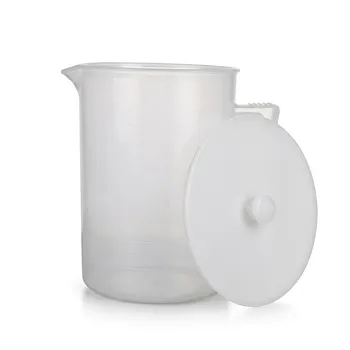
- High Purity PFA Beaker with Handle and Large Capacity Washable Soak Basket Multi Spec Teflon Laboratory Labware
- Custom PTFE Petri Dish 30mm Corrosion Resistant Low Background Non Leaching Laboratory Ware
- Custom Polytetrafluoroethylene PTFE Petri Dishes 60mm Corrosion Resistant Low Background Labware
- Custom PTFE Petri Dish 120mm Diameter Corrosion Resistant Low Background High Purity Labware
People Also Ask
- What are the chemical compatibility boundaries of PFA fluoropolymer labware, and how can PFA surfaces be treated for adhesive bonding? Learn safe usage and bonding methods.
- How does end-group stabilization during PFA polymer synthesis influence purity? Achieve Ultra-High Purity & Reliability in Lab Components.
- Why Use PFA Labware for MnFe2O4/rGO Precursors? Ensure Stoichiometric Precision and Purity
- Why is PFA labware recommended for CuBi2O4? Protect high-purity precursors and ensure semiconductor bandgap accuracy.
- How does PFA labware enhance the accuracy of ultra-trace element analysis? Achieving PPT Precision with Zero Leaching