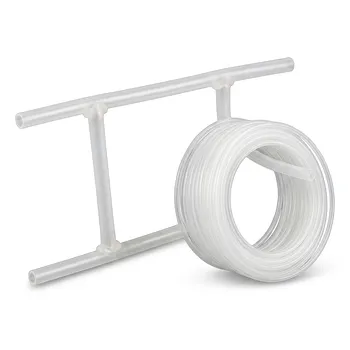
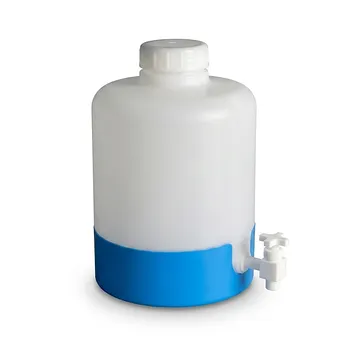
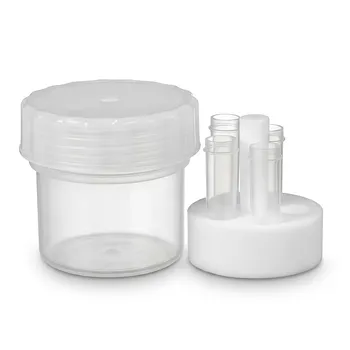
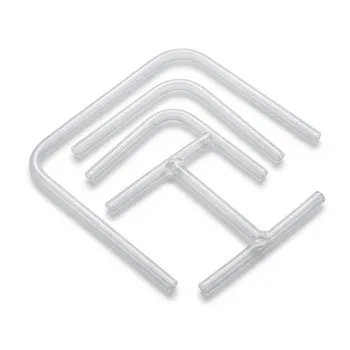
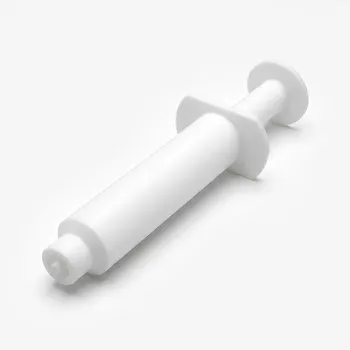
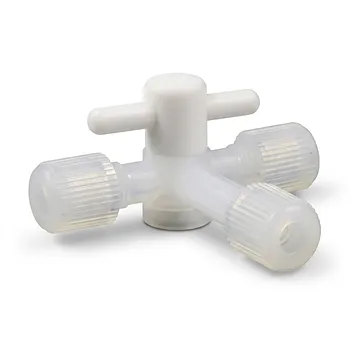
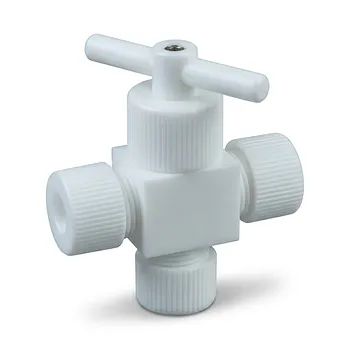
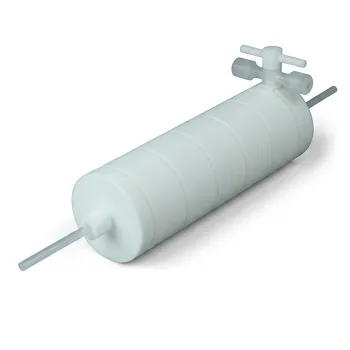
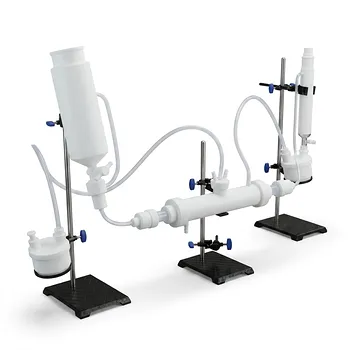
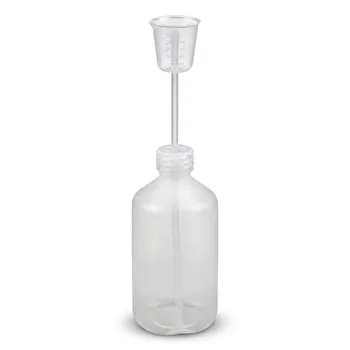
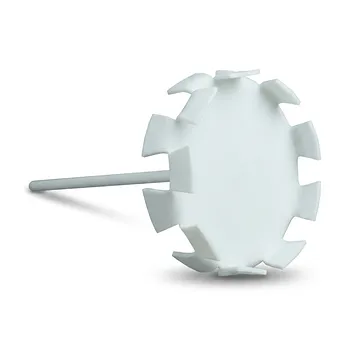
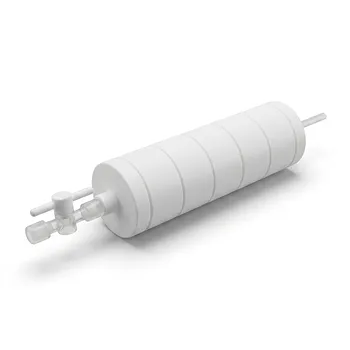
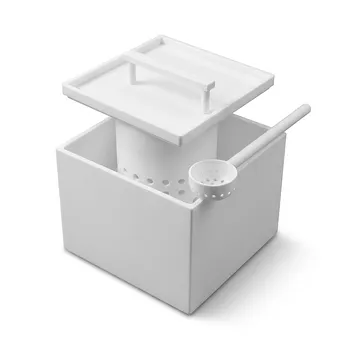
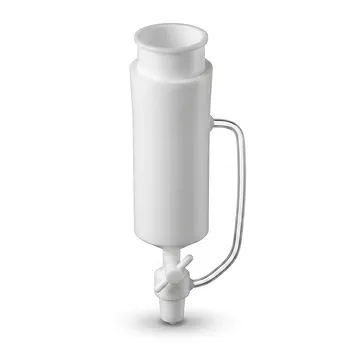
PTFE and PFA are suitable because they combine exceptional chemical inertness with broad thermal stability. Their fluorinated carbon backbones resist aggressive acids, solvents, and many reactive chemicals, while their low surface energy limits wetting, adhesion, fluid retention, and contamination. These properties allow them to function reliably as tubing, valves, fittings, pipe liners, and high-purity laboratory vessel liners.
The central advantage of PTFE and PFA is the combination of chemical resistance, thermal endurance, and low-contamination surfaces. Full fluorination gives these materials particularly high purity and chemical inertia, making them appropriate for aggressive fluid transfer and trace-sensitive laboratory applications.
Why Fluorination Improves Performance
The Protective Carbon-Fluorine Structure
Fluoropolymers replace hydrogen atoms in the polymer backbone with fluorine. The strong carbon-fluorine bonds and the fluorine-rich outer structure shield the carbon chain from chemical attack.
This molecular architecture explains their resistance to degradation, oxidation, and many solvent interactions. Perfluorinated materials such as PTFE and PFA provide among the highest levels of chemical resistance in the fluoropolymer family.
Broad Chemical Resistance
PTFE and PFA resist a wide range of aggressive acids, solvents, and hydrocarbon-based chemicals. They are therefore useful where conventional plastics or metals could corrode, swell, crack, or release extractables.
They are not universally immune to every chemical. Certain environments, including molten alkali metals and highly reactive fluorinating conditions, can attack fluoropolymers, so compatibility must still be checked for the specific reagent, concentration, temperature, and exposure time.
Low Leaching and High Purity
The chemical stability of PTFE and PFA reduces the likelihood that the liner will react with or contaminate the transferred fluid. This is especially important in trace analysis, digestion, chemical synthesis, and high-purity storage.
PFA is also available in highly pure, melt-processable forms, which makes it practical for molded laboratory vessels, tubing, and complex fluid-handling components.
Thermal Properties That Support Severe Service
Wide Operating Temperature Capability
PTFE retains useful properties across a very broad temperature range, including cryogenic conditions and elevated temperatures. PFA also supports high-temperature service, with commonly cited maximum continuous-use temperatures in the approximate range of 260°C to 288°C, depending on grade, design, load, and operating conditions.
These figures should be treated as application guidance rather than universal limits. Mechanical stress, pressure, chemical exposure, thermal cycling, and the specific manufacturer’s rating can substantially change the usable service temperature.
Cryogenic Flexibility
Fluoropolymers remain functional at very low temperatures, with PTFE commonly used in cryogenic environments. This helps liners and fluid-transfer components tolerate temperature changes without becoming as brittle as many conventional polymers.
Thermal cycling still requires engineering attention because dimensional changes, pressure, and mechanical restraint can create stresses even when the polymer itself remains chemically stable.
Resistance to Thermal Degradation
The strong fluorinated structure gives PTFE and PFA high thermal stability compared with many general-purpose plastics. They maintain chemical resistance and functional integrity when exposed to elevated temperatures used in laboratory digestion, chemical processing, or heated fluid transfer.
At sufficiently high temperatures, however, fluoropolymers can decompose and produce hazardous fumes. Proper temperature controls, ventilation, and manufacturer guidance remain essential.
Surface Properties That Protect Fluids and Components
Low Surface Energy
PTFE and PFA have exceptionally low surface energy. Liquids are less likely to spread across, wet, or strongly adhere to these surfaces.
For laboratory vessels, this can reduce sample hold-up and make cleaning easier. For tubing and fittings, it can reduce residual fluid and simplify transitions between chemicals.
Non-Stick and Low-Friction Behavior
PTFE has an extremely low coefficient of friction and is naturally slippery. This reduces sliding resistance in valve components, dynamic seals, and moving interfaces.
The same non-stick behavior limits buildup and adhesion inside fluid paths. It can improve reliability, although PTFE’s relatively low stiffness and tendency to deform under sustained load must be considered in pressure-containing designs.
Hydrophobic and Lipophobic Behavior
The fluorinated surface is resistant to wetting by many aqueous and organic substances. This combination of hydrophobicity and low adhesion helps minimize fluid retention and cross-contamination.
These benefits are valuable in high-purity vessels and transfer systems, where even small residues can affect subsequent samples or analytical results.
Why PTFE and PFA Fit Different Component Designs
PTFE for Chemical and Low-Friction Performance
PTFE is widely selected for chemically resistant tubing, seals, valve components, gaskets, and liners. Its low friction and broad temperature capability are particularly useful where moving parts or repeated chemical exposure are involved.
Its processing characteristics can limit the complexity of molded shapes compared with melt-processable fluoropolymers. Designs must also account for creep and deformation under sustained pressure or load.
PFA for High-Purity Fabricated Components
PFA combines high chemical and thermal resistance with melt processability. That makes it well suited to molded laboratory vessels, complex tubing, fittings, and vessel liners where dimensional precision or transparent inspection is useful.
For high-purity work, the selected grade, manufacturing process, cleanliness controls, and surface condition matter as much as the base polymer. A chemically resistant material can still cause contamination if it is poorly processed, improperly cleaned, or exposed to unsuitable additives.
Understanding the Trade-offs
Chemical Resistance Is Not Universal
PTFE and PFA resist most commonly encountered laboratory acids, bases, and solvents, but no material should be described as resistant to every chemical under every condition. Temperature and concentration can change compatibility significantly.
Chemical compatibility charts are useful for screening, but critical applications should be validated under actual operating conditions.
Mechanical Strength Has Limits
Chemical and thermal stability do not mean that fluoropolymers behave like metals or high-strength engineering plastics. PTFE in particular can creep under continuous pressure, compressive load, or elevated temperature.
Liners, seals, and tubing should therefore be supported and designed around pressure, bending, dimensional stability, and long-term loading requirements.
Temperature Ratings Depend on the Application
A polymer may tolerate a temperature briefly but have a lower recommended continuous-use rating under pressure or mechanical stress. Thermal cycling can also accelerate dimensional changes and fatigue.
The correct rating must come from the material grade and component design, not from a generic maximum temperature alone.
Purity Depends on the Entire System
PTFE or PFA can reduce leaching and sample contamination, but purity is a system-level property. Clean manufacturing, suitable fittings, proper cleaning procedures, and control of particulates and extractables are also necessary.
For trace analysis, the component should be selected and qualified for the specific analytical method and contamination limits.
Making the Right Choice for Your Goal
The best selection depends on whether the primary requirement is chemical containment, low-friction operation, high-purity processing, or thermal exposure.
- If your primary focus is aggressive chemical resistance: Choose a suitably graded PTFE or PFA component after verifying compatibility with the exact reagent, concentration, and temperature.
- If your primary focus is high-purity laboratory handling: Favor high-purity PTFE or PFA designs with controlled manufacturing and cleaning processes to minimize leaching, adhesion, and sample carryover.
- If your primary focus is complex molded vessels or fittings: Consider PFA because its melt processability supports more intricate geometries while retaining strong chemical and thermal performance.
- If your primary focus is low-friction seals or moving valve components: Consider PTFE for its exceptionally slippery, non-stick surface, while accounting for creep and mechanical support.
- If your primary focus is high-temperature or cryogenic service: Confirm the component-specific continuous-use rating, pressure limits, thermal cycling behavior, and ventilation requirements.
PTFE and PFA succeed in demanding fluid and laboratory applications because their fluorinated structure protects against chemical attack while their stable, low-adhesion surfaces preserve component reliability and sample purity.
Summary Table:
| Property | PTFE | PFA |
|---|---|---|
| Chemical Resistance | Excellent | Excellent |
| Max Continuous Use Temp | ~260°C | ~260-288°C |
| Melt Processability | No | Yes |
| Purity Grades | Available | High purity available |
| Typical Applications | Seals, gaskets, liners | Labware, tubing, fittings |
| Key Limitations | Creep under load | Higher cost |
Unlock the full potential of PTFE and PFA for your lab or industrial needs. At KINTEK, we specialize in manufacturing high-performance fluoropolymer components, from simple tubing to complex custom machined parts. Our PTFE/PFA products deliver superior chemical resistance, thermal stability, and purity for demanding applications. Whether you need standard labware or bespoke solutions, our OEM/ODM support ensures a perfect fit. Contact us today to discuss your requirements and benefit from our expertise and reliable supply. Get in touch now!
Related Products
- Corrosion Resistant High Purity PFA Valve and Weldable Transparent Tubing for Semiconductor Fluid Transfer
- Corrosion Resistant PFA Tubing 1/4 Inch Custom Molded Welded Fluid Transfer Components
- High Corrosion Resistant PTFE Faucet Polytetrafluoroethylene Valve for Chemical Storage Drums and Fluid Transfer Systems Customizable Industrial Grade
- Corrosion Resistant PTFE Support with PFA Transparent Reaction Tank and High Purity PFA Sampling Tube for Trace Analysis
- PTFE PFA Vacuum Filtration System Corrosion Resistant Customizable Shatterproof Laboratory Device
People Also Ask
- Why are high-purity PFA fluid transfer components preferred for battery electrolytes? Ensure Purity & Data Accuracy
- How does high-purity PFA tubing maintain reagent purity? Achieve Ultra-Smooth, Zero-Contamination Fluid Transfer
- How do high-precision PFA fluid transfer components, such as tubing and fittings, affect the results of continuous-flow synthesis?
- How do PFA fluid transfer components contribute to chemical research precision? Achieve high-purity results today.
- What role do PFA tubing and valves play in high-precision laboratory fluid transfer systems? Ensure Ultra-Pure Results