The key difference is water compatibility: free PFOA is the neutral acid, whereas APFO and related compounds are ionic perfluorooctanoate salts. The acid is substantially insoluble in water, while salts such as ammonium, sodium, and potassium perfluorooctanoate dissolve readily and can act as aqueous surfactants during fluoropolymer polymerization.
APFO’s solubility made it useful as a polymerization aid, not as a component that makes finished PTFE or PFA soluble. For high-purity laboratory products, the critical issue is controlling residual processing chemicals and ionic contamination through surfactant-free or compliant alternative manufacturing methods.
How the Acid and Salt Forms Differ
Free PFOA is the neutral acid
Perfluorooctanoic acid, or PFOA, is the protonated, electrically neutral form. Its limited water solubility makes it poorly suited to forming a stable aqueous surfactant system for emulsion polymerization.
The acid and its salts share the same perfluorinated carboxylate structure, but their behavior in water differs because the salt has an ionic carboxylate group paired with a counterion.
APFO is an ionic salt
Ammonium perfluorooctanoate, commonly abbreviated APFO, consists of the perfluorooctanoate anion paired with an ammonium cation. Sodium and potassium perfluorooctanoate are analogous salt forms.
These salts dissolve much more readily in water. Their amphiphilic structure allows them to accumulate at interfaces and stabilize dispersed fluorinated polymer particles in an aqueous emulsion.
Why Solubility Matters in Fluoropolymer Processing
Aqueous emulsion polymerization requires a water-compatible aid
In emulsion polymerization, the processing aid must function throughout an aqueous reaction mixture. A water-insoluble material cannot efficiently provide the interfacial stabilization needed to create and maintain a uniform dispersion.
Soluble PFOA salts historically served this role by acting as surfactants or emulsifying aids during the production of fluoropolymer resins such as PTFE-related materials.
The salt supports processing, not polymer dissolution
The salt’s utility comes from its behavior during polymer manufacture. It helps organize the aqueous reaction environment and stabilize growing polymer particles.
Once the fluoropolymer is formed, the processing aid is not what gives PTFE or PFA their chemical resistance. The finished polymer’s performance comes from its highly fluorinated molecular structure and resulting low reactivity, hydrophobicity, and oleophobicity.
Finished PTFE and PFA remain highly resistant materials
Properly manufactured PTFE and PFA labware are chemically resistant to many aggressive acids, bases, oxidizing agents, and organic solvents. The fact that a soluble salt was used during an earlier processing step does not mean the finished fluoropolymer behaves like a water-soluble material.
This distinction is essential: processing solubility and finished-material solubility are separate properties.
Why This Matters for Laboratory Labware
Residual processing chemicals can affect trace work
Residual APFO, PFOA, or related derivatives can be undesirable in laboratory products because they are environmentally persistent contaminants and may contribute ionic or chemical background in sensitive analyses.
For routine applications, trace residues may not be operationally significant. For ultra-trace elemental, ionic, or environmental analysis, however, the manufacturing history and cleaning controls of the labware can matter.
High-purity labware requires manufacturing control
Modern PTFE and PFA laboratory supplies may be manufactured using surfactant-free suspension polymerization or compliant, non-persistent alternative polymerization aids. These approaches are intended to reduce contamination risks associated with legacy processing chemicals.
The relevant specification is therefore not simply “PTFE” or “PFA.” Buyers should also consider the product’s purity grade, manufacturing route, extractables, cleaning process, and suitability for trace analysis.
Chemical inertness protects samples and equipment
Fluoropolymer vessels, tubing, fittings, crucibles, and wash bottles are used because they resist chemical attack and can prevent aggressive fluids from degrading ordinary plastics.
This is particularly important with strong aromatics, chlorinated hydrocarbons, polar aprotic solvents, and other media that may dissolve or swell less-resistant materials.
Understanding the Trade-offs
Salt solubility is useful during manufacture but creates a residue concern
The same water solubility that makes APFO effective in aqueous polymerization also makes it capable of remaining in, or being removed from, water-based processing streams. Inadequate control can create concerns about residual surfactant or related species.
Therefore, a salt form is advantageous for resin production but is not automatically desirable in the final laboratory product.
“PFOA-free” terminology requires context
PFOA can refer loosely to the free acid, its salts, or related processing residues in commercial discussions. A claim concerning one form does not necessarily describe every related compound or every stage of manufacturing.
For critical applications, request a clear statement of what is excluded, which processing aids are used, and whether the claim applies to the finished article, the resin, or both.
Fluoropolymer resistance is not universal under every condition
PTFE and PFA are highly resistant, but no material should be treated as absolutely inert in every temperature, pressure, and chemical combination. Compatibility can depend on the solvent, concentration, temperature, exposure time, mechanical stress, and product construction.
The most demanding applications should be evaluated against supplier compatibility data rather than relying only on the polymer name.
Purity and chemical compatibility are different criteria
A vessel can be chemically resistant yet unsuitable for ultra-trace analysis if it introduces unacceptable background. Conversely, a very clean product may still be inappropriate if its mechanical or temperature limits are exceeded.
A sound selection process evaluates both chemical compatibility and contamination control.
Making the Right Choice for Your Goal
The best choice depends on whether your priority is polymer production, routine chemical handling, or trace analytical cleanliness.
- If your primary focus is understanding polymer processing: Recognize that soluble PFOA salts such as APFO historically enabled aqueous emulsion polymerization, while the poorly water-soluble free acid did not serve that role effectively.
- If your primary focus is selecting routine labware: Choose PTFE or PFA when broad resistance to aggressive chemicals and solvents is required, while checking the supplier’s compatibility data for the specific conditions.
- If your primary focus is trace or contamination-sensitive analysis: Specify high-purity labware with documented control of PFOA, APFO, related residues, extractables, and manufacturing aids.
- If your primary focus is procurement compliance: Ask whether the product is made through surfactant-free processing or with compliant non-persistent alternatives, and clarify exactly what the supplier’s “PFOA-free” statement covers.
Understanding both ionic solubility during processing and residual purity in the finished product lets you choose fluoropolymer labware with confidence rather than treating all PFOA references as equivalent.
Summary Table:
| Form | Chemical Nature | Water Solubility | Role in Processing |
|---|---|---|---|
| Free PFOA (acid) | Neutral acid | Poorly soluble | Not effective as aqueous surfactant |
| APFO and other salts | Ionic salts | Readily soluble | Effective surfactant for emulsion polymerization |
Ensure your labware meets high-purity standards—contact KINTEK today to discuss PTFE/PFA solutions tailored to your trace analysis needs. Contact us to learn more about our contamination-controlled products.
Related Products
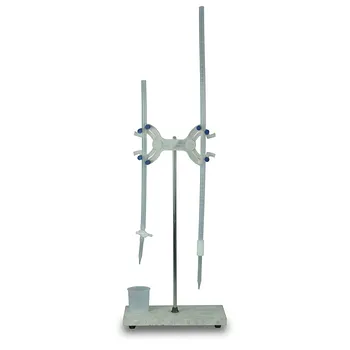
- PFA Acid and Base Burette with PTFE Valve for Corrosive Chemical Analysis and Hydrofluoric Acid Resistance Customizable Labware
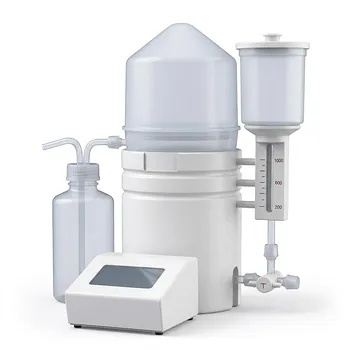
- PFA Sub Boiling Acid Purifier Electronic Grade Distillation System Laboratory Trace Analysis Equipment
- High Purity PFA Chromatography Column Double Layer Constant Pressure Filtration System with Sieve Plate for Strong Acid Resistance
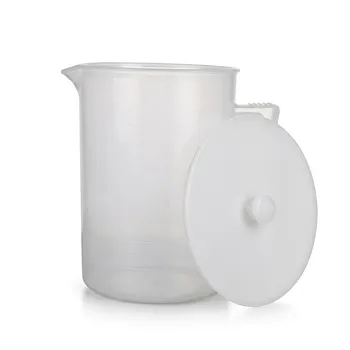
- High Purity PFA Beaker with Handle and Large Capacity Washable Soak Basket Multi Spec Teflon Laboratory Labware
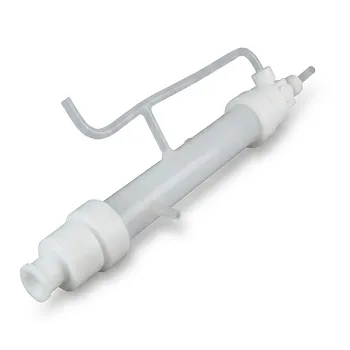
- High Purity PFA Constant Pressure Condensation Reaction System Acid Resistant High Temperature Customizable Teflon Labware
People Also Ask
- Why are PTFE and PFA laboratory products utilized for processing corrosive reagents in high-precision chemical research?
- Why is PFA widely used for high-purity fluid handling components, and why is end-group fluorination necessary?
- Why is PFA chosen over standard PTFE for complex fluid transfer components? Discover the advantages of PFA in lab fittings and valves.
- What chemical conditions are required for the post-polymerization sulfonation of PFCB aryl ether polymers, and how do PTFE and PFA laboratory supplies support these processes?
- What role do PFA tubing and valves play in high-precision laboratory fluid transfer systems? Ensure Ultra-Pure Results