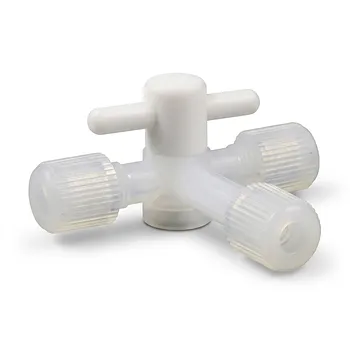
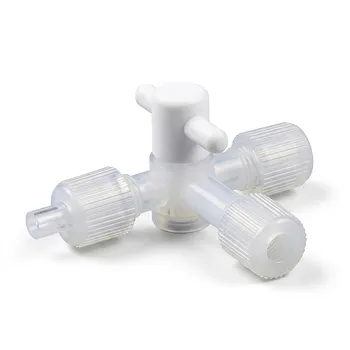
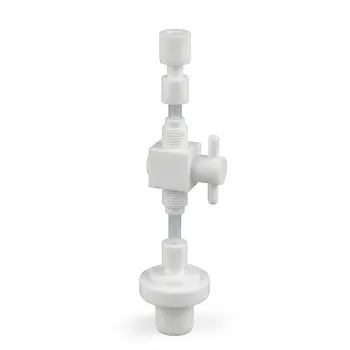
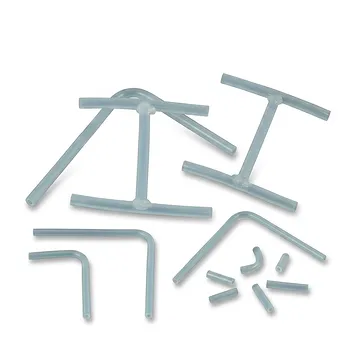
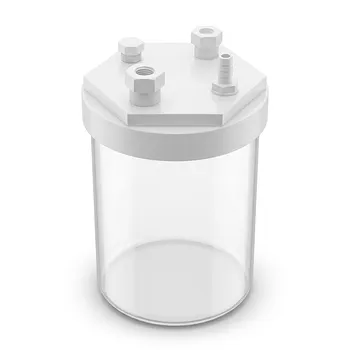
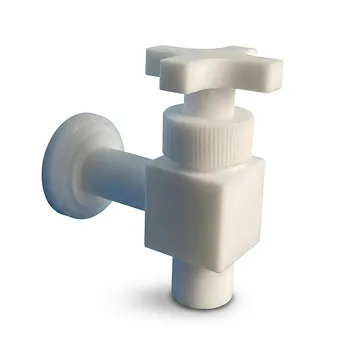
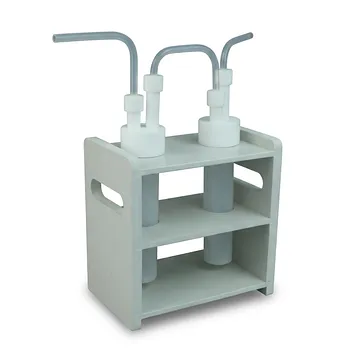
PFA is chosen over standard PTFE primarily because it can be melt-processed into complex, precise shapes without giving up PTFE’s chemical resistance and high-temperature performance. PTFE typically requires sintering, compression molding, or machining because its melt viscosity is too high for conventional injection molding. PFA can be injection-molded and extruded into intricate valve bodies, threaded fittings, tubing connectors, and other components with smooth, non-porous surfaces.
The key advantage of PFA is manufacturing flexibility: it preserves the ultra-pure, chemically inert, high-temperature characteristics associated with PTFE while enabling more precise and economical production of complex fluid-handling geometries.
Why Complex Components Favor PFA
PFA can be conventionally melt-processed
PFA is a copolymer of tetrafluoroethylene and perfluoroalkyl vinyl ether. These comonomers reduce crystallinity and melt viscosity enough for injection molding and extrusion.
Standard PTFE forms a stiff, non-flowing gel above its melting point rather than flowing like a conventional thermoplastic. As a result, PTFE components generally require sintering, compression molding, and CNC machining.
Intricate geometries are easier to produce
Melt-processing allows PFA to form features such as:
- Internal channels
- Thin walls
- Threads
- Valve seats
- Complex junctions
- Integrated tubing connections
- Custom reaction-vessel geometries
These features can be difficult, expensive, or impractical to produce consistently from sintered PTFE.
Molded parts can achieve tight tolerances
Injection molding provides repeatable dimensions and consistent part-to-part geometry. This is important for valves, fittings, and sealing interfaces, where small dimensional variations can affect leakage, assembly, and flow control.
Machined PTFE can still provide excellent performance, but complex designs often require more operations and tighter process control.
Why PFA Retains PTFE-Like Performance
Chemical resistance remains exceptional
PFA retains a fully fluorinated molecular structure, giving it broad resistance to aggressive acids, solvents, and other corrosive chemicals.
This makes it suitable for demanding laboratory and analytical fluid-transfer systems where ordinary engineering plastics may swell, degrade, or release contaminants.
Temperature capability remains high
PFA and standard PTFE are commonly specified for continuous service temperatures up to approximately 260°C, depending on the grade, mechanical load, pressure, and application conditions.
Therefore, selecting PFA is generally not a compromise in maximum continuous temperature capability. Its advantage is that the material can be formed into complex components while retaining high thermal stability.
Surfaces support high-purity fluid handling
Melt-processed PFA can provide smooth, non-porous internal surfaces with minimal micro-voids. These surfaces reduce sites where residues, particles, or trace chemicals could collect.
That is valuable in ultra-pure chemical handling, trace analysis, laboratory digestion systems, and applications where cross-contamination must be minimized.
Low surface energy reduces adhesion
Like PTFE, PFA has very low surface energy. Fluids and residues are less likely to adhere strongly to the material, which supports easier flushing and cleaning.
This characteristic is particularly useful when a component handles multiple chemicals or very small sample volumes.
How PFA Supports Sealing and Reliability
Dimensional stability matters in fittings and valves
Fittings and valves must maintain their shape under pressure, temperature cycling, and repeated assembly. PFA’s molecular structure can reduce chain slippage compared with standard PTFE, helping limit cold flow and creep under sustained load.
This supports more stable threads, valve seats, and sealing surfaces. However, the actual result depends on component design, temperature, pressure, and the specific material grade.
Smooth molded surfaces improve leak resistance
A consistent molded surface can reduce irregularities at sealing interfaces. When combined with accurate dimensions and appropriate compression, this helps produce leak-tight connections.
PFA is therefore well suited to complex fittings and valves where surface finish and geometry are both critical.
Seamless construction can reduce contamination risks
Melt-formed components can be produced with fewer joints, inserts, or mechanically assembled sections. Reducing these discontinuities can help limit crevices and potential contamination sites in high-purity systems.
Why PTFE Is Still Used
PTFE remains excellent for simple shapes
PTFE is often the practical choice for washers, gaskets, simple tubing, seals, liners, and uncomplicated machined parts. Its chemical inertness, low friction, and temperature capability remain highly valuable.
For a simple geometry, the additional manufacturing complexity of PFA may provide little benefit.
PTFE can be cost-effective for low-complexity parts
When a component can be made efficiently by compression molding, sintering, or straightforward machining, PTFE may offer a more economical solution.
Material selection should therefore consider the component’s geometry and production volume, not only its chemical environment.
Understanding the Trade-offs
PFA is not identical to PTFE in every property
PFA generally offers better melt-processability and improved dimensional behavior in some loaded applications, but PTFE may provide advantages in areas such as lower friction or specific sealing behavior.
The best choice depends on whether chemical resistance, friction, creep, permeability, stiffness, clarity, or processing method is the dominant requirement.
Melt-processing does not eliminate design limitations
PFA parts still require appropriate wall thickness, draft, gating, cooling, and tolerance design. Poor molding design can cause distortion, residual stress, dimensional variation, or defects.
A molded PFA component must also be evaluated under the real combination of temperature, pressure, chemical exposure, and mechanical load.
Temperature ratings require application context
The approximately 260°C continuous-service figure is not a universal operating limit for every geometry. Pressure, stress, cycling, exposure time, and manufacturer-specific grade data can reduce the practical working temperature.
Designers should use the supplier’s compatibility and pressure-temperature data for the intended application.
Machining may still be appropriate
For prototypes, very low production volumes, or highly customized parts, machining PFA or PTFE may be more practical than developing an injection-molding tool.
The manufacturing route should be selected alongside the material rather than treating PFA molding as automatically superior.
Making the Right Choice for Your Goal
The decision should begin with the component geometry, followed by chemical, thermal, mechanical, and purity requirements.
- If your primary focus is complex geometry: Choose PFA when injection molding or extrusion can produce intricate valves, fittings, channels, or connectors more consistently than sintered PTFE and machining.
- If your primary focus is ultra-pure fluid handling: Favor PFA when smooth, low-porosity, low-extractable surfaces and reduced contamination risk are essential.
- If your primary focus is dimensional and sealing stability: Evaluate PFA for fittings and valve components exposed to sustained pressure, temperature, or clamping loads where creep control matters.
- If your primary focus is simple seals or low-friction parts: Consider standard PTFE when the geometry is uncomplicated and its friction or sealing characteristics are more important than melt-processability.
- If your primary focus is low-volume customization: Compare machined PTFE and PFA based on tooling, tolerances, lead time, and the required production quantity.
PFA is the stronger choice when complex manufacturability and high-purity performance must coexist in the same fluid-transfer component.
Summary Table:
| Feature | PFA | PTFE |
|---|---|---|
| Processability | Excellent – can be injection molded and extruded | Poor – requires sintering, compression molding, or machining |
| Complex geometries | Easy to produce intricate shapes like threads and internal channels | Difficult and expensive to machine complex designs |
| Surface quality | Smooth, non-porous surfaces for high purity | May have micro-voids and rougher finishes |
| Chemical resistance | Excellent – fully fluorinated structure | Excellent – same inertness |
| Temperature range | Up to 260°C continuous | Up to 260°C continuous |
| Dimensional stability | Better – reduced cold flow and creep | Can creep under sustained load |
| Friction coefficient | Low, but slightly higher than PTFE | Extremely low |
| Common applications | Complex valves, fittings, high-purity systems | Seals, gaskets, simple machined parts |
Looking for high-performance PFA or PTFE fluid handling components? At KINTEK, we specialize in precision-manufactured labware and custom parts. Our expertise in PTFE and PFA machining and molding ensures you get the right solution for your most demanding applications. Contact us today to discuss your requirements and benefit from our end-to-end custom manufacturing capabilities, from complex non-standard parts to high-volume orders. Get in touch with us to optimize your lab's efficiency and reliability!
Related Products
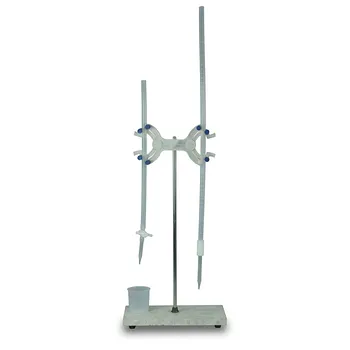
- PFA Acid and Base Burette with PTFE Valve for Corrosive Chemical Analysis and Hydrofluoric Acid Resistance Customizable Labware
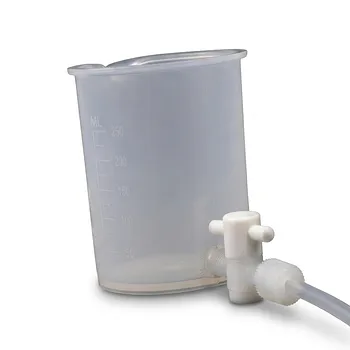
- PFA Beaker with Integrated Drainage Valve and Discharge Tube for Corrosive Chemical Processing and High Purity Laboratory Applications
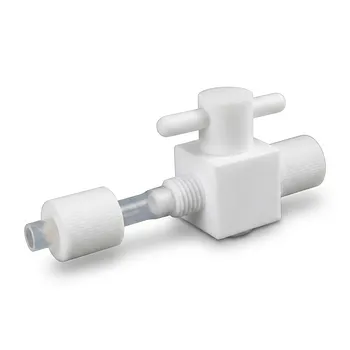
- High Purity PFA Flared Globe Valve Custom Two Way Three Way Reducing PTFE Valve Heavy Metal Free
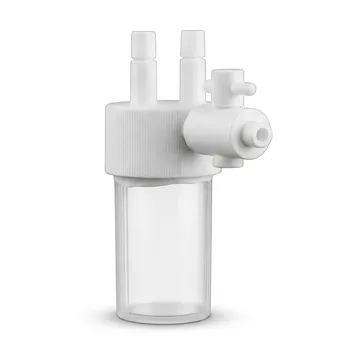
- Custom PTFE Reaction Lid with Integrated Valve and Fitting Corrosion Resistant No Leaching PFA FEP Bottle Cap System
- High Purity PFA Valves and Weldable Corrosion Resistant Transparent Tubing for Semiconductor Sensor Manufacturing Fluid Transfer
People Also Ask
- What role do PFA tubing and valves play in high-precision laboratory fluid transfer systems? Ensure Ultra-Pure Results
- Why use PTFE/PFA for pH adjustment in dye studies? Ensure chemical purity and reliable adsorption data accuracy.
- What is the function of PFA and PTFE lined check valves in chemical plants? Prevent Corrosive Backflow and Protect Equipment
- What advantages do customized PFA valves and fittings provide in fluid transfer and chemical reagent delivery systems?
- How do structural differences between PVDF and ETFE affect their chemical suitability for handling strong bases and polar solvents?