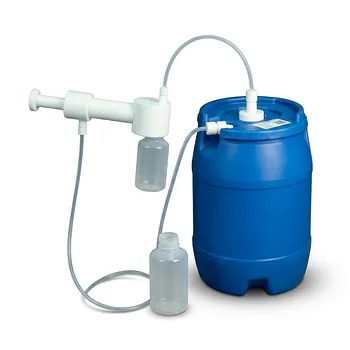
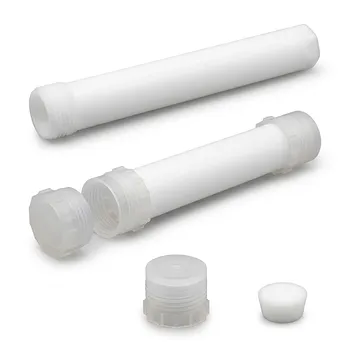
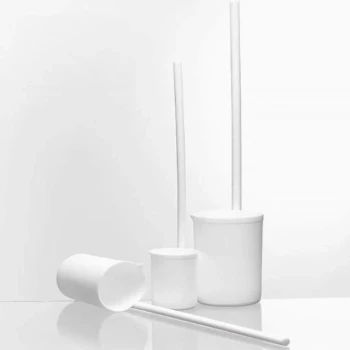
Oxidation and peroxide formation make oxygen exclusion the primary design requirement. CTFE sampling containers must be hermetically sealed, chemically compatible, and capable of maintaining an inert atmosphere throughout collection, storage, and transfer. Sampling valves should provide vacuum-tight isolation with minimal dead volume and non-reactive wetted surfaces, which is why PFA containers and PTFE valve assemblies are commonly selected for laboratory handling of oxygen-sensitive CTFE.
The container and valve must function as one oxygen-tight sampling system. Fluoropolymer materials reduce chemical interaction with CTFE, but they do not eliminate the hazard by themselves: effective purging, leak control, inert-gas blanketing, and validated operating procedures are equally essential.
Why CTFE Storage Requires Oxygen Exclusion
Trace oxygen can create unstable products
Liquid and gaseous CTFE can react with oxygen at ambient and low temperatures. The reaction can produce organic peroxides and oxygenated compounds, including chlorodifluoroacetyl chloride and chlorotrifluoroethylene oxide.
The relevant risk is not merely gradual degradation. These products can accumulate and behave as unstable initiators for CTFE autopolymerization.
Polymerization can become violent
Peroxide-containing CTFE may polymerize suddenly and exothermically. A container that appears chemically intact can therefore contain a latent initiation hazard if air has entered during sampling, storage, or transfer.
The sampling system must be designed to prevent oxygen ingress rather than relying on visual inspection or short storage times as evidence of safety.
Low temperature does not remove the hazard
Because oxidation can occur even at low temperatures, refrigeration alone is not a sufficient control. Temperature management may be part of the storage procedure, but it does not replace oxygen exclusion and compatible containment.
How the Hazard Shapes Container Selection
Use hermetically sealed, compatible vessels
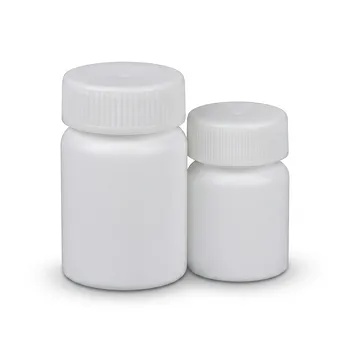
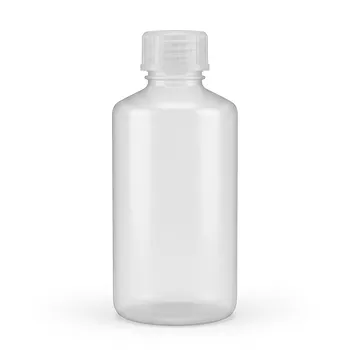
A sampling container should maintain a reliable seal against both CTFE loss and air ingress. Hermetically sealed PFA reagent bottles are suitable where the laboratory procedure requires fluoropolymer containment and the bottle design has been qualified for the pressure, temperature, and exposure conditions involved.
The closure must be treated as part of the containment system. A chemically compatible bottle with a leaking cap, degraded gasket, or poorly seated liner does not provide effective oxygen control.
Prefer non-reactive wetted surfaces
PFA provides a chemically inert surface for contact with CTFE and reduces the likelihood that the sample will interact with the container material. PTFE components offer similar chemical resistance in valve bodies, seats, liners, and other wetted parts.
This material choice helps preserve sample integrity and limits material-related reactions, but it should not be described as preventing peroxide formation on its own. Peroxide prevention depends primarily on excluding oxygen.
Evaluate permeation and mechanical integrity
The container should be assessed for gas permeation, seal performance, pressure capability, and resistance to the actual CTFE service conditions. Fluoropolymers are chemically inert, but their gas-barrier performance and mechanical behavior are design-dependent.
For longer storage periods, higher pressure, or especially stringent oxygen limits, the laboratory should compare qualified fluoropolymer, glass, and metallic containment designs rather than assuming that any PFA bottle is automatically equivalent.
Use an appropriate headspace strategy
A CTFE sample should not be collected with an uncontrolled air headspace. Procedures generally need an inert-gas purge or blanket, using a validated gas and a method that does not introduce oxygen through the sampling line or container closure.
The selected bottle must support the required purge, fill, pressure relief, and closure sequence without exposing the sample to ambient air.
How the Hazard Shapes Valve Selection
Choose valves that isolate the sample reliably
PTFE valve assemblies are appropriate when the wetted components must resist CTFE and avoid reactive surfaces. The valve should provide a dependable shutoff and remain leak-tight through repeated sampling and storage cycles.
A valve that seals only under ideal laboratory conditions is insufficient. Qualification should include the actual pressure, temperature, connection method, and number of operating cycles expected.
Minimize dead legs and trapped volumes
Dead legs can retain CTFE and any oxidation products, creating contamination and maintenance hazards. A low-dead-volume valve and a short, direct flow path make purging more effective and reduce the amount of material left behind after sampling.
The design should also avoid pockets where air can remain trapped after an apparently completed purge.
Control air ingress during operation
Every valve operation is a potential oxygen-ingress event. Two-valve isolation, purgeable manifolds, check valves, or other engineered arrangements may be appropriate depending on the sampling procedure and system pressure.
The critical question is not only whether the valve is chemically compatible, but whether the complete assembly can be purged, sampled, isolated, and disconnected without drawing air into the CTFE container.
Match seals and fittings to CTFE service
Valve seats, stem seals, diaphragms, gaskets, ferrules, and connection fittings must all be compatible with CTFE and the selected purge gas. A PTFE valve body does not make an assembly safe if a less-compatible elastomer or metal component becomes the primary wetted or sealing surface.
The complete materials-of-construction list should be reviewed against current supplier compatibility data and the applicable safety documentation.
Building the Sampling System Around the Container and Valve
Treat purging as a system function
The bottle, valve, transfer line, manifold, and gas supply must be considered together. Purging only the bottle while leaving oxygen-containing lines or valve cavities connected to it does not establish reliable oxygen exclusion.
Degassed fluids and an inert-gas blanket may be required where the procedure involves liquid transfer or repeated sampling. The purge sequence should be written, validated, and documented rather than left to operator judgment.
Prevent contamination during disconnection
Disconnecting a sample bottle can expose the valve interface and container neck to air. The design should provide a controlled isolation and capping sequence, with suitable purge provisions where needed.
Sampling containers should be capped or valved immediately after collection, and the closure should be verified before the sample leaves the controlled handling area.
Include leak and oxygen verification
A robust procedure should define how the system is checked for leaks and how the oxygen-exclusion condition is confirmed. Depending on the installation, this may involve pressure-decay testing, vacuum testing, inert-gas verification, or oxygen analysis.
The acceptance criteria must reflect the actual CTFE storage duration and hazard assessment. “No visible leak” is not an adequate oxygen-control specification.
Understanding the Trade-offs
Fluoropolymers improve compatibility, not overall safety by themselves
PFA and PTFE provide valuable chemical inertness and non-reactive wetted surfaces. However, they cannot compensate for poor purging, permeation over time, defective seals, or an open sampling procedure.
Material selection is therefore one layer of protection within a broader containment and oxygen-control strategy.
Flexible fluoropolymer components may have mechanical limits
Fluoropolymer parts can have limitations involving creep, deformation, pressure rating, temperature range, and valve-cycle life. These properties must be considered when selecting threaded closures, valve seats, tubing, and fittings.
The design may require reinforcement or a compatible external pressure boundary, particularly for pressurized CTFE service.
Completely sealed systems create pressure-management obligations
Hermetic containment prevents oxygen ingress but can also trap pressure generated by temperature changes, vaporization, or decomposition. The system must be rated for credible pressure conditions and must include a controlled, compatible method for pressure management where required.
Never improvise a relief arrangement that could discharge CTFE or peroxide-containing material into the laboratory.
Storage time and peroxide management remain critical
Preventing new oxygen entry does not necessarily remove peroxide that may already have formed. Sampling, storage, inspection, and disposal procedures must address the possibility of accumulated hazardous oxidation products.
The laboratory should follow the CTFE supplier’s current SDS, technical guidance, and site-specific hazard review, including restrictions on aging, warming, opening, and transporting samples.
Making the Right Choice for Your Goal
The correct specification depends on whether the priority is short-term analytical sampling, repeated transfer, or longer-term storage.
- If your primary focus is preventing oxidation: Use a hermetically sealed, qualified container with an inert-gas purge or blanket, and pair it with valves and fittings that prevent air ingress during sampling and disconnection.
- If your primary focus is chemical compatibility: Use PFA for the container and PTFE for wetted valve components only after confirming the complete assembly, including seals and fittings, is compatible with CTFE service.
- If your primary focus is reliable repeated sampling: Select low-dead-volume, vacuum-tight valves with a defined purge and isolation sequence, and verify leak performance over the expected operating cycles.
- If your primary focus is extended storage or shipment: Evaluate gas permeation, pressure rating, closure integrity, temperature exposure, peroxide age, and supplier-specific transport requirements as one containment assessment.
For CTFE, the safest sampling design is an engineered, validated oxygen-exclusion system in which the container, valves, purge procedure, and pressure controls work together.
Summary Table:
| Factor | Container Selection | Valve Selection |
|---|---|---|
| Primary Hazard | Oxygen ingress leading to peroxide formation | Same as container; must prevent air entry during operation |
| Material | PFA for chemical inertness | PTFE for wetted parts; ensure all seals compatible |
| Sealing | Hermetic, leak-tight closure | Vacuum-tight, low dead volume |
| Purging | Must support inert gas purge/blanket | Design to allow effective purging of dead legs |
| Pressure | Rated for expected pressure and temperature | Rated for service conditions; consider pressure management |
| Verification | Leak and oxygen checks | Same as container; test over cycles |
Ensure safety and compliance in your CTFE sampling operations. KINTEK offers high-performance PFA containers and PTFE valve assemblies designed for oxygen-sensitive applications. Our end-to-end custom machining capabilities provide tailored solutions for your lab. Contact our experts today to discuss your requirements and secure a reliable sampling system.
Related Products
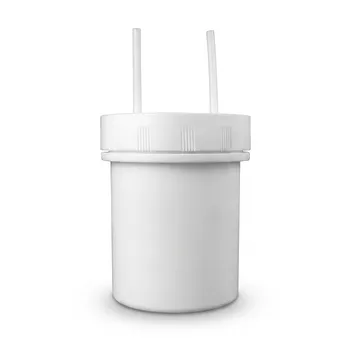
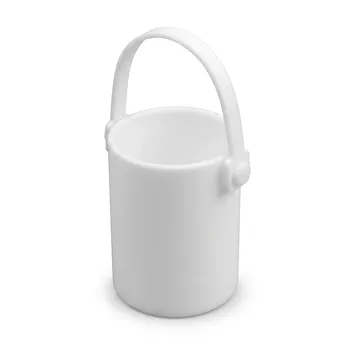
- High Purity Opaque White PTFE Chemical Storage Barrels and Customizable Fluoropolymer Reaction Sampling Vessels
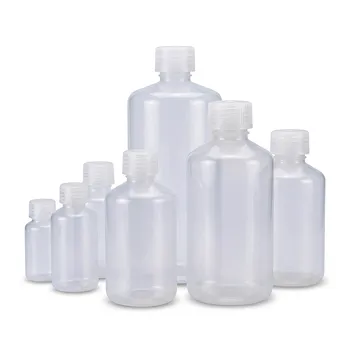
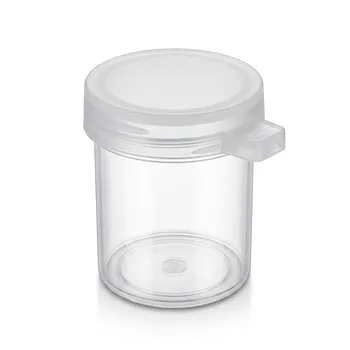
- Semiconductor Electronic Grade PFA Sampling Bottle for Ultrapure Reagent Storage and Trace Analysis
- Corrosion Resistant PTFE Sampling Spoon and Cleaning Basket for Acid Tank Reagent Handling
- Custom PTFE Digestion Tubes and High Purity Polytetrafluoroethylene Centrifuge Vessels 60ml for Trace Analysis
- Custom PTFE Conical Sample Cell Fluoropolymer Triangular Container Chemical Resistant Low Background Labware
People Also Ask
- What key inherent material properties make PTFE fluoropolymers suitable for demanding lab applications? Discover chemical inertness, thermal stability, and more for reliable storage and reactions.
- What toxicological hazards and safe handling protocols must be established when PTFE fluoropolymer reaction vessels are subjected to pyrolysis temperatures? Learn essential safety measures now.
- How does thixotropic flow behavior affect liquid formulation storage in PTFE chemical storage tanks and containers? Maximize Stability with PTFE
- Why is fluorination via PTFE degradation thermally different from oxide formation when processing reactive metal formulations in custom PTFE vessels? Key safety insights for high-risk reactions
- Why do PTFE fluoropolymer laboratory vessels and containers exhibit superior chemical resistance against harsh solvents and corrosive acids compared to standard plastic labware? Discover the molecular secrets