All Questions
Why Are Ptfe Washers Resistant To Water And Moisture? Unlocking The Power Of Hydrophobic Sealing
Discover how PTFE's non-polar molecular structure provides superior water and chemical resistance, making it ideal for harsh environments.
How Do Ptfe Washers Provide Electrical Insulation? Ensure Reliable Circuit Protection
Discover how PTFE washers prevent shorts & leakage with high dielectric strength, ideal for harsh environments in medical, semiconductor, and lab equipment.
What Are The Durability Benefits Of Ptfe Washers? Achieve Unmatched Chemical & Thermal Resistance
Explore the key durability benefits of PTFE washers, including extreme chemical inertness, wide temperature tolerance, and superior wear resistance.
How Does Low Friction Benefit Mechanical Systems Using Ptfe Washers? Boost Efficiency & Lifespan
Learn how PTFE washers reduce wear, lower energy consumption, and extend equipment life through self-lubrication and minimal friction.
Why Are Non-Stick Properties Important In Ptfe Washers? Prevent Adhesion And Ensure Reliability
Discover why PTFE washer non-stick properties are vital for easy maintenance, low friction, and chemical resistance in demanding applications.
What Makes Ptfe Washers Suitable For High-Temperature Environments? Superior Thermal & Chemical Stability
Discover why PTFE washers excel in high-heat applications up to 260°C (500°F) with unmatched chemical resistance and low friction.
How Does Chemical Resistance Benefit Ptfe Washers? Ensure Unmatched Reliability In Harsh Environments
Discover how PTFE washers' chemical inertness prevents leaks, contamination, and failure when exposed to acids, bases, and solvents, ensuring long-term system integrity.
What Material Are Ptfe Washers Made From? Unlocking The Power Of Ptfe For Demanding Seals
PTFE washers are made from Polytetrafluoroethylene (Teflon™), offering unmatched chemical resistance, wide temperature stability, and low friction.
What Are The Main Advantages Of Ptfe Washers In Industrial Applications? Unlock Superior Chemical & Thermal Performance
Discover the key benefits of PTFE washers: extreme chemical inertness, wide temperature range (-200°C to +260°C), and low friction for demanding industrial uses.
What Are Some Common Grades Of Ptfe Used In Fabrication? Choose The Right Material For Your Application
Explore virgin, glass-filled, carbon-filled, and bronze-filled PTFE grades. Learn how fillers enhance strength, wear resistance, and thermal properties.
What Types Of Components Are Commonly Manufactured From Ptfe? Seals, Bearings, Insulators & More
Explore common PTFE components like seals, bearings, and insulators. Learn how PTFE's chemical resistance, low friction, and electrical insulation benefit your industry.
What Are The Advantages Of Using Ptfe Machined Parts? Solve Demanding Engineering Challenges
Discover the key advantages of PTFE machined parts: low friction, chemical inertness, high-temperature stability, and electrical insulation for demanding industries.
What Are Some Common Ptfe Fabrication Processes? Understand Compression Molding, Cnc Machining, And Extrusion
Learn about PTFE fabrication processes like compression molding, CNC machining, and extrusion. Understand why PTFE requires unique handling compared to other plastics.
What Are The Chemical Resistance Properties Of Ptfe? Unmatched Inertness For Demanding Applications
Learn why PTFE is inert to most chemicals, including acids, bases, and solvents, and understand its few specific limitations for safe use.
What Are The Electrical Properties Of Ptfe? Discover Unmatched Insulation Performance
Explore PTFE's electrical properties: high dielectric strength, low dielectric constant, and extreme resistivity for reliable performance in demanding applications.
What Is Ptfe And What Are Its Key Properties? Unlock Unmatched Chemical And Thermal Resistance
Discover the core properties of PTFE: extreme chemical inertness, high temperature stability, low friction, and excellent dielectric strength.
What Are Some Examples Of Chemicals With Excellent (A) Resistance For All Filler Types In Filled Ptfe? | Key Compatible Chemicals
Discover the wide range of chemicals, including acids, solvents, and salts, that exhibit excellent resistance with all common Filled PTFE filler types.
What Do The Ratings A, B, And C Indicate In The Chemical Resistance Table For Filled Ptfe? A Guide To Material Safety
Learn what A, B, and C ratings mean for Filled PTFE chemical resistance to ensure material compatibility and prevent component failure.
How Does The Chemical Resistance Of Filled Ptfe Compare To Virgin Ptfe? A Guide To Material Selection
Learn the key differences in chemical resistance between Virgin and Filled PTFE to select the right material for your application's specific environment.
Which Substances Is Ptfe Not Chemically Resistive To? Avoid These Extreme Conditions
Learn the specific substances that can degrade PTFE, including alkali metals and fluorinating agents, and the critical conditions required for a reaction.
What Is The Chemical Resistance Of Virgin Ptfe? Unmatched Inertness For Harsh Chemical Environments
Discover why Virgin PTFE is one of the most chemically inert materials, resistant to nearly all acids, bases, and solvents, with key exceptions explained.
Why Are Ptfe Rods Suitable For Medical Applications? Unmatched Safety And Sterilization Performance
Discover why PTFE rods are ideal for medical use due to their biocompatibility, chemical inertness, thermal stability, and low-friction surface.
How Are Ptfe Rods Utilized In Electronic And Electrical Applications? Unlock Superior Performance & Reliability
Discover how PTFE rods provide unmatched electrical insulation, high-frequency performance, and thermal stability for demanding electronics.
What Are The Mechanical Applications Of Ptfe Rods? Solve Friction And Corrosion Problems
Learn how PTFE rods are machined into self-lubricating bearings, seals, and gaskets for demanding low-friction, high-temperature, and corrosive environments.
How Are Ptfe Rods Used In The Chemical Industry? Ensure Safety And Reliability In Corrosive Environments
Explore how machined PTFE rods create seals, valves, linings, and more, providing unmatched chemical inertness and low friction for chemical processing.
What Are The Two Types Of Ptfe Rods And Their General Applications? Choose The Right Ptfe For Your Project
Learn the difference between pressed and molded PTFE rods and their applications in chemical processing, mechanical seals, and electrical insulation.
What Are The Additional Characteristics Of Ptfe Rods? Unlock Superior Performance In Harsh Environments
Explore PTFE rod properties: exceptional electrical insulation, chemical inertness, low friction, and safety for demanding industrial applications.
What Are The Key Properties Of Ptfe Rods? A Guide To Extreme Performance Materials
Explore the key properties of PTFE rods: extreme temperature range, chemical inertness, low friction, and superior electrical insulation.
What Are Ptfe Rods And How Are They Manufactured? A Guide To Their Properties And Production
Learn how PTFE rods are made via extrusion and sintering, and discover their key properties like chemical resistance and low friction for industrial use.
What Industries Commonly Use Ptfe Bushings, And Why? Solve Critical Engineering Challenges
Discover why PTFE bushings are essential in food, medical, aerospace, chemical, and automotive industries for their self-lubrication and chemical resistance.
What Types Of Additives Can Be Used With Ptfe Bushings? Enhance Performance For Demanding Applications
Learn how glass, carbon, graphite, and MoS2 additives boost PTFE bushing strength, wear resistance, and thermal performance for critical applications.
Can Ptfe Bushings Operate Without Lubrication? Achieve Maintenance-Free Performance In Harsh Environments.
Learn how PTFE bushings provide self-lubrication, reducing maintenance, preventing contamination, and operating reliably from -200°C to +260°C.
What Is The Coefficient Of Friction For Virgin Ptfe? Achieve Superior Low-Friction Performance For Your Bushings
Virgin PTFE has a remarkably low coefficient of friction (0.05-0.10), offering self-lubrication, extreme temperature stability, and chemical resistance for bushings.
Why Is Ptfe Considered Chemically Inert, And Why Is This Beneficial For Bushings? Ensure Reliability In Harsh Chemical Environments
Learn how PTFE's molecular structure provides superior chemical inertness, preventing corrosion and contamination in bushings for demanding industries.
How Do High Pv Grades Of Ptfe Perform In Demanding Applications? Excel In High-Speed, High-Load Environments
Discover how high PV (filled) PTFE grades deliver superior wear resistance and stability for demanding applications like bearings and bushings.
What Is The Maximum Continuous Operating Temperature For Virgin Ptfe, And What Considerations Are Necessary At This Temperature? Designing For High-Temp Performance
Virgin PTFE's max continuous temperature is 260°C. Learn key design considerations for mechanical strength & creep resistance at high temperatures.
What Are The Key Advantages Of Ptfe Bushings For High-Speed And High-Temperature Applications? Unlock Maintenance-Free Performance
Discover how PTFE bushings offer self-lubrication, thermal stability up to 260°C, and chemical inertness for demanding high-speed applications.
How Do Peek And Ptfe Compare In Terms Of Friction And Chemical Compatibility? Choose The Right High-Performance Polymer
Compare PEEK vs. PTFE for chemical resistance and friction. Learn which polymer is best for high-pressure, high-temperature, or highly corrosive applications.
What Are The Pressure And Temperature Limits For Ptfe Backup Rings? A Guide To Selecting The Right Material
Learn the pressure (up to 5,800 psi) and temperature (-328°F to 500°F) limits for PTFE backup rings, including virgin vs. filled grades.
What Are The Pressure And Temperature Limits For Peek Backup Rings? Achieve Superior Sealing In Extreme Conditions
Learn the high-pressure (20,000 psi) and high-temperature (500°F) limits of PEEK backup rings for demanding sealing applications.
What Are The Key Factors To Consider When Choosing A Backup Ring Material? Ensure Seal Integrity In High-Pressure Systems
Learn how to select the right backup ring material (PTFE, PEEK, Nylon) based on pressure, temperature, and chemical compatibility for optimal seal performance.
What Challenges Should Be Identified For An O-Ring Application? A Guide To Ensuring Seal Success
Learn to identify O-ring application challenges like chemical exposure, temperature extremes, and pressure to prevent seal failure and ensure reliability.
What Are The Key Considerations When Choosing An O-Ring? A Guide To Reliable Sealing Performance
Learn how to select the right O-ring by evaluating material, size, and application demands like chemical compatibility, temperature, and pressure.
Why Are Ptfe Bushes Considered Indispensable In Modern Industrial Applications? Achieve Unmatched Reliability
Discover how PTFE bushes provide self-lubrication, extreme chemical resistance, and thermal stability to reduce maintenance and prevent contamination.
How Are Ptfe Bushes Manufactured To Ensure Quality? A Guide To Precision And Reliability
Learn the key steps in manufacturing high-quality PTFE bushes, from raw material purity to precision CNC machining and rigorous quality control.
In Which Industries Are Ptfe Bushes Commonly Used? A Guide To High-Performance Applications
Discover the key industries using PTFE bushes, including chemical processing, automotive, aerospace, and food/pharma, for superior performance and reliability.
What Are The Benefits Of Ptfe Bushes Being Self-Lubricating? Achieve Maintenance-Free, High-Efficiency Motion
Discover how self-lubricating PTFE bushes eliminate external lubricants, reduce maintenance, and enable reliable operation in critical environments.
How Do The Lightweight And Durable Properties Of Ptfe Bushes Benefit Industrial Use? Boost Efficiency & Cut Costs
Learn how PTFE bushes' lightweight design and extreme durability improve equipment efficiency, reduce energy use, and lower maintenance costs in demanding industries.
What Makes Ptfe Bushes Suitable For High-Temperature Applications? Unlock Reliability In Extreme Heat
Discover why PTFE bushes excel in high-heat environments with a high melting point, thermal stability, and retained low friction up to 260°C.
Why Are Ptfe Bushes Preferred In Harsh Chemical Environments? Ensure Unmatched Reliability And Low Friction
Discover why PTFE bushes excel in corrosive environments with superior chemical inertness, self-lubrication, and thermal stability for industrial applications.
How Does The Low Coefficient Of Friction In Ptfe Bushes Benefit Industrial Applications? Reduce Wear & Maintenance
Discover how PTFE bushes' low friction and self-lubricating properties extend equipment life, cut maintenance, and prevent contamination in industrial settings.
What Are The Key Advantages Of Ptfe Bushes Over Traditional Materials? Achieve Maintenance-Free Reliability
Discover how PTFE bushes offer self-lubrication, chemical resistance, and extreme temperature stability to eliminate maintenance and prevent failure.
What Are Ptfe Bushes And What Are They Commonly Used For? Essential Components For Demanding Applications
Discover the uses and benefits of PTFE bushes: self-lubricating, chemically inert bearings for harsh environments in industrial, chemical, and electrical systems.
What Are The Key Advantages Of Using Ptfe Instrumentation Tube Fittings? Superior Performance In Extreme Conditions
Discover why PTFE tube fittings excel with unmatched chemical resistance, extreme temperature stability, and high-pressure integrity for demanding applications.
Why Is Ptfe's Flexibility Important In High-Pressure Applications? Ensure A Perfect Seal And System Integrity
Learn how PTFE's flexibility creates a reliable seal in high-pressure systems, preventing leaks and ensuring long-term performance with its unique properties.
How Does Ptfe's Pressure Resistance Compare To Other Materials? Unmatched Performance For Demanding Systems
PTFE withstands up to 10,000 psi, offering superior pressure, chemical, and thermal resistance compared to other polymers and elastomers.
What Is The Temperature Range That Ptfe Instrumentation Tube Fittings Can Withstand? A Guide To Extreme Thermal Performance
PTFE tube fittings operate from -328°F to 500°F (-200°C to 260°C). Learn how temperature affects performance for reliable sealing.
What Is The Significance Of Ptfe's Chemical Inertness In Instrumentation Systems? Ensure Unmatched System Integrity And Accuracy
Discover how PTFE's chemical inertness prevents contamination, guarantees measurement accuracy, and ensures long-term reliability in demanding instrumentation systems.
What Makes Ptfe Instrumentation Tube Fittings Highly Reliable And Durable? Superior Chemical & Thermal Resistance
Discover why PTFE tube fittings offer unmatched reliability with superior chemical inertness, extreme temperature stability, and long-term durability.
In What Industries Are Ptfe Instrumentation Tube Fittings Commonly Used? Ensuring Purity And Chemical Resistance
Explore the key industries that rely on PTFE tube fittings for chemical inertness, high purity, and temperature stability in critical applications.
How Are Ptfe Slide Bearings Installed In Construction Projects? A Guide To Methods & Best Practices
Learn the 4 primary PTFE slide bearing installation methods: full welding, tack welding, bolting, and mortar embedment. Ensure success with key principles.
What Are The Maintenance Requirements For Ptfe Slide Bearings? Ensure Long-Term, Maintenance-Free Performance
Learn why PTFE slide bearings are maintenance-free and the critical installation and inspection steps needed to ensure their long-term reliability.
Why Are Ptfe Slide Bearings Superior To Conventional Expansion Plates And Rollers? Achieve Maintenance-Free Structural Movement
Discover how PTFE slide bearings offer low friction, self-lubrication, and corrosion resistance for reliable, long-term structural movement solutions.
How Do Ptfe Slide Bearings Handle Thermal, Seismic, And Differential Movements? Ensure Structural Resilience
Learn how PTFE slide bearings use low-friction sliding to manage thermal expansion, seismic energy, and settlement, protecting structures from stress.
What Are The Key Advantages Of Ptfe Slide Bearings In Construction? Achieve Maintenance-Free Structural Movement
Discover how PTFE slide bearings offer near-frictionless movement, extreme durability, and zero maintenance for long-term structural integrity in construction.
Are Ptfe Slide Bearings Customizable? Tailor Performance For Your Unique Engineering Challenges
Learn how to customize PTFE slide bearings for size, load, temperature, and material to solve complex structural and thermal problems.
What Types Of Movements Can Ptfe Slide Bearings Accommodate? Handling Thermal, Seismic, And Structural Shifts
Learn how PTFE slide bearings manage thermal expansion, seismic shifts, and structural movements in bridges and large-scale construction projects.
How Does The Installation Of Ptfe Slide Bearings Reduce Project Time And Costs? Achieve Faster, Lower-Cost Construction
Discover how PTFE slide bearings cut project time and costs with simple installation, zero maintenance, and predictable long-term performance.
What Installation Methods Are Available For Ptfe Slide Bearings? Choose The Right Method For Your Structure
Explore PTFE slide bearing installation: full welding, tack welding, bolting, and mortar embedment for steel and concrete structures.
In What Ways Do Ptfe Slide Bearings Enhance Structural Integrity? Achieve Resilient, Low-Friction Support
Learn how PTFE slide bearings manage movement, dissipate stress from thermal expansion & seismic activity, and ensure long-term structural durability.
How Do Ptfe Slide Bearings Ensure Consistent Performance? Discover The Science Of Reliable, Maintenance-Free Motion
Learn how PTFE slide bearings deliver consistent performance with low friction, self-lubrication, and chemical inertness for reliable, maintenance-free operation.
What Advantages Do Ptfe Slide Bearings Offer In Terms Of Corrosion And Heat Loss? Boost System Longevity & Efficiency
Learn how PTFE slide bearings prevent galvanic corrosion and minimize heat loss through superior electrical and thermal insulation properties.
What Makes Ptfe Slide Bearings More Space And Weight Efficient? Replace Complex Mechanics With A Simple, Lightweight Pad
Discover how PTFE slide bearings use material science for high-load capacity in a compact, maintenance-free design, ideal for civil engineering.
How Do Ptfe Slide Bearings Compare In Load Capacity To Traditional Bearings? Superior Support For High-Load, Low-Speed Applications
Discover why PTFE slide bearings excel under immense structural loads in bridges and buildings, offering maintenance-free operation and long-term reliability.
Why Are Ptfe Slide Bearings Considered Maintenance-Free? The Key To Long-Term Reliability
Discover how PTFE's self-lubricating properties and chemical resistance eliminate routine maintenance, making slide bearings ideal for harsh environments.
What Are The Main Benefits Of Ptfe Slide Bearings? A Low-Maintenance, High-Performance Alternative
Discover the key advantages of PTFE slide bearings over traditional rollers, including maintenance-free operation, superior load capacity, and corrosion resistance.
What Additional Construction Applications Exist For Ptfe Beyond Slide Bearings? Leverage Ptfe For Thermal Breaks & Washers
Explore PTFE's use in construction for thermal breaks, washers, and separators. Learn how its low friction and chemical inertness solve complex engineering challenges.
What Are The Two Primary Types Of Ptfe Used In Slide Bearings And Their Respective Applications? Choose The Right Grade For Your Load And Environment
Learn the key differences between Virgin and Reinforced PTFE for slide bearings. Make the right choice for high-load structural or sensitive chemical applications.
How Do Ptfe Slide Bearings Accommodate Thermal And Seismic Movements? Control Structural Movement With Low-Friction Design
Learn how PTFE slide bearings use a low-friction interface to safely dissipate thermal expansion and seismic energy, protecting structures from stress damage.
What Operational Advantages Do Ptfe Slide Bearings Offer In Construction Projects? Achieve Maintenance-Free Structural Movement
Explore PTFE slide bearings' low friction, high load capacity, and durability for cost-effective, long-term structural solutions in construction.
What Design Considerations Are Important For Ptfe Slide Bearing Implementation? Achieve Long-Lasting, Low-Friction Performance
Learn key PTFE slide bearing design factors: load calculation, material selection, thermal expansion, installation methods, and surface protection for reliability.
What Are The Installation Methods For Ptfe Slide Bearings? Select The Right Method For Your Structure
Explore the 4 primary PTFE slide bearing installation methods: bolting, full welding, tack welding, and mortar embedment. Learn how to choose based on your structural materials and requirements.
What Are The Main Construction Applications For Ptfe Slide Bearings? Ensure Structural Integrity For Bridges And Buildings
Explore the key uses of PTFE slide bearings in bridges, buildings, and pipelines to manage thermal expansion, seismic loads, and structural movement.
How Do Ptfe Slide Bearings Compare To Traditional Expansion Plates? Superior Performance & Lower Lifetime Cost
PTFE slide bearings outperform traditional plates with lower friction, zero maintenance, and superior chemical/weather resistance for long-term reliability.
What Are The Key Material Properties That Make Ptfe Ideal For Slide Bearings? Low Friction & Maintenance-Free Performance
Discover why PTFE's low friction, self-lubrication, and chemical inertness make it the top choice for durable, maintenance-free slide bearings.
What Are Ptfe Slide Bearings And What Is Their Primary Function In Construction? Manage Structural Movement Safely
Discover how PTFE slide bearings use low-friction surfaces to safely accommodate thermal expansion, seismic shifts, and settlement in construction.
What Are The Cost And Availability Differences Between Ptfe And Stainless Steel Impellers? A Guide To Material Selection
Compare PTFE vs. stainless steel impellers: cost, availability, chemical resistance, and lifespan. Make the right choice for your application.
How Do Stainless Steel Impellers Compare To Ptfe Impellers In Terms Of Non-Stick Properties? Prevent Residue & Buildup
PTFE impellers offer vastly superior non-stick properties vs. stainless steel for sticky substances, ensuring purity and consistent mixing performance.
What Are The Non-Stick Properties Of Ptfe Impellers? Achieve Purity & Prevent Buildup In Critical Mixing
Learn how PTFE impellers' exceptional non-stick properties prevent residue, ensure process purity, and handle sticky materials like adhesives and polymers.
Can Both Ptfe And Stainless Steel Impellers Be Sterilized In An Autoclave? Yes, And Here's How To Choose.
Learn why PTFE and stainless steel impellers are autoclave-safe and how to select the right material for your mixing application.
What Are The Limitations Of Ptfe Impellers In Terms Of Durability? Balancing Chemical Resistance And Mechanical Wear
Explore the key durability limitations of PTFE impellers, including susceptibility to mechanical wear and a strict thermal ceiling of 260°C (500°F).
What Are The Strength And Durability Characteristics Of Stainless Steel Impellers? Superior Mechanical & Thermal Performance
Explore the strength, heat resistance, and durability of stainless steel impellers versus PTFE for high-speed, abrasive, and high-temperature mixing.
What Are Common Applications Of Ptfe O-Rings? Ideal For Extreme Chemical & Temperature Seals
Explore PTFE O-ring uses in chemical, medical, and aerospace for superior chemical inertness, extreme temperature tolerance, and static sealing reliability.
Why Are Ptfe O-Rings Suitable For Food Production Machinery? Ensuring Purity And Performance
Discover why FDA-compliant virgin PTFE O-rings are ideal for food machinery, offering chemical inertness, temperature resistance, and non-stick properties.
Why Don't Ptfe O-Rings Swell? Discover The Key To Unmatched Chemical Stability
Learn why PTFE O-rings resist swelling due to their hydrophobic, inert molecular structure, ensuring dimensional stability in harsh chemical environments.
What Temperature Range Can Ptfe O-Rings Withstand? Unlock Extreme Thermal Performance From -200°C To 260°C
Learn the precise temperature range of PTFE O-rings, from cryogenic -200°C to high-heat 260°C, and how construction affects performance.
What Makes Ptfe O-Rings Durable Over Time? The Secret To Long-Lasting Seals In Harsh Conditions
Discover why PTFE O-rings offer unmatched chemical inertness, extreme temperature stability, and low compression set for superior long-term sealing performance.
What Are The Key Advantages Of Ptfe O-Rings? Superior Chemical & Thermal Resistance
Discover the key benefits of PTFE O-rings, including unmatched chemical inertness, extreme temperature tolerance, and low friction.
How Does Ptfe Compare To Elastomeric Materials For O-Rings? A Guide To Extreme Sealing
PTFE vs. elastomer O-rings: Learn when to choose PTFE for extreme chemical and thermal resistance, and when elastomers are better for dynamic sealing.
What Are O-Rings And Their Primary Function? The Key To Leak-Free Sealing In Any System
Learn how O-rings work, their core sealing principle, and how to select the right material for your application's temperature and chemical resistance.
Related Products
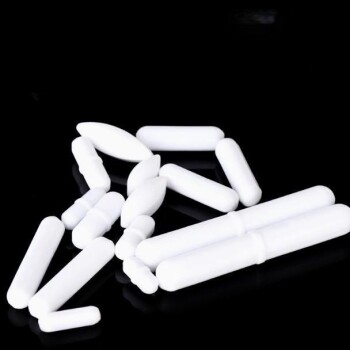
Custom PTFE Teflon Parts Manufacturer PTFE Magnetic Stirring Bar
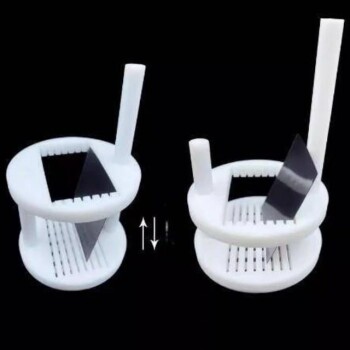
Custom PTFE Teflon Parts Manufacturer Adjustable Height Flower Basket
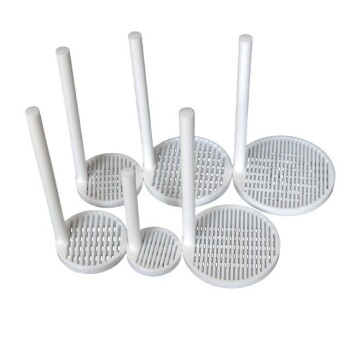
Custom PTFE Teflon Parts Manufacturer PTFE Cleaning Rack
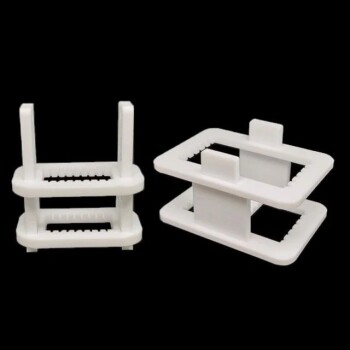
Custom PTFE Teflon Parts Manufacturer Conductive Glass Substrate Cleaning Rack
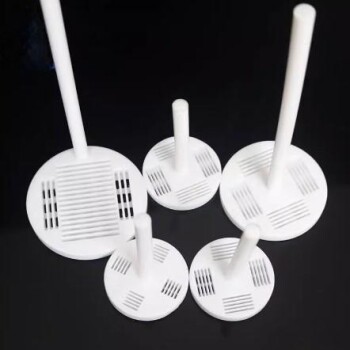
Custom Machined Molded PTFE Teflon Parts Manufacturer for Laboratory ITO FTO Conductive Glass Cleaning Flower Basket
