All Questions
What Is Ptfe And Why Is It Suitable For O-Rings? Achieve Unmatched Chemical & Temperature Resistance
Discover why PTFE is the ideal material for O-rings in harsh environments, offering superior chemical inertness, high-temperature stability, and low friction.
What Factors Should Be Considered When Choosing Between Solid Teflon O-Rings And Teflon Encapsulated O-Rings?
Compare solid vs. encapsulated Teflon O-rings for chemical resistance, sealing force, and durability. Choose the right seal for your application.
In What Applications Are Teflon Encapsulated O-Rings Most Suitable? Ideal For Harsh Chemical Seals
Discover where Teflon encapsulated O-rings excel: sealing aggressive chemicals in static applications with superior chemical resistance and reliability.
In What Applications Are Solid Teflon O-Rings Most Suitable? Maximize Performance In Extreme Conditions
Learn when to use solid Teflon O-rings for superior chemical resistance, extreme temperature tolerance, and low friction in demanding applications.
What Are The Disadvantages Of Teflon Encapsulated O-Rings? Key Weaknesses And Safer Alternatives
Learn the main drawbacks of Teflon encapsulated O-rings, including physical fragility, limited elasticity, chemical vulnerabilities, and higher cost.
What Are The Advantages Of Teflon Encapsulated O-Rings? Superior Sealing For Extreme Conditions
Discover the key benefits of Teflon encapsulated O-rings, including unmatched chemical resistance, extreme temperature tolerance, and low friction.
What Are The Disadvantages Of Solid Teflon O-Rings? Key Limitations For Reliable Sealing
Understand the key drawbacks of solid PTFE O-rings, including lack of elasticity, cold flow, and installation challenges, to prevent seal failure.
What Are The Advantages Of Solid Teflon O-Rings? Achieve Unmatched Chemical & Thermal Resistance
Discover the key benefits of solid Teflon O-rings, including extreme chemical inertness, wide temperature tolerance, and low friction for static seals.
What Are The Main Differences Between Solid Teflon O-Rings And Teflon Encapsulated O-Rings? Choose The Right Seal For Harsh Environments
Compare solid vs. encapsulated Teflon O-rings: chemical resistance, flexibility, temperature range, and application suitability for reliable sealing.
How Is The Quality Of Ptfe Parts Ensured? A Full Lifecycle Guide To Precision
Learn how PTFE part quality is ensured from raw material synthesis to final testing, including machining, annealing, and rigorous inspections.
Can Ptfe Machined Parts Be Customized? Tailor High-Performance Components For Your Needs
Learn how to customize PTFE parts for chemical inertness, low friction, and high heat resistance. Ideal for semiconductor, medical, and lab applications.
What Industries Use Ptfe V-Rings? Critical Sealing Solutions For Demanding Applications
Discover why chemical, pharmaceutical, food & beverage, and automotive industries rely on PTFE V-Rings for unmatched chemical resistance, temperature tolerance, and purity.
Why Choose Ptfe V-Ring Seals? Unmatched Reliability For Extreme Conditions
Discover how PTFE V-Ring seals provide superior chemical resistance, extreme temperature tolerance, and low friction for demanding industries.
What Are The Key Features Of Ptfe V-Rings? Master Sealing In Extreme Environments
Discover the 5 key features of PTFE V-Rings, including unmatched chemical resistance, extreme temperature tolerance, and low friction.
What Are The Applications Of Ptfe V-Rings? Sealing Solutions For Extreme Environments
Explore the key applications of PTFE V-Rings in high-speed, chemical, and extreme temperature environments for reliable sealing performance.
Are Ptfe V-Rings Customizable? Engineer A Perfect Seal For Your Unique Application
Discover how PTFE V-Rings can be customized in size, shape, and material composition for superior performance in demanding environments.
What Material Is Used To Make Ptfe V-Rings? Pure Ptfe For Superior Chemical & Thermal Sealing
PTFE V-Rings are made from pure Polytetrafluoroethylene for unmatched chemical resistance, low friction, and a wide temperature range.
What Is Another Name For Ptfe V Ring? It's Also Known As A Teflon V Ring
Learn the key synonyms for a PTFE V Ring, including Teflon V Ring and TFE V Ring, to ensure you source the right component.
What Are The General Safety Precautions When Cleaning Teflon Residue? Protect Your Team And Equipment
Learn the critical safety steps for cleaning industrial Teflon residue, including ventilation, PPE, and non-metallic tools to prevent toxic fumes and equipment damage.
How Can Purging Compounds Assist In Cleaning Teflon Residue? A Step-By-Step Guide To Effective Equipment Cleaning
Learn how purging compounds loosen Teflon residue for easier removal. Discover the complete cleaning process, including mechanical methods and thermal shock.
What Is The Thermal Shock Method For Cleaning Teflon Residue? Safely Remove Stubborn Ptfe Buildup
Learn how thermal shock cleaning uses rapid temperature changes to remove hardened Teflon residue from metal components. Understand the risks and alternatives.
What Chemical Solvents Can Be Used To Clean Teflon Residue? The Safer, More Effective Alternatives
Discover why solvents fail to dissolve cured PTFE (Teflon) residue and learn the practical, safer mechanical removal methods that actually work.
What Is The High-Temperature Decomposition Method For Cleaning Teflon Residue? A Guide To High-Risk, High-Efficacy Removal
Learn how to safely remove stubborn Teflon (PTFE) residue using high-temperature decomposition, a method involving heating to 500°C with critical safety protocols.
What Are The Challenges Of Cleaning Teflon Residue From A Screw And Barrel? A Guide To Safe, Effective Removal
Learn why Teflon residue is so difficult to remove from extruders and discover safe, effective cleaning methods to protect your equipment and personnel.
What Flange Types Are Ptfe Envelope Gaskets Compatible With? Versatile Sealing For Every Industry
Learn about PTFE envelope gasket compatibility with glass-lined, cast iron, metal, concrete, and other flanges for superior chemical resistance and sealing performance.
What Are The Advantages Of Ptfe Envelope Gaskets? Achieve Superior Chemical Sealing & Purity
Discover how PTFE envelope gaskets combine chemical inertness with mechanical strength for reliable sealing in corrosive, high-purity, and demanding applications.
What Are The Main Benefits Of Ptfe Envelope Gaskets? Achieve Superior Chemical Resistance And Sealing Integrity
Discover the key benefits of PTFE envelope gaskets, including unmatched chemical resistance, durability, and purity for sensitive applications.
What Material Are Ptfe Envelope Gaskets Made From? A Guide To Their Composite Construction
PTFE envelope gaskets are composite seals combining a PTFE outer layer for chemical resistance with a resilient inner core for mechanical strength.
What Are Ptfe Envelope Gaskets Used For? Protect Delicate Flanges & Seal Aggressive Chemicals
Learn how PTFE envelope gaskets combine chemical inertness with mechanical compliance to seal glass-lined, plastic, and FRP flanges in harsh environments.
What Are Some Applications Of Ptfe In The Medical Field? Key Uses In Implants & Medical Devices
Explore critical PTFE applications in medicine, including cardiovascular grafts, surgical instruments, and catheters, leveraging its biocompatibility and low friction.
Why Is Ptfe An Excellent Material For Coating Machine Parts? Achieve Superior Performance & Durability
Discover how PTFE coatings reduce friction, resist chemicals, and provide thermal stability to protect machine parts in harsh industrial environments.
What Industries Benefit From Using Ptfe Rod In Bearings And Bushings? Enhance Performance In Demanding Environments
Discover how aerospace, chemical, medical, and industrial sectors use PTFE rod for bearings and bushings to solve friction, corrosion, and temperature challenges.
What Are The Machining Advantages Of Ptfe Rod? Achieve Cost-Effective, Complex Parts
Explore the key machining benefits of PTFE rod, including low friction, easy shaping, and superior surface finishes for efficient custom part production.
Why Is Dimensional Stability Important For Ptfe Rod In Heavy-Load Applications? Prevent Failure & Ensure Reliability
Learn why PTFE's dimensional stability is critical for heavy-load applications, preventing mechanical failure and maintaining precise tolerances.
What Are The Self-Lubricating Properties Of Ptfe Rod? Achieve Low-Friction, Maintenance-Free Performance
Discover how PTFE rod's inherent low friction and non-stick surface eliminate the need for external lubricants in bearings, seals, and bushings.
How Does Ptfe Rod Perform In Chemically Harsh Environments? Unmatched Chemical Resistance For Demanding Applications
Discover why PTFE rod is the industry standard for chemical resistance, offering inertness against acids, bases, solvents, and extreme temperatures.
What Makes Ptfe Rod Suitable For High-Temperature Applications? Unlock Its Unique Thermal And Chemical Resilience.
Discover why PTFE rod excels in high-temp environments up to 260°C, maintaining chemical inertness, low friction, and dimensional stability under heat stress.
What Industries Commonly Use Ptfe And Nylon Bushings And Thrust Washers? Select The Right Material For Your Application
Explore the key industries using PTFE and nylon bushings and washers. Learn how to choose the right material based on temperature, chemical, and moisture requirements.
What Are The Electrical Conductivity And Chemical Resistance Properties Of Ptfe And Nylon? Key Differences For Your Application
Compare PTFE vs. nylon for electrical insulation and chemical resistance. Learn how moisture affects their performance to make the right material choice.
What Are The Mechanical Properties Of Ptfe And Nylon In Bushings And Thrust Washers? A Guide To Material Selection
Compare PTFE vs. Nylon for bushings and washers: friction, load capacity, wear resistance, and creep. Choose the right material for your application.
What Are The Operating Temperature Ranges For Ptfe And Nylon? Choose The Right Polymer For Extreme Or Moderate Heat
PTFE operates from -200°C to 260°C, while nylon maxes at 104°C. Learn which polymer is best for your application's thermal and mechanical needs.
How Do Ptfe And Nylon Differ In Terms Of Water Interactivity? Key Differences For Component Stability
PTFE repels water (hydrophobic), ensuring dimensional stability, while nylon absorbs it (hygroscopic), causing swelling. Learn which to choose for your application.
What Are The Key Properties Of Ptfe And Nylon In Bushings And Thrust Washers? Select The Right Material For Your Application
Compare PTFE vs. nylon for bushings and thrust washers. Understand friction, load capacity, chemical resistance, and cost to make the best choice for your needs.
What Are The Benefits Of Glass-Filled Ptfe Sheet? Achieve Superior Strength And Wear Resistance
Discover how glass-filled PTFE offers enhanced mechanical properties, including superior wear resistance, increased strength, and reduced creep.
What Makes Molded Ptfe Sheet A Cost-Effective Option? Reduce Long-Term Costs With Superior Durability
Molded PTFE sheet offers long-term cost savings through unmatched chemical resistance, superior sealing, and versatility, minimizing downtime and replacement needs.
What Are The Advantages Of Expanded Ptfe Sheet? Achieve Superior Sealing Reliability And Chemical Resistance
Discover the key benefits of expanded PTFE (ePTFE) sheet, including superior cold flow resistance, chemical inertness, and high-temperature stability for demanding applications.
What Are The Different Styles Of Ptfe Gasket Materials Available? Choose The Right Type For Your Application
Compare Virgin PTFE, Filled PTFE, and Expanded PTFE (ePTFE) gasket materials. Select the right style for your pressure, temperature, and flange conditions.
What Types Of Applications Are Ptfe Gaskets Suitable For? The Ultimate Guide For Extreme Environments
Explore PTFE gasket applications in chemical, pharmaceutical, and food industries. Learn about chemical resistance, temperature stability, and purity requirements.
What Are The Key Characteristics Of Ptfe Gasket Materials? Engineered For Extreme Chemical & Thermal Resistance
Explore the core properties of PTFE gaskets: exceptional chemical inertness, wide temperature range, and low friction. Learn how to select the right type for your application.
Why Is Ptfe Suitable For Mechanisms That Rotate Or Slide? Achieve Maintenance-Free, Low-Friction Motion
Discover why PTFE's ultra-low friction, self-lubrication, and chemical resistance make it ideal for durable, low-maintenance sliding and rotating parts.
What Types Of Components Can Be Made From Ptfe? Discover High-Performance Seals, Bearings & More
Explore the types of PTFE components like seals, gaskets, bearings, and insulators. Learn how their unique properties solve demanding engineering challenges.
What Machining Processes Can Be Used For Ptfe? Master Cnc Turning, Milling & Drilling
Learn how to machine PTFE with CNC turning, milling, and drilling. Discover key techniques for managing thermal expansion and achieving precise tolerances.
Related Products
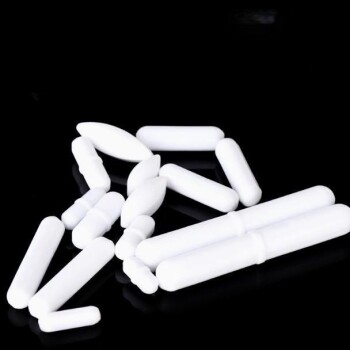
Custom PTFE Teflon Parts Manufacturer PTFE Magnetic Stirring Bar
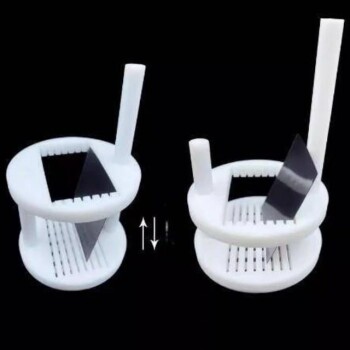
Custom PTFE Teflon Parts Manufacturer Adjustable Height Flower Basket
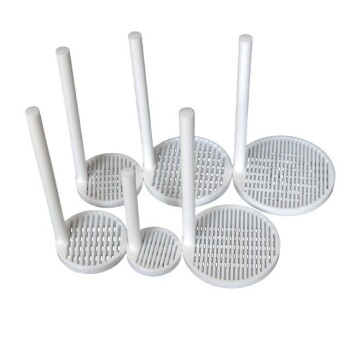
Custom PTFE Teflon Parts Manufacturer PTFE Cleaning Rack
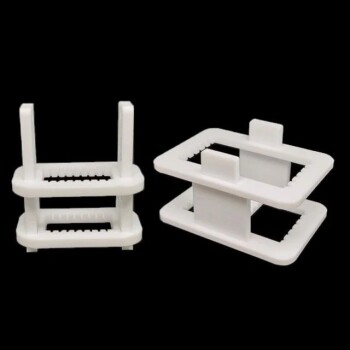
Custom PTFE Teflon Parts Manufacturer Conductive Glass Substrate Cleaning Rack
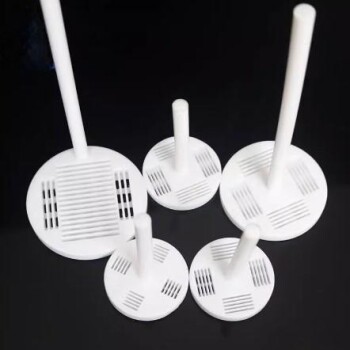
Custom Machined Molded PTFE Teflon Parts Manufacturer for Laboratory ITO FTO Conductive Glass Cleaning Flower Basket