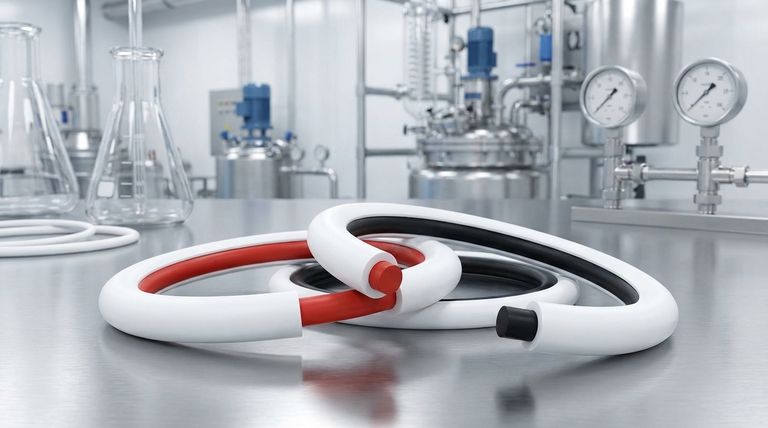
At their core, the primary advantage of a Teflon encapsulated O-ring is its ability to provide a robust seal in environments where a standard elastomer O-ring would quickly fail. This design combines the superior chemical inertness and temperature resistance of a seamless Teflon (PTFE/FEP) outer jacket with the flexibility and compression force of an inner elastomeric core, such as Silicone or FKM. It effectively gives you the best of both worlds for the most demanding applications.
The crucial takeaway is that you are not just choosing a material, but a composite system. This system leverages a protective, chemically-impervious shell to shield a resilient, flexible core, creating a seal that survives extreme chemicals and temperatures without sacrificing its physical sealing capability.
The Core Principle: A Two-Part Solution
To understand the advantages, you must first understand the fundamental design. A standard O-ring made of a single material, like FKM, must balance chemical resistance with elasticity. Encapsulated O-rings separate these duties.
The Protective Teflon Jacket
The outer shell is a seamless layer of Teflon, typically FEP or PFA. This jacket is the component that comes into direct contact with the media. Its primary role is to provide a near-universal barrier against chemical attack and extreme temperatures.
The Resilient Elastomer Core
The inner core is what gives the O-ring its "life" and sealing force. Since it is completely protected by the Teflon jacket, the core material can be chosen specifically for its mechanical properties, such as its ability to rebound after compression (compression set), rather than its chemical resistance.
Key Advantages in Demanding Environments
This dual-material construction delivers specific, critical benefits that make it an essential component in fields like chemical processing, pharmaceuticals, and aerospace.
Unmatched Chemical Resistance
The seamless Teflon encapsulation is inert to almost all industrial chemicals, including aggressive acids, solvents, bases, and petroleum spirits. This prevents the swelling, hardening, or degradation that would destroy a standard elastomer O-ring.
Extreme Temperature Tolerance
By combining a thermally stable Teflon jacket with a silicone or FKM core, these O-rings can function effectively in a vast temperature range. They can withstand continuous high heat (up to 260-300°C / 500-572°F) and cryogenic lows, far beyond the limits of most single elastomers.
Ultra-Low Coefficient of Friction
Teflon is famous for its non-stick, low-friction surface. This significantly reduces the force needed for installation and is a major advantage in dynamic applications where it minimizes friction and wear on moving parts. This property also aids in easy removal and prevents sticking during maintenance.
Prevents Contamination and Leaks
The smooth, non-porous surface of the Teflon jacket resists material buildup and is easy to clean, which is critical in sanitary applications. This seamless surface also provides an excellent barrier against leaks, especially for gases.
Understanding the Trade-offs and Limitations
While powerful, encapsulated O-rings are a specialized solution, not a universal replacement for standard O-rings. Their unique construction introduces specific trade-offs.
Reduced Elasticity and Memory
The Teflon jacket is far more rigid than a standard elastomer. This means the O-ring has less "bounce back" or memory. Once compressed, it does not recover its original shape as effectively as a simple rubber O-ring.
Higher Compression Force Required
Because of the jacket's stiffness, a greater "squeeze" or compression force is required to achieve an effective seal. Gland designs must account for this to ensure sufficient force is applied.
Sensitivity to Surface Imperfections
The lack of high elasticity makes encapsulated O-rings less forgiving of scratches, nicks, or rough finishes on the sealing surfaces. A smooth, well-prepared gland is essential for a leak-free seal.
When to Specify a Teflon Encapsulated O-Ring
Choosing this type of O-ring depends entirely on whether the demands of your application justify its specific strengths and trade-offs.
- If your primary focus is chemical compatibility: The encapsulated O-ring is your safest and most reliable choice for sealing against aggressive or corrosive media.
- If your primary focus is extreme temperature ranges: Its ability to handle both high heat and cryogenic lows makes it superior to most standard elastomers.
- If your primary focus is reducing friction or preventing sticking: The Teflon surface is ideal for dynamic seals or systems requiring frequent, easy disassembly.
- If your primary focus is a general-purpose, cost-effective seal: A standard FKM or NBR O-ring is likely a more practical and forgiving choice for non-aggressive environments.
By understanding this unique design, you can confidently specify the right seal for even the most challenging engineering problems.
Summary Table:
| Advantage | Key Benefit |
|---|---|
| Chemical Resistance | Inert to aggressive acids, solvents, and bases; prevents degradation. |
| Temperature Tolerance | Withstands extreme heat (up to 300°C) and cryogenic temperatures. |
| Low Friction | Non-stick surface reduces installation force and wear in dynamic applications. |
| Contamination Prevention | Smooth, seamless surface is easy to clean and provides an excellent leak barrier. |
Solve Your Toughest Sealing Challenges with KINTEK
Are you designing for an environment with aggressive chemicals, extreme temperatures, or demanding cleanliness standards? The unique advantages of Teflon encapsulated O-rings are exactly what you need for reliable performance.
KINTEK specializes in manufacturing high-performance PTFE components, including custom encapsulated O-rings. We serve the semiconductor, medical, laboratory, and industrial sectors, where precision and durability are non-negotiable. Our expertise ensures you get a seal that is perfectly suited to your application's specific pressures, temperatures, and media.
Let us bring our precision production and custom fabrication capabilities to your project—from prototypes to high-volume orders.
Contact KINTEK today to discuss your sealing requirements and receive a quote.
Visual Guide

Related Products
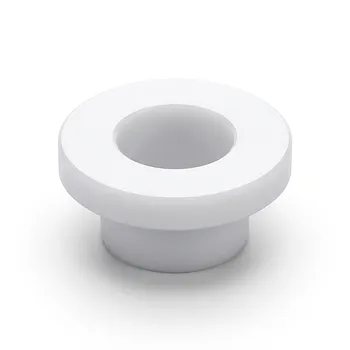
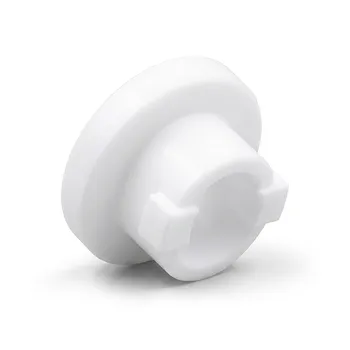
- Customizable High Temperature Resistant Anti Static PTFE Insulating Gaskets Flame Retardant Corrosion Proof Industrial Seals
- Custom PTFE Insulating Gaskets Corrosion Resistant Teflon Seals Tailored Engineering Plastic Components
- Customizable PTFE Rods for Advanced Industrial Applications
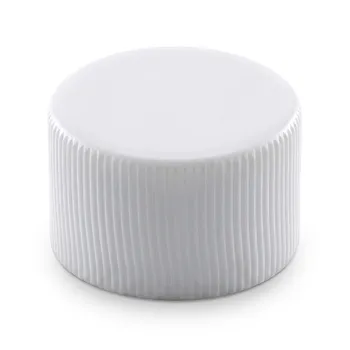
- Custom PTFE Sealing Caps and Corrosion Resistant Low Background Teflon Adapters
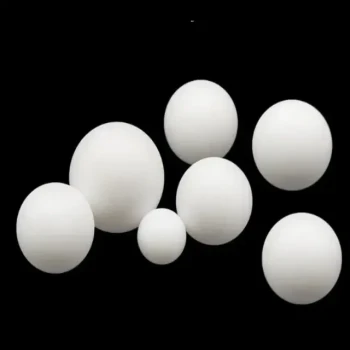
- Custom PTFE Teflon Balls for Advanced Industrial Applications
People Also Ask
- Why is PTFE an ideal material choice for sealing gaskets, valves, and fluid transfer tubing exposed to extremely aggressive chemicals? Discover Its Superior Chemical Resistance and Reliability
- How is PTFE utilized in seals and gaskets? Leverage Its Chemical & Temperature Resistance
- What are the key properties of PTFE that make it suitable for seals and gaskets? Unlock Superior Sealing Performance
- How does the sealing performance of PTFE gaskets benefit industrial applications? Ensure Leak-Free Reliability in Harsh Environments
- What are the best applications for standard PTFE gaskets? Ideal for Chemical & High-Temp Sealing