At their core, PTFE V-Rings are defined by five key features: exceptional chemical resistance, high and low temperature tolerance, an extremely low coefficient of friction, durability, and excellent electrical insulation. These properties stem directly from the unique molecular structure of Polytetrafluoroethylene (PTFE), the material from which they are made.
The central takeaway is that PTFE is a material of extremes. Its value lies not in being a general-purpose solution, but in its unparalleled ability to perform reliably in harsh operational environments where conventional elastomers would quickly fail.
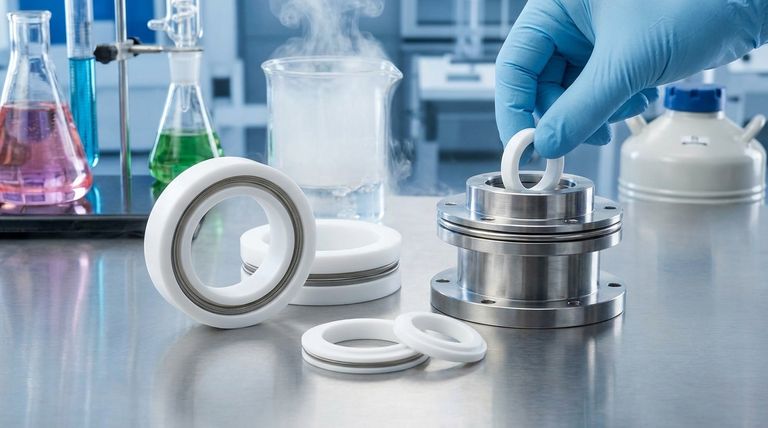
The Defining Characteristics of PTFE Seals
To understand why PTFE V-Rings are chosen for demanding applications, we must look at the fundamental properties of the material itself.
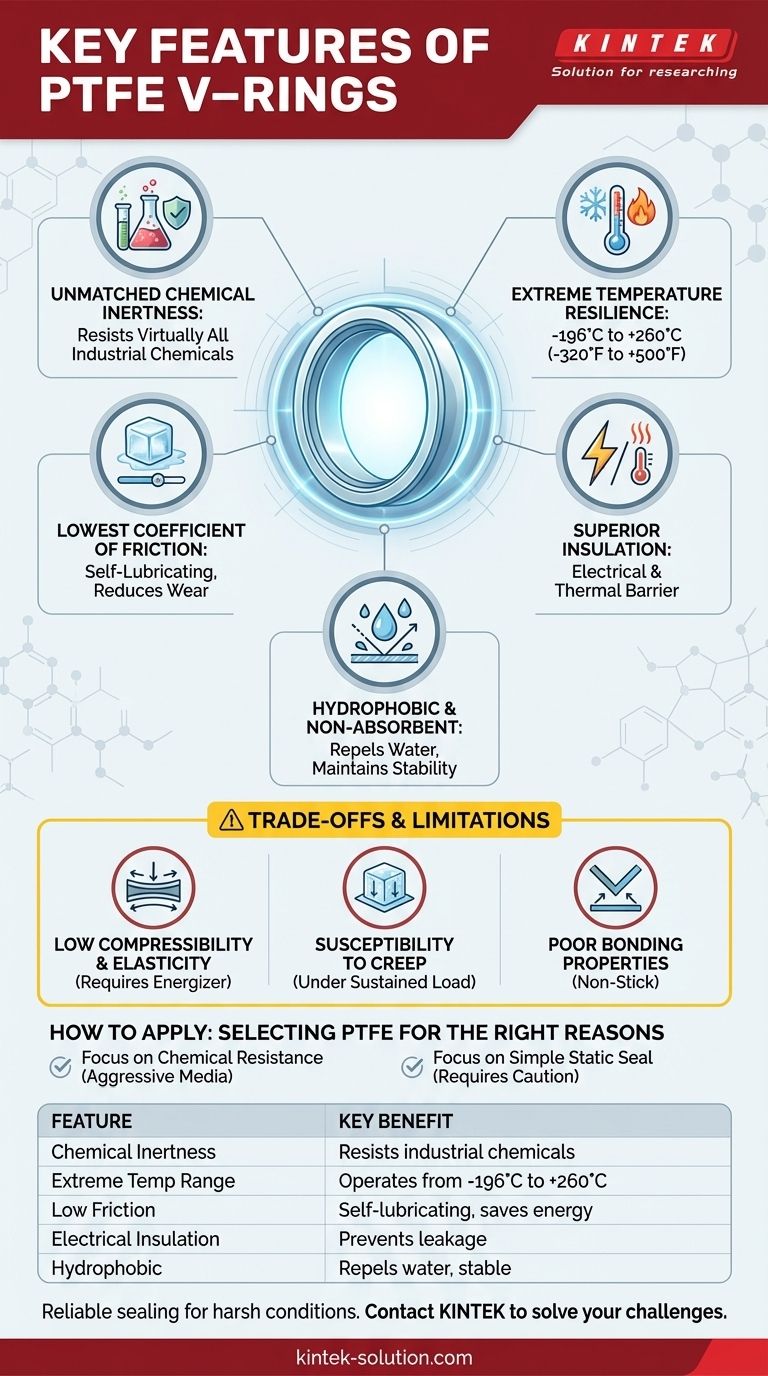
Unmatched Chemical Inertness
PTFE is virtually inert to almost all industrial chemicals, acids, and alkalis. It is highly resistant to corrosive chemicals and is not affected by organic solvents.
This stability makes it an essential choice for seals in chemical processing, pharmaceuticals, and oil and gas industries where exposure to aggressive media is constant.
Extreme Temperature Resilience
PTFE seals operate across an exceptionally wide temperature range, typically cited from -196°C to +260°C (-320°F to +500°F).
This allows them to function effectively in everything from cryogenic applications to high-heat industrial processes, maintaining their flexibility and structural integrity where other materials become brittle or degrade.
The Lowest Coefficient of Friction
PTFE has one of the lowest coefficients of friction of any known solid material, often compared to wet ice on wet ice.
This "slippery" characteristic is critical for dynamic sealing applications. It reduces wear on moving parts, lowers energy consumption, and prevents the "stick-slip" phenomenon common in reciprocating or rotating shafts.
Superior Electrical and Thermal Insulation
As an excellent electrical insulator with high dielectric strength, PTFE is ideal for applications where preventing electrical leakage is crucial.
It is also a thermal insulator, which can be beneficial in systems where you need to minimize heat transfer through the sealing point.
Hydrophobic and Non-Absorbent
PTFE is hydrophobic, meaning it repels water and does not absorb moisture. This ensures its dimensional stability and electrical properties are not compromised in humid or wet environments.
Understanding the Trade-offs and Limitations
No material is perfect. Acknowledging the limitations of PTFE is critical for successful engineering and design.
Low Compressibility and Elasticity
Unlike rubber elastomers, PTFE is a relatively rigid material and exhibits very little "memory" or bounce-back. It is not a true elastomer.
This means that for a seal to be effective, especially under low pressure, a PTFE V-Ring often requires a spring or an O-ring energizer to provide the necessary sealing force against a surface.
Susceptibility to Creep
Under sustained compressive load (preload), especially at elevated temperatures, PTFE can slowly deform over time. This phenomenon, known as creep or "cold flow," must be accounted for in the design of the seal gland.
Poor Bonding Properties
The same non-stick properties that make PTFE so valuable also make it extremely difficult to bond to other materials using adhesives. This must be considered during the assembly design process.
How to Apply This to Your Project
Understanding these properties allows you to select PTFE V-Rings for the right reasons, ensuring reliability and longevity.
- If your primary focus is sealing against aggressive chemicals: PTFE's chemical inertness is its most powerful feature, making it the default choice for caustic or solvent-rich environments.
- If your primary focus is performance in extreme temperatures: PTFE maintains its critical properties in both cryogenic and high-heat conditions where elastomers would fail.
- If your primary focus is reducing friction in a dynamic system: The self-lubricating, low-friction surface of PTFE minimizes wear and ensures smooth operation without external lubricants.
- If your primary focus is a simple, compliant static seal: Be cautious. The low elasticity of PTFE means an energized seal design is often required to maintain a consistent sealing force.
Ultimately, choosing PTFE is a decision to prioritize resilience in the most challenging operational conditions.
Summary Table:
| Feature | Key Benefit |
|---|---|
| Chemical Inertness | Resists virtually all industrial chemicals, acids, and alkalis. |
| Extreme Temperature Range | Operates from -196°C to +260°C (-320°F to +500°F). |
| Low Coefficient of Friction | Self-lubricating; reduces wear and energy consumption. |
| Excellent Electrical Insulation | Ideal for preventing electrical leakage. |
| Hydrophobic & Non-Absorbent | Repels water; maintains stability in humid environments. |
Need a reliable sealing solution for harsh conditions?
PTFE V-Rings from KINTEK are engineered to excel where other seals fail. We specialize in manufacturing high-performance PTFE components—including custom seals, liners, and labware—for the semiconductor, medical, laboratory, and industrial sectors.
Our precision production ensures your components meet exact specifications, from prototypes to high-volume orders.
Contact KINTEK today to discuss how our PTFE expertise can solve your most demanding sealing challenges.
Visual Guide
Related Products
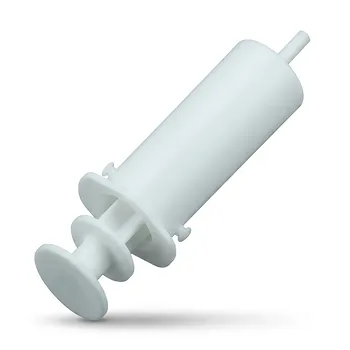
- High Purity Laboratory Grade PTFE Syringe Chemical Resistant Fluoropolymer Injector for Trace Analysis
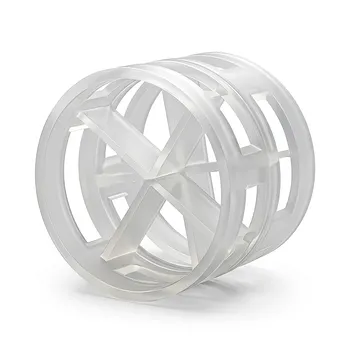
- High Purity PFA PTFE Raschig Rings for Chemical Distillation Tower Packing in Acidic and Alkaline Environments
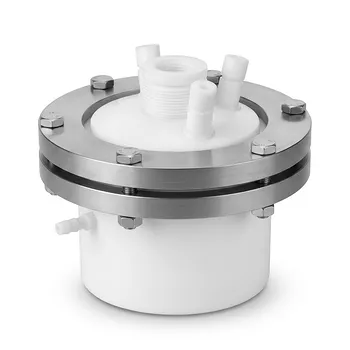
- Customizable PTFE Reaction Vessel with Electric Stirring Paddle and Buchner Funnel Vacuum Filtration System
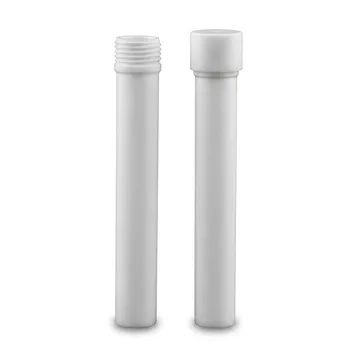
- Customizable PTFE Rods for Advanced Industrial Applications
- High Corrosion Resistant PTFE Faucet Polytetrafluoroethylene Valve for Chemical Storage Drums and Fluid Transfer Systems Customizable Industrial Grade
People Also Ask
- In what medical devices is PTFE commonly used? Essential Components for Safety and Reliability
- What are the benefits of PTFE's chemical resistance? Achieve Unmatched Reliability in Corrosive Environments
- What chemicals is PTFE resistant to? Discover Its Near-Universal Chemical Inertness
- How do surfactants like APFO impact TFE polymerization, and why are alternatives essential?
- What chemical endgroups and off-gases are produced during the molecular weight reduction of PTFE fluoropolymers, and what safety measures are required?