The primary benefit of glass-filled PTFE sheet is a dramatic improvement in mechanical properties. By adding glass fibers, typically at a 25% concentration, the material gains significant rigidity, strength, and resistance to wear and creep when compared to standard, unfilled PTFE. This makes it an ideal choice for more demanding industrial applications where pure PTFE would deform or fail.
Adding glass fibers transforms PTFE from a soft, compliant material into a robust engineering plastic engineered for high-load and high-wear scenarios. However, this enhancement comes with a critical trade-off: increased abrasiveness against mating surfaces.

The Core Mechanical Enhancements
The addition of glass fibers fundamentally changes the performance profile of PTFE, targeting its inherent mechanical weaknesses.
Superior Wear and Abrasion Resistance
Glass fibers act as a reinforcing agent within the softer PTFE matrix. This composition provides excellent resistance to wear, making it suitable for dynamic components like self-lubricating bearings, seals, and compressor rings.
Increased Strength and Stiffness
Compared to unfilled PTFE, the glass-filled variant is significantly stronger and more rigid. This enhanced compressive strength and stiffness prevents the material from easily deforming under load.
Reduced Creep and Deformation
Standard PTFE has a tendency to "creep" or slowly deform under sustained pressure. The embedded glass fibers provide dimensional stability, drastically reducing this effect and ensuring components hold their shape over time.
Preserving PTFE's Key Advantages
While its mechanical properties are boosted, glass-filled PTFE retains many of the core benefits that make PTFE such a versatile material.
Excellent Chemical Inertness
Glass-filled PTFE remains chemically neutral and highly resistant to aggressive media and oxidizing environments. This makes it a reliable choice for components used in chemical processing.
Wide Operational Temperature Range
The material maintains its exceptional performance across an extreme temperature range, functioning reliably from as low as -268°C to as high as +260°C.
Understanding the Critical Trade-offs
Selecting this material requires a clear understanding of its limitations. The very properties that provide benefits also introduce potential drawbacks.
Increased Abrasiveness
This is the most critical consideration. The hard glass fibers that improve wear resistance can also abrade and damage softer mating surfaces.
Glass-filled PTFE should only be used against very hard surfaces, typically shafts or components with a hardness greater than 62 Rockwell C, to prevent premature wear of the mating part.
Reduced Flexibility
The increase in rigidity and stiffness naturally means a loss of flexibility. Glass-filled PTFE is not suitable for applications that require the material to bend or conform to irregular shapes.
Alternatives for Softer Surfaces
For applications requiring enhanced wear resistance against softer metals, consider a PTFE blend with 15% glass and 5% Molybdenum Disulfide (MoS2). The MoS2 acts as a lubricant, reducing the abrasiveness of the glass fibers while retaining much of the added strength and stiffness.
How to Choose the Right PTFE for Your Application
Your specific goal will determine whether glass-filled PTFE is the correct choice.
- If your primary focus is maximum chemical resistance and flexibility: Standard, unfilled (virgin) PTFE remains the superior option.
- If your primary focus is high wear resistance against a hardened steel surface: Glass-filled PTFE is an excellent and cost-effective choice.
- If your primary focus is wear resistance against a softer metal surface: A Glass/MoS2-filled PTFE blend is a much safer selection to avoid damaging your equipment.
- If your primary focus is dimensional stability under a sustained load: The anti-creep properties of glass-filled PTFE make it the ideal candidate.
By understanding this balance of enhanced mechanical performance and its associated trade-offs, you can confidently select the right material for your engineering challenge.
Summary Table:
| Property | Glass-Filled PTFE | Standard PTFE |
|---|---|---|
| Wear Resistance | Excellent | Low |
| Compressive Strength | High | Low |
| Creep Resistance | Excellent | Low |
| Flexibility | Low | High |
| Abrasiveness | High (Abrasive) | Low (Non-Abrasive) |
Need a high-performance PTFE solution for your demanding application?
At KINTEK, we specialize in manufacturing precision PTFE components, including custom glass-filled PTFE parts for the semiconductor, medical, laboratory, and industrial sectors. Our expertise ensures you get the right material properties—whether you need maximum wear resistance, dimensional stability, or a custom blend for softer mating surfaces—from prototypes to high-volume production.
Let's engineer the perfect solution for your project. Contact our experts today for a consultation!
Visual Guide

Related Products
- Custom Graphite Filled PTFE Rods for Advanced Industrial Applications
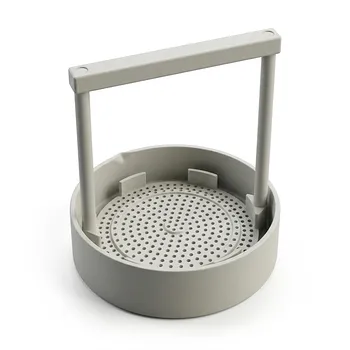
- Custom PTFE Teflon Parts Manufacturer Conductive Glass Substrate Cleaning Rack
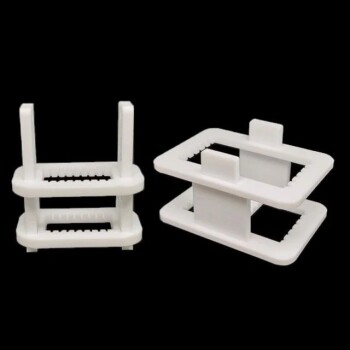
- Custom Machined Molded PTFE Teflon Parts Manufacturer for Laboratory ITO FTO Conductive Glass Cleaning Flower Basket
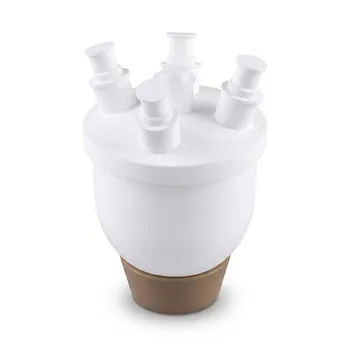
- High Performance Customizable PTFE Reaction Vessel and Corrosion Resistant Polytetrafluoroethylene Flask for Chemical Laboratory Use
- Custom PTFE Insulating Gaskets and Corrosion Resistant Fluoropolymer Seals for Industrial Electrical Applications
People Also Ask
- What property does graphite filler provide to PTFE? Achieve Superior Self-Lubrication and Low Friction
- How does graphite-filled PTFE perform? A Guide to Superior Self-Lubricating Components
- What are the advantages of Polytetrafluoroethylene (PTFE) with Graphite Fill? Enhance Wear and Friction Performance
- How do graphite fillers enhance PTFE? Achieve Superior Self-Lubrication and Wear Resistance
- How is graphite filler typically used in PTFE? Enhance Wear Resistance & Self-Lubrication