Yes, absolutely. The ability to customize PTFE slide bearings is one of their most significant advantages over conventional, off-the-shelf solutions. This adaptability allows engineers and designers to create bespoke components that meet the precise structural, thermal, and dimensional requirements of a specific project.
The core takeaway is that PTFE slide bearing customization goes far beyond simple size and shape. It involves a holistic approach to engineering, allowing for adjustments in material composition, load capacity, and thermal performance to solve unique and demanding challenges.

The Scope of Customization: Beyond Simple Dimensions
Understanding the full range of available modifications is key to leveraging the power of PTFE slide bearings. The customization is not a single feature but a collection of variables that can be tailored to a specific application.
Adjusting Size and Shape
This is the most fundamental level of customization. PTFE bearings can be machined into non-standard shapes to fit irregularly shaped housings or unique architectural footprints, ensuring a precise fit where a standard rectangular or circular bearing would fail.
Modifying Material Composition
The materials themselves are a primary point of customization. This can involve using alternative PTFE grades for different performance characteristics or changing the backing plate material (e.g., from carbon steel to stainless steel) for enhanced corrosion resistance.
Tailoring for Specific Loads and Movements
Standard bearings are designed for a specific load and movement range. Custom solutions can be engineered for higher loadings or greater movements, ensuring structural integrity and performance under exceptional stress.
Adapting to Thermal Extremes
PTFE bearings can be designed for specific temperature ranges. Standard configurations often involve a 3mm thick PTFE layer bonded to a backing plate for service up to 130°C. For higher temperatures (up to 200°C), a thicker, 5mm PTFE layer can be recessed into the backing plate to protect the bonding agent. For extreme heat (400-500°C), the PTFE can be replaced entirely with a material like graphite.
Understanding the Key Trade-offs
While customization offers immense flexibility, it requires a clear understanding of the engineering principles and project constraints involved.
The Critical Role of the Backing Plate
The PTFE element handles the low-friction sliding, but the backing plate provides the structural support. Customizing the backing plate's thickness, material, and bolting configuration is just as critical as modifying the PTFE to ensure the entire assembly can handle the intended loads.
Performance vs. Cost
Extensive customization naturally impacts project costs. Tailored designs require more engineering, specialized manufacturing, and potentially more expensive materials than standard, mass-produced options. It's crucial to balance the need for a perfect-fit solution with the project budget.
Manufacturing and Lead Times
Off-the-shelf components are readily available, but custom-machined parts require a longer lead time for design, approval, and fabrication. This timeline must be factored into the overall project schedule to avoid delays.
Making the Right Choice for Your Project
To specify the right custom bearing, you must first define your primary engineering challenge.
- If your primary focus is fitting a non-standard physical space: Prioritize the customization of the bearing's overall shape and dimensions.
- If your primary focus is accommodating extreme temperatures: Specify the PTFE thickness, whether it's recessed, or if an alternative like graphite is needed for high-heat applications.
- If your primary focus is managing exceptional structural loads: Concentrate on the design of the backing plate, including its material, thickness, and bolting pattern.
Ultimately, the inherent adaptability of PTFE makes it a powerful problem-solving material for the most complex engineering designs.
Summary Table:
| Customization Aspect | Key Options & Considerations |
|---|---|
| Size & Shape | Non-standard shapes for irregular housings; precise footprint machining. |
| Material Composition | Different PTFE grades; stainless or carbon steel backing plates for corrosion resistance. |
| Load & Movement | Engineered for higher loadings and greater movements than standard bearings. |
| Thermal Performance | Standard (up to 130°C), high-temp (up to 200°C with 5mm PTFE), extreme heat (400-500°C with graphite). |
| Backing Plate | Critical for structural support; customizable thickness, material, and bolting configuration. |
Ready to solve your unique engineering challenge with a custom PTFE solution?
At KINTEK, we specialize in precision manufacturing of custom PTFE components, including slide bearings, seals, liners, and labware. Whether you're in the semiconductor, medical, laboratory, or industrial sector, our team can fabricate a bearing tailored to your exact specifications—from prototypes to high-volume orders.
Contact our experts today to discuss your project's requirements for load, temperature, and dimensions. Let us help you achieve optimal performance and reliability.
Visual Guide

Related Products
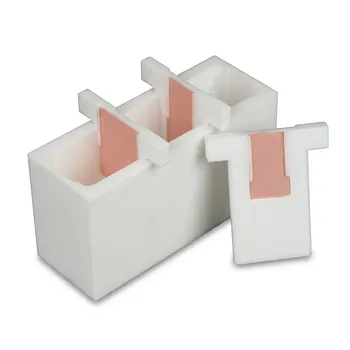
- White PTFE Electrolytic Cell with Movable Slider and Insulated Lid for Fluorine Corrosion Resistance
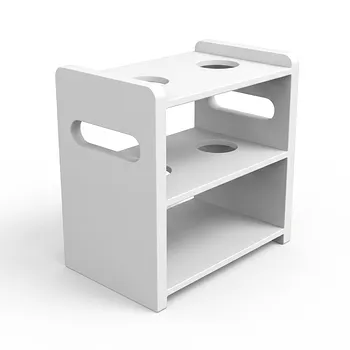
- Customizable PTFE Heat Insulation Plate High Temperature Corrosion Resistant Laboratory Support Layered Multi Tier Stand
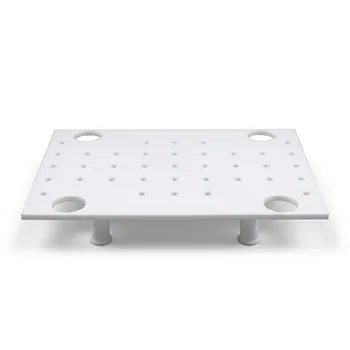
- Custom PTFE Acid Resistant Support Rack for PFA Hydrogen Absorption Systems Multi Hole Configurations
- Customizable PTFE Rods for Advanced Industrial Applications
- Custom PTFE Sleeves and Hollow Rods for Advanced Applications
People Also Ask
- What makes PTFE an ideal construction material for custom electrochemical cells and electronic analytical instrumentation housings? Discover superior chemical resistance and electrical insulation
- How do custom PTFE electrochemical cells improve the accuracy of stability testing for alkaline catalysts compared to glass cells?
- How does the hydrophobicity of PTFE benefit electrochemical measurements? Enhance Stability and Precision in Your Lab
- How are electrolytic cells utilized in the Hall-Héroult process? Optimizing Purity and Energy Efficiency
- What are the primary components required for the construction of a standard electrolytic cell? Essential Hardware Guide