All Questions
What Are The Main Challenges In Machining Teflon (Ptfe)? Overcome Softness, Heat, And Slipperiness
Learn the key PTFE machining challenges: material softness, low friction, and heat sensitivity. Discover strategies for precision and safety.
What Is The Key To Mastering Ptfe Lip Seal Selection For Peak Performance? A Guide To System-Level Design
Learn how to select PTFE lip seals by analyzing temperature, pressure, speed, and media to match the right seal and hardware system for peak performance.
Why Is Professional Consultation Recommended For Custom Seal Solutions? Mitigate Risk And Ensure Operational Integrity
Learn why expert consultation for custom PTFE seals is critical for performance in extreme conditions. Avoid costly failures and optimize your system.
How Should Application-Specific Temperature Requirements Be Assessed For Seal Selection? Avoid Failure With A Complete Thermal Profile
Learn to assess the full thermal range for seal selection, from cold start-up to peak operating temperatures, to prevent degradation and ensure reliability.
What Factors Should Be Considered When Selecting A Ptfe Lip Seal? Optimize Your Sealing System For Reliability
Learn the critical factors for selecting PTFE lip seals: temperature, chemical media, pressure, and speed. Ensure optimal performance and longevity.
What Future Advancements Are Expected In Temperature-Resistant Ptfe Seals? Discover Smarter, Tougher Sealing Solutions
Explore the future of PTFE seals with nanotechnology, smart sensors, and 3D printing for extreme temperature and predictive maintenance applications.
What Are Some Examples Of Specialty Ptfe Formulations And Their Benefits? Enhance Performance With Filled Ptfe
Explore specialty PTFE formulations like glass, carbon, and graphite-filled PTFE. Learn their benefits for wear, creep, and thermal performance.
What Modifications Are Made To Standard Ptfe To Improve Thermal Properties? Enhance Performance With Filled Ptfe
Learn how fillers like glass, carbon, and bronze modify PTFE to improve thermal conductivity, dimensional stability, and creep resistance.
What Are The Benefits Of Advanced Ptfe Compounds For Temperature Challenges? Achieve Unmatched Reliability In Extreme Heat
Discover how advanced PTFE compounds with specialized fillers provide superior thermal stability, mechanical strength, and longevity in demanding applications.
How Should Temperature-Related Seal Performance Issues Be Troubleshooted? A Step-By-Step Guide To Thermal Failure
Learn how to diagnose and solve seal failures caused by high or low temperatures. Ensure material compatibility and prevent costly downtime.
What Are The Common Pitfalls In High-Temperature And Low-Temperature Scenarios For Seals? Avoid Costly Seal Failures
Learn how extreme temperatures cause seal failure through softening, brittleness, and degradation. Discover key material selection strategies for reliability.
What Are The Symptoms Of Temperature-Induced Seal Failure? Diagnose Leaks And Prevent Downtime
Learn to identify the key symptoms of seal failure from high or low temperatures, including hardening, cracking, and permanent deformation.
What Are Symptoms Of Temperature-Induced Ptfe Lip Seal Failure? Identify The Cause Of Your Leaks
Learn to diagnose PTFE seal failure from high/low temperatures. Spot hardening, deformation, and brittleness to prevent costly leaks and downtime.
How Can Ptfe Lip Seals Be Enhanced For Extreme Temperature Performance? Optimize With Fillers & Design
Learn how to enhance PTFE lip seals for extreme temperatures using specialized fillers and optimized geometry to ensure reliability from cryogenic to high-heat.
What Are Some Industrial Applications Of Ptfe Lip Seals In Extreme Temperatures? Ensuring Reliability From Cryogenics To High Heat
Explore PTFE lip seal uses in aerospace, cryogenics, chemical processing & more. Learn how they withstand extreme temperatures where other seals fail.
How Do Speed And Pressure Affect Ptfe Lip Seal Temperature? Manage Heat For Optimal Performance
Learn how speed and pressure increase PTFE lip seal temperature via friction and how to balance these factors to prevent failure.
What Design Considerations Are Important For Ptfe Lip Seals In Extreme Temperatures? | Material, Geometry & Energizer
Learn key PTFE lip seal design strategies for extreme temperatures: material formulation, optimized geometry, and energizer force to ensure reliability.
What Factors Influence A Ptfe Seal's Temperature Capabilities? Maximize Performance In High-Heat Applications
Learn how PTFE seal material, geometry, and operating conditions define temperature limits for reliable sealing in demanding environments.
How Does Ptfe Compare To Other Elastomers In Temperature Resilience? Unmatched Performance From -200°C To 260°C
Explore PTFE's extreme temperature resilience, from -200°C to 260°C, and how it outperforms materials like silicone, FKM, and Nitrile in demanding applications.
How Does Temperature Affect The Performance Of Ptfe Lip Seals? Ensure Reliability From -95°F To 480°F
Learn how temperature extremes impact PTFE lip seals, from thermal expansion and softening to brittleness and cracking, and how to design for reliability.
What Temperature Range Can Standard Ptfe Lip Seals Typically Withstand? A Guide To Extreme-Temp Performance
Standard PTFE seals operate from -54°C to 232°C. Learn how specialized compounds extend this range from -200°C to 260°C for extreme applications.
What Are The Key Properties Of Ptfe For Lip Seals? Master Sealing In Extreme Conditions
Discover the 4 key PTFE properties—low friction, chemical inertness, extreme temperature range, and high-speed capability—that make it ideal for demanding lip seal applications.
How Does Ptfe Compare To Other Non-Stick Materials? The Ultimate Guide To Chemical & Friction Performance
Explore PTFE's unmatched chemical resistance and low friction vs. ceramics, silicone, and other polymers. Find the right non-stick material for your application.
What Industries Benefit Most From Ptfe Coatings? Unlock Superior Performance In Demanding Environments
Discover how PTFE coatings provide non-stick, chemical resistance, and thermal stability for food, automotive, medical, and chemical industries.
Can You Provide An Example Of A Large-Scale Ptfe Application? The Metrodome's 20-Acre Ptfe Roof
Explore the Hubert H. Humphrey Metrodome's PTFE-coated fiberglass roof as a prime example of large-scale PTFE application in architecture.
What Are The Uses Of Ptfe Coatings In The Semiconductor And Electronics Industries? Ensure Purity & Reliability
Explore how PTFE coatings protect semiconductor fabrication from contamination and provide superior electrical insulation for electronics, ensuring purity and signal integrity.
How Do Ptfe Coatings Benefit Industrial Manufacturing? Enhance Equipment Life & Efficiency
Discover how PTFE coatings provide chemical inertness, low friction, and non-stick surfaces to boost durability and cut costs in industrial applications.
What Are The Medical Applications Of Ptfe Coatings? Essential Guide For Safer Medical Devices
Explore how PTFE's biocompatibility, lubricity, and non-stick properties are used in surgical tools, implants, and medical components for better patient outcomes.
How Have Ptfe Coatings Transformed The Food Processing Industry? Boosting Efficiency, Safety & Profitability
Explore how PTFE's non-stick, inert, and heat-resistant properties solve food processing challenges, enhancing hygiene, throughput, and compliance.
What Role Do Ptfe Coatings Play In Automotive Engineering? Boost Engine Efficiency & Durability
Discover how PTFE coatings reduce friction, improve fuel economy, and extend engine life in demanding automotive applications.
How Are Ptfe Coatings Used In The Aerospace Industry? Ensuring Reliability In Extreme Conditions
Explore how PTFE coatings provide critical temperature resistance, chemical inertness, and low friction for aerospace wiring, seals, and fluid systems.
What Are Some Industrial Applications Of Ptfe Coatings? Enhance Performance In Demanding Environments
Explore PTFE coating uses in chemical, automotive, food, and medical industries for corrosion resistance, low friction, and non-stick surfaces.
How Do Ptfe Coatings Prevent Component Failure? Control Friction And Corrosion For Reliable Performance
Learn how PTFE coatings prevent component failure by providing stable low-friction, dry-film lubrication, and a chemically inert barrier against corrosion.
What Advantages Do Ptfe Coatings Offer In Terms Of Durability And Maintenance? Maximize Component Lifespan
Discover how PTFE coatings deliver superior durability, chemical resistance, and low maintenance for industrial components.
How Does Ptfe Perform In Chemical Resistance Applications? Unmatched Inertness For Harsh Environments
Learn why PTFE is the top choice for chemical resistance, withstanding aggressive acids, bases, and solvents while maintaining integrity in extreme conditions.
What Are The Key Benefits Of Ptfe Coatings In Corrosion Resistance? Achieve Unmatched Protection For Your Components
Discover how PTFE coatings provide superior chemical inertness, temperature stability, and a non-stick barrier against acids, bases, and saltwater.
What Are Some Real-World Applications Of Ptfe Coatings? Solve Friction, Corrosion & Contamination
Explore how PTFE coatings are used in aerospace, medical, automotive, and industrial applications for low friction, chemical resistance, and safety.
How Does Ptfe's Hydrophobicity Protect Against Corrosion? Build A Superior Moisture Barrier For Your Equipment
Learn how PTFE's extreme hydrophobicity, chemical inertness, and electrical insulation create a powerful, multi-layered defense against corrosion.
What Makes Ptfe An Excellent Electrical Insulator? Superior Performance For High-Frequency & High-Voltage Applications
Discover why PTFE is a top electrical insulator, offering high dielectric strength, low signal loss, and reliability in harsh environments for electronics.
How Does Ptfe Enhance Durability In Industrial Applications? Achieve Superior Wear Resistance
Discover how PTFE's chemical inertness, low friction, and environmental resilience extend equipment lifespan and reduce maintenance in demanding industries.
How Does Ptfe's Chemical Resistance Benefit Industrial Applications? Boost Equipment Lifespan & Safety
Discover how PTFE's chemical inertness prevents corrosion, reduces downtime, and ensures product purity in demanding industrial environments.
What Temperature Range Can Ptfe Coatings Withstand? From -260°C To +260°C For Extreme Applications
Learn the definitive temperature range for PTFE coatings: -260°C to +260°C. Ideal for high-heat and cryogenic applications in demanding industries.
What Industries Benefit From Ptfe's Non-Stick Properties? Boost Efficiency And Purity
Discover how PTFE's non-stick properties benefit food processing, manufacturing, and packaging industries by preventing adhesion and reducing downtime.
How Does Ptfe's Molecular Structure Contribute To Its Non-Stick Properties? The Science Behind Its Slick Surface
Discover how PTFE's unique fluorine sheath and carbon backbone create an ultra-low energy, non-reactive surface for superior non-stick performance.
What Are The Key Benefits Of Ptfe Coatings? Achieve Unmatched Performance In Extreme Conditions
Discover the key benefits of PTFE coatings: extreme temperature resistance, superior chemical inertness, low friction, and excellent electrical insulation.
Why Is Virgin Ptfe Preferred For Custom Parts? Unmatched Purity For Critical Applications
Learn why virgin PTFE's 100% pure composition ensures superior chemical inertness, electrical insulation, and biocompatibility for custom parts.
What Are The Benefits Of Cnc Machining For Custom Ptfe Applications? Achieve Unmatched Precision & Performance
Discover how CNC machining unlocks PTFE's full potential for custom seals, bushings & insulators in demanding semiconductor, medical & industrial applications.
How Does Ptfe Contribute To Pharmaceutical Manufacturing? Ensure Product Purity And Compliance
Discover how PTFE's chemical inertness, sterility, and durability are essential for pharmaceutical manufacturing, ensuring product purity and regulatory compliance.
What Aerospace Applications Utilize Teflon Plastic Sheets? Critical Components For Extreme Environments
Explore how Teflon (PTFE) sheets are used in aerospace for seals, insulation, and bearings, providing reliability in extreme conditions.
How Does Teflon Benefit The Chemical Processing Industry? Enhance Safety, Purity, And Equipment Life
Discover how Teflon's chemical inertness, high-temperature stability, and low friction protect equipment, prevent leaks, and ensure product purity in harsh chemical environments.
Why Is Teflon's Heat Resistance Important In Food Processing? Ensure Safety And Efficiency
Discover how Teflon's heat resistance up to 500°F ensures food safety, operational efficiency, and product quality in high-temperature food processing.
What Role Do Teflon Plastic Sheets Play In Food Processing? Solve Stickiness & Boost Efficiency
Discover how Teflon (PTFE) sheets enhance food processing with non-stick surfaces, high heat resistance, and food safety for better efficiency and product quality.
How Are Teflon Plastic Sheets Used In The Electronics Industry? For High-Performance Insulation & Protection
Discover how Teflon (PTFE) sheets provide critical electrical insulation, chemical resistance, and low friction for reliable electronics in demanding applications.
What Makes Teflon Plastic Sheets Versatile Across Industries? The Ultimate High-Performance Solution
Discover why Teflon (PTFE) sheets are indispensable. Learn about their extreme chemical resistance, wide thermal stability, low friction, and biocompatibility.
How Does Cnc Machining Contribute To Cost-Efficiency In Ptfe Part Manufacturing? Achieve Precision And Reduce Waste
Discover how CNC machining reduces material waste, eliminates rework, and ensures precision for cost-effective PTFE components in demanding industries.
What Advantages Do Custom Ptfe Parts Offer For Industrial Efficiency? Boost Uptime & Cut Costs
Discover how custom PTFE parts enhance industrial efficiency with superior chemical resistance, low friction, and thermal stability for demanding applications.
What Are The Benefits Of Virgin Ptfe In Medical Devices? Ensure Biocompatibility And Safety
Explore the critical benefits of virgin PTFE for medical devices, including purity, biocompatibility, chemical inertness, and thermal stability.
How Are Custom Ptfe Parts Used In The Automotive Sector? Enhance Vehicle Performance & Durability
Explore how custom PTFE seals, bushings, and gaskets improve fuel efficiency, durability, and reliability in demanding automotive systems.
How Does The Versatility Of Teflon Plastic Sheets Benefit Different Industries? Solve Complex Engineering Challenges
Discover how Teflon's chemical resistance, thermal stability, and low friction enhance durability, safety, and efficiency across industries like semiconductor, medical, and food processing.
What Are The Advantages Of Virgin Ptfe For Industrial Applications? Unmatched Purity & Performance
Discover the key benefits of virgin PTFE, including absolute purity, superior chemical resistance, and low friction for critical industrial applications.
How Is Cnc Machining Used With Teflon Plastic Sheets For Industrial Applications? Achieve High-Performance Custom Parts
Discover how CNC machining creates precise Teflon (PTFE) seals, gaskets, and insulators for demanding industries like semiconductor and medical.
What Are The Benefits Of Teflon's Non-Stick Properties In Industrial Settings? Boost Uptime & Cut Costs
Discover how Teflon's non-stick surface reduces downtime, extends equipment life, and ensures product purity in industrial applications.
How Do The Low Friction Properties Of Teflon Plastic Sheets Enhance Industrial Performance? Reduce Wear & Boost Efficiency
Discover how Teflon's low friction slashes maintenance costs, extends equipment life, and improves energy efficiency in demanding industrial applications.
What Are Some Practical Applications Of Teflon Sheets In High-Temperature Industries? Solve Heat, Friction, And Corrosion Challenges
Discover how Teflon (PTFE) sheets provide heat resistance, non-stick surfaces, and chemical inertness for aerospace, automotive, and industrial applications.
How Does The Heat Resistance Of Teflon Plastic Sheets Benefit High-Temperature Applications? Ensure Unmatched Stability And Reliability
Discover how Teflon (PTFE) sheets maintain dimensional stability & chemical inertness up to 260°C, ideal for seals, gaskets, and precision components.
What Are The Advantages Of Teflon Sheets? Superior Performance In Harsh Environments
Discover why Teflon (PTFE) sheets outperform rubber and metals with superior chemical resistance, high-temperature stability, and a non-stick surface.
How Does The Chemical Resistance Of Teflon Plastic Sheets Benefit Industrial Applications? Ensure Unmatched Reliability In Harsh Environments
Discover how Teflon (PTFE) sheets provide superior chemical resistance, protecting equipment and ensuring purity in demanding industrial processes.
What Are The Key Properties That Make Teflon Plastic Sheets Suitable For Industrial Applications? Unlock Unmatched Performance
Explore Teflon's key industrial properties: extreme thermal stability, chemical inertness, low friction, and non-stick capabilities for demanding applications.
How Does The Fiber Structure Of Expanded Ptfe Gaskets Contribute To Their Performance? Unlock Superior Sealing With Engineered Eptfe
Discover how the unique porous fiber structure of expanded PTFE gaskets provides superior conformability, chemical resistance, and long-term sealing reliability.
What Cost Advantages Do Expanded Ptfe Gaskets Offer? Lower Your Total Cost Of Ownership
Discover how ePTFE gaskets reduce operational costs through simplified inventory, easier installation, and superior long-term reliability.
What Are The Cleanliness Benefits Of Expanded Ptfe Gaskets? Ensure Maximum Purity For Sensitive Applications
Learn how 100% pure expanded PTFE gaskets prevent contamination, protect product integrity, and are ideal for pharmaceutical, food, and lab industries.
How Do Expanded Ptfe Gaskets Compare To Rubber Or Plastic Seals In Terms Of Lifespan? Last Up To 7X Longer
ePTFE gaskets offer superior lifespan (10,000-50,000+ hours) vs. rubber/plastic seals due to unmatched chemical, thermal, and physical stability.
What Makes Expanded Ptfe Gaskets Easy To Handle And Install? Achieve A Perfect Seal On Any Flange
Discover why ePTFE gaskets are easy to install due to softness, compressibility, and on-site customization, ensuring reliable seals on imperfect surfaces.
How Do Expanded Ptfe Gaskets Handle Surface Irregularities? Achieve A Perfect Seal On Imperfect Flanges
Learn how ePTFE gaskets use softness and compressibility to fill cracks and voids, creating a reliable seal on damaged or warped surfaces.
What Are The Compression And Recovery Characteristics Of Expanded Ptfe Gaskets? Achieve Superior Sealing For Delicate Flanges
Learn how ePTFE gaskets use high compressibility (55-80%) and low recovery (15-20%) to create superior, long-lasting seals for fragile or uneven surfaces.
What Chemical Resistance Properties Do Expanded Ptfe Gaskets Have? Achieve Universal Sealing For Aggressive Chemicals
Discover how expanded PTFE gaskets resist nearly all chemicals across the 0-14 pH scale, offering superior sealing for aggressive and high-purity applications.
What Temperature Range Can Expanded Ptfe Gaskets Withstand? From Cryogenic -200°C To High-Temp 260°C
Learn the reliable temperature range for ePTFE gaskets: -200°C to 260°C, with insights on cryogenic flexibility and high-heat stability.
What Are Expanded Ptfe Gaskets And How Are They Made? A Guide To Superior Sealing Performance
Learn how expanded PTFE (ePTFE) gaskets are manufactured and why their unique fibrous structure provides superior sealing for imperfect surfaces.
What Capabilities Exist For Manufacturing Ptfe With Different Methods? A Guide To Polymerization And Fabrication
Explore PTFE manufacturing methods: suspension & dispersion polymerization, compression molding, sintering, and machining for custom parts.
How Does Sintering Affect The Properties Of Ptfe? Control Crystallinity For Hard Or Flexible Parts
Learn how the sintering cooling rate determines PTFE's final properties. Slow cooling creates hard, wear-resistant parts; fast cooling yields flexible, high-flex-life components.
What Role Does Thermal History Play In The Processing Of Ptfe? Master Heat Control For Superior Components
Learn how PTFE's thermal history during sintering and machining dictates crystallinity, hardness, flexibility, and dimensional accuracy.
Why Is Compression Molding Preferred For Certain Ptfe Applications? For Superior Seals And Machinable Stock Shapes
Learn why PTFE's high melt viscosity makes compression molding the ideal process for creating dense, strong seals and stock shapes for machining.
What Are The Differences Between Isostatic And Compression Molding For Ptfe? Choose The Right Method For Your Component
Learn the key differences between isostatic and compression molding for PTFE parts, including impact on material properties like isotropy vs. anisotropy.
How Does The Method Of Ptfe Molding Affect The Performance Of The Parts Produced? Choose The Right Process For Optimal Strength.
Learn how compression vs. isostatic PTFE molding creates directional vs. uniform strength, impacting performance in seals, labware, and machined components.
How Does Carbon Filler Cause Corrosion When Combined With Aluminum? Understanding Galvanic Corrosion Risks
Learn how carbon filler triggers galvanic corrosion in aluminum assemblies and discover effective prevention strategies like anodizing.
Why Might Friction Or Seal Wear Increase Over Time Under Stable Conditions? Uncover The Hidden Causes
Learn why seal wear increases despite stable conditions. Discover the roles of heat buildup, shaft hardening, and abrasive fillers in accelerating wear.
Do Lubricating Agents Impact Particle Generation In Ptfe? Yes, And Here's How To Control It.
Learn how internal and external lubricants affect PTFE particle generation. Discover strategies for minimizing contamination in sensitive applications.
Are Fibrous Fillers Better Than Particulate Fillers In Ptfe? Optimize Your Ptfe Component Performance
Learn the key differences between fibrous and particulate PTFE fillers for wear resistance, compressive strength, and cost-effectiveness in your application.
Are Ptfe Filler Specifications Typically By Weight Or Volume? Unlock The Key To Material Performance
Learn why PTFE fillers are specified by weight but performance is driven by volume. Make informed decisions for your components.
What Is The Radiation Resistance Of Ptfe And Mptfe? Key Insights For Semiconductor & Medical Applications
Learn why PTFE degrades under high-energy radiation like gamma rays, its impact on mechanical properties, and alternatives for radiation-heavy environments.
What Are The Benefits Of Different Spring Types Used In Ptfe Seals? Optimize Sealing Performance & Lifespan
Learn how cantilever, canted coil, and other spring energizers in PTFE seals balance sealing force, friction, and wear for your application.
Does Carbon Fiber-Filled Ptfe Damage Shafts? Ensure Longevity With Proper Material Pairing
Learn how to prevent shaft damage with carbon fiber-filled PTFE by specifying the correct shaft hardness (≥60 HRC) for durable, high-performance rotary systems.
How Does Pctfe Compare To Ptfe For Cryogenic Applications? Choose The Right Material For Extreme Cold
PCTFE vs. PTFE for cryogenics: a guide to superior gas sealing with PCTFE or cost-effective flexibility with PTFE. Make the right choice.
What Is The Best Ptfe Material For Cryogenic Gas Applications? Mptfe Ensures Leak-Proof Sealing
Discover why Modified PTFE (mPTFE) is the superior choice for cryogenic gas applications, offering superior gas impermeability and flexibility.
Does Modified Ptfe (Mptfe) Always Outperform Regular Ptfe In Seal Performance? Make The Right Material Choice
Learn when to choose mPTFE vs. standard PTFE for seals. Understand the trade-offs in performance, cost, and application requirements.
What Is The Smallest Size Ptfe Seal That Can Be Manufactured? Achieve Micro-Scale Sealing For Your Precision Designs
Discover the limits of PTFE seal miniaturization, from 1/16 inch spring-energized seals to manufacturing capabilities for micro-scale applications.
Do Ptfe Backups Provide Chemical Resistance To Rubber O-Rings? The Surprising Truth About Seal Protection
Learn why PTFE backup rings are for mechanical support, not chemical protection. Ensure your O-ring material is chemically compatible to prevent seal failure.
Why Is Ptfe Used As A Coating On Nitrile Seals? Enhance Performance With A Low-Friction Surface
Discover how a PTFE coating on nitrile seals reduces friction, improves chemical resistance, and prevents stick-slip in demanding applications.
What Is The Shelf Life Of Ptfe Seals? Achieve Long-Term Reliability With Chemically Inert Seals
Discover why PTFE seals have an unlimited shelf life due to their chemical inertness and thermal stability, and learn best practices for storage.
What Are The Key Benefits Of Ptfe Oil Seals? Superior Performance In Extreme Conditions
Discover the core advantages of PTFE oil seals, including unmatched chemical resistance, extreme temperature tolerance, and low-friction operation.
Related Products
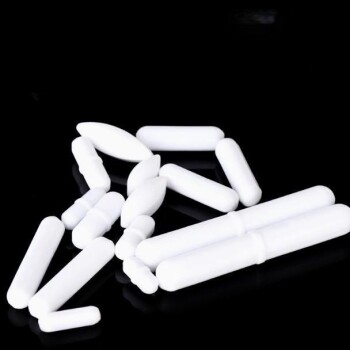
Custom PTFE Teflon Parts Manufacturer PTFE Magnetic Stirring Bar
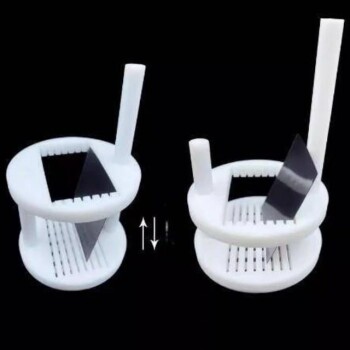
Custom PTFE Teflon Parts Manufacturer Adjustable Height Flower Basket
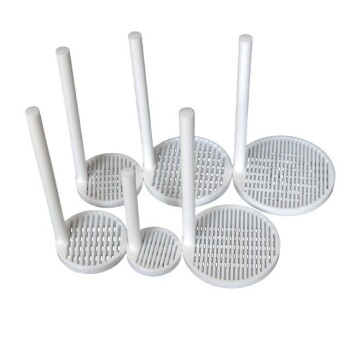
Custom PTFE Teflon Parts Manufacturer PTFE Cleaning Rack
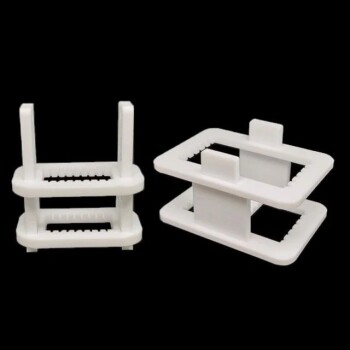
Custom PTFE Teflon Parts Manufacturer Conductive Glass Substrate Cleaning Rack
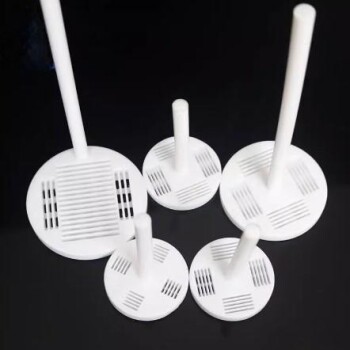
Custom Machined Molded PTFE Teflon Parts Manufacturer for Laboratory ITO FTO Conductive Glass Cleaning Flower Basket