All Questions
What Should Be Considered When Choosing A Manufacturer For Ptfe-Lined Bearings? Ensure Long-Term Reliability And Performance
Learn key factors for selecting a PTFE-lined bearing manufacturer, focusing on bonding expertise, custom engineering, and material validation.
What Are The Key Properties That Make Teflon Sheets Stand Out? Unmatched Performance In Extreme Conditions
Discover the 5 key properties of Teflon (PTFE): non-stick, chemical inertness, high heat resistance, low friction, and electrical insulation.
What Is An Important Characteristic Of A High-Quality Ptfe Liner? It's All About Compressive Strength
Learn why a minimum compressive strength of 40,000 psi is the key indicator of a durable, high-performance PTFE liner for demanding applications.
What Are The Advantages Of Using A Ptfe Liner In Bearings? Achieve Self-Lubricating, Maintenance-Free Performance
Discover how PTFE-lined bearings eliminate external lubrication, reduce friction, prevent contamination, and extend lifespan for maintenance-free operation.
How Does A Ptfe Liner Function In A Spherical Bearing Or Rod End? Achieve Maintenance-Free, Self-Lubricating Performance
Learn how PTFE liners eliminate friction and external lubrication in bearings, providing clean, reliable performance in demanding environments.
What Is The Purpose Of A Ptfe Liner In Spherical Bearings And Rod Ends? Achieve Zero-Maintenance, High-Precision Motion
Learn how a PTFE liner creates a self-lubricating, low-friction surface in bearings, eliminating maintenance and resisting contamination.
What Types Of Ptfe Parts Can Be Manufactured With Quality Control? Precision Bearings, Valves, And More
Learn how quality control ensures reliable PTFE parts like bearings, tubing, and valves for demanding applications in semiconductor, medical, and industrial sectors.
What Industries Commonly Use Ptfe Components? Critical Solutions For Extreme Environments
Discover why PTFE components are vital in semiconductor, medical, chemical, aerospace, and automotive industries for chemical inertness, high temperatures, and low friction.
What Are Important Tips For Machining Ptfe Teflon? Master Sharp Tools, Cooling, And Finesse
Essential PTFE machining tips: Use sharp tools, manage heat with coolant, control speeds/feeds, and minimize clamping to prevent deformation.
What Are The Benefits Of Cnc Machining For Ptfe Parts? Achieve Precision And Performance
Discover how CNC machining unlocks PTFE's full potential for precision, chemical resistance, and complex geometries in demanding applications.
What Are The Main Advantages Of Using Ptfe For Custom Parts? Solve Complex Engineering Challenges
Discover the key benefits of PTFE for custom parts: low friction, chemical inertness, high heat resistance, and excellent electrical insulation.
What Is Cnc Machining Of Ptfe Teflon? Precision Parts For Demanding Applications
Learn how CNC machining creates high-precision PTFE Teflon parts with complex geometries for semiconductor, medical, and industrial applications.
What Are The Benefits Of Integrating Ptfe Into Piping Support Systems? Reduce Friction, Corrosion & Maintenance
Learn how PTFE pipe supports reduce friction, prevent galvanic corrosion, and absorb vibration to lower costs and extend system lifespan.
What Are Ptfe Slide Plates And How Are They Used? Achieve Controlled Movement In Critical Infrastructure
Discover how PTFE slide plates enable safe, low-friction movement for bridges, pipelines, and industrial equipment, preventing structural stress.
What Are Some Alternatives To Teflon For Machining? Optimize Your Material Selection For Specialized Applications
Explore PFA, ECTFE, and PCTFE as alternatives to Teflon (PTFE) for machining. Compare chemical resistance, water absorption, and non-stick properties.
What Are Some Tips For Cnc Machining Teflon? Master Ptfe Machining For Superior Results
Learn expert tips for CNC machining Teflon (PTFE), including tool selection, coolant use, and deburring strategies to overcome material challenges.
Are Colored Ptfe Balls Available, And What Are The Options? Choose The Right Color For Your Application's Needs
Discover how colored PTFE balls indicate specific material properties like wear resistance and conductivity. Learn which color is right for your application.
What Standard Surface Finishes Are Available For Ptfe Balls? Tumbled Vs. Machined For Optimal Performance
Compare PTFE ball surface finishes: tumbled (50-63 µin) for cost-efficiency vs. machined (32 µin) for low friction and high precision.
What Are Some Common Applications Of Teflon Machining? Unlock Performance In Harsh Environments
Explore common Teflon (PTFE) machining applications across medical, aerospace, and industrial sectors. Learn about its benefits and key challenges.
What Are The Typical Tolerances For Ptfe Balls? Achieve Perfect Fit And Performance
Learn about PTFE ball tolerances (diameter & sphericity) for valves, bearings, and more. Match precision to your application's needs.
What Materials Can Ptfe Balls Be Made From? Virgin, Modified, Or Filled Compounds For Specific Performance
PTFE balls are made from virgin PTFE, modified PTFE, or filled compounds (glass, carbon, bronze, stainless steel) to enhance wear, strength, or thermal properties.
What Are The Limitations Of Machining Teflon? Overcoming Burrs, Creep, And Thermal Instability
Learn the key challenges of machining Teflon (PTFE), including burr formation, stress creep, thermal expansion, and safety risks from toxic fumes.
What Size Range Is Available For Ptfe Balls? A Guide From 1/8 Inch To 8 Inches
Discover the standard & custom PTFE ball size ranges (1/8" to 8"), why tolerance is critical, and how to select the right grade for your application.
What Are The Process Advantages Of Machining Teflon? High-Speed Production With Superior Thermal Stability
Discover the key machining advantages of Teflon (PTFE), including high cutting speeds, minimal tool wear, and thermal stability for clean cuts.
What Are Some Common Applications Of Ptfe Balls? Essential Uses In Chemical & Low-Friction Systems
Explore key PTFE ball applications in chemical pumps, valves, bearings, and baths. Learn how their chemical inertness and low friction drive performance.
What Are The Material Advantages Of Machining Teflon? Unlock Unmatched Chemical & Thermal Resistance
Explore the key advantages of Teflon (PTFE): extreme chemical inertness, wide temperature range, low friction, and superior electrical insulation.
What Are The Key Properties Of Ptfe Balls? Unmatched Performance For Extreme Industrial Environments
Discover how PTFE balls' chemical inertness, extreme temperature range, and low friction solve critical challenges in harsh industrial applications.
What Tips Can Help In Using Teflon Sheets Effectively? Achieve Flawless Heat Press Results
Master Teflon sheet use: select the right size, ensure flat placement, maintain cleanliness, and understand heat transfer for perfect results.
What Are The Durability And Reusability Benefits Of Teflon Sheets? Achieve Consistent, Cost-Effective Performance
Discover how Teflon sheets' heat resistance, non-stick surface, and durability lead to lower costs, less waste, and protected equipment.
What Are The Advantages Of Using Teflon Sheets With A Heat Press? Achieve Flawless, Professional Transfers
Discover how Teflon sheets protect garments from scorching, prevent press contamination, and ensure even heat distribution for perfect heat press results.
How Are Teflon Sheets Used In Embroidery? Achieve Professional Results With A Simple Tool
Discover how Teflon sheets protect delicate fabrics and prevent adhesive messes in embroidery, ensuring a flawless, professional finish every time.
How Do Teflon Sheets Prevent Adhesive Build-Up In Screen Printing? Ensure Cleaner Prints & Protect Equipment
Discover how Teflon (PTFE) sheets act as a non-stick barrier in screen printing to prevent ink and adhesive buildup, ensuring consistent quality and easy cleanup.
What Benefits Do Teflon Sheets Provide In Dtg Printing? Achieve Consistent, Professional Prints
Discover how Teflon sheets ensure even heat distribution, prevent scorching, and eliminate ink transfer for superior DTG printing results.
How Are Teflon Sheets Used In Direct-To-Garment (Dtg) Printing? Achieve A Professional, Durable Finish
Learn how a Teflon sheet ensures even heat distribution, prevents scorching, and eliminates ink ghosting for high-quality DTG printing results.
What Are The Key Properties Of Teflon Sheets? A Guide To Ptfe's Versatility
Explore the key properties of Teflon sheets, including non-stick surface, chemical resistance, temperature stability, and low friction.
What Are Teflon Sheets And What Are They Made Of? The Ultimate Guide To Ptfe Properties
Discover Teflon (PTFE) sheets: made of carbon & fluorine for superior non-stick, heat resistance, and chemical inertness. Ideal for labs & industry.
What Maintenance Characteristics Do Ptfe Sliding Pipe Supports Have? A Zero-Maintenance Solution For Piping Systems
PTFE sliding pipe supports are maintenance-free due to self-lubrication, chemical resistance, and debris absorption. Learn how they reduce lifecycle costs.
How Does The Coefficient Of Friction Behave In Ptfe Sliding Pipe Supports? Ensure Predictable, Low-Friction Movement
Discover why PTFE's exceptionally low and stable coefficient of friction (0.04-0.1) is critical for reliable, maintenance-free sliding pipe supports.
What Are The Cost-Related Advantages Of Ptfe Sliding Pipe Supports? Reduce Total Cost Of Ownership
Learn how PTFE sliding pipe supports lower construction costs and eliminate long-term maintenance for a superior return on investment.
What Are The Tolerances For Ptfe Balls Based On Size? Precision Vs. Standard Grade Explained
Learn the diameter and sphericity tolerances for PTFE balls by size and manufacturing grade (precision vs. standard) for your application.
What Are The Properties Of Teflon Balls? Unlock Elite Chemical & Friction Resistance
Explore the key properties of Teflon (PTFE) balls: chemical inertness, low friction, and wide temperature range for industrial applications.
What Are The Common Industrial Applications Of Teflon Balls? Solve Low-Friction & Chemical Resistance Challenges
Discover how Teflon (PTFE) balls are used in valves, bearings, and high-purity systems for their chemical inertness, low friction, and non-contaminating properties.
What Materials Are Used For Ptfe Balls? A Guide To Virgin Ptfe Vs. Filled Composites
Learn about PTFE ball materials: virgin PTFE for chemical inertness and filled composites (glass, carbon, steel) for strength and wear resistance.
What Are The Key Features Of Teflon Balls? Unlock Superior Performance In Demanding Environments
Explore the key features of Teflon (PTFE) balls: chemical inertness, low friction, thermal stability, and electrical insulation for specialized applications.
What Types Of Ptfe Machined Parts Are Commonly Produced? Essential Components For Demanding Industries
Explore common PTFE machined parts like seals, bearings, and insulators, and learn how their unique properties solve critical challenges in various industries.
What Manufacturing Capabilities Are Associated With Ptfe Parts? Unlock Precision With Expert Machining
Explore PTFE manufacturing capabilities: CNC machining for complex parts, sheet fabrication for high-volume components, and why expertise matters.
What Are The Advantages Of Ptfe Laminates In Pcb Applications? Unlock Superior High-Frequency Performance
Discover why PTFE laminates are essential for high-frequency PCBs, offering low signal loss, stable dielectric constant, and superior thermal stability.
What Are The Main Differences Between Fr4 And Ptfe Pcb Laminate Materials? Choose The Right Material For Your Application
Learn the key differences between FR4 and PTFE PCB laminates for cost, performance, and high-frequency signal integrity in electronics design.
What Advantages Do Ptfe Sliding Elastomeric Bearings Offer In Terms Of Bridge Movement? Achieve Superior Load And Movement Management
Discover how PTFE sliding bearings enable large horizontal bridge movement with low friction, while handling vertical loads and rotation for long-span structures.
For What Types Of Bridge Structures Are Ptfe Sliding Elastomeric Bearings Suitable? Ideal For Large Horizontal Movement
Discover the ideal bridge types for PTFE sliding elastomeric bearings, including large-span, multi-span continuous beams, and simply supported structures.
What Is The Purpose Of Dimples On The Ptfe Surface Of These Bearings? Enhancing Lubrication And Longevity
Learn how dimples on PTFE bearings act as lubricant reservoirs to reduce friction and wear, extending bearing life in demanding applications.
How Does The Ptfe Layer Enhance The Functionality Of Elastomeric Bearings? Achieve Superior Load Support And Movement
Discover how a PTFE layer on elastomeric bearings enables large horizontal sliding for thermal expansion & seismic movement, while supporting heavy vertical loads.
What Are The Key Features Of Ptfe Sliding Elastomeric Bearings? Essential For Bridge And Structural Movement
Discover the key features of PTFE sliding elastomeric bearings, including large horizontal displacement, rotational capacity, and vibration damping for bridges.
What Is A Ptfe Sliding Elastomeric Bearing? A Guide To Managing Large Structural Movements
Learn how PTFE sliding elastomeric bearings support vertical loads while accommodating large horizontal movements in bridges and long-span structures.
What Manufacturing Processes Are Used For Ptfe Components? A Guide To Molding, Extrusion & Cnc Machining
Learn the key PTFE manufacturing processes: from polymerization and molding to precision CNC machining. Understand the stages for creating high-performance components.
What Are The Benefits Of Annealing Ptfe After Machining? Ensure Dimensional Stability & Prevent Failure
Learn why annealing PTFE after machining is critical for dimensional stability, preventing cracks, and improving chemical/wear resistance.
What Type Of Coolants Are Recommended For Machining Ptfe? Control Heat For Precision Results
Discover the best coolants for machining PTFE, including water-soluble fluids and air, to prevent thermal expansion and ensure dimensional accuracy.
What Are Recommended Tolerances For Machining Ptfe Parts? Achieve Dimensional Stability & Cost-Effectiveness
Learn the standard PTFE machining tolerance rule (+/- .001"/inch), why tight tolerances are challenging, and key principles for dimensional accuracy.
Why Is Environmental Control Critical For Ptfe Machining? Master Dimensional Stability & Surface Finish
Learn why temperature control, coolant use, and sharp tools are essential for precision PTFE machining to avoid thermal expansion and warping.
What Post-Machining Steps Improve Ptfe Surface Finish? Achieve A Smooth, High-Performance Surface
Learn the best post-machining steps for PTFE, including mechanical polishing and bead blasting, to improve surface finish without damaging the material.
What Are The Key Differences Between Machining Filled And Unfilled Ptfe? Optimize Your Process For Performance
Learn the critical machining differences between soft, ductile unfilled PTFE and hard, abrasive filled PTFE for better tooling, speeds, and finishes.
How Do Fillers Alter Ptfe's Machining Properties? A Guide To Taming Abrasive Composites
Learn how fillers like carbon and glass transform PTFE machining, increasing tool wear and requiring specialized strategies for success.
What Toolpath Strategies Benefit Thin-Wall Ptfe Machining? Master Precision With Helical Paths And Low-Stress Techniques
Learn how helical toolpaths, shallow cuts, and sharp tooling prevent deformation in thin-wall PTFE machining for superior accuracy and finish.
How Should Thin-Wall Ptfe Components Be Clamped During Machining? Prevent Deformation With The Right Fixtures
Learn the best practices for clamping thin-wall PTFE to prevent crushing and deformation. Discover soft jaw and vacuum fixture solutions for secure, stress-free machining.
Why Is Coolant Management Important In Ptfe Machining? Prevent Melting & Ensure Precision
Learn why proper coolant management is critical for PTFE machining to prevent heat buildup, ensure dimensional accuracy, and protect surface finish.
What Are The Recommended Cutting Parameters For Machining Ptfe? Achieve Precision With The Right Speed, Feed, And Depth Of Cut
Master PTFE machining with key parameters for speed, feed, and depth of cut. Learn how to manage heat and stress for accurate, high-quality components.
How Does Tool Selection Affect Ptfe Surface Finish? Achieve A Flawless Finish With The Right Tools
Learn how ultra-sharp tools with low rake angles and polished edges are critical for a clean PTFE finish by minimizing tearing and heat.
What Practices Ensure Dimensional Stability In Ptfe Parts? Achieve Long-Term Precision & Reliability
Learn key practices like annealing, precision machining, and design for thermal expansion to ensure PTFE parts maintain their dimensions over time.
How Can Dimensional Stability Be Maintained In Machined Ptfe Parts? Master Precision Machining & Stress Relief
Learn key strategies for stable PTFE parts: sharp tooling, controlled machining, and post-machining annealing to prevent warping and ensure precision.
What Are The Best Practices For Precision Ptfe Machining? Master The Finesse For Flawless Components
Learn the essential practices for precision PTFE machining, from sharp tooling and optimal parameters to secure fixturing, to achieve tight tolerances and superior finishes.
What Cnc Techniques Are Used For Machining Complex Ptfe Geometries? Master Precision With Specialized Methods
Learn key CNC techniques for machining complex PTFE parts, including multi-axis strategies, tool selection, and parameters to prevent deformation and heat damage.
How Can Tight Tolerances Be Achieved In Cnc-Machined Ptfe Parts? Master Precision Machining For Stable Components
Learn expert strategies for machining PTFE with tight tolerances, including tool selection, heat management, and post-machining annealing for dimensional stability.
What Are The Advantages Of Cnc Machining For Ptfe Components? Achieve Unmatched Precision For Complex Parts
Discover how CNC machining overcomes PTFE's challenges like thermal expansion and softness to produce high-precision, low-waste components.
How Does Cnc Machining Enhance Ptfe Part Production? Achieve Unmatched Precision & Efficiency
Discover how CNC machining delivers precise, complex PTFE parts with high repeatability, ideal for seals, bearings, and custom labware.
How Can Thermal Expansion Be Managed During Ptfe Machining? Master Precision With A Multi-Faceted Strategy
Learn effective strategies to control PTFE thermal expansion during machining, including tool selection, cutting parameters, and coolant use for tight tolerances.
What Are The Optimal Cutting Speeds And Feed Rates For Machining Ptfe? Master The Art Of Precision Machining
Learn the optimal PTFE machining parameters (200-500 sfm, 0.002-0.010 IPR) and the critical techniques for managing heat and deformation.
What Types Of Cutting Tools Are Recommended For Machining Ptfe? Achieve Clean Cuts And Tight Tolerances
Discover the best cutting tools and techniques for machining PTFE, including tool materials, geometry, and parameters to prevent melting and deformation.
What Are The Key Considerations When Machining Ptfe? Master The Art Of Precision Machining
Learn how to successfully machine PTFE by managing heat, using sharp tools, and applying minimal clamping pressure to prevent deformation and ensure accuracy.
How Does Ptfe's Low Coefficient Of Friction Affect Its Machining Process? Balancing Clean Cuts With Material Distortion
Learn how PTFE's low friction and softness create machining challenges and discover proven strategies for achieving precision and a smooth finish.
What Role Does Cnc Machined Ptfe Play In The Future Of Design And Engineering? Unlock Innovation With Precision Components
Explore how CNC machined PTFE enables innovation in aerospace, medical, and electronics with its chemical inertness, low friction, and temperature stability.
Why Is Cnc Machined Ptfe Gaining Importance In The Biomedical Field? Unlock Safer, High-Precision Medical Devices
Discover how CNC-machined PTFE combines biocompatibility and precision for superior surgical tools, implants, and medical components.
What Makes Cnc Machined Ptfe Suitable For Aerospace And Space Exploration Applications? Unmatched Reliability In Extreme Environments
Discover why CNC machined PTFE is critical for aerospace with its extreme thermal stability, chemical inertness, and low friction for mission-critical components.
How Can Ai And Machine Learning Improve Cnc Machining Processes For Ptfe Parts? Boost Precision & Reduce Waste
Discover how AI and machine learning optimize CNC machining for PTFE parts by enabling real-time adaptation, predictive tool wear, and enhanced quality control.
What Future Trends Are Expected For Cnc Machined Ptfe In Design? Ai, Hybrid Manufacturing, And New Applications
Explore how AI-driven CNC machining and hybrid manufacturing with 3D printing are expanding PTFE's role in sustainable tech and medical devices.
What Are The Advantages Of Ptfe Over Other Polymers In Cnc Machining? Achieve Superior Performance In Demanding Applications
Discover why PTFE is the top choice for CNC machined parts requiring low friction, chemical resistance, high-temperature stability, and superior electrical insulation.
How Does Ptfe Compare To Metals In Cnc Machining? Choose The Right Material For Your Application
Explore the key differences between PTFE and metals in CNC machining, including strength, chemical resistance, friction, and machinability.
What Industries Have Benefited From Innovations Using Cnc Machined Ptfe? Critical Applications Across High-Tech Sectors
Discover how CNC machined PTFE drives innovation in aerospace, medical, automotive, electronics, and chemical processing with its unique properties.
How Does Cad/Cam Software Enhance The Precision Of Cnc Machined Ptfe Parts? Master Digital Machining For Flawless Components
Discover how CAD/CAM software ensures precise CNC machining of PTFE parts by eliminating human error, optimizing tool paths, and managing heat for tight tolerances.
What Are The Special Considerations For Cnc Machining Ptfe? Master The Art Of Precision Machining
Learn essential strategies for CNC machining PTFE, including tool sharpness, thermal management, and workholding to achieve tight tolerances.
What Are Some Applications Of Cnc Machined Ptfe Parts? Critical Components For Medical, Electrical & Food Industries
Explore the key applications of CNC machined PTFE parts, leveraging their biocompatibility, electrical insulation, and chemical resistance for critical industries.
Why Is Ptfe Preferred In Cnc Machining For Product Design? Unlock High-Performance Components
Discover why PTFE's chemical resistance, low friction, and thermal stability make it ideal for CNC-machined seals, liners, and insulators in demanding industries.
What Are The Unique Properties Of Ptfe That Make It Suitable For Cnc Machining? Master Machining For Superior Components
Explore PTFE's key properties like low friction and chemical inertness for CNC machining. Learn how to overcome its softness and thermal expansion challenges.
What Are The Characteristics Of Peek-Filled Ptfe? Enhanced Durability For High-Load Applications
Discover the properties of PEEK-filled PTFE, a composite material offering superior hardness, wear resistance, and thermal stability for demanding dynamic seals and bearings.
What Are The Key Design Advantages Of Ptfe Components? Achieve Superior Performance In Harsh Environments
Explore PTFE's key advantages: extreme chemical inertness, low friction, high temperature resistance, and excellent electrical insulation for demanding applications.
What Are The Properties Of Stainless Steel-Filled Ptfe Bushings? Achieve Superior Strength & Durability
Discover how stainless steel-filled PTFE bushings offer high load-bearing, wear resistance, and chemical inertness for demanding industrial applications.
What Are The Benefits Of 55% Bronze + 5% Mos2-Filled Ptfe Bushings? Achieve Superior Performance In High-Load Applications
Discover the advantages of bronze and MoS2-filled PTFE bushings, including superior wear resistance, high load capacity, and excellent thermal conductivity.
What Advantages Do 40% Bronze-Filled Ptfe Bushings Provide? Boost Load Capacity, Wear Resistance & Heat Dissipation
Discover how 40% bronze-filled PTFE bushings enhance mechanical strength, reduce creep, and improve thermal conductivity for demanding applications.
What Are The Properties Of 25% Glass-Filled Ptfe Bushings? A Guide To Enhanced Strength & Durability
Explore the key properties of 25% glass-filled PTFE bushings, including enhanced strength, wear resistance, and reduced creep for demanding applications.
What Improvements Do 25% Carbon-Filled Ptfe Bushings Offer? Boost Strength, Wear & Static Dissipation
Learn how 25% carbon-filled PTFE bushings enhance compressive strength, wear resistance, and thermal/electrical conductivity for demanding applications.
What Are The Benefits Of 15% Graphite-Filled Ptfe Bushings? Enhance Wear Resistance & Thermal Performance
Discover how 15% graphite-filled PTFE bushings improve wear resistance, thermal conductivity, and dry-running capability for demanding applications.
Related Products
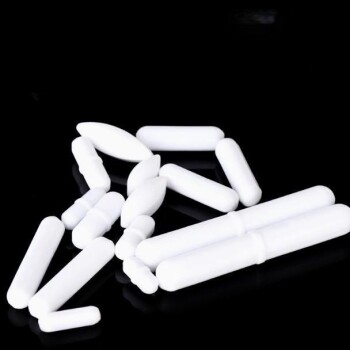
Custom PTFE Teflon Parts Manufacturer PTFE Magnetic Stirring Bar
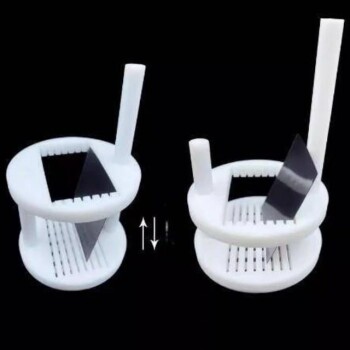
Custom PTFE Teflon Parts Manufacturer Adjustable Height Flower Basket
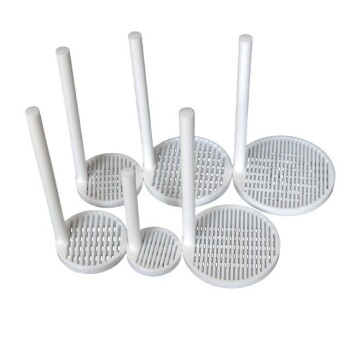
Custom PTFE Teflon Parts Manufacturer PTFE Cleaning Rack
Custom PTFE Teflon Parts Manufacturer Conductive Glass Substrate Cleaning Rack
Custom Machined Molded PTFE Teflon Parts Manufacturer for Laboratory ITO FTO Conductive Glass Cleaning Flower Basket