All Questions
What Are The Advantages Of 15% Glass + 5% Mos2-Filled Ptfe Bushings? Superior Wear & Load Resistance
Discover the key benefits of 15% Glass + 5% MoS2-filled PTFE bushings, including superior wear resistance, higher load capacity, and maintenance-free dry operation.
What Are The Properties Of 10% Peek-Filled Ptfe Bushings? Enhance Wear Resistance & High-Temp Performance
Discover the key properties of 10% PEEK-filled PTFE bushings, including enhanced hardness, wear resistance, and thermal performance for demanding applications.
What Are The Characteristics Of Virgin Ptfe Bushings? Unlock Superior Chemical & Thermal Performance
Discover the key properties of virgin PTFE bushings: extreme chemical inertness, low friction, and a wide temperature range from -200°C to +260°C.
What Benefits Do Fillers Provide To Virgin Ptfe Bushings? Boost Strength & Wear Resistance
Discover how fillers enhance PTFE bushings with superior strength, wear resistance, and heat dissipation for demanding industrial applications.
What Are The Physical And Chemical Properties Of Pure Ptfe Bushings? Unlock Extreme Chemical & Thermal Resistance
Explore the key properties of pure PTFE bushings: extreme chemical inertness, low friction, and high thermal stability from -200°C to +260°C.
What Is A Potential Downside Of Ptfe Bushings Under Heavy Loads? Prevent Deformation With The Right Material
Learn why pure PTFE bushings can creep under heavy loads and how filled PTFE composites solve this issue for demanding applications.
What Industries Commonly Use Ptfe Bushings? Critical Applications In Chemical, Automotive, And Medical
Explore the key industries using PTFE bushings for their chemical inertness, low friction, and high-temperature stability. Learn why they are essential.
What Are The Key Properties Of Solid Ptfe Bushings? Master Low Friction & Chemical Resistance
Explore the key properties of PTFE bushings: extreme temperature resistance, chemical inertness, low friction, and electrical insulation for demanding applications.
Which Chemicals React Negatively With Ptfe? Identify The Few Substances That Can Compromise Its Integrity
Learn which aggressive chemicals, like molten alkali metals and elemental fluorine, can damage PTFE. Ensure the safety and longevity of your components.
What Are The Common Uses Of Teflon In Mechanical Engineering? Solve Friction, Sealing & Corrosion Challenges
Explore Teflon's key uses in mechanical engineering: self-lubricating bearings, chemical-resistant seals, and protective linings for durable, low-maintenance systems.
What Considerations Are Important For Successful Ptfe Cnc Machining? Master Precision With A Finesse-Over-Force Approach
Learn the key strategies for machining PTFE, including tool selection, speeds and feeds, and workholding to prevent deformation and thermal expansion.
What Industries Commonly Use Teflon Cnc Machined Parts? Critical Solutions For Aerospace, Medical & More
Discover why aerospace, medical, electronics, and chemical industries rely on Teflon CNC parts for chemical resistance, low friction, and insulation.
What Are The Common Cnc Machining Methods For Teflon Parts? Mastering Ptfe's Unique Challenges
Learn the key CNC methods for Teflon (PTFE) parts, including turning, milling, and 5-axis machining, and how to overcome material challenges like thermal expansion.
Why Is Cnc Machining The Preferred Method For Manufacturing Teflon Parts? Achieve Precision Without Compromise
Discover why CNC machining is the ideal process for Teflon (PTFE) parts, avoiding thermal degradation and enabling complex geometries with tight tolerances.
What Are The Common Grades Of Ptfe Used In Machining? Choose The Right Grade For Your Application
Compare Virgin, Glass, Carbon, Bronze, and PEEK-filled PTFE grades for machining. Understand their properties, trade-offs, and ideal applications.
What Are The Limitations Of Machining Teflon (Ptfe)? Overcome Challenges For Precision Parts
Learn the key limitations of machining PTFE, including softness, thermal issues, and burr formation, and discover strategies to achieve precision.
What Factors Should Be Considered When Choosing Between Ptfe And Traditional Bushings? Optimize Your Application's Performance
Learn the key differences between PTFE and traditional bushings for load, environment, maintenance, and cost to make the right choice.
In What Types Of Applications Are Ptfe Bushes Most Advantageous? Solve Lubrication, Corrosion, And Contamination Challenges
Discover why PTFE bushes are ideal for chemical, food, medical, and automotive applications where lubrication is forbidden and corrosion resistance is critical.
What Are The Benefits Of Ptfe Bushes Over Plastic Bushings? Superior Performance For Harsh Environments
Discover the key advantages of PTFE bushes: self-lubrication, extreme temperature resistance, and unmatched chemical inertness for demanding applications.
How Do Ptfe Bushes Compare To Traditional Metal Bushings? Choose The Right Bushing For Your Application
Explore the key differences between PTFE and metal bushings, including friction, load capacity, chemical resistance, and temperature range for optimal selection.
Why Is Ptfe Difficult To Machine? Mastering The Challenges Of Precision Ptfe Fabrication
Learn why PTFE's softness, high thermal expansion, and low strength make machining a challenge and discover the key strategies for success.
What Are The Load Capacity Limitations Of Ptfe Bushes? Understanding Creep And Deformation
Learn why PTFE bush load capacity is limited by creep and deformation under pressure, making it unsuitable for high-stress applications.
How Does The Cost Of Ptfe Bushes Compare To Traditional Bushings? Analyze The True Long-Term Value
PTFE bushes have a higher upfront cost but offer a lower total cost of ownership (TCO) by eliminating maintenance and providing superior durability.
What Are The Disadvantages Of Ptfe Bushes? Key Limitations For Industrial Applications
Explore the key disadvantages of PTFE bushes, including mechanical weakness, susceptibility to wear, high cost, and manufacturing challenges.
What Are The Electrical Properties Of Ptfe Bushes? Superior Insulation For High-Performance Applications
PTFE bushes offer elite electrical insulation: high resistivity, strong dielectric strength, and stable performance for high-voltage & high-frequency applications.
Why Are Ptfe Bushes Considered Self-Lubricating? Achieve Maintenance-Free, Contamination-Free Motion
Learn how PTFE bushes create a permanent solid lubricant film for low-friction, maintenance-free operation in clean and demanding environments.
What Temperature Range Can Ptfe Bushes Withstand? From Cryogenic -200°C To High-Heat 260°C
Learn the standard PTFE bush temperature range of -200°C to 260°C, its performance at extremes, and key selection criteria for your application.
What Makes Ptfe Bushes Suitable For Corrosive Environments? Unmatched Chemical Resistance And Reliability
Discover why PTFE bushes excel in corrosive environments due to extreme chemical inertness, self-lubrication, and thermal stability from -180°C to 260°C.
How Does The Low Friction Property Of Ptfe Bushes Benefit Applications? Extend Component Life And Reduce Maintenance
Discover how PTFE's low friction and self-lubrication extend component life, ensure smooth motion, and reduce maintenance in demanding applications.
What Are The Main Advantages Of Ptfe Bushes? Achieve Maintenance-Free, High-Performance Operation
Discover the key benefits of PTFE bushes: low friction, self-lubrication, chemical resistance, and high temperature stability for demanding applications.
Why Are Ptfe Fasteners Considered A Key Component In Advanced Medical Devices? Unlock Superior Safety & Reliability
Explore why PTFE fasteners are essential for medical devices, offering biocompatibility, chemical inertness, and low friction for patient safety and device reliability.
What Are The Limitations Of Ptfe Fasteners? Key Weaknesses In Strength, Creep, And Cost
Explore the key limitations of PTFE fasteners, including low mechanical strength, susceptibility to creep, and higher cost, to ensure proper material selection.
What Are The Common Applications Of Ptfe Fasteners In Medical Devices? Ensure Safety And Reliability
Explore how PTFE fasteners are used in surgical instruments, implants, and diagnostic equipment for biocompatibility, chemical resistance, and sterilization.
What Is The Significance Of Biocompatibility In Ptfe Fasteners For Medical Devices? Ensure Patient Safety And Device Reliability
Learn why biocompatibility is critical for PTFE fasteners in medical devices, ensuring patient safety, chemical inertness, and long-term performance.
Why Are Ptfe Fasteners Used In Applications Requiring Electrical Insulation? Ensure Reliable, Non-Conductive Performance
Discover why PTFE fasteners are ideal for electrical insulation, offering high dielectric strength, thermal stability, and chemical resistance for demanding applications.
What Makes Ptfe Fasteners Suitable For High-Temperature Environments? Discover Their Critical Advantages
Learn why PTFE fasteners excel in extreme heat with superior thermal stability, chemical resistance, and low friction for demanding applications.
How Does The Low Friction Property Of Ptfe Fasteners Benefit Medical Devices? Enhance Device Longevity And Patient Safety
Learn how PTFE's low friction in medical fasteners improves device durability, simplifies maintenance, and ensures patient safety through biocompatible performance.
Why Is The Non-Reactivity Of Ptfe Fasteners Important In Medical Devices? Ensuring Patient Safety And Device Integrity
Discover why PTFE's chemical inertness is critical for biocompatibility, corrosion resistance, and preventing contamination in medical devices.
How Does The Corrosion Resistance Of Ptfe Fasteners Benefit Medical Applications? Ensure Device Safety And Reliability
Discover how PTFE's chemical inertness prevents fastener corrosion in medical devices, ensuring safety during sterilization and exposure to harsh chemicals.
What Are The Key Advantages Of Using Ptfe Fasteners In Medical Devices? Ensure Safety And Reliability In Critical Applications
Discover how PTFE fasteners enhance medical device safety with biocompatibility, chemical inertness, low friction, and thermal stability for sterilization.
What Are The Types Of Ptfe Fasteners And Their Common Uses? Find The Right Solution For Your Industry
Learn about PTFE fastener types (screws, nuts, bolts, washers) and their applications in chemical, medical, and electronics industries.
What Is Ptfe And Why Is It Used In Fasteners For Medical Devices? Ensure Safety With Biocompatible Materials
Learn why PTFE is the material of choice for medical fasteners due to its biocompatibility, chemical inertness, and low friction for patient safety.
What Role Does Ptfe Play In Industrial Equipment Maintenance? Extend Lifespan & Reduce Downtime
Discover how PTFE's chemical inertness, low friction, and temperature resistance enhance industrial equipment reliability and slash maintenance costs.
Are Ptfe Coating Thrust Washers Suitable For All Types Of Fishing Reels? Matching Performance To Your Angling Needs
Discover when PTFE thrust washers are the right upgrade for your fishing reel. Learn about reduced friction, corrosion resistance, and compatibility.
Can Ptfe Coating Thrust Washers Be Used In Saltwater Fishing? Key Considerations For Marine Durability
PTFE-coated thrust washers work in saltwater fishing, but the base metal is critical. Learn why marine-grade stainless steel is essential for preventing corrosion.
How Often Should A Ptfe Coating Thrust Washer Be Replaced? Proactive Maintenance For Peak Performance
Learn when to replace a PTFE thrust washer based on wear signs, not a fixed schedule. Discover inspection tips for fishing reels and industrial equipment.
What Determines The Lifespan Of A Ptfe Coating Thrust Washer In A Fishing Reel? Maximize Durability & Performance
Learn the 3 key factors that determine PTFE thrust washer lifespan: coating quality, operational stress, and environmental exposure for your fishing reel.
What Factors Should Be Considered When Selecting A Ptfe Coating Thrust Washer? Optimize Performance And Lifespan
Learn key factors for choosing PTFE-coated thrust washers: load capacity, temperature range, chemical resistance, and coating quality for optimal performance.
How Do You Install A Ptfe Coating Thrust Washer In A Fishing Reel? A Simple Upgrade For Smoother Casting & Longer Distance
Learn how to install a PTFE-coated thrust washer to reduce friction, increase casting distance, and improve your fishing reel's smoothness and durability.
What Are The Benefits Of Using A Ptfe Coating Thrust Washer In A Fishing Reel? Smoother Drag, Longer Reel Life
Discover how a PTFE-coated thrust washer reduces friction, prevents corrosion, and extends the lifespan of your fishing reel, especially in saltwater.
How Does Ptfe Coating Improve The Performance Of A Thrust Washer? Achieve Superior Smoothness And Durability
Discover how PTFE coatings reduce friction, prevent corrosion, and extend the life of thrust washers for smoother mechanical operation.
What Is A Ptfe Coating Thrust Washer? Achieve Low-Friction, High-Performance Axial Load Management
Learn how a PTFE-coated thrust washer reduces friction, resists wear and chemicals, and extends equipment life in demanding applications.
What Advantages Do Teflon Washers Have Over Nylon And Plastic Washers? Achieve Superior Performance In Harsh Environments
Discover why Teflon (PTFE) washers excel with low friction, chemical resistance, and temperature stability for demanding applications.
What Are The Characteristics Of Teflon Washers? Unlock Superior Slipperiness & Chemical Resistance
Explore the key properties of Teflon (PTFE) washers: low friction, chemical inertness, electrical insulation, and their ideal applications.
What Considerations Should Be Made When Deciding To Use Ptfe Gaskets? Balance Chemical Resistance With Mechanical Limits
Learn when to use PTFE gaskets for chemical inertness and purity, and how to manage their susceptibility to creep and cold flow under pressure.
How Does The Flexibility Of Ptfe Gaskets Contribute To Their Versatility? Sealing Imperfect Surfaces With Ease
Discover how PTFE gasket flexibility enables superior sealing on uneven surfaces and in demanding chemical & thermal environments.
What Are The Limitations Of Ptfe Gaskets In High-Pressure Applications? Overcoming Cold Flow & Creep Issues
Learn the key limitations of PTFE gaskets in high-pressure systems, including cold flow, creep, and temperature sensitivity, plus engineered alternatives.
What Makes Ptfe Gaskets Suitable For The Food Industry? Ensure Purity And Compliance
Discover why PTFE gaskets are ideal for food processing: FDA-compliant, chemically inert, non-stick, and heat-resistant for superior hygiene.
Why Are Ptfe Gaskets Considered Durable In Harsh Conditions? Unmatched Chemical & Temperature Resistance
Learn why PTFE gaskets excel in harsh environments due to their chemical inertness, extreme temperature stability, and resilience to pressure.
How Does The Chemical Resistance Of Ptfe Gaskets Benefit Industrial Applications? Achieve Unmatched Reliability
Explore how PTFE gaskets' chemical inertness enhances safety, reduces downtime, and lowers costs in demanding industrial environments.
What Are The Disadvantages Of Ptfe Gaskets? Key Limitations To Consider
Learn the key disadvantages of PTFE gaskets, including creep, cold flow, limited compressibility, and unsuitability for high-pressure applications.
What Industries Commonly Use Ptfe Gaskets And Why? Solve Demanding Sealing Challenges
Learn why chemical, pharmaceutical, food, and energy industries rely on PTFE gaskets for chemical inertness, high purity, and extreme temperature resistance.
What Is A Ptfe Gasket And What Are Its Primary Properties? Unlock Superior Chemical And Thermal Sealing
Discover the key properties of PTFE gaskets, including unmatched chemical resistance, thermal stability, and how to manage creep for a reliable seal.
How Can Teflon (Ptfe) Be Processed Into Parts? A Guide To Compression Molding & Cnc Machining
Learn the primary methods for processing PTFE, including compression molding for simple shapes and CNC machining for complex, high-precision components.
What Types Of Fasteners And Custom Parts Can Be Made From Teflon (Ptfe)? Explore Its Unique Advantages
Discover the wide range of Teflon (PTFE) fasteners and custom parts, ideal for extreme chemical, temperature, and low-friction applications.
What Makes Ptfe Gaskets An Excellent Choice For Compressors? Unlock Superior Sealing Performance
Discover why PTFE gaskets excel in compressors with high heat resistance, chemical inertness, low friction, and durability for reliable operation.
Why Are Ptfe Gaskets Suitable For Food Processing Plants? Ensure Purity & Compliance
Learn why FDA-approved PTFE gaskets are ideal for food processing, offering chemical inertness, non-stick surfaces, and high-temperature resistance.
How Are Ptfe Gaskets Utilized In Electrical Components? Ensure Superior Insulation & Sealing
Learn how PTFE gaskets provide critical electrical insulation and environmental sealing for transformers, motors, PCBs, and high-frequency equipment.
What Role Do Ptfe Gaskets Play In The Medical And Pharmaceutical Industries? Ensuring Purity And Safety In Critical Applications
Discover why PTFE gaskets are essential for medical and pharmaceutical applications, offering biological inertness, chemical resistance, and contamination prevention.
Why Are Ptfe Gaskets Used In The Petrochemical Industry? For Superior Chemical & Thermal Resistance
Discover why PTFE gaskets are essential for sealing in the petrochemical industry, offering unmatched chemical inertness and extreme temperature stability.
How Do Ptfe Gaskets Benefit Industrial Operations In Terms Of Maintenance? Reduce Downtime And Costs
Learn how PTFE gaskets reduce maintenance frequency, simplify replacements, and protect equipment to lower operational costs and increase uptime.
What Are The Key Features Of Ptfe? Unmatched Performance For Extreme Industrial Environments
Discover the key properties of PTFE, including extreme chemical inertness, low friction, and wide thermal stability, that make it ideal for demanding industrial applications.
What Is Ptfe Commonly Known As And Why Is It Used For Gaskets? | Superior Sealing Solutions
Discover why PTFE (Teflon) is the top choice for gaskets in harsh environments, offering unmatched chemical resistance and extreme temperature performance.
Are Ptfe O-Rings Safe For Medical Applications? Ensuring Biocompatibility For Critical Devices
Learn why PTFE O-rings are safe for medical use due to chemical inertness, biocompatibility, and non-contaminating properties for implants and devices.
Why Are Ptfe O-Rings Non-Stick? Unlock The Molecular Secret To Frictionless Sealing
Discover why PTFE O-rings are inherently non-stick due to strong carbon-fluorine bonds, providing superior chemical resistance and low friction.
What Lubrication Properties Do Ptfe O-Rings Have? Low Friction And Self-Lubricating Seals
Explore PTFE O-rings' low coefficient of friction, chemical resistance, and ideal applications for dynamic sealing in demanding environments.
What Makes Ptfe O-Rings Weather Resistant? Unmatched Chemical & Uv Immunity For Harsh Environments
Discover why PTFE O-rings offer superior weather resistance, including UV stability, chemical inertness, and extreme temperature performance.
How Do Ptfe O-Rings Perform Against Chemicals? Achieve Unmatched Chemical Resistance
Learn why PTFE O-rings offer superior chemical inertness against acids, alkalis, and solvents, with a wide temperature range from -200°C to +250°C.
What Are The Temperature Resistance Properties Of Ptfe O-Rings? Withstand -200°C To 260°C Extremes
Learn the full temperature range of PTFE O-rings, from cryogenic -200°C to high-heat 260°C, and understand their application trade-offs for sealing.
What Are The General Advantages Of O-Ring Designs? Achieve Reliable, Cost-Effective Sealing
Discover the key advantages of O-ring designs, including simplicity, compactness, ease of installation, and cost-effectiveness for various applications.
What Are The Typical Characteristics And Applications Of O-Ring Materials? Find The Right Seal For Extreme Environments
Learn the key properties of O-ring materials, including temperature resistance and chemical compatibility, to ensure reliable sealing performance.
What Are O-Rings And Why Are They Commonly Used? A Guide To Simple, Reliable Sealing
Learn how O-rings work, their benefits for static and dynamic sealing, and key factors for material selection and application success.
Why Are Ptfe Gaskets Preferred In Extreme Temperature Environments? Unlock Reliable Sealing From -200°C To +260°C
Learn why PTFE gaskets excel in extreme temperatures from -200°C to +260°C, offering superior thermal stability and chemical resistance.
What Role Does High-Pressure Laminate (Hpl) Play In Ptfe Gasket Manufacturing? Prevent Cold Flow For Reliable Seals
Learn how HPL reinforcement in PTFE gaskets prevents cold flow, enabling reliable sealing in high-pressure, high-temperature industrial applications.
How Does The Non-Stick Property Of Ptfe Benefit Gasket Applications? Ensure Clean, Durable, And Low-Maintenance Seals
Learn how PTFE's non-stick nature enhances gasket performance in hygiene, mechanical integrity, and maintenance for industrial and sanitary applications.
What Are The Key Benefits Of Using Ptfe Gaskets? Achieve Unmatched Chemical & Temperature Resistance
Discover the top benefits of PTFE gaskets: superior chemical resistance, extreme temperature stability, and non-stick properties for demanding applications.
What Are The Steps Involved In The Compression Molding Process For Ptfe Gaskets? From Powder To Precision Seal
Learn the key stages of PTFE gasket compression molding: pre-forming, sintering, and machining. Achieve high-density, reliable seals for demanding applications.
What Are The Two Main Methods Used To Manufacture Ptfe Gaskets? Ensure Optimal Sealing Performance
Learn about compression molding and cutting methods for PTFE gaskets. Understand how manufacturing affects density, precision, and chemical resistance.
What Is Ptfe And What Makes It Suitable For Gaskets? The Ultimate Guide To High-Performance Sealing
Learn why PTFE's chemical inertness, thermal stability, and low friction make it a top choice for industrial gaskets in harsh environments.
What Factors Should Be Considered When Choosing A Gasket Material? A Guide To Reliable Sealing
Learn the key factors—temperature, pressure, chemical compatibility—to select the right gasket material for reliable, long-lasting seals in any system.
What Are Ptfe-Coated Gaskets And What Are Their Limitations? Understanding The Risks Of Surface Coatings
Learn the critical limitations of PTFE-coated gaskets, including flaking, contamination risks, and why they fail in demanding applications.
How Do Rubber Gaskets Compare To Ptfe Gaskets? Choose The Right Seal For Your Application
Compare rubber vs. PTFE gaskets: flexibility & cost vs. extreme chemical & temperature resistance. Make the right choice for your system.
What Are The Main Advantages Of Ptfe Gaskets? Superior Sealing For Extreme Chemical & Thermal Environments
Discover the key benefits of PTFE gaskets: unmatched chemical resistance, extreme temperature stability, and superior sealing for demanding applications.
Why Are Ptfe O-Rings Considered Versatile For Low-Pressure, Static Applications? Unlock Superior Chemical And Thermal Resistance
Discover the unique properties of PTFE O-Rings: extreme chemical inertness, wide temperature range (-270°C to 260°C), and low friction for static seals.
What Are Static Applications And How Are Ptfe O-Rings Used In Them? Ensure Leak-Proof Seals In Demanding Environments
Learn how PTFE O-Rings create reliable static seals for corrosive chemicals and extreme temperatures in industrial, medical, and lab settings.
In Which Industries Are Ptfe O-Rings Commonly Used? Solve Extreme Sealing Challenges
Discover why PTFE O-rings are essential in aerospace, chemical, medical, and oil & gas for extreme chemical, temperature, and pressure resistance.
What Are Dynamic Applications And Why Are Ptfe O-Rings Suitable For Them? Unlock Low-Friction, Chemical-Resistant Sealing
Discover why PTFE O-rings excel in dynamic applications with low friction, chemical inertness, and extreme temperature resistance for pumps, valves, and more.
What Makes Ptfe O-Rings Superior To Those Made Of Other Materials? Unmatched Performance In Extreme Conditions
Discover why PTFE O-Rings excel with superior chemical inertness, extreme temperature stability, and the lowest friction for demanding applications.
What Is The Coefficient Of Friction For Ptfe O-Rings And Why Is It Beneficial? Achieve Smooth, Low-Friction Performance
Learn why PTFE O-Rings have an exceptionally low coefficient of friction (0.04-0.1), enabling smooth motion, reduced wear, and minimal lubrication needs.
What Types Of Fluids Can Ptfe O-Rings Repel? The Ultimate Guide To Chemical Resistance
PTFE O-Rings repel nearly all fluids, including strong acids, bases, solvents, and oils. Learn about their universal chemical resistance and key limitations.
Related Products
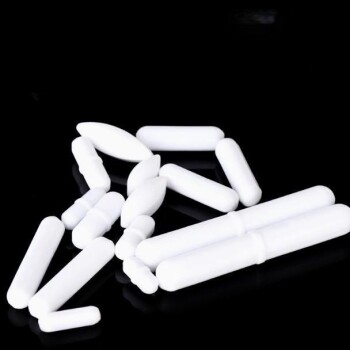
Custom PTFE Teflon Parts Manufacturer PTFE Magnetic Stirring Bar
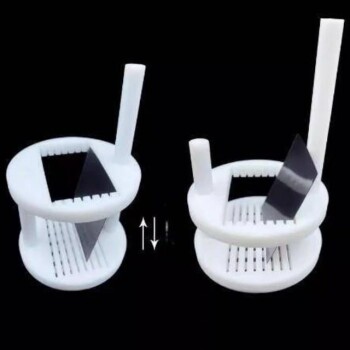
Custom PTFE Teflon Parts Manufacturer Adjustable Height Flower Basket
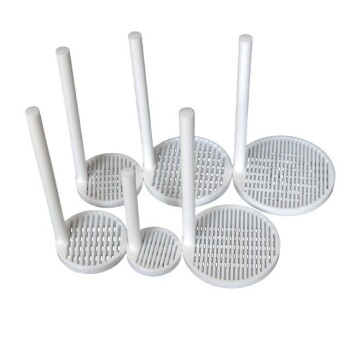
Custom PTFE Teflon Parts Manufacturer PTFE Cleaning Rack
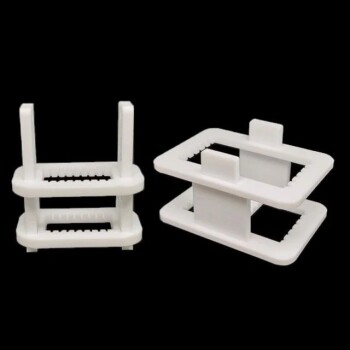
Custom PTFE Teflon Parts Manufacturer Conductive Glass Substrate Cleaning Rack
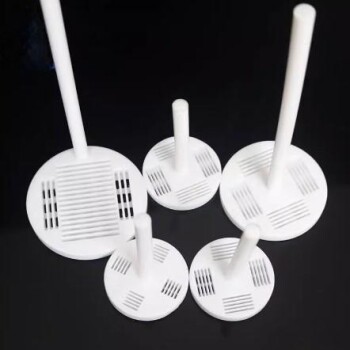
Custom Machined Molded PTFE Teflon Parts Manufacturer for Laboratory ITO FTO Conductive Glass Cleaning Flower Basket