At its core, PTFE is superior for applications involving extreme conditions. Its primary advantages over other materials stem from a unique combination of near-universal chemical inertness, an exceptionally wide operating temperature range, and the lowest coefficient of friction of any solid material. These properties make it the definitive choice for environments where common elastomers like nitrile or Viton would quickly degrade and fail.
While many materials offer a single standout feature, PTFE (Polytetrafluoroethylene) serves as an extreme environment specialist. It doesn't just tolerate harsh conditions; it is fundamentally indifferent to the chemical attacks, temperature swings, and friction that destroy other seals.

The Core Pillars of PTFE Performance
To understand why PTFE is specified for critical applications, we must examine its fundamental properties. These are not incremental improvements over other materials; they represent a different class of performance entirely.
Unmatched Chemical Inertness
PTFE is renowned for its resistance to nearly all industrial chemicals and solvents. This includes strong acids, alkalis, corrosive gases, and organic solvents.
Where other materials swell, harden, or dissolve, PTFE remains dimensionally stable and physically unchanged. This makes it essential for chemical processing, pharmaceutical production, and laboratory equipment.
Extreme Temperature Stability
PTFE O-rings perform reliably across a vast temperature spectrum, from cryogenic lows around -100°F (-73°C) to high heats of 400°F (204°C) or more.
This stability prevents the material from becoming brittle at low temperatures or degrading at high temperatures. It is ideal for systems that experience significant thermal cycling without compromising the seal's integrity.
The Lowest Coefficient of Friction
PTFE has an extremely low coefficient of friction, making its surface exceptionally slippery. This is a critical advantage in dynamic applications.
For rotating shafts, pistons, or valve stems, this property dramatically reduces wear, heat generation, and the energy required for movement. Its non-stick nature also simplifies cleaning and prevents media buildup.
Environmental and Physical Robustness
Beyond its primary strengths, PTFE is highly resistant to weathering and UV radiation, which can cause other materials to embrittle and crack over time.
It is also an excellent electrical and thermal insulator. Manufacturers can produce PTFE O-rings with a very smooth, defect-free surface, ensuring a high-quality initial seal against perfectly machined surfaces.
Understanding the Trade-offs: When PTFE Isn't the Answer
Objectivity requires acknowledging that no material is perfect for every situation. The very properties that make PTFE strong also create limitations that are critical to understand.
The Challenge of Creep and Cold Flow
The most significant drawback of pure PTFE is its tendency to "creep" or "cold flow." Under sustained pressure, especially at elevated temperatures, the material can slowly deform and move out of place.
This deformation is permanent and can lead to a loss of sealing force over time, making pure PTFE a potential risk for high-pressure, static applications where long-term reliability is paramount.
Lower Elasticity and Memory
Unlike rubber or elastomer O-rings that are compressed to create a seal, PTFE is a more rigid material. It has very little elasticity or "memory."
This means it does not spring back to its original shape after being compressed. Consequently, PTFE O-rings require very smooth mating surfaces and precise groove designs to seal effectively, as they are less forgiving of surface imperfections.
The Solution: Filled PTFE Compounds
To overcome the issue of cold flow, manufacturers often add fillers like glass, carbon, graphite, or bronze to the raw PTFE.
These filled PTFE grades significantly improve creep resistance, increase hardness, and enhance wear properties, making them suitable for more demanding sealing applications that still require PTFE's core benefits.
Making the Right Choice for Your Application
Your final decision must be based on the primary demands of your specific engineering challenge.
- If your primary focus is chemical compatibility: Use PTFE when sealing aggressive media where elastomers would chemically degrade.
- If your primary focus is dynamic sealing: Choose PTFE for rotating or sliding components to minimize friction, wear, and heat buildup.
- If your primary focus is high-pressure static sealing: Approach pure PTFE with caution due to cold flow and instead evaluate a filled PTFE compound or a high-performance elastomer.
Ultimately, selecting PTFE is a strategic decision to prioritize chemical, thermal, and frictional resilience in applications where failure is not an option.
Summary Table:
| Key Property | PTFE O-Ring Advantage | Ideal For |
|---|---|---|
| Chemical Resistance | Resists nearly all industrial chemicals, acids, and solvents | Chemical processing, pharmaceuticals, labs |
| Temperature Range | Stable from -100°F (-73°C) to 400°F (204°C) | Applications with extreme thermal cycling |
| Coefficient of Friction | Lowest of any solid material; reduces wear and energy use | Dynamic sealing (rotating shafts, pistons) |
| Trade-off: Creep/Cold Flow | Pure PTFE can deform under sustained pressure; filled compounds are available | Requires careful application design |
Need a Reliable Seal for Extreme Conditions?
PTFE O-rings are the definitive choice for applications where failure is not an option. At KINTEK, we specialize in manufacturing high-precision PTFE components—including seals, liners, and labware—for the semiconductor, medical, laboratory, and industrial sectors.
We prioritize precision production and offer custom fabrication from prototypes to high-volume orders, ensuring you get the exact solution for your demanding environment.
Let's discuss how our PTFE expertise can solve your sealing challenges. Contact our engineering team today for a consultation.
Visual Guide

Related Products
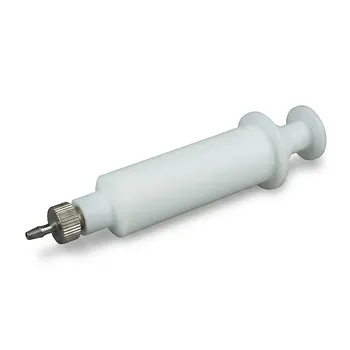
- High Temperature Chemical Resistant 50ml PTFE Syringe Customized Teflon Injector with Threaded Seal for Trace Analysis
- Custom PTFE Corrosion Resistant White Syringe with Threaded Luer Connector Compatibility
- Customizable PTFE Rods for Advanced Industrial Applications
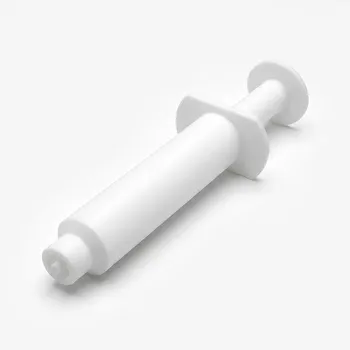
- High Purity Virgin PTFE Syringe 20ml Chemical Resistant Liquid Handling for Syringe Pumps and PFA Tubing Integration
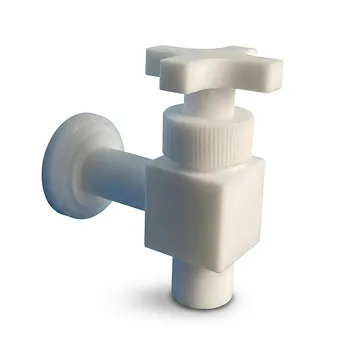
- High Corrosion Resistant PTFE Faucet Polytetrafluoroethylene Valve for Chemical Storage Drums and Fluid Transfer Systems Customizable Industrial Grade
People Also Ask
- In what medical devices is PTFE commonly used? Essential Components for Safety and Reliability
- Is PTFE approved for food contact applications? Ensuring Food Safety with Compliant PTFE
- Why is PTFE highly resistant to chemicals? Unmatched Inertness for Demanding Applications
- How does PTFE's flexibility affect its performance? Unlock Durability and Sealing Power
- What is notable about the coefficient of friction of PTFE? Achieve Unmatched Low-Friction Performance