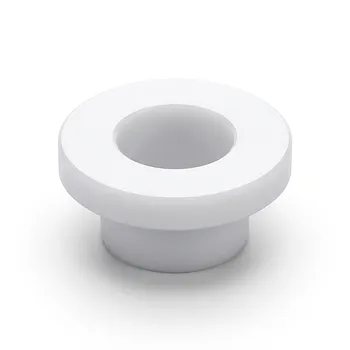
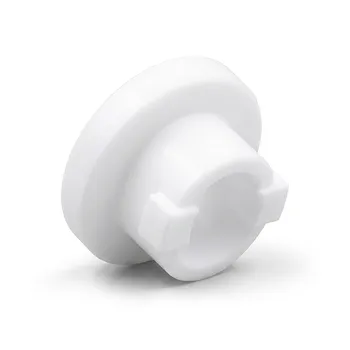
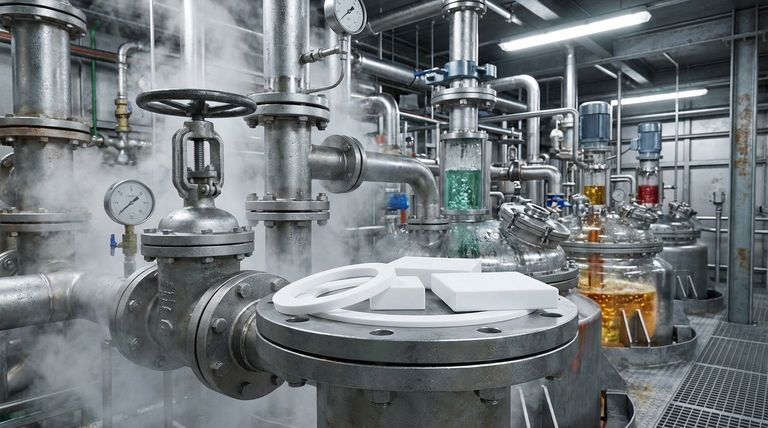
In short, PTFE gaskets are exceptionally durable because of their unique molecular structure, which makes them nearly immune to chemical attack, stable across extreme temperature ranges, and resilient to physical pressure. This combination allows them to maintain their shape and sealing integrity in harsh industrial environments where other materials would quickly fail.
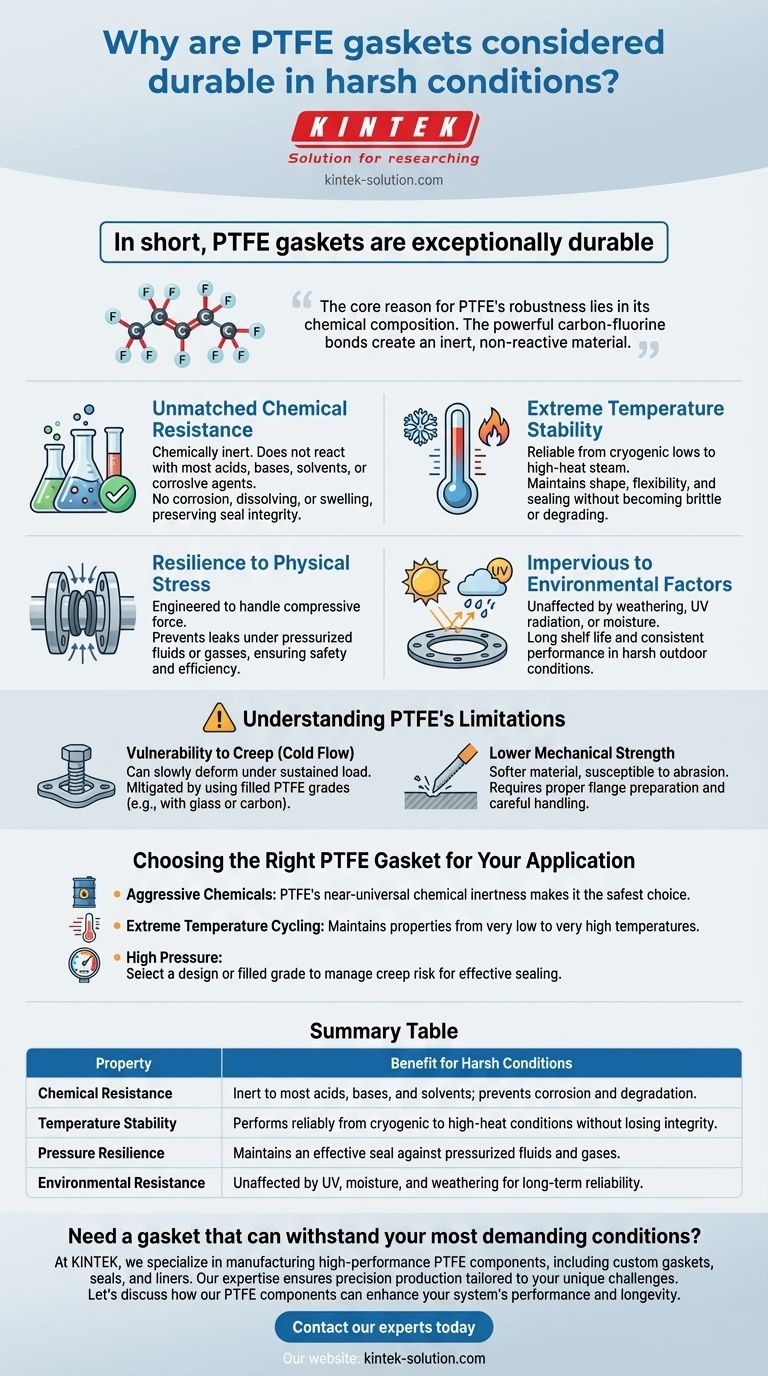
The core reason for PTFE's robustness lies in its chemical composition. The powerful carbon-fluorine bonds create an inert, non-reactive material that simply does not degrade when exposed to the vast majority of chemicals, extreme temperatures, or environmental contaminants.
The Core Properties of PTFE's Durability
To understand why PTFE (polytetrafluoroethylene) is a go-to choice for demanding applications, we must look at its fundamental material properties. Each one contributes to its overall resilience.
Unmatched Chemical Resistance
PTFE is one of the most chemically inert materials known. This means it does not react with most acids, bases, solvents, or corrosive agents.
This property ensures the gasket will not corrode, dissolve, or swell when exposed to aggressive fluids, preserving the integrity of the seal over its entire service life.
Extreme Temperature Stability
PTFE gaskets perform reliably across an incredibly wide temperature spectrum, from cryogenic lows to high-heat conditions in steam systems or engines.
They maintain their shape, flexibility, and sealing capability without becoming brittle in the cold or degrading in the heat, a critical feature for applications with significant temperature cycling.
Resilience to Physical Stress
In any sealed joint, the gasket is subjected to compressive force. PTFE is engineered to handle this pressure without losing its ability to seal.
It effectively seals mating surfaces and prevents leaks even when exposed to pressurized fluids or gasses, ensuring operational safety and efficiency.
Impervious to Environmental Factors
Unlike many materials, PTFE is unaffected by weathering, UV radiation, or moisture.
This resistance to environmental degradation means the gaskets have a long shelf life and can be trusted to perform consistently even after long-term exposure to harsh outdoor or industrial conditions.
Understanding PTFE's Limitations
While highly durable, no material is perfect. Acknowledging the trade-offs of PTFE is critical for proper application and joint design.
Vulnerability to Creep (Cold Flow)
Under sustained compressive load, especially at elevated temperatures, pure PTFE can slowly deform or "creep." This can lead to a loss of bolt torque and potentially compromise the seal over time.
This is often mitigated by using filled PTFE grades (e.g., with glass or carbon) which significantly improve creep resistance.
Lower Mechanical Strength
Compared to metals, PTFE is a relatively soft material. It can be susceptible to damage from abrasion or significant surface imperfections on the flange faces.
Proper flange preparation and careful handling during installation are necessary to prevent mechanical damage.
Choosing the Right PTFE Gasket for Your Application
Your specific operational challenge will determine if PTFE is the optimal choice.
- If your primary focus is handling aggressive chemicals: PTFE's near-universal chemical inertness makes it one of the safest and most reliable choices available.
- If your primary focus is extreme temperature cycling: PTFE's ability to maintain its physical properties from very low to very high temperatures ensures a consistent, long-lasting seal.
- If your primary focus is maintaining a seal under high pressure: PTFE is highly effective, but you must select a gasket design or filled grade that properly manages the risk of creep.
Ultimately, understanding both the exceptional strengths and the specific limitations of PTFE empowers you to design a more reliable and long-lasting sealed system.
Summary Table:
| Property | Benefit for Harsh Conditions |
|---|---|
| Chemical Resistance | Inert to most acids, bases, and solvents; prevents corrosion and degradation. |
| Temperature Stability | Performs reliably from cryogenic to high-heat conditions without losing integrity. |
| Pressure Resilience | Maintains an effective seal against pressurized fluids and gases. |
| Environmental Resistance | Unaffected by UV, moisture, and weathering for long-term reliability. |
Need a gasket that can withstand your most demanding conditions?
At KINTEK, we specialize in manufacturing high-performance PTFE components, including custom gaskets, seals, and liners. Our expertise ensures precision production tailored to the unique challenges of the semiconductor, medical, laboratory, and industrial sectors.
Whether you require a prototype or a high-volume order, we deliver solutions built for durability and reliability. Let's discuss how our PTFE components can enhance your system's performance and longevity. Contact our experts today for a consultation!
Visual Guide
Related Products
- Customizable High Temperature Resistant Anti Static PTFE Insulating Gaskets Flame Retardant Corrosion Proof Industrial Seals
- Custom PTFE Insulating Gaskets Corrosion Resistant Teflon Seals Tailored Engineering Plastic Components
- Custom PTFE Insulating Gaskets and Corrosion Resistant Fluoropolymer Seals for Industrial Electrical Applications
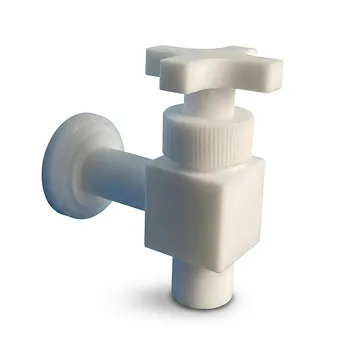
- High Corrosion Resistant PTFE Faucet Polytetrafluoroethylene Valve for Chemical Storage Drums and Fluid Transfer Systems Customizable Industrial Grade
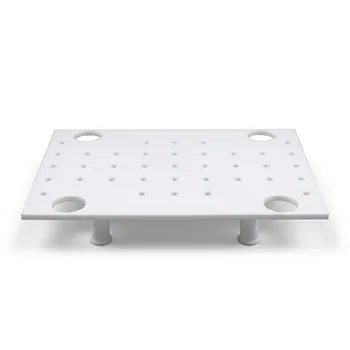
- Custom PTFE Acid Resistant Support Rack Multi Hole PFA Hydrogen Absorption System Bracket
People Also Ask
- Why is PTFE an ideal material choice for sealing gaskets, valves, and fluid transfer tubing exposed to extremely aggressive chemicals? Discover Its Superior Chemical Resistance and Reliability
- How is PTFE utilized in seals and gaskets? Leverage Its Chemical & Temperature Resistance
- What are the key properties of PTFE that make it suitable for seals and gaskets? Unlock Superior Sealing Performance
- What industries benefit from PTFE gaskets due to their FDA compliance? Ensure Product Purity and Safety
- How does the sealing performance of PTFE gaskets benefit industrial applications? Ensure Leak-Free Reliability in Harsh Environments