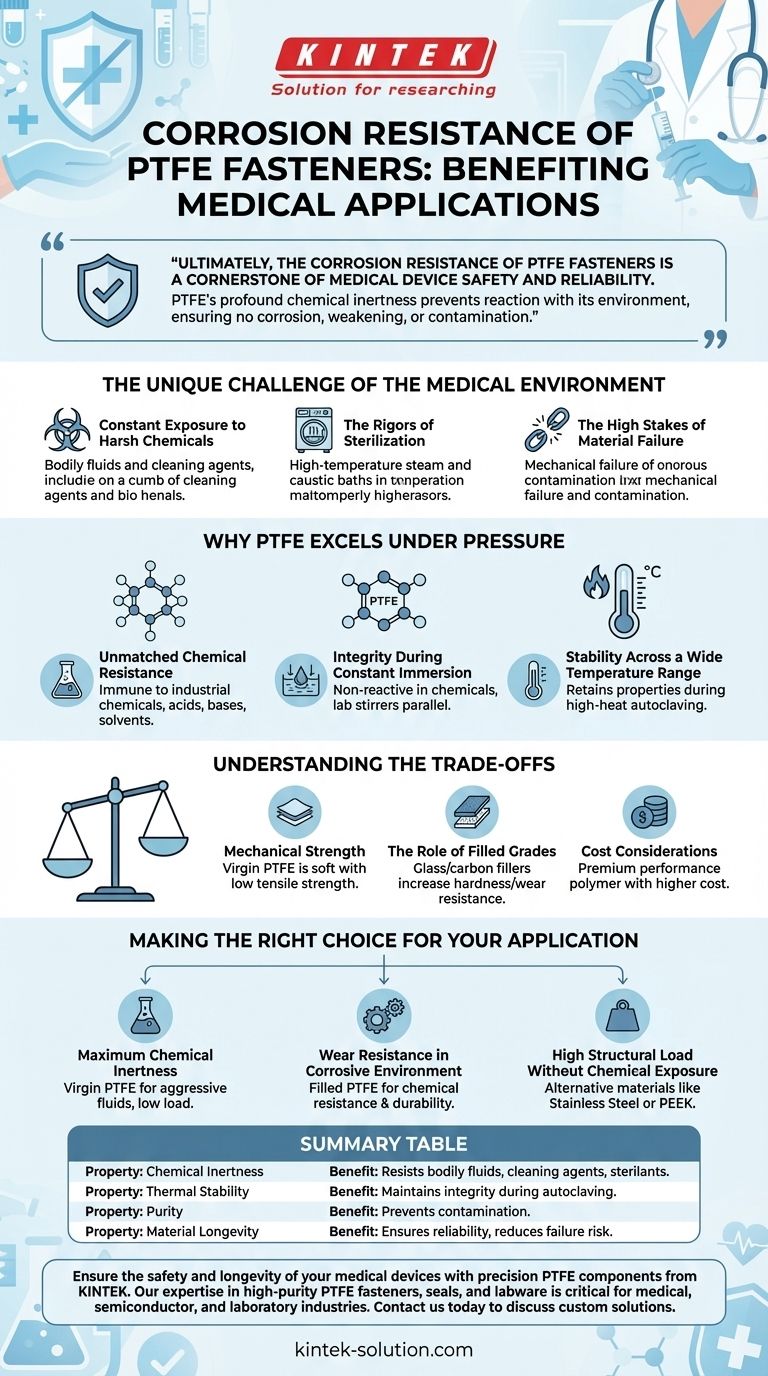
Ultimately, the corrosion resistance of PTFE fasteners is a cornerstone of medical device safety and reliability. This property ensures that fasteners maintain their structural integrity and do not degrade or release contaminants when exposed to the aggressive chemicals and sterilization processes common in healthcare environments.
The core benefit is simple: PTFE's profound chemical inertness prevents it from reacting with its environment. In a medical setting, this means a fastener that will not corrode, weaken, or contaminate, directly contributing to equipment longevity and patient safety.
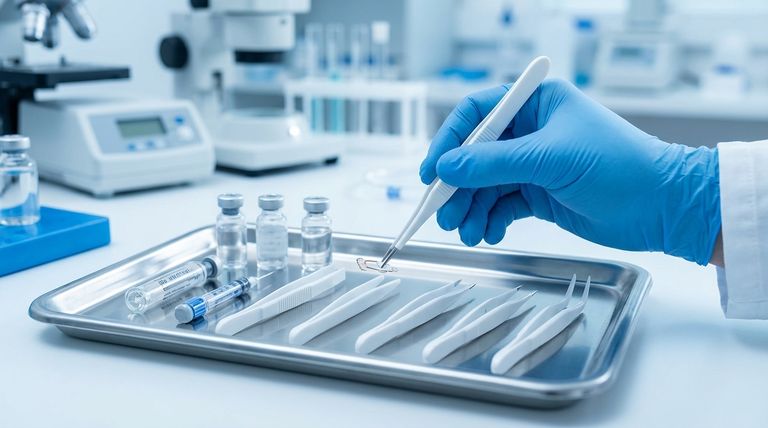
The Unique Challenge of the Medical Environment
Traditional materials often fail when subjected to the demanding conditions of medical and laboratory settings. The environment is inherently hostile to many metals and plastics, creating a need for exceptionally resilient components.
Constant Exposure to Harsh Chemicals
Medical equipment is constantly exposed to a wide array of substances, including bodily fluids, aggressive cleaning agents, and sterilizing chemicals. These can quickly corrode standard materials, compromising the device.
The Rigors of Sterilization
Sterilization processes, whether using high-temperature steam in an autoclave or caustic chemical baths, are designed to destroy organic matter. Unfortunately, they are also highly corrosive to many materials, causing them to degrade over time.
The High Stakes of Material Failure
In a medical context, the failure of a simple component like a fastener can have severe consequences. A corroded fastener can lead to mechanical failure of a device or introduce harmful contaminants into a sterile field.
Why PTFE Excels Under Pressure
Polytetrafluoroethylene (PTFE) possesses a unique molecular structure that makes it one of the most non-reactive substances known. This chemical inertness is the key to its performance in corrosive applications.
Unmatched Chemical Resistance
PTFE is virtually immune to almost all industrial chemicals, acids, bases, and solvents. This ensures that fasteners made from PTFE will not be damaged by sterilizing agents or other aggressive fluids they encounter.
Integrity During Constant Immersion
As seen in laboratory equipment like stirrers, PTFE can be constantly immersed in chemicals without reacting or degrading. This is a direct parallel to medical components that are part of fluid paths or require frequent, intensive cleaning.
Stability Across a Wide Temperature Range
PTFE retains its essential properties across a broad spectrum of temperatures. This makes it perfectly suited for devices that must endure the high heat of autoclaving and other thermal sterilization methods.
Understanding the Trade-offs
While its chemical resistance is nearly absolute, PTFE is not a universal solution. An objective evaluation requires acknowledging its limitations.
Mechanical Strength
Virgin PTFE is a relatively soft material with low tensile strength compared to metals or other engineering plastics. It is not suitable for high-load, structural applications on its own.
The Role of Filled Grades
To overcome mechanical weaknesses, PTFE can be blended with fillers like glass or carbon. These filled PTFE grades significantly increase hardness and wear resistance, making them suitable for more demanding mechanical roles, but this can alter other properties.
Cost Considerations
PTFE is a premium performance polymer. Its cost is higher than that of common plastics and many metals, making it a choice reserved for applications where its unique properties are a critical requirement.
Making the Right Choice for Your Application
Selecting the right fastener material depends entirely on the specific demands of the device and its intended use.
- If your primary focus is maximum chemical inertness: Virgin PTFE is the ideal choice for components in direct contact with aggressive fluids or subject to harsh sterilization where mechanical load is low.
- If your primary focus is wear resistance in a corrosive environment: A glass-filled or carbon-filled PTFE fastener offers an excellent balance of chemical resistance and enhanced mechanical durability.
- If your primary focus is high structural load without chemical exposure: A different material, such as stainless steel or another engineering polymer like PEEK, would likely be a more appropriate and cost-effective choice.
By understanding these distinct properties, you can select a material that ensures the safety, reliability, and longevity of critical medical technology.
Summary Table:
| Property | Benefit for Medical Applications |
|---|---|
| Chemical Inertness | Resists bodily fluids, cleaning agents, and sterilants without degrading. |
| Thermal Stability | Maintains integrity during autoclaving and other high-temperature sterilization. |
| Purity | Prevents contamination of sterile fields and fluid paths. |
| Material Longevity | Ensures device reliability and reduces the risk of component failure. |
Ensure the safety and longevity of your medical devices with precision PTFE components from KINTEK.
Our expertise in manufacturing high-purity PTFE fasteners, seals, and labware is critical for applications in the medical, semiconductor, and laboratory industries. Whether you need virgin PTFE for maximum chemical resistance or filled grades for enhanced mechanical properties, we provide custom fabrication from prototypes to high-volume orders.
Contact us today to discuss how our PTFE solutions can benefit your specific application and contribute to your product's reliability.
Visual Guide
Related Products
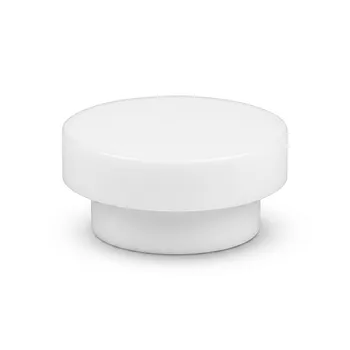
- High Temperature Resistant PTFE White Screw Plugs Custom T Shaped Sealing Hole Stoppers Waterproof Dustproof Chemical Inert Laboratory Fasteners
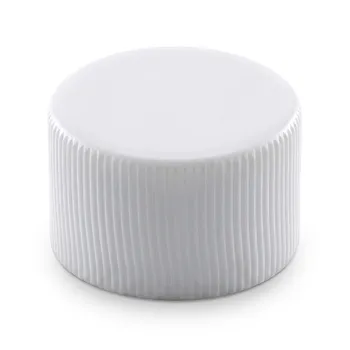
- Custom PTFE Sealing Caps and Corrosion Resistant Low Background Teflon Adapters
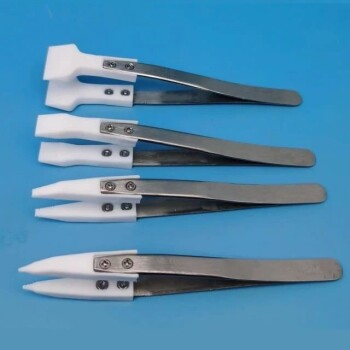
- Custom PTFE Parts Manufacturer for Teflon Parts and PTFE Tweezers
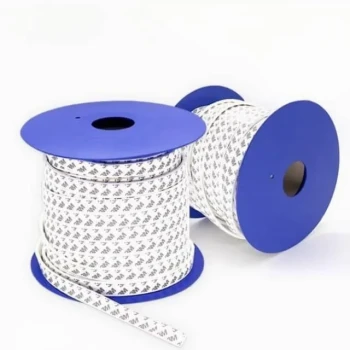
- Custom PTFE Sealing Tapes for Industrial and High Tech Applications
- Customizable PTFE Rods for Advanced Industrial Applications
People Also Ask
- What can happen if PTFE plugs are rotated with solid particles lodged between the plug and barrel? Avoid Permanent Seal Failure
- What makes PTFE plugs durable? Unmatched Chemical and Temperature Resistance
- What are the key characteristics of PTFE plugs? Master Performance in Extreme Conditions
- What industries benefit from using PTFE plugs? Solve Extreme Sealing Challenges
- What are the key applications of PTFE plugs? Seal and Protect in Demanding Environments