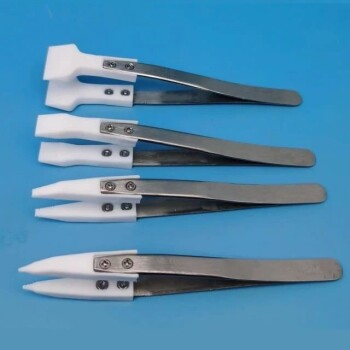
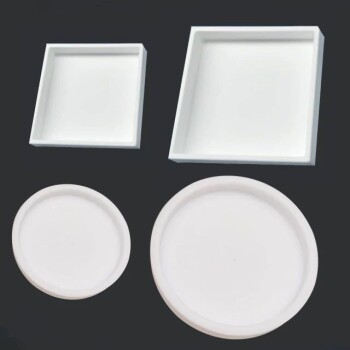
The defining features of PTFE for industrial use are its extreme chemical inertness, exceptionally low coefficient of friction, and wide operating temperature range. These properties, combined with its excellent electrical insulation and durability, make it a uniquely versatile problem-solver for the most demanding engineering challenges.
PTFE (polytetrafluoroethylene) is rarely chosen for its mechanical strength. Instead, its value lies in its unique combination of properties that allow it to survive and perform reliably in extreme chemical, thermal, and high-friction environments where nearly all other materials would quickly fail.
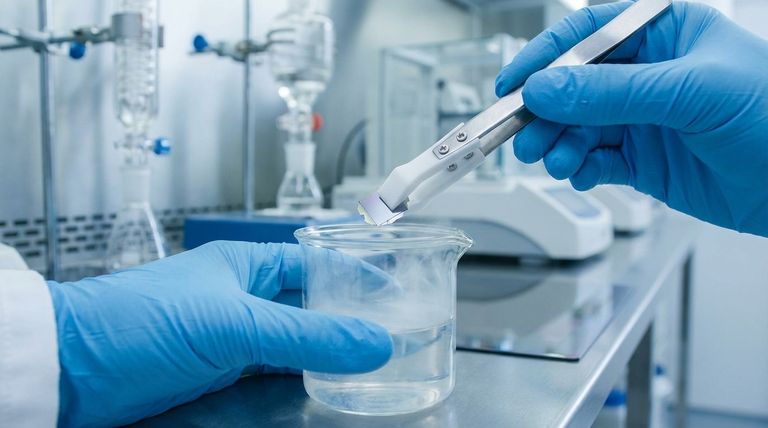
The Core Trifecta: Why PTFE Excels in Extreme Environments
The primary reasons for PTFE's widespread adoption in industry can be distilled down to three exceptional characteristics.
Unmatched Chemical Inertness
PTFE is highly resistant to virtually all common chemicals, acids, and solvents. It does not react, corrode, or degrade when exposed to aggressive substances.
This makes it the material of choice for components in the chemical processing, pharmaceutical, and aerospace industries. It is used extensively for gaskets, seals, and linings for vessels and hoses that handle corrosive materials.
Exceptionally Low Friction
PTFE has one of the lowest coefficients of friction of any known solid material. This creates an incredibly smooth, non-stick surface that requires no external lubrication.
This self-lubricating property is critical for applications like bearings, slide plates, and cable liners. It minimizes wear and energy loss in moving parts and prevents materials from sticking, as seen in its use for non-stick cookware.
Wide Thermal Stability
PTFE maintains its integrity and core properties across an astonishingly wide temperature range, typically from -200°C to +260°C (-328°F to +500°F).
It remains flexible at cryogenic temperatures and does not degrade at high heat, making it the most thermally stable plastic. This allows it to function reliably in engines, industrial ovens, and aerospace applications where temperature extremes are common.
Beyond the Basics: Key Supporting Properties
While the core trifecta defines PTFE, several other features expand its industrial utility.
Superior Electrical Insulation
PTFE is an excellent electrical insulator with high dielectric strength, meaning it can withstand high voltages without breaking down.
Its resistance to heat and moisture further enhances its insulating capabilities, making it ideal for high-performance wiring, cable insulation, and components in the electronics industry.
Hydrophobic and UV Resistant
The material has very poor water absorption, meaning it repels moisture effectively. This quality, combined with its inherent resistance to UV light, ensures long-term durability in outdoor or exposed environments.
Excellent Machinability
Despite its unique properties, PTFE can be easily machined into complex and precise shapes. This allows for the cost-effective production of custom seals, insulators, bushings, and other intricate parts without the need for expensive molding or finishing processes.
Understanding the Trade-offs
No material is perfect. To use PTFE effectively, it's critical to understand its limitations.
Relatively Low Mechanical Strength
Compared to engineering plastics like Nylon or metals, PTFE is mechanically soft. It exhibits lower tensile strength and can be susceptible to "creep," or deforming slowly under a sustained load.
Susceptibility to Abrasion
While PTFE has high surface wear resistance in low-friction sliding applications, it can be damaged by hard, abrasive particles. Its softness makes it less suitable for high-abrasion environments.
Higher Cost
PTFE is a premium performance polymer. Its cost is significantly higher than that of common commodity plastics, so its use must be justified by specific performance requirements that other materials cannot meet.
Making the Right Choice for Your Application
Selecting PTFE is about matching its unique strengths to a specific engineering problem.
- If your primary focus is sealing against aggressive chemicals: PTFE is the industry standard due to its unmatched chemical inertness.
- If your primary focus is reducing friction in moving parts: PTFE's self-lubricating, non-stick surface is its most valuable asset.
- If your primary focus is insulating critical electrical components: PTFE's high dielectric strength and thermal stability offer superior reliability.
- If your primary focus is performance in extreme temperatures: PTFE's vast operating range ensures it will not become brittle or degrade.
Ultimately, PTFE is the definitive choice for applications where reliability in harsh conditions is a non-negotiable requirement.
Summary Table:
| Key Feature | Why It Matters for Industry |
|---|---|
| Extreme Chemical Inertness | Resists virtually all acids, solvents, and corrosive materials. |
| Exceptionally Low Friction | Self-lubricating, non-stick surface for moving parts without grease. |
| Wide Thermal Stability | Performs reliably from -200°C to +260°C (-328°F to +500°F). |
| Superior Electrical Insulation | Excellent dielectric strength and resistance to heat/moisture. |
| Hydrophobic & UV Resistant | Repels moisture and withstands outdoor exposure for long-term durability. |
Need High-Performance PTFE Components?
PTFE's unique properties solve the most demanding challenges in the semiconductor, medical, laboratory, and industrial sectors.
KINTEK specializes in the precision manufacturing of PTFE components—including custom seals, liners, and labware—from prototypes to high-volume production. We ensure your parts meet exact specifications for reliability in extreme conditions.
Let us provide the solution for your application.
Contact KINTEK today to discuss your project requirements.
Visual Guide

Related Products
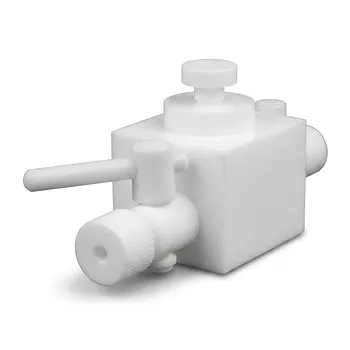
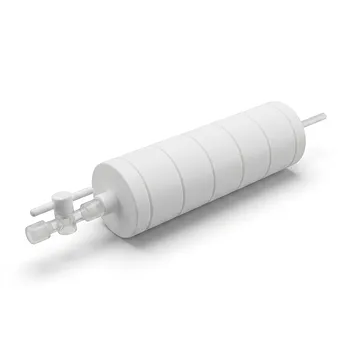
- Custom PTFE Filtration System Acid Resistant High Purity Semiconductor Grade Chemical Processing Filter
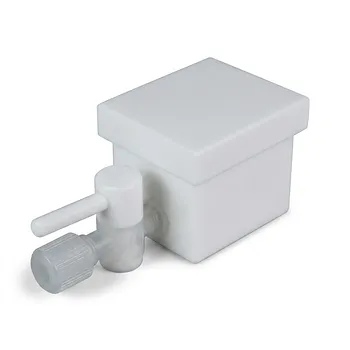
- High Corrosion Resistant PTFE Faucet Polytetrafluoroethylene Valve for Chemical Storage Drums and Fluid Transfer Systems Customizable Industrial Grade
- PTFE PFA Vacuum Filtration System Corrosion Resistant Customizable Shatterproof Laboratory Device
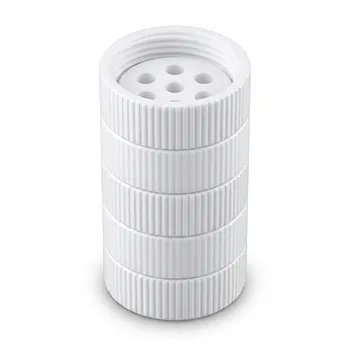
- PTFE Corrosion Resistant Filter with PFA Valve Connections and Integrated Sieve Plate
- High Temperature Chemical Resistant 50ml PTFE Syringe Customized Teflon Injector with Threaded Seal for Trace Analysis
People Also Ask
- What makes PTFE filtration systems advantageous for industrial and scientific use? Unmatched Chemical & Thermal Stability
- What steps are involved in selecting the proper PTFE filter? A 4-Step Guide to Optimal Filtration
- What sizes and pore options are available for PTFE filters? Choose the Right Filter for Your Application
- How does the hydrophobicity of PTFE filters benefit their use? Ensure Uninterrupted Gas Flow and Solvent Filtration
- What temperature resistance do PTFE filters offer? Unmatched Thermal Stability from -200°C to +260°C