All Questions
What Types Of Products Are Typically Made Through Ptfe Paste Extrusion? High-Performance Tubing, Hoses & Wire Insulation
Discover the key products made via PTFE paste extrusion, including chemical hoses, wire insulation, and medical tubing, and their critical applications.
What Special Considerations Are Needed When Machining Ptfe? Master High-Precision Fabrication
Learn essential PTFE machining techniques: sharp tooling, high feed rates, light clamping, and coolant use to manage thermal expansion and achieve accuracy.
What Factors Influence The Properties Of Compression Molded Ptfe Parts? Master The 4 Key Processing Parameters
Learn how preforming pressure, sintering temperature, dwell time, and cooling rate define the density, strength, and crystallinity of PTFE parts.
What Are The Key Steps In Ptfe Coating Application? A Guide To The Critical 4-Stage Process
Learn the 4 essential stages of PTFE coating: surface prep, primer, topcoat, and high-temperature cure for a durable, non-stick finish.
How Is Ptfe Skiving Performed? A Guide To Precision Ptfe Film Manufacturing
Learn how PTFE skiving creates uniform, continuous films for seals, gaskets, and insulation. Discover the process, benefits, and key applications.
What Is The Purpose Of Ptfe Etching? Unlock Bondable Surfaces For Your Components
Learn how PTFE etching chemically transforms the non-stick surface to enable strong, permanent bonds with adhesives and coatings for critical applications.
When Is Machining Preferred For Ptfe Part Fabrication? For High-Precision, Complex, Or Low-Volume Needs
Discover when CNC machining is the best method for PTFE parts, including prototyping, complex geometries, and achieving tight tolerances.
What Are The Key Characteristics Of Ptfe Ram Extrusion? Efficient Production Of Long Ptfe Rods & Tubes
Explore PTFE ram extrusion: a continuous process for cost-effective production of long, simple PTFE profiles with excellent chemical resistance and low friction.
How Does Ptfe Paste Extrusion Work? A Guide To Manufacturing High-Strength Components
Learn how PTFE paste extrusion creates strong, durable tubing and wire insulation via fibrillation, a key process for demanding applications.
What Are The Basic Steps In Ptfe Compression Molding? A Guide To The Press-And-Bake Process
Learn the four key stages of PTFE compression molding: powder charging, cold compression, sintering, and controlled cooling for durable components.
Why Can't Ptfe Be Processed Like Other Thermoplastics? Unlocking Its Unique Manufacturing Challenge
Discover why PTFE's extreme melt viscosity prevents conventional processing and requires specialized sintering methods for production.
What Are The Unique Properties Of Ptfe That Make It Commercially Valuable? Unlock Unmatched Performance
Explore PTFE's unique properties: chemical inertness, low friction, and thermal stability. Learn why it's vital for demanding industries.
How Can The Right Ptfe Gasket Improve Equipment Service Life? Extend Lifespan With Superior Protection
Discover how the right PTFE gasket prevents leaks, reduces friction, and resists corrosion to significantly extend your equipment's service life and reliability.
Why Is High-Quality Ptfe More Expensive? The Critical Role Of Purity And Precision Manufacturing
High-quality PTFE costs more due to 100% virgin resin purity and a precise sintering process, ensuring superior electrical, chemical, and mechanical performance.
What Factors Should Engineers Consider When Selecting Ptfe Gaskets? Ensure A Perfect Seal For Your Application
Learn the key factors for selecting PTFE gaskets: material type, temperature, pressure, chemical compatibility, and flange condition for optimal sealing.
Why Is Expanded Ptfe Considered Superior For Demanding Applications? Unlock Superior Sealing Performance
Discover why expanded PTFE's unique fibrillated microstructure offers superior creep resistance and sealing for demanding chemical and industrial applications.
How Does Structured Ptfe Improve Performance Over Virgin Ptfe? Enhance Durability & Strength
Learn how structured PTFE overcomes virgin PTFE's creep and cold flow issues for superior performance in high-pressure, high-temperature applications.
What Are The Limitations Of Virgin Ptfe In High-Temperature Applications? Avoid Creep And Sealing Failures
Learn why virgin PTFE's thermal expansion and creep cause failure above 200°C. Essential for engineers in semiconductor, medical, and lab industries.
What Are The Torque Requirements For Ptfe Gaskets According To En 1591-1? A Guide To Reliable Sealing
EN 1591-1 doesn't provide a single torque value. Learn how to calculate the correct torque range for your PTFE gasket based on material and operating conditions.
How Does En 13555 Assist In Comparing Ptfe Gaskets? Make Data-Driven Sealing Decisions
Learn how EN 13555 testing provides objective data on stress, pressure, and leakage to accurately compare PTFE gasket performance for your application.
What Are The Key Differences Between Monoaxial And Multidirectional Expanded Ptfe? Choose The Right Eptfe For Your Seal
Learn the critical difference between monoaxial and multidirectional ePTFE: fiber orientation dictates mechanical strength, stability, and ideal applications.
How Is Expanded Ptfe (Eptfe) Produced? A Guide To The Controlled Stretching Process
Learn how expanded PTFE is manufactured through mechanical stretching, creating a microporous structure for superior strength and breathability.
What Role Do Fillers Play In Structured Ptfe? Enhancing Strength, Wear, And Thermal Performance
Learn how fillers like glass and carbon transform PTFE, boosting wear resistance 1000x, improving creep resistance, and doubling thermal conductivity.
How Is Structured Ptfe Manufactured? The Process Behind High-Performance Ptfe Components
Learn how structured PTFE is made through paste extrusion, fibrillation, and sintering to create unique properties like porosity and high strength.
What Challenges Arise During The Manufacturing Of Skived Ptfe Sheets? Achieving Consistent Quality And Performance
Explore the key manufacturing challenges of skived PTFE sheets, from billet inconsistencies to internal stresses, and learn how to ensure material uniformity.
How Is Virgin Ptfe Processed Into Sheets? A Guide To Purity, Performance, And Trade-Offs
Learn the multi-step process of making virgin PTFE sheets, from powder compression to sintering and skiving, and understand its key properties and limitations.
Why Is The Quality Of Ptfe Resin Important For Structured And Expanded Ptfe? Ensure Long-Term Sealing Integrity
Learn how high-quality PTFE resin with long molecular chains provides superior creep resistance and durability for critical sealing applications.
What Are The Three Primary Classifications Of Ptfe Gasket Materials? Skived, Structured, Or Expanded Ptfe
Learn the differences between skived, structured, and expanded PTFE gaskets to select the right material for chemical resistance, pressure, and flange conditions.
What Are The Main Disadvantages Of Virgin Ptfe Products In Fluid Sealing Applications? Overcoming Creep And Cold Flow
Learn the key mechanical weaknesses of virgin PTFE seals, including high creep, low strength, and poor recovery, and discover superior alternatives.
What Alternatives To Ptfe Are Available For Sealing Applications? Find The Right Material For Your Sealing Needs
Explore PTFE alternatives like UHMW and thermoplastic elastomers for sealing applications. Learn when to choose each material based on your specific requirements.
How Can Fillers Improve The Performance Of Ptfe O-Rings? Enhance Strength, Wear, And Stability
Discover how fillers like glass, graphite, and bronze enhance PTFE O-ring performance by increasing strength, wear resistance, and thermal conductivity.
Why Is Correct Sizing More Critical For Ptfe O-Rings Than For Rubber O-Rings? Precision Is Non-Negotiable
PTFE O-rings require perfect sizing due to material rigidity, unlike elastic rubber seals. Learn the critical differences and design requirements.
What Are Spring-Energized Seals? An Active Sealing Solution For Extreme Ptfe Applications
Discover how spring-energized seals solve PTFE's cold flow and inelasticity issues, providing reliable sealing in extreme environments.
How Does The Inelasticity Of Ptfe Affect Its Use In Sealing Applications? Understand The Critical Trade-Offs For Reliability
Learn how PTFE's inelasticity makes it ideal for static seals but unsuitable for dynamic applications. Discover solutions with filled PTFE and backup rings.
What Are The Disadvantages Of Using Ptfe O-Rings? When Rigidity And Lack Of Elasticity Cause Leaks
PTFE O-rings lack elasticity, deform permanently, and are prone to leakage. Learn their key disadvantages and when to choose an alternative seal.
Why Is Ptfe Often Chosen For Extreme Temperatures Or Corrosive Environments? Unmatched Chemical & Thermal Resistance
Discover why PTFE's unique molecular structure provides superior performance from -325°F to +500°F and resistance to virtually all chemicals.
What Are The Main Advantages Of Ptfe O-Rings Compared To Elastomeric Compounds? Superior Sealing In Extreme Conditions
Discover why PTFE O-Rings outperform elastomers in chemical resistance, extreme temperatures, and long-term stability for demanding industrial applications.
What Are The Properties Of Teflon Pfa Encapsulated O-Rings? Achieve Superior Sealing In Extreme Environments
Explore the key properties of PFA encapsulated o-rings, including extreme chemical inertness, high temperature resistance, and low permeability for demanding applications.
What Are The Properties Of Teflon Fep Encapsulated O-Rings? A Hybrid Seal For Extreme Chemical & Thermal Resistance
Discover the unique properties of Teflon FEP encapsulated o-rings: a hybrid seal offering superior chemical inertness, a wide temperature range, and reliable elasticity.
What Are The Four Combinations Of Jacket Type And Elastomer Used In Teflon Encapsulated O-Rings? Select The Right Seal For Your Application
Learn the 4 standard Teflon encapsulated O-ring combinations (FEP/Viton, FEP/Silicone, PFA/Viton, PFA/Silicone) and how to select the best for your temperature, chemical, and pressure needs.
What Are The Advantages Of Teflon Encapsulated O-Rings? Superior Chemical & Temperature Resistance
Discover how Teflon encapsulated o-rings combine chemical inertness with reliable sealing force for demanding industrial applications.
Why Is Ptfe Used In The Semiconductor Industry? For Unmatched Chemical Resistance And Purity
Discover why PTFE's extreme chemical inertness, ultra-high purity, and electrical properties make it essential for semiconductor manufacturing.
Why Is Ptfe Used In Medical Applications? The Key To Biocompatible, Low-Friction Devices
Discover why PTFE is vital for medical devices. Learn about its biocompatibility, chemical resistance, and low-friction properties for safe, effective healthcare solutions.
Is Ptfe Recommended For Abrasive Applications? A Guide To Ptfe's Strengths And Weaknesses
Learn why PTFE is not suitable for abrasive applications but excels in chemical inertness, extreme temperatures, and low friction.
What Are The Primary Applications Of Ptfe Fasteners And Custom Parts? Critical Solutions For Extreme Environments
Explore how PTFE fasteners and custom parts ensure reliability in medical, semiconductor, and chemical processing with superior chemical and temperature resistance.
How Can Ptfe Be Processed Into Parts? A Guide To Molding And Machining For High-Performance Components
Learn how PTFE's unique properties require a specialized two-stage process of compression molding and CNC machining to create precise, durable parts.
What Types Of Fasteners Can Be Made From Ptfe? A Guide To Chemical-Resistant, Low-Friction Components
Explore the types of PTFE fasteners like screws, nuts, and washers, and their advantages in chemical, medical, and electronic applications.
What Are Typical Applications Of Tfe Encapsulated Gaskets? Ideal For Chemical & High-Purity Seals
Discover how TFE encapsulated gaskets provide reliable seals in chemical processing, pharmaceuticals, and more by combining PTFE inertness with resilient elastomer cores.
What Are The Benefits Of Fep-Encapsulated O-Rings? Superior Sealing For Harsh Chemical & High-Temp Environments
Discover the key benefits of FEP-encapsulated O-rings: unmatched chemical resistance, wide temperature range, low friction, and compliance for demanding industries.
What Are The Primary Uses Of Teflon Encapsulated O-Rings? Seal Against Aggressive Chemicals & High Temperatures
Discover how Teflon encapsulated O-rings provide reliable static seals for aggressive chemicals, high purity, and extreme temperatures in critical industries.
What Industries Benefit From Tfe Encapsulated O-Rings And Gaskets? Ensure Reliability In Demanding Applications
Discover how TFE encapsulated seals provide superior chemical resistance and purity for chemical, pharmaceutical, semiconductor, and food processing industries.
What Are The Advantages Of Square Cross-Section Ring Seals In Tfe Encapsulated Gaskets? Achieve Superior, Reliable Sealing
Discover the key advantages of square cross-section TFE encapsulated seals: larger sealing surface, reduced compression, and drop-in retrofitting for reliability.
What Are The Benefits Of White Tfe Encapsulated Silicone Core Gaskets? Optimize Purity & Performance
Discover the benefits of white TFE encapsulated silicone gaskets for superior chemical inertness, thermal stability, and cost-efficiency in sanitary applications.
What Are The Core Materials Used In Tfe Encapsulated Gaskets And Their Applications? A Guide To Superior Sealing
Learn about TFE encapsulated gaskets: their FEP shell, silicone/Viton core, and applications in chemical, pharmaceutical, and food industries.
What Are The Key Features Of Tfe Encapsulated O-Rings And Gaskets? Achieve Superior Sealing In Demanding Environments
Discover how TFE encapsulated seals combine PTFE chemical resistance with elastomer flexibility for superior performance in harsh chemical and temperature conditions.
What Factors Should Be Considered When Choosing Between Spiral And Split Ptfe Backup Rings?
Learn the key differences between spiral and split PTFE backup rings to make the right choice for your application's sealing performance and installation needs.
Which Type Of Ptfe Backup Ring Is More Convenient For Retrofitting Existing Systems? Choose Split Rings For Quick, In-Place Installation
Discover why split PTFE backup rings are the ideal choice for retrofitting, enabling easy installation without system disassembly to reduce downtime.
Which Type Of Ptfe Backup Ring Is Better For Harsh Environments? Choose Spiral Rings For Maximum Reliability
Learn why spiral PTFE backup rings offer superior extrusion resistance in high-pressure, high-temperature, and chemically aggressive environments.
What Are The Differences In Installation And Maintenance Between Spiral And Split Ptfe Backup Rings? A Guide To Maximizing Performance And Minimizing Downtime
Compare spiral vs. split PTFE backup ring installation and maintenance. Learn which is best for high-pressure sealing or easy serviceability to optimize your system.
How Do Spiral And Split Ptfe Backup Rings Compare In Terms Of Sealing Performance? High-Pressure Vs. Easy Installation
Compare spiral vs. split PTFE backup rings for sealing performance. Learn which is best for high-pressure, dynamic applications vs. easy installation.
When Are Split Ptfe Backup Rings Particularly Suitable? Ideal For Retrofitting And High-Pressure Seals
Discover when to use split PTFE backup rings for easy installation, retrofitting, and protecting O-rings from extrusion in high-pressure systems.
What Are The Advantages Of Split (Scarf Cut) Ptfe Backup Rings? Achieve Fast, Tool-Free Installation
Discover the key benefits of split PTFE backup rings, including easy installation without disassembly, simplified maintenance, and application versatility.
What Industries Are Spiral Ptfe Backup Rings Ideal For? Achieve Superior Sealing In Extreme Conditions
Discover why spiral PTFE backup rings are essential for oil & gas, aerospace, and automotive applications requiring high pressure, chemical resistance, and low friction.
What Are The Key Features Of Spiral Ptfe Backup Rings? Superior Extrusion Protection For High-Pressure Seals
Explore the key features of spiral PTFE backup rings: gapless design, low friction, chemical resistance, and high-temperature performance for reliable sealing.
What Is The Role Of Ptfe Backup Rings In Sealing Applications? Prevent Seal Extrusion Under High Pressure
Learn how PTFE backup rings support O-rings to prevent extrusion failure in high-pressure hydraulic, chemical, and thermal applications.
What Factors Should Be Considered When Selecting Teflon Encapsulated O-Rings? Ensure Chemical And Thermal Reliability
Learn how to select Teflon encapsulated O-rings by evaluating chemical compatibility, temperature range, and mechanical requirements for optimal performance.
What Are The Key Differences Between Fep And Pfa Encapsulated O-Rings? A Guide To Temperature, Flexibility & Cost
Compare FEP vs. PFA encapsulated O-rings: temperature limits, flexibility, and cost. Choose the right seal for your chemical or high-heat application.
What Are Some Common Applications For Teflon Encapsulated O-Rings? Sealing Solutions For Demanding Industries
Explore the key uses of Teflon encapsulated O-rings in chemical, pharmaceutical, semiconductor, and aerospace applications for superior chemical resistance.
How Do The Costs Of Teflon Encapsulated O-Rings Compare To Other Sealing Solutions? A Guide To Total Cost Of Ownership
Compare Teflon encapsulated O-ring costs vs. standard elastomer & solid PTFE seals. Learn why higher upfront cost leads to long-term savings in harsh environments.
Are Teflon Encapsulated O-Rings Compliant With Fda And Usp Standards? Ensuring Sealing Integrity For Regulated Industries
Learn how Teflon encapsulated O-rings meet FDA and USP Class VI standards for safe use in pharmaceutical, medical, and food processing applications.
How Resistant Are Teflon Encapsulated O-Rings To Compression Set? Achieve Long-Term Sealing Reliability
Learn why Teflon encapsulated O-rings offer superior compression set resistance for reliable, long-term sealing in demanding chemical and industrial environments.
What Is The Water Transmission Rate Of Teflon Encapsulated O-Rings? A Guide To Superior Moisture Sealing
Learn why Teflon encapsulated O-rings offer exceptionally low water transmission rates for critical sealing in semiconductor, medical, and lab applications.
How Do Teflon Encapsulated O-Rings Perform In High-Pressure Gas Applications? Achieve Superior Sealing Reliability
Learn how Teflon encapsulated O-rings provide exceptional gas permeation resistance and reliability in demanding high-pressure gas systems.
What Is The Operating Temperature Range For Teflon Encapsulated O-Rings? -60°C To +205°C Guide
Learn the operating temperature range for Teflon O-rings (-60°C to +205°C) and how the inner core material (Silicone/FKM) dictates performance.
What Is The Chemical Resistance Of Teflon Encapsulated O-Rings? The Ultimate Guide To Inert Sealing
Teflon encapsulated O-rings offer near-universal chemical resistance. Learn their strengths, key weaknesses, and critical application limits.
How Are The Dimensions Of Teflon Encapsulated O-Rings Defined? Master Id And Cs For A Perfect Seal
Learn how inside diameter (ID) and cross-section (CS) define Teflon encapsulated O-ring size and why construction impacts groove design for a reliable seal.
What Are The Components Of Teflon Encapsulated O-Rings? A Guide To Their Dual-Material Design
Learn about the two components of Teflon encapsulated O-rings: a fluoropolymer jacket for chemical resistance and an elastomer core for sealing force.
What New Technologies Are Being Applied To Ptfe O-Ring Seals? Enhance Performance With Nanomaterials & 3D Printing
Discover how nanomaterials and 3D printing are revolutionizing PTFE O-ring seals, offering superior wear resistance and custom geometries for demanding applications.
What Are The Future Trends For Ptfe O-Ring Seal Technology? Advanced Composites, 3D Printing & Sustainability
Explore the future of PTFE seals: advanced composites, 3D printing for complex designs, and sustainable manufacturing for superior performance.
What Is The Development History Of Ptfe O-Ring Seals? From Simple Shapes To High-Performance Seals
Explore the evolution of PTFE seals, from solving elastomer failures to advanced designs for extreme chemical, temperature, and low-friction applications.
What Are Some Application Examples Of Ptfe O-Ring Seals In Mechanical Equipment? Solve Extreme Sealing Challenges
Discover PTFE O-ring applications in pumps, valves, and cryogenic systems. Learn why PTFE is chosen for chemical, temperature, and friction challenges.
What Are The Key Considerations For Chemical Industry Applications Of Ptfe O-Ring Seals? Ensure Reliability In Aggressive Environments
Learn critical design factors for PTFE O-ring seals in chemical applications, including chemical inertness, temperature resistance, and mechanical design requirements.
What Special Requirements Do Aerospace Applications Have For Ptfe O-Ring Seals? Ensuring Reliability In Extreme Environments
Learn the critical requirements for PTFE O-rings in aerospace, including extreme temperature resistance, chemical inertness, and pressure cycling reliability.
How Are Ptfe O-Ring Seals Used In The Automotive Industry? Critical Sealing Solutions For High-Performance Vehicles
Explore how PTFE O-rings and seals provide superior performance in demanding automotive applications, from engines and transmissions to EVs.
What Are The Material Options For Ptfe O-Ring Seals? A Guide To High-Performance Filled Ptfe Compounds
Explore PTFE O-ring seal materials. Learn how fillers like glass, carbon, and bronze enhance performance for chemical resistance, temperature, and wear.
What Factors Are Important When Selecting Ptfe O-Ring Seals? Ensure Long-Term Reliability In Harsh Environments
Learn the key factors for selecting PTFE O-ring seals, including chemical compatibility, temperature range, and proper installation to prevent failure.
What Are The Main Application Areas Of Ptfe O-Ring Seals? Critical Seals For Demanding Industries
Explore the key applications of PTFE O-rings in aerospace, chemical, medical, and industrial sectors for extreme temperature and chemical resistance.
What Is The Basic Structure And Working Principle Of Ptfe O-Ring Seals? Unlock Superior Sealing Performance
Learn how PTFE O-rings combine an elastic core with a PTFE jacket for extreme chemical resistance, low friction, and high-temperature sealing.
What Industries Rely Heavily On Teflon Machined Parts? Critical Applications In Aerospace, Medical & More
Discover why aerospace, medical, chemical, and electronics industries depend on Teflon (PTFE) parts for extreme environments, chemical resistance, and biocompatibility.
Why Are Teflon Machined Parts Indispensable In Modern Industries? Unmatched Performance For Demanding Applications
Discover why Teflon's unique properties—chemical inertness, thermal stability, and low friction—make it indispensable for critical components in aerospace, medical, and industrial sectors.
How Will New Ptfe Composites And Machining Techniques Impact The Industry? Unlock Advanced Performance
Explore how new PTFE composites and advanced CNC machining overcome material limitations, enabling durable, high-precision components for demanding industries.
What Future Trends Are Expected In Teflon Parts Machining? Ai, Automation, And Sustainability
Explore how AI, IoT, and advanced automation are shaping the future of Teflon (PTFE) machining for superior precision and efficiency.
How Do Modern Cnc Machines Contribute To Energy Efficiency In Teflon Machining? Achieve Precision And Sustainability
Discover how advanced CNC features like optimized tool paths, regenerative braking, and targeted cooling enhance energy efficiency in Teflon machining.
What Advancements Are Being Made In Recycling Teflon Scrap? From Micronization To Upcycling
Explore the latest PTFE recycling methods: mechanical micronization for powders and thermal pyrolysis for chemical upcycling, overcoming Teflon's inertness.
How Is Teflon Parts Machining Adapting To Sustainability Goals? Maximize Lifespan & Minimize Waste
Learn how precision Teflon machining achieves sustainability through durable, long-lasting parts and advanced techniques that drastically reduce material waste.
What Impact Has Globalization Had On The Teflon Machining Industry? Unlock Global Expertise & Competitive Pricing
Explore how globalization transformed Teflon machining, offering access to niche expertise, higher quality standards, and competitive global sourcing.
How Has Sourcing Teflon Parts From Global Suppliers Improved Supply Chain Efficiency?
Learn how global sourcing of Teflon parts reduces lead times, lowers costs, and enhances supply chain efficiency for high-performance PTFE components.
Which Industries Benefit From Teflon Machined Parts? Achieve Peak Performance In Demanding Applications
Discover how aerospace, medical, chemical, and electronics industries use Teflon (PTFE) parts for superior chemical resistance, low friction, and thermal stability.
How Do Manufacturers Produce Custom Teflon Components? Precision Cnc Machining For High-Performance Parts
Discover how custom Teflon components are made using precision CNC machining to achieve tight tolerances and complex geometries for demanding applications.
What Factors Have Contributed To The Expansion Of The Global Supply Chain For Teflon Machined Parts? Key Drivers And Industry Insights
Explore the key factors driving the global Teflon parts supply chain expansion, including high-tech industry demand, advanced CNC machining, and specialized PTFE suppliers.
Related Products
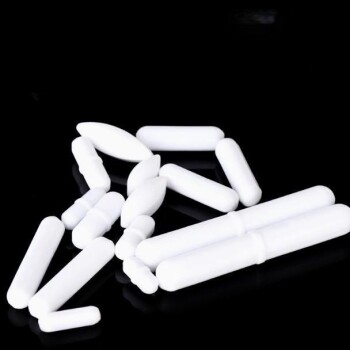
Custom PTFE Teflon Parts Manufacturer PTFE Magnetic Stirring Bar
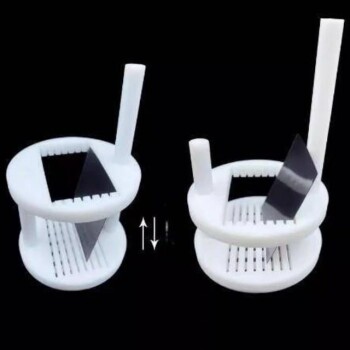
Custom PTFE Teflon Parts Manufacturer Adjustable Height Flower Basket
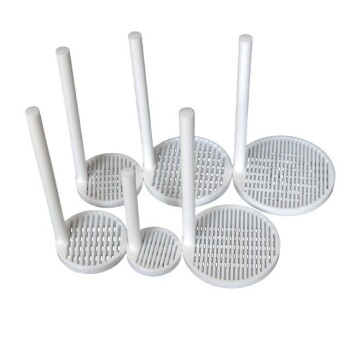
Custom PTFE Teflon Parts Manufacturer PTFE Cleaning Rack
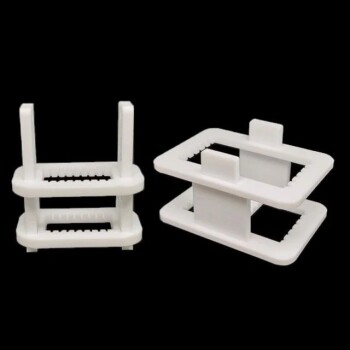
Custom PTFE Teflon Parts Manufacturer Conductive Glass Substrate Cleaning Rack
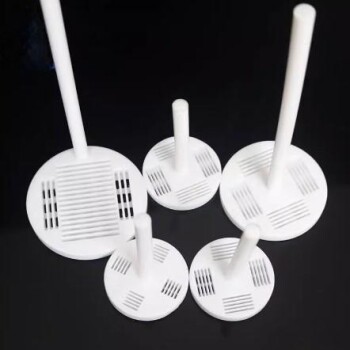
Custom Machined Molded PTFE Teflon Parts Manufacturer for Laboratory ITO FTO Conductive Glass Cleaning Flower Basket
