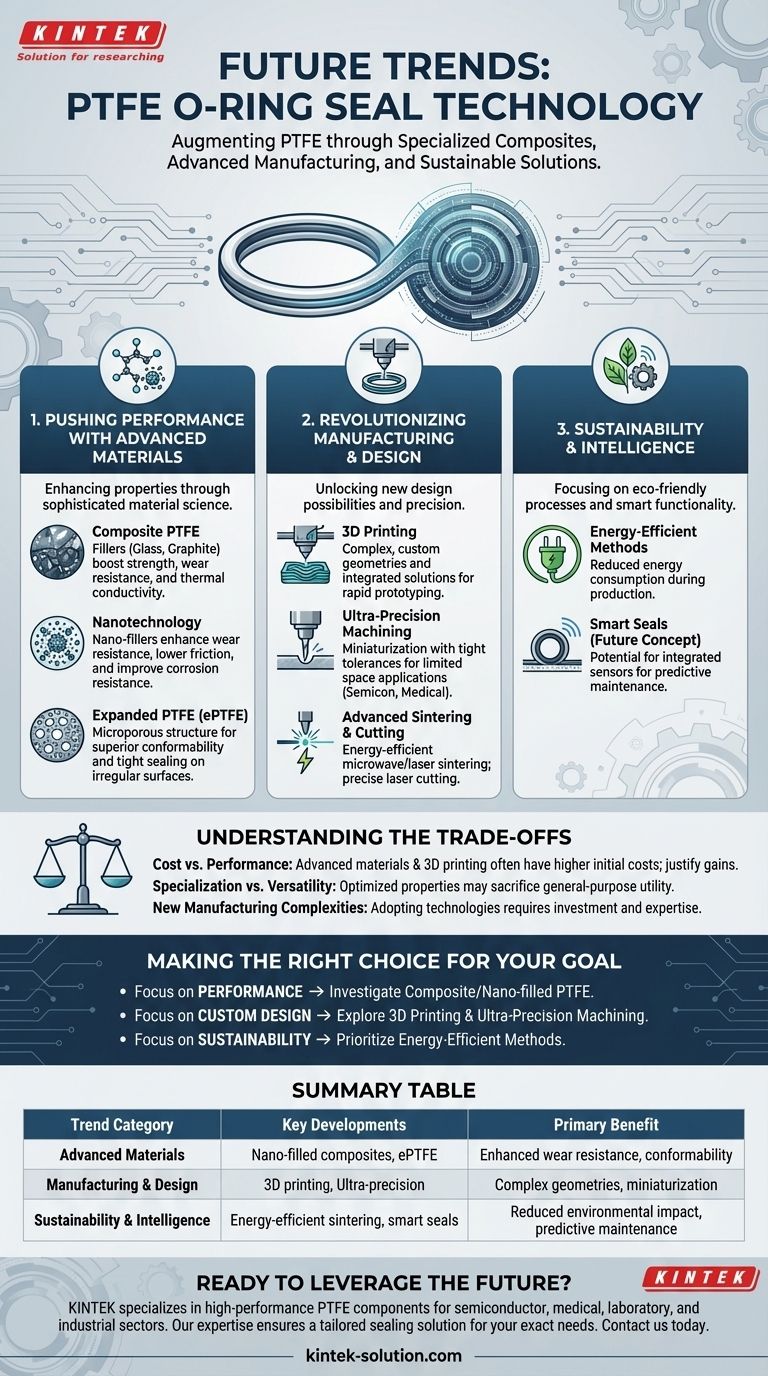
In short, the future of PTFE O-ring seal technology is not about replacing PTFE, but augmenting it. The core trends are centered on creating highly specialized composite materials, leveraging advanced manufacturing like 3D printing for complex designs, and pursuing greater sustainability and intelligence in sealing solutions.
The next generation of PTFE seals will be defined by customization. Instead of a one-size-fits-all material, engineers will specify seals with tailored fillers and complex geometries manufactured through precision processes to solve highly specific application challenges.
Pushing Performance with Advanced Materials
The fundamental properties of PTFE are being enhanced through sophisticated material science. The goal is to overcome its traditional limitations, such as low strength and creep, by blending it with other high-performance materials.
The Rise of Composite PTFE
Pure PTFE is relatively soft. By adding fillers, its mechanical properties can be dramatically improved.
Common fillers like glass fiber or graphite are used to increase compressive strength, reduce wear, and improve thermal conductivity, making seals more robust in high-pressure and high-temperature environments.
Nanotechnology for Superior Properties
The next evolution of composite materials involves nanotechnology.
Adding nano-scale fillers can significantly enhance wear resistance, lower the coefficient of friction, and improve corrosion resistance without the drawbacks of larger, more traditional fillers. This is key for applications requiring both durability and lubricity.
Expanded PTFE (ePTFE) for Conformability
Expanded PTFE (ePTFE) is a material with a microporous structure created by stretching PTFE under specific conditions.
This structure gives ePTFE superior conformability, allowing it to create a tight seal even on irregular or damaged surfaces where a standard O-ring might fail.
Revolutionizing Manufacturing and Design
How PTFE seals are made is changing as rapidly as the materials themselves. These new processes unlock design possibilities that were previously impossible or cost-prohibitive.
3D Printing for Complex Geometries
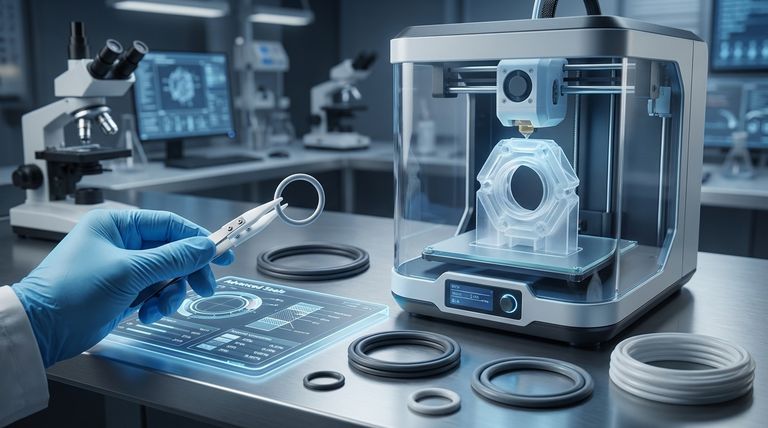
Additive manufacturing, or 3D printing, is making it possible to produce modified PTFE seals with highly complex internal structures and custom shapes on demand.
This allows for rapid prototyping and the creation of integrated sealing solutions that are optimized for a specific piece of equipment, moving beyond simple O-ring forms.
Ultra-Precision Machining for Miniaturization
Industries like semiconductors and medical devices require increasingly smaller and more precise components.
Ultra-precision machining allows for the creation of miniaturized PTFE seals with extremely tight tolerances, which is critical for applications where space is limited and sealing integrity is paramount.
Advanced Sintering and Cutting
The final steps of manufacturing are also becoming more efficient and precise.
Energy-efficient sintering methods like microwave or laser-assisted sintering reduce the energy consumed during production. At the same time, techniques like laser cutting enable the creation of customized gaskets and seals with unparalleled precision.
Understanding the Trade-offs
While these advancements offer significant benefits, they are not without practical considerations. A clear understanding of the trade-offs is essential for proper application.
Cost vs. Performance
Advanced materials like nano-filled PTFE and processes like 3D printing are currently more expensive than traditional methods. The performance gains must justify the increased cost for the specific application.
Specialization vs. Versatility
A PTFE seal heavily filled with graphite for high thermal conductivity may not be suitable for an application requiring high electrical insulation. Each specialized compound excels at a specific task, often at the expense of general-purpose utility.
New Manufacturing Complexities
Adopting new manufacturing techniques requires investment in technology and expertise. 3D printing PTFE, for instance, is a complex process, and ensuring material properties are consistent and reliable is a significant engineering challenge.
Making the Right Choice for Your Goal
The future of PTFE sealing technology provides a powerful and highly specialized toolkit. To leverage these trends, align your approach with your primary engineering objective.
- If your primary focus is performance in extreme environments: Investigate composite and nano-filled PTFE materials that offer enhanced strength, wear resistance, and thermal properties.
- If your primary focus is custom or complex designs: Explore the capabilities of 3D printing and ultra-precision machining to create unique sealing solutions for integrated systems.
- If your primary focus is sustainability and process efficiency: Ask your suppliers about their use of energy-efficient sintering methods and other green manufacturing initiatives.
Ultimately, these trends empower engineers to stop designing around a seal's limitations and start designing seals that meet the exact demands of their application.
Summary Table:
| Trend Category | Key Developments | Primary Benefit |
|---|---|---|
| Advanced Materials | Nano-filled composites, ePTFE | Enhanced wear resistance, superior conformability |
| Manufacturing & Design | 3D printing, ultra-precision machining | Complex geometries, miniaturization, rapid prototyping |
| Sustainability & Intelligence | Energy-efficient sintering, smart seals | Reduced environmental impact, predictive maintenance |
Ready to leverage the future of PTFE sealing for your application?
At KINTEK, we specialize in manufacturing high-performance PTFE components—including seals, liners, and labware—for the semiconductor, medical, laboratory, and industrial sectors. Our expertise in precision production and custom fabrication, from prototypes to high-volume orders, ensures you get a sealing solution tailored to your exact needs.
Contact us today to discuss how our advanced PTFE technology can solve your specific challenges.
Visual Guide
Related Products
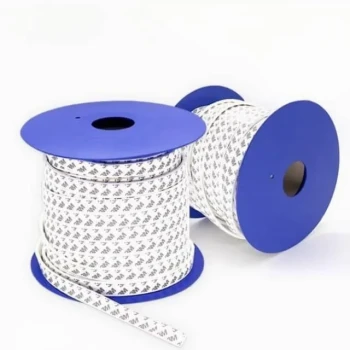
- Custom PTFE Sealing Tapes for Industrial and High Tech Applications
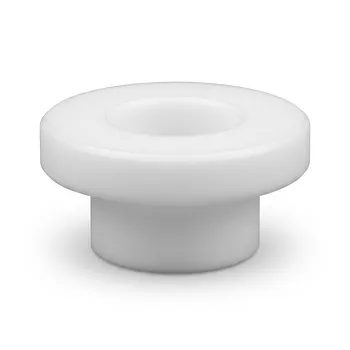
- Custom PTFE Insulating Gaskets and Corrosion Resistant Fluoropolymer Seals for Industrial Electrical Applications
- High Temperature Chemical Resistant 50ml PTFE Syringe Customized Teflon Injector with Threaded Seal for Trace Analysis
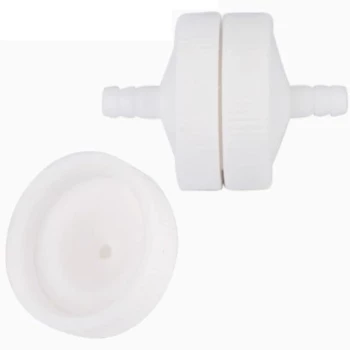
- Customizable PTFE Seals Filter Holders for Versatile Applications
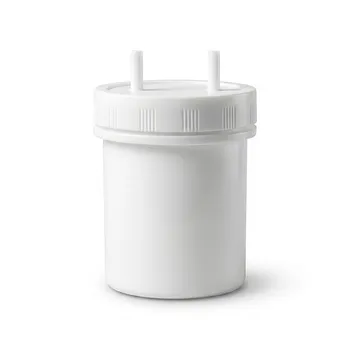
- High Purity Corrosion Resistant PTFE Fluoropolymer Raw Material Drum with Secure Screw Cap Seal for Low Background Chemical Storage and Feeding
People Also Ask
- How are custom PTFE parts used in the automotive sector? Enhance Vehicle Performance & Durability
- Why is PTFE's temperature stability important for sealing applications? Ensure Leak-Proof Performance from -200°C to 260°C
- Why is PTFE popular in the oil and gas industry? Withstand Extreme Heat, Pressure & Corrosion
- What is PTFE and why is it used for seals? The Ultimate Guide to High-Performance Sealing
- What are the key benefits of using PTFE for seals? Unlock Superior Performance in Extreme Conditions