All Questions
In What Applications Are Ptfe-Lined Bearings Particularly Beneficial? For Maintenance-Free Performance In Harsh Environments
Discover how PTFE-lined bearings provide self-lubrication, low friction, and chemical resistance for automotive, medical, food processing, and industrial applications.
What Are The Main Benefits Of Ptfe-Lined Bearings? Achieve Maintenance-Free, High-Performance Motion
Discover the key benefits of PTFE-lined bearings: self-lubrication, low friction, and chemical resistance for demanding applications.
What Are The Key Properties Of Ptfe That Make It Suitable For Lined Bearings? Discover The Ultimate Low-Friction Solution
Learn how PTFE's low friction, self-lubrication, high compressive strength, and chemical inertness make it ideal for durable, maintenance-free bearings.
Why Are Ptfe Expansion Bellows Considered Versatile In Technology? Mastering Chemical, Thermal, And Mechanical Challenges
Discover how PTFE bellows' chemical inertness, thermal stability, and mechanical flexibility solve complex engineering problems across industries.
How Does The Low Friction Coefficient Of Ptfe Expansion Bellows Benefit Fluid Flow? Reduce Energy Use & Prevent Blockages
Discover how PTFE bellows' low friction and non-stick surface minimize pipeline resistance, prevent buildup, and ensure reliable, efficient fluid transport.
What Temperature Range Can Ptfe Expansion Bellows Withstand? Endure Extremes From -200°C To 260°C
Learn how PTFE expansion bellows handle extreme temperatures from -200°C to 260°C while maintaining chemical inertness and flexibility in demanding applications.
What Advantages Do Ptfe Expansion Bellows Offer Over Traditional Alternatives? Achieve Unmatched Reliability In Demanding Environments
Discover the key advantages of PTFE expansion bellows, including superior chemical resistance, thermal stability, and lower total cost of ownership.
What Are Some Specialized Industrial Applications Of Guide Rings? Essential Uses For Oil-Free And High-Load Systems
Discover key industrial applications for guide rings, including oil-free compressors, pumps, and automotive systems, to prevent contamination and manage high loads.
What Materials Are Available For Guide Rings And What Are Their Properties? Select The Right Compound For Your Application
Compare PTFE, filled PTFE (glass, bronze, carbon), and PEEK guide ring materials. Learn properties like wear resistance, load capacity, and chemical inertness.
What Is The Purpose Of Ptfe Piston Guide Rings? Prevent Costly Wear In Your Equipment
Learn how PTFE piston guide rings prevent metal-to-metal contact, absorb side loads, and enhance reliability in demanding applications.
What Role Do Ptfe Expansion Joints Play In Sustainable Industrial Practices? Reduce Waste And Emissions
PTFE expansion joints enhance sustainability through superior durability, chemical resistance, and emission control, lowering waste and costs.
What Overall Benefits Do Ptfe Expansion Joints Provide To Industrial Systems? Enhance System Reliability And Longevity
Discover how PTFE expansion joints absorb movement, resist chemicals, and ensure thermal stability to protect industrial piping systems and reduce downtime.
How Does The Manufacturing Of Ptfe Expansion Joints Accommodate Industry-Specific Needs? Tailor-Made Solutions For Your Application
Learn how PTFE expansion joints are customized for chemical resistance, purity, and precision to meet the demands of industries like chemical, pharmaceutical, and food processing.
What Additional Safety Feature Do Ptfe Compensators Provide? Prevent Electrical Sparks In Hazardous Environments
PTFE compensators provide critical electrical insulation, preventing stray currents and ignition risks in conductive fluid systems and explosive atmospheres.
What Factors Should Be Considered When Selecting A Ptfe Expansion Joint? Ensure System Integrity And Safety
Learn the critical factors for selecting PTFE expansion joints, including pressure, temperature, chemical compatibility, and movement requirements.
What Are The Installation Benefits Of Ptfe Compensators Compared To Metal Alternatives? Achieve Faster, Safer, And More Cost-Effective Installation
Discover how PTFE compensators' lightweight and flexible design simplifies installation, reduces labor, and saves time compared to metal alternatives.
What Maintenance Advantages Do Ptfe Compensators Offer? Maximize Uptime With Self-Cleaning Design
PTFE compensators eliminate maintenance with non-stick surfaces that prevent buildup, scaling, and corrosion. Achieve higher uptime and reliability.
How Do Ptfe Expansion Joints Contribute To Sustainability? Enhance Long-Term System Integrity & Environmental Safety
Learn how PTFE expansion joints reduce waste, prevent contamination, and improve safety through exceptional durability and chemical inertness.
How Do Ptfe Compensators Handle Mechanical Stress In Piping Systems? Absorb Movement And Protect Equipment
Learn how PTFE compensators manage mechanical stress by absorbing thermal expansion, vibration, and movement to prevent pipe fatigue and equipment damage.
What Environmental Benefits Do Ptfe Expansion Joints Provide? Achieve Sustainability And Compliance
PTFE expansion joints reduce industrial waste and fugitive emissions through superior chemical resistance and durability. Enhance your environmental compliance.
What Is The Temperature Tolerance Range Of Ptfe Compensators? Ideal For Extreme Heat And Cryogenic Systems
PTFE compensators operate reliably from -200°C to +260°C. Learn about their thermal stability for demanding industrial applications.
What Are The Types Of Ptfe Expansion Joints Available? Find The Right Fit For Your Piping System
Explore the 3 main types of PTFE expansion joints: lined, molded, and multi-arch. Learn how to select the best joint for chemical, temperature, and movement needs.
What Makes Ptfe Compensators Suitable For Handling Aggressive Chemicals? Unmatched Chemical Inertness For Your System
Discover why PTFE compensators excel in chemical resistance, ensuring product purity and protecting critical systems from acids, bases, and solvents.
What Are Ptfe Expansion Joints And Their Primary Function? Protect Piping Systems From Stress And Corrosion
Learn how PTFE expansion joints absorb thermal expansion, isolate vibrations, and resist chemicals to protect critical piping infrastructure.
In Which Industries Are Ptfe Compensators Commonly Used? Essential For Corrosive & High-Purity Systems
Discover how PTFE compensators handle corrosive chemicals, absorb vibration, and ensure purity in chemical, pharmaceutical, power generation, and water treatment industries.
What Are The Primary Functions Of Ptfe Expansion Joints? Protect Piping Systems From Stress And Failure
Learn how PTFE expansion joints absorb thermal movement, isolate vibrations, and correct misalignment to ensure industrial piping system integrity.
How Are Rocker Bearings Integrated With Ptfe Sliding Arrangements? Achieve Complex Multi-Directional Movement
Learn how rocker bearings are integrated with PTFE to create a single hybrid unit for simultaneous rocking and sliding motion in structural applications.
What Are The Advantages Of Ptfe Sliding Bearings In Terms Of Size And Design Flexibility? Achieve Compact, Custom Solutions
Discover how PTFE sliding bearings offer superior design flexibility, compactness, and low-friction performance for demanding applications.
What Are The Key Properties Of Ptfe For Sliding Bearings? Achieve Superior Load Support And Low Friction
Discover why PTFE's low friction, high compressive strength, and chemical resistance make it ideal for high-performance sliding bearings in demanding applications.
What Are Ptfe Expansion Joints And What Are Their Primary Functions? Protect Your Piping System From Movement And Corrosion
Learn how PTFE expansion joints absorb thermal movement, dampen vibration, and provide unmatched chemical resistance in demanding industrial applications.
What Additional Services Are Offered With Ptfe Expansion Joints? Ensure A Perfect Fit For Your System
Discover the essential engineering, design, and consulting services that make PTFE expansion joint solutions reliable and long-lasting.
How Do Ptfe Expansion Joints Contribute To Food And Beverage Production? Ensure Purity And Boost Efficiency
Discover how PTFE expansion joints protect product integrity, meet FDA standards, and reduce maintenance costs in food and beverage processing.
What Role Do Ptfe Expansion Joints Play In Power Generation Facilities? Ensure Reliability And Cut Costs
Learn how PTFE expansion joints absorb stress, prevent failures, and reduce maintenance costs in power plant piping systems for turbines and generators.
Why Are Ptfe Expansion Joints Particularly Suitable For The Chemical Industry? Ensure Leak-Free, Corrosion-Resistant Piping
Discover how PTFE expansion joints provide unmatched chemical inertness, high-temperature stability, and non-contaminating surfaces for safe, reliable chemical processing.
How Do Ptfe Expansion Joints Benefit The Oil And Gas Industry? Ensure System Integrity In Harsh Environments
Discover how PTFE expansion joints manage movement, resist corrosion, and withstand extreme temperatures in oil and gas pipelines for superior reliability.
In Which Industries Are Ptfe Expansion Joints Commonly Used? Critical For Chemical, Power, And Hygienic Systems
Discover the key industries using PTFE expansion joints for superior chemical resistance, temperature stability, and product purity in demanding applications.
What Are The Key Material Properties Of Ptfe That Make It Suitable For Expansion Joints? Ensure Long-Term Reliability In Demanding Systems
Discover how PTFE's chemical inertness, high-temperature stability, and low friction make it the ideal material for durable, high-performance expansion joints.
What Are Ptfe Expansion Joints And What Is Their Primary Function? Protect Your Piping System From Stress And Failure
Learn how PTFE expansion joints absorb thermal expansion, vibration, and misalignment in harsh chemical and high-purity environments.
Why Are Ptfe Bellows Suitable For Electroplating Processes? Master Harsh Chemical & Thermal Environments
Discover why PTFE bellows excel in electroplating with unmatched chemical resistance, high-temperature stability, and critical electrical insulation.
How Are Ptfe Bellows Manufactured? A Guide To Precision Thermal Forming
Learn how PTFE bellows are made via ram extrusion and thermal forming for unmatched chemical resistance and flexibility in demanding applications.
What Advantages Do Ptfe Bellows Have Over Other Types Of Bellows? Superior Chemical Resistance And Flexibility
Discover the key advantages of PTFE bellows, including unmatched chemical inertness, superior flexibility, and operational purity for demanding industries.
What Industries Commonly Use Ptfe Bellows And For What Purposes? Critical Applications In Chemical & Semiconductor
Discover the key industries using PTFE bellows for chemical inertness, high purity, and flexibility in semiconductor, pharmaceutical, and chemical processing.
What Are The Key Properties Of Ptfe Bellows? Achieve Unmatched Chemical & Thermal Resilience
Discover the key properties of PTFE bellows: extreme chemical inertness, wide temperature range (-200°C to 260°C), low friction, and flexibility for demanding applications.
What Temperature Range Can Ptfe Bellows Withstand? Operate From -200°C To +260°C
PTFE bellows withstand extreme temperatures from -200°C to +260°C, offering reliable performance in cryogenic and high-heat applications.
What Are Ptfe Bellows And What Material Are They Made From? Discover The Key To Chemical Resistance & Flexibility
Learn about PTFE Bellows made from Teflon, offering unmatched chemical resistance, flexibility, and temperature tolerance for demanding industrial applications.
What Should Be Placed Between A Shirt And A Heat Press? Protect Your Gear With The Right Barrier
Learn why a protective cover sheet is essential for heat pressing. Prevent scorching, platen contamination, and ensure clean transfers every time.
Can A Towel Be Used Instead Of A Teflon Sheet For Heat Press? A High-Risk Shortcut Explained
Learn why a Teflon sheet is essential for heat pressing, and the risks of using a towel as a substitute, including scorching and uneven transfers.
What Are Alternatives To Teflon Sheets For Heat Press? Parchment Paper Vs. Silicone Vs. Teflon
Explore alternatives to Teflon heat press sheets, including parchment paper and silicone. Learn the trade-offs in heat resistance, durability, and transfer quality.
Why Is A Teflon Sheet Essential For Heat Transfer Projects? Ensure Perfect, Non-Stick Results
Discover why a Teflon (PTFE) sheet is vital for heat transfer. It provides a non-stick barrier, protects garments from scorching, and shields your heat press.
What Printing Applications Are Teflon Sheets Suitable For? Achieve Flawless Heat Transfers
Discover how Teflon sheets protect garments and equipment for professional heat transfer vinyl (HTV) and sublimation printing applications.
How Do Teflon Sheets Prevent Adhesive Build-Up On Heat Presses? The Science Of Non-Stick Protection
Discover how Teflon (PTFE) sheets use low surface energy to prevent adhesive build-up on heat presses, ensuring clean transfers and protecting your equipment.
What Temperature Can Heat-Resistant Teflon Sheets Withstand? Up To 500°F For Reliable Performance
Learn the temperature limits of Teflon (PTFE) sheets: continuous use up to 500°F (260°C) and cryogenic stability down to -328°F (-200°C).
What Makes Reusable Teflon Sheets Environmentally Friendly? Cut Waste With Durable, Long-Lasting Solutions
Discover how reusable Teflon sheets reduce landfill waste by replacing hundreds of single-use papers, offering a practical eco-friendly alternative.
How Does The Durability Of Teflon Sheets Benefit Printing Operations? Boost Quality & Cut Costs
Discover how durable Teflon sheets protect equipment, ensure print consistency, and reduce costs in heat press operations for superior results.
What Are The Key Benefits Of Heat-Resistant Teflon Sheets For Printing? Protect Your Prints & Equipment
Discover how heat-resistant Teflon sheets prevent scorching, ensure clean transfers, and protect your heat press for professional printing results.
What Advantages Do Teflon Sheets Offer For Sublimation Printing? Achieve Flawless, Professional Transfers
Discover how Teflon sheets provide a non-stick surface, heat resistance, and reusability for perfect sublimation printing results every time.
Why Are Teflon Sheets Important For Sublimation Printing? Protect Your Press & Ensure Perfect Prints
Discover how Teflon sheets prevent heat press damage, ensure even heat distribution, and guarantee vibrant, professional sublimation prints every time.
What Are The Steps To Create A Custom Teflon Sheet For A Heat Press? Boost Your Production Efficiency & Quality
Learn how to measure, cut, and install a custom PTFE sheet for your heat press to ensure flawless heat distribution and protect your equipment.
How Does A Teflon Sheet Protect Materials During Heat Press Applications? Prevent Scorching & Smudging For Professional Results
Learn how a Teflon sheet acts as a heat-resistant, non-stick barrier to prevent fabric scorching, ink smudging, and adhesive buildup on your heat press.
What Are The Benefits Of Using A Teflon Sheet For Heat Press? Achieve Flawless, Professional Transfers
Discover how a Teflon sheet protects your heat press and garments, prevents scorching and smudging, and ensures even heat distribution for perfect results.
What Are The Main Advantages Of Using Ptfe Parts In Industrial Applications? Unlock Unmatched Chemical Resistance And Reliability
Discover the key benefits of PTFE parts, including superior chemical inertness, low friction, high thermal stability, and excellent electrical insulation for demanding industries.
What Are Some Examples Of Electrical Insulation Products That Can Be Made From Ptfe? High-Performance Solutions For Demanding Applications
Explore common PTFE electrical insulation products like insulators, spacers, and wire coatings, and learn why PTFE's dielectric strength and temperature resistance make it ideal.
What Is Glass-Filled Ptfe And What Are Its Properties? A Guide To Enhanced Ptfe Performance
Learn about Glass-Filled PTFE, a composite material offering superior wear resistance and dimensional stability while retaining PTFE's chemical inertness.
What Are Some Common Expanded Ptfe Products? Discover The Top 3 Forms For Superior Sealing
Learn about the 3 most common Expanded PTFE (ePTFE) products: sheets, joint sealants, and tapes, and their critical role in high-performance industrial sealing.
What Is Expanded Ptfe And How Does It Differ From Regular Ptfe? Choosing The Right Material For Your Application
Learn the key differences between Expanded PTFE (ePTFE) and standard PTFE, including structure, properties, and ideal applications for sealing and components.
What Are The Advantages Of Using Filled Ptfe Materials? Enhance Strength, Wear, And Stability
Discover how filled PTFE materials improve mechanical strength, wear resistance, and dimensional stability while retaining key PTFE properties for demanding applications.
What Are Some Common Ptfe Products Besides Gasketing Materials? Discover High-Performance Components
Explore PTFE's applications beyond gaskets: bearings, seals, piston rings, and fluid-handling parts for industrial, semiconductor, and medical use.
What Are The Common Applications Of Ptfe Bars? Key Uses In High-Performance Industries
Explore the primary applications of PTFE bars, including seals, bearings, and medical components, driven by their chemical resistance and low friction.
What Are The Different Types Of Ptfe Rods Available Based On Manufacturing Technology? Choose The Right Type For Your Project
Learn the differences between extruded and molded PTFE rods, including size limitations, internal stress, and ideal applications for each manufacturing method.
What Materials Are Offered For Ptfe Bushes? Choose The Right Filled Ptfe Compound For Your Application
Learn about high-performance PTFE bush materials, including FDA-compliant and wear-resistant grades, to ensure optimal performance in your specific application.
What Materials Are Used To Manufacture Ptfe Bars? A Guide To Virgin & Filled Ptfe
Discover the materials used in PTFE bars, from virgin PTFE resin to filled grades like glass, carbon, and bronze for enhanced performance.
What Are The Advantages Of Using Ptfe Bushes? Low-Friction, Chemical-Resistant Performance
Discover the key benefits of PTFE bushes: self-lubricating, chemical inertness, wide temperature range, and electrical insulation for demanding applications.
How Are Ptfe Bushes Designed And Manufactured? A Guide To Custom Engineered Components
Learn how PTFE bushes are designed for specific applications and manufactured from raw polymer to finished part, including material selection and molding.
Why Are Ptfe Sheets Used In The Medical Industry? For Biocompatibility, Inertness & Low Friction
Discover why PTFE's biocompatibility, chemical inertness, and low friction make it essential for medical implants, surgical tools, and lab equipment.
What Temperature Range Can Ptfe Sheets Withstand? From -200°C To +260°C For Extreme Applications
PTFE sheets reliably operate from -200°C to +260°C, maintaining chemical inertness and low friction across this extreme thermal range.
How Should Ptfe Sheets Be Maintained For Optimal Performance? Proactive Strategies For Longevity
Learn the essential steps for PTFE sheet maintenance: regular inspection, proper cleaning, and correct storage to preserve its low-friction and chemical resistance.
What Are Some Installation Tips For Ptfe Sheets? Achieve A Perfect, Leak-Free Seal
Learn expert PTFE sheet installation tips for liners and gaskets, including surface prep, cutting, and bonding techniques for a flawless seal.
What Factors Should Be Considered When Choosing A Ptfe Sheet? Select The Right Grade For Your Application
Learn how to choose the right PTFE sheet by evaluating chemical resistance, temperature range, mechanical stress, and electrical needs for your industry.
What Industries Commonly Use Ptfe Sheets And For What Purposes? Unlock The Power Of High-Performance Ptfe
Discover how PTFE sheets are used in chemical, aerospace, medical, and food industries for their chemical inertness, temperature resistance, and low friction.
What Are The Key Benefits Of Using Ptfe Sheet Material? Achieve Unmatched Performance In Extreme Conditions
Discover the key benefits of PTFE sheet material: extreme chemical resistance, wide temperature range, low friction, and superior electrical insulation.
What Machine Parts Can Be Made From Teflon? Seals, Bearings & Components For Harsh Environments
Discover Teflon (PTFE) machine parts like seals, bearings, and liners that excel in low friction, chemical resistance, and extreme temperatures.
What Are The Common Applications Of Ptfe In Industrial Components? Seals, Bearings & More
Explore key PTFE applications in seals, gaskets, bearings, and electrical insulation for chemical, semiconductor, and medical industries.
What Types Of Parts Are Made From Filled Granular Ptfe Resins? Enhance Durability In Demanding Applications
Discover how filled PTFE resins create high-performance parts like gaskets, seals, and bearings by improving wear resistance and strength.
What Are Bearing Grades Of Ptfe Used For? Achieve High-Performance, Self-Lubricating Components
Discover how bearing grades of PTFE with fillers like carbon, bronze, or glass create durable, low-friction parts for demanding industrial applications.
Are Teflon Ptfe Sheets Compatible With All Heat Press Machines? The Essential Guide To Protecting Your Equipment & Projects
Learn why Teflon PTFE sheets are a universal, non-stick shield for all heat press machines, protecting your platen and ensuring flawless transfers.
What Is The Recommended Method For Cleaning Teflon Ptfe Sheets? A Guide To Preserving Non-Stick Performance
Learn the safe and effective methods for cleaning PTFE sheets, from simple soap and water to industrial thermal cleaning, while avoiding surface damage.
Can Teflon Ptfe Sheets Be Customized In Size? Achieve Precise Custom Ptfe Components For Your Industry
Learn how PTFE sheets can be customized in size, thickness, and form, including professional cutting and machining for high-precision applications.
Are Teflon Ptfe Sheets Safe For Food-Related Uses? Ensuring Food Safety With Pure Ptfe
Learn why 100% pure, FDA-approved PTFE is the only safe choice for food contact, from baking sheets to industrial seals.
Can Teflon Ptfe Sheets Be Used As A Baking Liner? A Reusable, Non-Stick Solution For Bakers
Discover the benefits and limitations of using PTFE sheets as baking liners, including temperature limits, reusability, and performance compared to parchment paper.
How Can Teflon Ptfe Sheets Assist In Crafting With Glue Or Resin? Achieve A Clean, Reusable Workspace
Discover how Teflon PTFE sheets provide a non-stick, heat-resistant surface for glue and resin crafting, ensuring easy cleanup and long-term value.
What Role Do Teflon Ptfe Sheets Play In Sewing Projects? Achieve Flawless, Professional Results
Discover how Teflon PTFE sheets protect delicate fabrics and prevent sticking during heat pressing and sewing, ensuring clean, professional results.
How Can Teflon Ptfe Sheets Be Used In Heat Press Applications? Protect Your Designs And Equipment
Learn how Teflon PTFE sheets prevent scorching, ensure smooth transfers, and keep your heat press clean for professional results every time.
What Are The Main Benefits Of Using Teflon Ptfe Sheets? Achieve Superior Performance In Extreme Conditions
Discover the key benefits of Teflon PTFE sheets: non-stick surface, extreme heat resistance, chemical inertness, and electrical insulation.
What Are Teflon Ptfe Sheets Made Of And What Are Their Key Properties? Unlock Superior Performance
Discover the core properties of PTFE sheets: extreme chemical resistance, high heat tolerance, and low friction for demanding industrial applications.
Are Metric Sizes Available For Ptfe Balls? Ensuring Precision With The Right Tolerance
Yes, metric PTFE balls are standard. Learn why the manufacturing tolerance is the critical factor for proper function in your application.
What Additional Processing Option Is Available For Ptfe Balls? Enable Secure Bonding With Chemical Etching
Discover how chemical etching makes PTFE balls bondable, overcoming their natural non-stick properties for reliable assembly in your applications.
What Fillers Are Available For Ptfe Balls? Enhance Performance For Demanding Applications
Explore common PTFE ball fillers like glass, carbon, bronze, and MoS₂ to improve wear resistance, strength, and thermal conductivity.
What Are The Available Grades Of Ptfe Balls? Choose The Right Grade For Your Application
Compare Virgin vs. Ultra-Modified PTFE ball grades, sizes, tolerances, and finishes to select the optimal component for your needs.
How Do Ptfe Balls Contribute To Reduced Maintenance Costs? Extend Component Life And Cut Downtime
Discover how PTFE's chemical resistance, self-lubrication, and durability lower maintenance costs by reducing part replacements and downtime.
In What Applications Are Ptfe Balls Highly Functional? Ideal For Corrosive, Self-Lubricating Systems
Discover the key applications for PTFE balls, including chemical valves, light-load bearings, and lab equipment, where chemical resistance and self-lubrication are critical.
Related Products
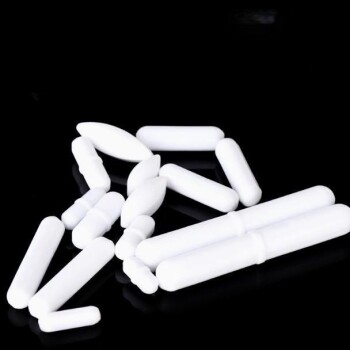
Custom PTFE Teflon Parts Manufacturer PTFE Magnetic Stirring Bar
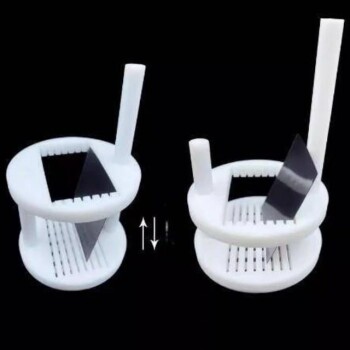
Custom PTFE Teflon Parts Manufacturer Adjustable Height Flower Basket
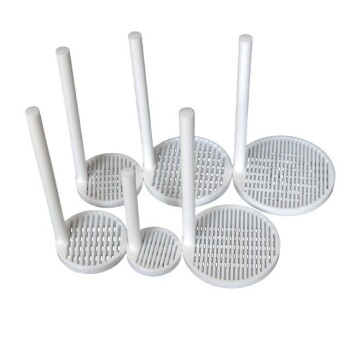
Custom PTFE Teflon Parts Manufacturer PTFE Cleaning Rack
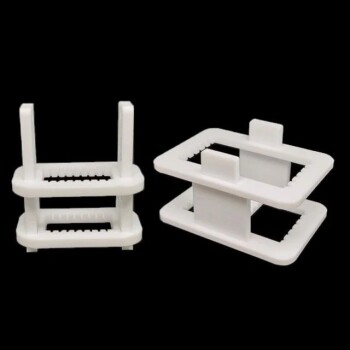
Custom PTFE Teflon Parts Manufacturer Conductive Glass Substrate Cleaning Rack
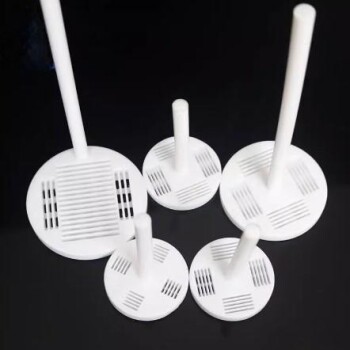
Custom Machined Molded PTFE Teflon Parts Manufacturer for Laboratory ITO FTO Conductive Glass Cleaning Flower Basket