All Questions
How Is Teflon Gland Packing Manufactured? A Guide To Durable, Custom Seals
Learn the multi-stage process of manufacturing Teflon gland packing, from PTFE synthesis to braiding and quality control for industrial seals.
What Are The Key Properties Of Ptfe That Benefit Gland Packing? Achieve Superior Sealing Performance
Discover how PTFE's chemical resistance, low friction, and thermal stability make it the ideal material for durable, high-performance gland packing.
What Makes Teflon Gland Packing Superior To Other Types? Unmatched Chemical Resistance & Low Friction
Discover why Teflon (PTFE) gland packing excels in chemical resistance, thermal stability, and low friction for demanding industrial sealing applications.
How Have Gland Packing Materials Evolved Over Time? From Natural Fibers To High-Performance Synthetics
Explore the evolution of gland packing from natural fibers to advanced PTFE, aramid, and graphite materials for superior sealing in demanding industrial applications.
How Does Gland Packing Function In Sealing Systems? Achieve Reliable, Controlled Sealing
Learn how gland packing seals by converting axial force into radial pressure, creating a controlled leak for cooling and lubrication in pumps and valves.
What Are The Key Roles Of Gland Packing In Industrial Applications? Achieve Robust, Controllable Sealing
Discover the primary functions of gland packing: sealing moving shafts, preventing leaks, protecting bearings, and tolerating harsh industrial conditions.
What Is Teflon Gland Packing And Why Is It Important? Ensure Leak-Free Sealing In Harsh Conditions
Discover the critical role of Teflon (PTFE) gland packing in industrial sealing systems, offering unmatched chemical resistance and low friction for reliability.
How Do Teflon Bearings Perform In Demanding Applications? Superior Performance In Harsh Environments
Explore the advantages of Teflon bearings over traditional materials for self-lubrication, chemical resistance, and maintenance-free operation in demanding applications.
What Long-Term Benefits Do Teflon Bearings Provide? Slash Maintenance Costs & Boost Reliability
Discover how Teflon (PTFE) bearings reduce total cost of ownership with self-lubrication, chemical resistance, and extreme temperature durability.
Can Teflon Bearings Be Customized For Specific Applications? Tailor Ptfe Bearings For Your Unique Needs
Learn how Teflon™ (PTFE) bearings can be customized in material, geometry, and design for extreme environments and unique applications.
How Does The Quality Of Teflon Bearings Compare To Traditional Bearings? Superior Performance In Harsh Environments
Discover when Teflon (PTFE) bearings outperform traditional bearings with self-lubrication, chemical resistance, and extreme temperature tolerance.
What Are The Key Advantages Of Choosing Teflon Bearings For Applications? Solve Extreme Environment Challenges
Discover the benefits of Teflon bearings: self-lubrication, extreme temperature resistance, and chemical inertness for demanding applications.
What Are The Installation And Maintenance Guidelines For Teflon Bearings? Maximize Lifespan And Performance
Learn the essential steps for installing and maintaining Teflon (PTFE) bearings, focusing on cleanliness, alignment, and avoiding lubrication.
What Are Some Specialized Teflon Bearing Products? A Guide To Material Systems And Forms
Explore specialized PTFE bearing products: strips, lined bearings, bushings, and material grades for chemical resistance, low friction, and high loads.
What Are The Applications Of Teflon Bearings In Extreme Environments? Ensure Reliability From -400°F To +550°F
Discover how Teflon (PTFE) bearings provide self-lubrication, chemical inertness, and thermal stability in aerospace, chemical, and heavy machinery applications.
How Are Teflon Bearings Manufactured? A Guide To Machining, Molding, And Coating
Learn the core manufacturing methods for Teflon (PTFE) bearings: machining from stock, molding resins, and applying PTFE coatings to metal substrates.
What Factors Should Be Considered When Selecting Teflon Bearings? Match Your Application's Demands For Reliability
Learn key factors for choosing Teflon bearings: load capacity, speed, temperature range, and chemical environment for optimal performance.
What Are The Advantages Of Teflon Bearings? Low-Friction, Maintenance-Free Performance For Demanding Environments
Discover the key benefits of Teflon (PTFE) bearings: self-lubrication, chemical resistance, and long life in harsh or clean environments.
What Are The Different Types Of Teflon Bearings Available? Find The Right Ptfe Bearing For Your Application
Explore the types of Teflon bearings, from virgin PTFE to glass-filled and graphite-filled, and learn how to select the right one for load, speed, and chemical resistance.
What Are The Performance Characteristics Of Teflon Bearings? Superior Self-Lubricating Performance For Demanding Environments
Discover the key characteristics of Teflon bearings: extreme low friction, wide temperature range (-400°F to +550°F), and unmatched chemical resistance.
What Are The Different Types Of Teflon Materials Used In Bearings? Choose The Right Ptfe For Your Application
Compare virgin, glass-filled, and graphite-filled PTFE bearings. Learn how fillers and composite structures enhance wear resistance, load capacity, and thermal performance.
In Which Industries Are Teflon Bearings Commonly Used? Solve Critical Bearing Challenges Across Industries
Discover the key industries that rely on Teflon bearings for their chemical resistance, self-lubrication, and temperature stability.
What Is Ptfe And Why Is It Used In Teflon Bearings? Achieve Maintenance-Free Performance In Harsh Environments
Discover how PTFE's low friction, chemical inertness, and high-temperature stability make Teflon bearings ideal for demanding applications.
What Are The Key Properties Of Teflon Bearings? Engineered For Extreme Environments
Explore the key properties of Teflon (PTFE) bearings: extreme low friction, chemical inertness, wide temperature range, and self-lubrication.
What Are The General Conclusions About Ptfe And Peek For Ball Valve Seats? Ptfe Vs. Peek For Valve Performance
PTFE vs. PEEK ball valve seats: a guide to choosing based on chemical resistance, temperature, pressure, and mechanical strength for your application.
How Does Peek Compare To Ptfe For Ball Valve Seats? Choose The Right Material For Your Application
Compare PEEK vs. PTFE ball valve seats: PEEK excels in high temp/pressure, PTFE leads in chemical resistance. Select the best material for your needs.
What Are The Properties Of Stainless Steel-Reinforced Ptfe? A High-Performance Composite For Demanding Seals
Discover the enhanced strength, thermal stability, and chemical resistance of stainless steel-reinforced PTFE, a key material for sealing and mechanical parts.
What Are The Limitations Of Ptfe In Ball Valve Seat Applications? Avoid Costly Seal Failures
Understand PTFE's key limitations: cold creep, pressure limits, explosive decompression, and radiation sensitivity. Choose the right valve seat material for reliability.
What Are The Advantages Of Using Ptfe For Ball Valve Seats? Superior Sealing & Chemical Resistance
Explore PTFE ball valve seat advantages: unmatched chemical inertness, low friction, and reliable sealing for industrial fluid control systems.
What Are The Two Main Categories Of Polymers Used For Ball Valve Seats? Ptfe Vs. Peek For Optimal Performance
Learn the key differences between PTFE and PEEK ball valve seats to make the right choice for your application's pressure, temperature, and chemical needs.
How Does The Low Friction Coefficient Of Ptfe Coatings Affect Tightening Torque? Achieve Accurate Clamping Force Safely
Learn how PTFE coatings reduce required tightening torque to prevent over-tightening and ensure joint integrity in semiconductor, medical, and industrial applications.
What Are The Limitations Of Ptfe Coated Fasteners Regarding Abrasion Resistance? The Trade-Off For Superior Chemical Protection
Explore the key weakness of PTFE-coated fasteners: low abrasion resistance. Learn why this trade-off exists and how to choose the right coating for your application.
Why Are Ptfe Coated Fasteners Suitable For High-Temperature Environments? Superior Performance From -260°C To 300°C
Discover why PTFE-coated fasteners excel in high-heat, offering thermal stability, chemical resistance, and permanent lubrication to prevent seizing and corrosion.
How Do Ptfe Coated Washers Enhance Sealing Applications? Ensure Leak-Free Performance In Demanding Environments
Discover how PTFE coated washers provide superior sealing with chemical inertness, low friction, and thermal stability for industrial and lab applications.
What Specific Advantages Do Ptfe Coated Bolts And Screws Offer? Achieve Reliable, Seizure-Free Assemblies
Discover how PTFE coated fasteners reduce friction, prevent galling, and offer superior corrosion resistance for reliable threaded assemblies.
How Do Ptfe Coated Fasteners Perform In Marine And Offshore Environments? Superior Corrosion Protection For Critical Assets
Discover how PTFE coated fasteners combat saltwater corrosion, prevent galvanic corrosion, and ensure reliable performance in harsh marine environments.
Why Are Ptfe Coated Fasteners Used In Electronics And Telecommunications? Ensure Reliability And Signal Integrity
Learn why PTFE-coated fasteners are critical for electronics, providing electrical insulation, corrosion resistance, and low friction for reliable assembly.
What Advantages Do Ptfe Coated Fasteners Offer In Chemical Processing Plants? Enhance Safety And Reliability
Discover how PTFE coated fasteners provide superior corrosion resistance, prevent leaks, and reduce maintenance costs in harsh chemical environments.
How Are Ptfe Coated Fasteners Beneficial In The Automotive Sector? Enhance Reliability And Simplify Maintenance
Discover how PTFE coated fasteners provide superior corrosion resistance, prevent seizing, and withstand extreme temperatures in automotive applications.
In Which Industries Are Ptfe Coated Fasteners Commonly Used? Essential For Corrosive & High-Performance Applications
Discover why marine, chemical, medical, automotive, and electronics industries rely on PTFE coated fasteners for corrosion resistance, chemical inertness, and low friction.
Why Is The Curing Process Important In Ptfe Coating Manufacturing? It's The Key To Performance
Learn why PTFE coating curing is critical for creating durable, low-friction surfaces. Proper temperature and time are essential for performance.
What Methods Are Used To Apply Ptfe Coatings To Fasteners? Dip Vs. Spray Coating Explained
Learn the key methods for applying PTFE coatings to fasteners: dip coating vs. spray coating. Discover the 3-stage process for superior corrosion resistance and low friction.
How Is Surface Preparation Performed For Ptfe Coating Application? Achieve Unbreakable Adhesion For Your Components
Learn the critical steps for PTFE coating surface prep: degreasing, abrasive blasting, or chemical etching to create a durable mechanical bond.
What Are The Key Steps In The Manufacturing Process Of Ptfe Coated Fasteners? Build A Durable, Corrosion-Resistant Shield
Learn the 3 critical steps—surface prep, coating application, and curing—to create high-performance PTFE coated fasteners for harsh environments.
What Role Does Temperature Stability Play In Ptfe Coated Fasteners? Ensuring Reliability In Extreme Environments
Learn why temperature stability is critical for PTFE coated fasteners, enabling reliable performance in high heat, deep cold, and thermal cycling.
Why Is Chemical Inertness Important For Ptfe Coated Fasteners? Ensure Long-Term Reliability In Harsh Environments
Learn how PTFE coating's chemical inertness prevents corrosion, ensures fastener integrity, and extends service life in aggressive industrial settings.
What Benefits Does The Low Friction Coefficient Of Ptfe Provide For Fasteners? Enhance Assembly & Prevent Seizing
Learn how PTFE-coated fasteners prevent galling, reduce wear, and ensure effortless assembly/disassembly in demanding applications.
How Does Ptfe Coating Enhance Corrosion Resistance In Fasteners? Achieve Unmatched Protection In Harsh Environments
Learn how PTFE coating creates a chemically inert, impermeable barrier on fasteners to prevent rust and degradation from chemicals, moisture, and salt.
What Are The Key Characteristics Of Ptfe Coated Fasteners? Enhance Durability In Harsh Environments
Learn how PTFE coated fasteners provide superior corrosion resistance, low friction, and chemical inertness for demanding industrial applications.
What Materials Are Used To Overcome The Limitations Of Standard Ptfe In Ball Valve Seats? Upgrade To High-Performance Polymers
Learn about advanced materials like filled PTFE, PEEK, and Nylon for high-pressure, high-temperature ball valve seats that surpass standard PTFE limits.
What Is The Standard Seat Material For Ball Valves And Why Is It Used? Discover The Ideal Choice For Your Application
Learn why PTFE is the standard ball valve seat material, its key benefits in chemical resistance and sealing, and critical temperature limitations.
What Happens When Using A Soft Rotary Shaft With Ptfe Seals? Avoid Premature Wear And System Failure
Learn why pairing PTFE seals with a soft rotary shaft causes abrasion, leaks, and failure. Discover the critical role of shaft hardness for reliable sealing.
What Are The Advantages Of Ptfe Rotary Shaft Lip Seals? Superior Performance In Extreme Conditions
Discover the key benefits of PTFE seals: low friction, extreme temperature range, chemical inertness, and high-speed capability for demanding applications.
What Material Is Ideal For Rotary Shaft Lip Seals And Why? Ptfe Offers Superior Performance
Discover why PTFE is the top material for rotary shaft seals, offering low friction, chemical resistance, and high-temperature durability for demanding applications.
What Is A Floating Ball Valve And How Does It Seal Line Pressure? A Guide To Pressure-Actuated Sealing
Learn how a floating ball valve uses upstream line pressure to create a tight seal. Explore its design, advantages, and ideal applications.
What Makes Ptfe A Common Choice For Rotary Shaft Applications? Unlock Superior Performance & Reliability
Discover why PTFE's low friction, high thermal stability, and chemical inertness make it ideal for demanding rotary shaft seals, bushings, and bearings.
What Are The Advantages Of Polyimide-Filled Ptfe? Achieve Superior Low Friction & Non-Abrasive Performance
Discover how polyimide-filled PTFE offers the lowest friction and non-abrasive properties, ideal for protecting soft mating surfaces in dry-running applications.
What Are The Benefits Of Glass And Mos2-Filled Ptfe? Achieve Superior Performance In Demanding Applications
Discover how glass and MoS2-filled PTFE composites offer superior wear resistance, reduced friction, and reliable performance in vacuum or inert gas environments.
What Type Of Glass Is Used In Glass-Filled Ptfe? The Definitive Answer For Superior Performance
Discover why E-glass is the exclusive reinforcement for PTFE, enhancing mechanical stability and wear resistance while preserving electrical insulation.
What Are The Properties Of Glass-Filled Ptfe? Enhanced Strength & Wear Resistance For Demanding Applications
Explore the key properties of glass-filled PTFE: superior mechanical strength, wear resistance, and thermal stability, plus critical design considerations.
What Are The Advantages Of Carbon And Mos2-Filled Ptfe? Enhance Strength, Wear, And Performance
Discover how carbon and MoS2 fillers transform PTFE into a high-performance composite with superior strength, wear resistance, and thermal conductivity.
What Are The Benefits Of Carbon And Graphite-Filled Ptfe? Achieve Superior Strength & Lubricity
Discover how carbon & graphite-filled PTFE enhances wear resistance, heat dissipation, and load capacity for demanding industrial seals and bearings.
What Is The Difference Between Carbon And Graphite As Fillers In Ptfe? Optimize Strength Vs. Lubricity
Learn the key differences between carbon and graphite fillers in PTFE composites for seals and bearings. Choose the right filler for strength or lubricity.
What Are The Properties Of Carbon-Filled Ptfe? Enhance Strength, Wear, And Conductivity
Learn how carbon-filled PTFE offers superior wear resistance, improved strength, and static dissipation while retaining PTFE's low friction and chemical inertness.
What Are The Advantages Of Mos2-Filled Ptfe? Enhance Wear Resistance & Lubricity
Discover how MoS2-filled PTFE increases wear resistance, hardness, and self-lubrication while maintaining low friction for demanding applications.
What Are The Common Fillers Used With Ptfe For Rotary Shaft Seals? Optimize Seal Performance & Lifespan
Explore common PTFE seal fillers like glass, carbon, graphite, and MoS2. Learn how each enhances wear, strength, and thermal conductivity for your application.
What Are The Limitations Of Virgin Ptfe For Rotary Shaft Seals? Overcome Weakness With Filled Compounds
Learn the key weaknesses of virgin PTFE seals like poor wear resistance and cold flow, and discover how filled PTFE compounds solve these issues.
What Are The Benefits Of Virgin Ptfe In Rotary Shaft Seals? Achieve Unmatched Reliability In Demanding Applications
Discover the key advantages of virgin PTFE seals for high-speed, high-temperature, and chemically aggressive rotary applications.
Why Is Filled-Ptfe Often Chosen For Rotary Shaft Seal Lips? For Unmatched Performance In Extreme Conditions
Discover why filled-PTFE seals excel in high-speed, high-pressure, and aggressive chemical environments where other seals fail. Learn about their key advantages.
What Are The Main Applications Of Rotary Shaft Seals? From Automotive To Pharma, Ensure Zero Leaks
Explore the critical uses of rotary shaft seals in automotive, aerospace, chemical, and food industries for preventing leaks and contamination.
What Are The Key Considerations For Successful Ptfe Machining? Master Precision For Soft Materials
Learn essential PTFE machining strategies: sharp tools, controlled speeds, minimal clamping, and temperature management for accurate, high-quality parts.
What Chemical Processing Applications Involve Ptfe-Machined Parts? Essential Components For Corrosive & High-Purity Systems
Explore key PTFE-machined parts in chemical processing: pumps, valves, seals, and more. Learn how PTFE's inertness ensures purity and durability.
What Automotive Components Are Made Using Ptfe Machining? Enhance Performance In Extreme Conditions
Learn how machined PTFE parts like seals, bearings, and gaskets provide critical chemical resistance and low friction for automotive systems.
How Is Ptfe Used In The Medical Device Industry? Enhancing Safety And Performance In Medical Devices
Explore how PTFE's biocompatibility, chemical resistance, and low friction make it essential for medical implants, seals, and surgical instruments.
What Are The Aerospace Applications Of Precision-Machined Ptfe Parts? Achieve Peak Performance In Harsh Environments
Explore how precision-machined PTFE parts enhance aerospace systems with low friction, extreme temperature stability, and chemical resistance for seals, bearings, and liners.
What Tooling Strategies Are Effective For Machining Ptfe? Achieve Precision And A Clean Finish
Learn the best tooling strategies for machining PTFE, including sharp carbide tools, optimal speeds and feeds, and techniques to prevent deformation.
What Post-Machining Processes Can Improve Ptfe Surface Finishes? Achieve A Flawless Finish For Your Components
Learn about mechanical polishing, bead blasting, and buffing techniques to refine PTFE surfaces after machining. Enhance quality and appearance for critical applications.
What Are The Optimal Machining Parameters For Ptfe? Achieve Precision And Avoid Deformation
Learn the optimal PTFE machining parameters for speed, feed, tooling, and coolant to prevent heat buildup and stress creep for precise parts.
What Cooling And Lubrication Techniques Are Recommended For Ptfe Machining? Master Heat Control For Precision Parts
Learn the best cooling and lubrication methods for machining PTFE, including pressurized air, spray mists, and flood coolants, to ensure dimensional accuracy and a superior finish.
How Does Ptfe's Low Thermal Conductivity Impact Machining? Master Heat Management For Precision Parts
Learn how PTFE's low thermal conductivity causes heat buildup and dimensional instability during machining, and discover strategies for success.
Why Is Dimensional Stability A Concern When Machining Ptfe? Ensure Accurate, Stable Ptfe Components
Learn how to overcome PTFE's high thermal expansion and creep to machine dimensionally stable parts for semiconductor, medical, and lab applications.
How Does Ptfe's Soft Nature Affect Surface Finish Quality During Machining? Mastering The Slice, Not Tear, Process
Learn how PTFE's softness leads to tearing and burrs during machining, and discover the key strategies for achieving a superior surface finish.
What Are The Common Challenges In Ptfe Machining Related To Tool Wear? How To Extend Tool Life And Cut Costs
Discover why PTFE accelerates tool wear and learn key strategies like using carbide tools and optimizing speeds/feeds to improve machining precision and reduce costs.
What Are The Best Practices For Drilling And Tapping Ptfe? Achieve Clean, Precise Machining
Learn expert techniques for machining PTFE, including using sharp tools, high speeds, low feeds, and form taps to prevent deformation and ensure strong threads.
How Does Cnc Turning Work For Ptfe, And What Precautions Are Necessary? Achieve Precision Machining
Learn the CNC turning process for PTFE, including essential precautions for heat management, tool selection, and operator safety to ensure part accuracy.
What Challenges Are Associated With Cnc Milling Of Ptfe? Overcome Softness And Thermal Expansion
Learn how to solve key PTFE machining challenges like burring and dimensional instability with expert tips on tools, speeds, and workholding.
What Are The Main Machining Techniques Used For Ptfe? Achieve Precision With Cnc Turning, Milling & More
Discover the key PTFE machining techniques: CNC turning, milling, drilling & tapping. Learn how to manage heat & deformation for high-quality parts.
What Are The Key Properties Of Ptfe? Unmatched Chemical, Thermal, And Friction Performance
Explore the key properties of PTFE—chemical inertness, low friction, thermal stability—that make it essential for demanding industries.
What Industries Benefit From The Use Of Ptfe? Solve Extreme Chemical, Thermal, And Purity Challenges
Discover how PTFE's chemical inertness, high-temperature stability, and biocompatibility benefit medical, semiconductor, chemical, and food industries.
What Types Of Ptfe Seals Are Used In The Medical Field? From O-Rings To Spring-Energized Seals
Explore the key PTFE seal types for medical devices, including spring-energized, static, and rotary seals, and their critical role in biocompatibility and reliability.
What Are The Advantages Of Using Ptfe Bushings In Rotary Motion Applications? Achieve Zero-Maintenance, High-Performance Rotation
Discover why PTFE bushings excel in rotary applications with self-lubrication, low friction, and extreme chemical/temperature resistance for longer life and reduced maintenance.
How Is Ptfe Utilized In The Food And Beverage Industry? Ensuring Safety And Efficiency
Explore how PTFE's non-stick, heat-resistant, and chemically inert properties are critical for food safety and efficiency in processing equipment and cookware.
Why Are Ptfe Seals Preferred In Press Machinery In The Pharmaceutical Industry? Ensuring Purity And Performance
Discover why PTFE seals are the top choice for pharmaceutical presses, offering chemical inertness, low friction, and FDA compliance for product safety.
How Is Ptfe Used In The Pharmaceutical Industry? Ensuring Product Purity And Safety
Discover how PTFE's chemical inertness, biocompatibility, and low friction are essential for pharmaceutical manufacturing purity, safety, and equipment reliability.
Are Fragments Of Ptfe Harmful If They Come Loose During Medical Procedures? The Truth About Ptfe Safety
Learn why PTFE fragments are non-toxic and biologically inert, making them safe for use in critical medical devices and procedures.
What Were The Benefits Of Ptfe Wear Plates In The Die-Casting Industry Case Study? Reduce Downtime & Boost Production
Discover how PTFE wear plates reduce wear, enhance lubricity, and improve cycle times in die-casting. Learn from a real industry case study.
What Were The Results Of The Ptfe Wear Plates Trial In The Die-Casting Industry? Boost Efficiency With Superior Wear Resistance
PTFE wear plates in die-casting trials showed minimal wear under 2.5T loads, eliminated lubrication needs, and improved cycle times by reducing downtime.
What Are The Machining Concerns For Ptfe Wear Plates? Overcome Thermal Expansion & Tool Wear
Learn key strategies for machining PTFE wear plates: manage thermal expansion, avoid material deformation, and reduce rapid tool wear for precision results.
What Is The Load Bearing Capacity Of Ptfe Wear Plates? Strength Meets Low Friction For Heavy Loads
PTFE wear plates support 130-140 kg/cm². Learn how this strength, combined with decreasing friction under load, benefits industrial applications.
What Is The Correct Method For Installing Ptfe Wear Plates? Achieve Long-Lasting, Low-Friction Performance
Learn the definitive bolting method for PTFE wear plate installation, including stepped holes and metal bushes to prevent damage and ensure smooth operation.
Related Products
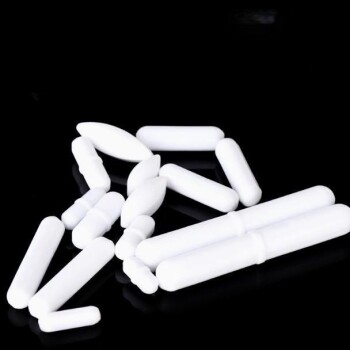
Custom PTFE Teflon Parts Manufacturer PTFE Magnetic Stirring Bar
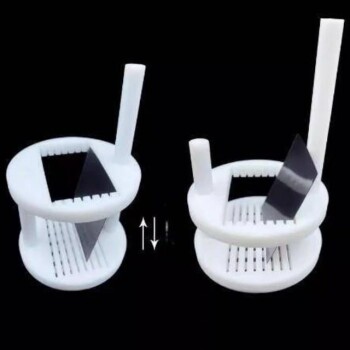
Custom PTFE Teflon Parts Manufacturer Adjustable Height Flower Basket
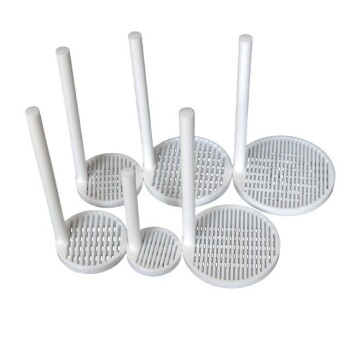
Custom PTFE Teflon Parts Manufacturer PTFE Cleaning Rack
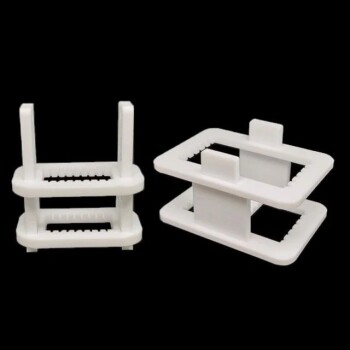
Custom PTFE Teflon Parts Manufacturer Conductive Glass Substrate Cleaning Rack
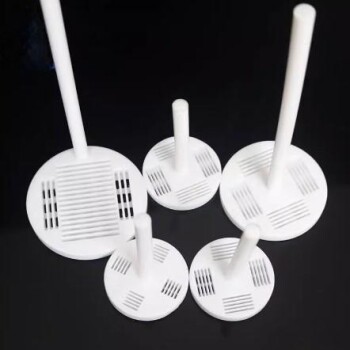
Custom Machined Molded PTFE Teflon Parts Manufacturer for Laboratory ITO FTO Conductive Glass Cleaning Flower Basket