All Questions
What Chemical Mechanisms Explain The Non-Stick Behavior And Low Dielectric Constant Of Fluoropolymer Labware? Discover The Molecular Science Behind Ptfe And Pfa Performance.
Explore how fluorine-rich surfaces reduce adhesion and low polarizability leads to low dielectric constants in fluoropolymers.
Why Are Ptfe And Pfa Preferred For Ultra-Trace Analysis And High-Purity Fluid Handling? Key Advantages Explained
Learn why PTFE and PFA outperform standard plastics for ultra-trace analysis and high-purity systems, ensuring low contamination and chemical resistance.
How Do Fluoroplastics And Fluoroelastomers Differ In Properties And Processing? Choose The Right Material For Your Lab Equipment.
Discover the key differences between fluoroplastics and fluoroelastomers for fluid handling and lab equipment, including properties, processing, and selection tips.
What Chemical Reactivity Properties Must Be Considered When Utilizing Ptfe Labware And Custom Fluoropolymer Components In Contact With Reactive Metal Powders? Key Safety Insights For High-Purity Applications.
Learn why PTFE's inertness has limits with reactive metal powders. Discover hazard thresholds, safe handling, and selection tips.
What Advantages Do Fluoropolymers Provide As Binders And Matrix Materials In Composites? Discover Their Multifunctional Role In Durability, Protection, And Performance.
Explore how fluoropolymers enhance composites with chemical resistance, low friction, and thermal stability. Learn key benefits and applications.
What Inherent Chemical And Thermal Characteristics Of Fluoropolymers Like Ptfe Make Them Essential For Harsh Operational Environments? Discover The Protective Power Of C-F Bonds.
Learn why PTFE's strong C-F bonds and thermal stability make it ideal for harsh chemical and high-temperature applications.
How Do Fluoropolymer Coatings Achieve Superhydrophobic Performance On Substrate Surfaces, And What Properties Make Them Effective For Advanced Material Protection?
Learn how fluoropolymer coatings achieve superhydrophobicity via low surface energy and texture, and their protective properties.
How Do The Dielectric Properties And Water Vapor Permeability Of Ptfe, Pfa, And Fep Compare For Precision Analytical Instrument Components?
Compare PTFE, PFA, FEP: excellent insulation, but PFA/FEP show lower water vapor permeability, making them better for moisture-sensitive precision instruments.
How Does The Thermal Cooling Rate During Processing Impact The Crystallinity, Density, And Lamellar Structure Of Ptfe Components? Tune Ptfe Properties With Controlled Cooling
Cooling rate controls PTFE crystallinity, density, and lamellar thickness. Learn how slow cooling increases crystallinity and density while rapid cooling enhances flexibility.
How Does Co-Feeding Perfluorocyclobutane (C4F8) Impact The Yield Of Tetrafluoroethylene (Tfe) During Chlorodifluoromethane Pyrolysis, And How Does It Influence Laboratory Analytical Setup Design? Achieve Optimal Tfe Yield With Controlled C4F8 Co-Feeding
Learn how C4F8 co-feeding boosts TFE yield and find essential lab setup tips for accurate pyrolysis analysis.
How Can Autopolymerization Of Tfe Gas Be Prevented During Storage And Handling? Master Tfe Safety With Oxygen Control, Inhibitors, And Robust System Design.
Learn key strategies to prevent TFE autopolymerization: oxygen exclusion, inhibitor use, and engineered safeguards for safe storage and handling.
Why Is Ultra-High-Purity Tfe Required And What Role Do High-Purity Fluid-Transfer Parts Play? Achieve Superior Fluoropolymers With Controlled Chain Growth.
Learn why trifluoroethylene limits are critical for PTFE quality and how high-purity PTFE/PFA components preserve purity.
How Do Granular Ptfe And Dispersion Ptfe Differ In Their Synthesis, And How Does This Affect Material Selection For Laboratory Apparatus? Key Synthesis And Processing Differences Explained.
Learn how granular and dispersion PTFE differ in synthesis and how to select the right form for lab apparatus, from machined parts to coatings.
What Mechanisms Cause Hyperbranched Fluorinated Polymer Coatings To Become Insoluble After High-Temperature Baking, And How Does This Affect Chemical Resistance?
Learn how high-temperature baking crosslinks hyperbranched fluoropolymers into insoluble networks, boosting chemical resistance and durability.
How Do -Cf3 Groups And Hyperbranched Architectures Enhance Fluoropolymer Properties? Achieve Superior Thermal Stability, Hydrophobicity, And Dielectric Performance
Discover how pendant -CF3 and hyperbranched structures boost fluoropolymers' heat resistance, water repellency, and low-k performance for high-end uses.
What Are The Process Requirements For Noble Gas Plasma-Assisted Tfe Monomer Synthesis? Optimize Your Specialized Thermal Reactor For High-Yield, Safe Production.
Discover essential thermal reaction vessel requirements for argon plasma-assisted TFE synthesis: high-temperature plasma, precise residence time, and rapid quenching.
How Do Pyrolysis Temperature And Steam Diluent Ratios Influence Tetrafluoroethylene (Tfe) Conversion And Yield In Fluoropolymer Monomer Reaction Apparatus? Optimize Tfe Yield With Temperature And Steam Control
Learn how temperature and steam ratios affect TFE conversion and yield. Discover optimal conditions for high selectivity in fluoropolymer monomer production.
What Chemical Side Reactions Limit Tfve Monomer Molecular Weight Growth? Discover How To Overcome Them For High-Performance Fluoropolymers.
Learn how base-induced fluoride addition limits TFVE monomer chain growth and how click chemistry or preformed oligomers solve it.
What Makes Advanced Fluoropolymers Ideal For Microelectronics Applications?
Explore how PFN and PFCB fluoropolymers offer low dielectric loss, excellent moisture resistance, and high thermal stability for demanding microelectronics.
Why Can Fully Perfluorinated Polymers Be Synthesized Without Causing Significant Structural Distortion In High-Performance Fluoropolymer Products?
Learn why fluorination minimizes structural distortion, preserving polymer integrity while enhancing chemical resistance for high-performance applications.
How Does Structural Integration Of Flame-Retardant Elements In Fluorinated Polymers Compare To Small-Molecule Additives, And Why Is This Relevant To Fluoropolymer Laboratory Material Selection?
Discover why structurally integrated flame retardants in fluoropolymers offer durable, low-leaching performance for high-purity lab applications.
What Techniques Are Used To Modify The Surface Of Fluorinated Polymer Films Or Fibers? Discover Advanced Surface Engineering For Enhanced Chemical Resistance.
Explore methods like plasma etching, graft polymerization, and controlled fluorination, plus fluoropolymer labware's role in maintaining purity and control.
Why Must Emulsion-Polymerized Ptfe Resin Be Used Instead Of Granular Ptfe For Producing Expanded Fluoropolymer Laboratory Products?
Learn why emulsion-polymerized PTFE is essential for ePTFE lab products, ensuring porosity, strength, and purity.
What Role Does Pre-Stretch Densification Play In Improving The Crush Resistance Of Porous Ptfe Seals And Structural Labware? Boost Durability With Optimized Density.
Discover how pre-stretch densification enhances crush resistance in porous PTFE, reducing crushability from 30.1% to 3.6% for reliable seals and labware.
How Does The Amorphous Locking Process Impact The Tensile Strength And Dimensional Stability Of Expanded Ptfe Components? Discover The Key Benefits For Your Applications.
Learn how amorphous locking improves ePTFE strength and stability, with key data and trade-offs to consider for your components.
Ptfe Granular Resin Vs Fine Powder: Which Processing Method Suits Your Labware?
Learn the key differences between PTFE granular resin and fine powder processing for labware and tubing, and how to choose the right material.
Why Must Alkaline Chemical Compatibility Be Evaluated For Pai Or Pi Alternatives? Avoid Premature Failure With The Right Material Choice.
High-temperature PAI/PI have poor alkali resistance. Evaluate alkaline compatibility to prevent failure and contamination. Learn key trade-offs and safer alternatives.
How Do Polymer Cross-Linking And Tg Affect Labware? Maximize Performance With High-Purity Ptfe/Pfa.
Learn how cross-linking and Tg impact stiffness and temperature limits, and how KINTEK's PTFE/PFA labware ensures reliable high-temperature performance.
What Chemical Scrubbing And Multi-Stage Distillation Procedures Are Required During Tfe Monomer Purification For Ptfe Fluoropolymer Manufacturing, And Why Are Corrosion-Resistant Fluid Transfer Components Necessary? Discover Essential Purification Steps And Material Requirements.
Learn TFE purification: acid scrubbing, caustic neutralization, drying, cryogenic distillation, and why PTFE/PFA components are vital for corrosion resistance.
What Are The Performance Differences Between Amine-Cured Epoxy Binders And Solid Ptfe Or Pfa Polymers In Aggressive Chemical Containment Applications? Key Trade-Offs Explained
Compare chemical resistance, adhesion, heat tolerance, and permeation. Learn when to use epoxy vs PTFE/PFA for reliable containment.
How Do The Melting Temperatures And Processing Characteristics Of Ptfe Compare To Pfa? Unlock Custom Lab Equipment Fabrication
Compare PTFE vs PFA melting points and processing. Learn which fluoropolymer suits your custom labware needs. Expert insights inside.
How Do The Moisture Absorption Characteristics Of Ptfe And Pfa Fluoropolymers Benefit High-Purity Trace Analysis Laboratory Instruments? Achieve Reliable Trace Analysis With Low-Moisture Fluoropolymers
Discover how PTFE and PFA's near-zero moisture absorption reduces contamination, cross-contamination, and sample loss for accurate trace analysis.
Why Are Ptfe And Pfa Fluoropolymers Preferred Over Conventional Engineering Plastics For Manufacturing Labware Used In High-Temperature Chemical Digestion And Acid Handling? Achieve Superior Chemical Resistance And Thermal Stability With Ptfe And Pfa Labware.
Discover why PTFE and PFA fluoropolymers outperform conventional plastics for high-temperature digestion and acid handling. Learn about their superior chemical resistance and thermal stability.
What Synthesis Controls Are Required To Produce Soluble, High-Molecular-Weight Hyperbranched Fluoropolymers Without Premature Gelation? Master The Key Process Controls.
Learn the essential controls for synthesizing soluble, high-MW hyperbranched fluoropolymers: dilute conditions and slow monomer feeding to avoid gelation.
What Thermal Performance Limits Can Be Expected From Trifluoromethyl-Functionalized Fluoropolymers Used In High-Temperature Environments? Discover Key Thermal Data
Learn the thermal limits of trifluoromethyl-functionalized fluoropolymers: decomposition temps up to 595°C, but service limits often 200-260°C.
How Does Incorporating Pendant Trifluoromethyl (-Cf3) Groups Into Specialty Fluoropolymer Structures Affect Their Surface Hydrophobicity And Performance In Lab Applications? Enhance Moisture Resistance And Reduce Sample Retention With Advanced Ptfe/Pfa Solutions.
Discover how pendant -CF3 groups enhance hydrophobicity, moisture resistance, and performance in lab applications, including high-purity and dielectric uses.
What Structural Mechanisms Control The Balance Between Tensile Strength And Elasticity In Physically Crosslinked Fluorinated Polymers? Discover Key Molecular Design Rules.
Learn how fluorinated side groups and bulky co-substituents balance tensile strength and elasticity via microcrystallinity and reversible physical crosslinks.
How Does Surface Modification Of Fluoropolymer Materials Enhance Their Chemical Resistance To Organic Liquids And Functional Versatility In Specialized Applications?
Discover how surface modification boosts fluoropolymer chemical resistance and enables tailored functionality for specialized uses.
How Can Researchers Verify Whether An Irradiated Electroactive Fluoropolymer Film Has Successfully Achieved Relaxor Ferroelectric Behavior? Key Dielectric And Fitting Tests Revealed.
Learn how to confirm relaxor ferroelectric behavior in irradiated fluoropolymers using dielectric spectroscopy and Vogel-Fulcher analysis.
What Molecular Properties Of Ptfe Contribute To Its Low Surface Energy, Chemical Resistance, And Suitability For High-Purity Fluid Handling?
Discover how PTFE's molecular structure provides chemical resistance, low surface energy, and purity for fluid handling.
How Do Perfluoropolymers Such As Ptfe And Pfa Compare To Partially Fluorinated Polymers In Terms Of Thermal Stability, Mechanical Hardness, And Chemical Inertness For Laboratory Equipment? Discover Key Differences To Select The Right Material For Your Lab.
Compare PTFE/PFA vs partially fluorinated polymers: thermal stability, hardness, chemical resistance. Learn which suits your lab equipment.
Why Is High Monomer Purity Critical In Fluoropolymer Synthesis? Key To Trace Analysis & Labware Performance
Learn how monomer purity affects fluoropolymer performance in trace analysis and labware, minimizing contamination and ensuring reliable results.
How Does Structural Cross-Linking Affect The Solvent Resistance And Mechanical Stability Of Fluoropolymers Used In Chemical Apparatus? Discover The Key Benefits For Durable Lab Equipment.
Learn how cross-linking enhances solvent resistance and mechanical stability in fluoropolymers, crucial for chemical apparatus reliability.
What Are The Primary Performance Characteristics And Processing Trade-Offs Of Traditional Commodity Fluoropolymers Like Ptfe In Demanding Laboratory Applications?
Explore PTFE's chemical resistance, thermal stability, and processing challenges like high melt viscosity and CNC machining trade-offs.
What Side-Reactions Occur During Tfe Monomer Pyrolysis, And Why Is Tight Process Control Necessary? Ensure High-Purity Fluoropolymer Labware With Kintek.
Learn about TFE pyrolysis side reactions and process control. Discover how impurity control ensures high-quality PTFE/PFA labware for trace analysis.
Why Is Steam Injection Applied During The Pyrolysis Step In Tfe Monomer Manufacturing? Boost Tfe Yield For High-Quality Ptfe Lab Components
Learn how steam injection optimizes TFE pyrolysis to increase yield and improve PTFE component quality, ensuring superior labware performance.
How Is Tetrafluoroethylene (Tfe) Synthesized Industrially? Key Steps From Fluorspar To Ptfe Monomer
Learn the industrial TFE synthesis route: fluorspar to HF, HCFC-22, and pyrolysis at 700-900°C, ensuring high-purity monomer for PTFE.
How Surface Energy And Friction Of Ptfe Benefit Fluid Transfer And Labware?
Discover how PTFE's low surface energy and friction reduce adhesion, boost recovery, and enhance fluid handling.
What Key Inherent Material Properties Make Ptfe Fluoropolymers Suitable For Demanding Lab Applications? Discover Chemical Inertness, Thermal Stability, And More For Reliable Storage And Reactions.
Learn how PTFE's chemical inertness, thermal stability, and nonstick surface ensure safe, contamination-free lab use for storage and reaction vessels.
What Fundamental Chemical Characteristics Make Fluoropolymer Materials Like Ptfe And Pfa Ideal For High-Purity Laboratory Labware And Fluid Transfer Components? Discover The Molecular Secrets
Discover how PTFE and PFA's carbon-fluorine bonds, low surface energy, and thermal stability ensure chemical inertness, low extractables, and non-stick performance for high-purity labware and fluid handling.
What Impact Does Thermal Annealing And Crystallization Temperature Have On The Material Properties Of Custom-Machined Fluoropolymer Apparatus? Optimize Performance With Controlled Thermal Processing
Learn how crystallization temperature and annealing affect stiffness, toughness, dimensional stability, and surface behavior of custom-machined fluoropolymer parts.
How Does Crystallinity Affect Young's Modulus In Fluoropolymers? Optimize Performance
Explore the trade-offs of crystallinity in high-performance fluoropolymers: stiffness, flexibility, chemical resistance, and electromechanical response.
Why Are Ptfe And Pfa Preferred Over Other Fluoropolymers? Superior Heat & Chemical Resistance
Discover why PTFE and PFA outperform FEP, ETFE, and PVDF for extreme temperatures and aggressive chemicals in labware.
How Do Ptfe And Pfa Compare In Physical And Thermal Properties? Key Differences And Selection Guide
Discover key differences between PTFE and PFA in temperature, friction, transparency, and fabrication to choose the right material for your lab.
How Does Physical Crosslinking Via Bulky Co-Substituents Alter The Mechanical Behavior And Reprocessability Of Fluoropolymers Compared To Traditional Covalent Crosslinking In Custom Labware Manufacturing?
Discover how physical crosslinking with bulky groups enhances creep resistance and reprocessability in fluoropolymers, offering a reversible alternative to covalent networks.
What Performance Characteristics Make Ptfe And Pfa Ideal For Custom Fluid Handling And Reaction Apparatus? Achieve Superior Chemical Resistance And Purity
Discover why PTFE and PFA excel in high-temperature halogenated environments, offering unmatched chemical resistance, purity, and customizability.
How Do The Melting Points Of Ptfe And Pfa Compare To Lower-Tier Fluoropolymers Such As Fep And Pvdf, And How Does This Affect Material Selection For High-Temperature Laboratory Labware And Digestion Vessels? Choose Ptfe Or Pfa For Maximum Thermal Margin In Demanding Applications.
Compare PTFE/PFA vs FEP/PVDF melting points and learn how to select materials for high-temperature labware and digestion vessels.
How Do Ptfe And Pfa Melt Viscosity And Rheology Compare? Discover Why They Require Custom Cnc Machining Or Specialized Molding For Precision Lab Parts.
Compare PTFE vs PFA melt viscosity and rheology. Learn why PTFE needs CNC machining and PFA suits molding for custom lab components.
How Do Processing Temperatures During Stretching And Sintering Influence The Structural Stability And Strength Of Eptfe Laboratory Products? Key Thermal Ranges Explained
Learn how stretching below 342°C and sintering above it stabilize ePTFE structure, preventing shrinkage and enhancing tensile strength.
What Molecular Structural Features Provide Ptfe Fluoropolymer Labware With Extreme Chemical Inertness And Low Sample Adsorption? Discover The Role Of Fluorine Shielding
Learn how PTFE's carbon-fluorine structure creates chemical inertness and low surface energy, minimizing sample adsorption for reliable lab results.
Why Do Pfa Fluoropolymer Laboratory Products Offer Different Melt-Processability And Structural Toughness Compared To Standard Ptfe Labware?
Understand how PFA's molecular structure enables melt processing and enhanced toughness while retaining chemical resistance.
How Does Thermal Cooling Rate Affect Pfa Vessel Crystallinity And Toughness? Optimize For Impact Resistance
Learn how cooling rate controls PFA crystallinity and mechanical toughness, and find the best processing strategy for lab vessels.
How Does The Static Coefficient Of Friction Of Ptfe Compare To Other Engineering Plastics? Discover Its Advantages For Lab Fluid Handling
PTFE has a static friction coefficient of 0.10, lower than PFA, acetal, nylon. This reduces sticking, improves flow in lab fluid systems.
How Do The Continuous-Use Temperature Capabilities And Flammability Ratings Of Ptfe And Pfa Benefit Demanding High-Temperature Laboratory Applications? Explore Their 260°C Ul 94 V-0 Performance.
Discover how PTFE & PFA's 260°C continuous-use temperature and V-0 flammability rating ensure safety and reliability in high-heat labs.
What Core Chemical And Thermal Properties Of Polytetrafluoroethylene (Ptfe) Make It Ideal For High-Purity Laboratory Supplies And Fluid Handling Components? Discover Ptfe's Superior Chemical Resistance And Thermal Stability For Your Lab.
Learn why PTFE's chemical inertness and thermal stability make it perfect for high-purity lab equipment and fluid handling.
Why Are Ptfe And Pfa Preferred For Insulating Components In Analytical Instrumentation And Electrochemical Cells?
Discover the electrical properties of PTFE and PFA that ensure high resistivity, dielectric strength, and signal integrity for precise measurements.
What Are The Continuous-Use Temperature Capabilities And Thermal Stability Features Of Ptfe And Pfa Fluoropolymer Labware? Achieve High-Temp Lab Performance
Discover PTFE/PFA labware continuous-use temp up to 260°C, thermal stability, and compare with other plastics for high-temp labs.
How Do Ptfe And Pfa Fluoropolymers Perform In Terms Of Chemical Resistance And Water Absorption When Handling Aggressive Reagents Compared To Standard Laboratory Plastics? Discover Superior Chemical Inertness And Minimal Moisture Uptake
Learn how PTFE and PFA outperform standard plastics with superior chemical resistance and near-zero water absorption for aggressive reagents.
How Do Fluorinated Polyphosphazenes Compare To Conventional Ptfe In Solubility And Processability? Discover Key Differences For High-Performance Fluoropolymer Applications.
Learn how fluorinated polyphosphazenes offer solution processability unlike PTFE, and when to choose each for high-performance fluoropolymer needs.
What Structural Mechanisms Govern Microphase Separation And Confined Crystallization In Fluoropolymer Block Copolymers? Explore How Incompatibility, Architecture, And Crystallization Timing Shape Nanoscale Domains.
Learn how fluoropolymer block copolymers balance microphase separation and confined crystallization to achieve controlled nanostructures.
Why Is Interfacial Architecture Critical When Dispersing Magnetic Nanoparticles Into Fluoropolymer Matrices For Magnetoelectric Devices? Key Design Insights For High Coupling.
Discover how interfacial design controls magnetoelectric coupling in fluoropolymer composites, enhancing dispersion and ferroelectric integrity.
How Does Filler Concentration Affect Fluoropolymer Nanocomposites? Optimize Ferroelectric Poling Performance By Staying Below 30 Wt% Filler.
Learn how filler concentration impacts morphology and ferroelectric poling in fluoropolymer block copolymers. Discover the optimal loading for stable hysteresis.
How Do Thermal Transition Temperatures (Tg And Tm) Influence The Structural Stability And Hydrophobic Performance Of Fluoropolymers? Understand Why Crystallinity Maintains Water Repellency And Mobility Reduces It.
Discover how Tg and Tm control fluoropolymer surface order and hydrophobicity, impacting stability, flexibility, and wetting behavior.
Why Are Aqueous Dispersions Preferred Over Solvent-Based Systems For Applying Fluoropolymer Surface Treatments? Safer, Eco-Friendly & Scalable Solutions
Discover why aqueous dispersions dominate fluoropolymer coating: safety, low VOC, and PTFE compatibility. Explore key processing methods.
What Is The Reduction Ratio (Rr) In Ptfe Paste Extrusion, And How Does It Influence Process Temperatures When Extruding Thin-Walled Tubing Or Insulation?
Discover how Reduction Ratio (RR) affects PTFE paste extrusion temperatures, pressure, and quality for thin-walled tubing and insulation.
What Equipment And Operational Steps Are Required When Blending Liquid Lubricants Into Fine-Powder Ptfe Resin To Avoid Shear Damage? Achieve Consistent Paste Extrusion With Gentle Mixing
Learn how to blend lubricants into PTFE resin without shear damage: low-shear mixers, cooling, controlled aging, and step-by-step guidance.
How Does Preforming Pressure And Compaction Rate Affect The Structural Integrity Of Fine-Powder Ptfe Billets Prior To Paste Extrusion? Optimize Your Process For Defect-Free Extrusion
Discover how preforming pressure and compaction rate influence PTFE billet integrity, with tips on pressure profiles, dwell time, and avoiding defects.
Why Are Inorganic Pigments Preferred For Ptfe Compounds, And Why Keep Loading Under 1%?
Discover why inorganic pigments are favored for colored PTFE compounds and why concentrations must stay below 1%.
Why Is Shear Control Critical When Choosing Mixing Equipment For Ptfe Fine Powder? Discover How Different Mixers Impact Polymer Integrity And Extrusion Quality.
Learn why low-shear mixing is vital for PTFE fine powder, how mixer types affect fibrillation, and best practices for uniform lubricant distribution.
How Do Resin Molecular Weight And Lubricant Concentration Affect Ptfe Extrusion Parameters? Balance Pressure, Fibrillation, And Green Strength.
Learn how resin molecular weight and lubricant concentration impact PTFE paste extrusion pressure, and how to balance them for optimal processing.
What Is The Difference Between Virgin Ptfe, Reprocessed Ptfe, And Ptfe Micropowders? Learn Why Virgin Ptfe Is Critical For Trace Analysis Laboratory Supplies.
Discover the key differences between PTFE grades and why virgin PTFE is essential for trace analysis to avoid contamination.
What Environmental And Safety Considerations Drive Modern Fluoropolymer Manufacturing For High-Purity Laboratory Products? Discover How Advanced Processes Ensure Purity And Safety.
Explore how modern fluoropolymer manufacturing balances environmental safety and high purity for lab products. Key considerations revealed.
How Has The Elimination Of Ammonium Perfluorooctanoate Impacted The Manufacturing And Safety Profile Of Fluoropolymer Products? Key Changes And What They Mean For You
Learn how APFO-free manufacturing affects fluoropolymer safety, performance, and compliance. Understand key trade-offs and choose the right high-purity PTFE/PFA products.
How Has The Industrial Elimination Of Pfoa Emulsifiers During Fluoropolymer Synthesis Benefited Ultra-Pure Laboratory Equipment Used In Trace Analysis? Achieving Cleaner, More Reliable Results
Learn how PFOA-free fluoropolymer production reduces contamination for ultra-pure labware, improving trace analysis reliability and accuracy.
What Process Steps And Conditions Are Critical During Coagulation And Drying Of Aqueous Ptfe Dispersions To Ensure Powder Quality? Master Key Parameters For Reliable Downstream Processing.
Learn critical steps for coagulating and drying PTFE dispersions: dilution, pH, controlled agitation, and low-shear drying to maintain powder quality.
Why Must Ptfe Fine Powder Resins Be Stored Below 19°C? Prevent Premature Fibrillation For Reliable Lab Components.
Learn why PTFE fine powder must be kept below 19°C to avoid shear-induced fibrillation, ensuring consistent processing and high-quality lab equipment.
What Is The Purpose Of Adding Ammonium Carbonate During Coagulation Of Ptfe Dispersion? Achieve Controlled Agglomeration And Preserve Particle Integrity
Learn why ammonium carbonate is added during PTFE coagulation to promote gentle agglomeration, preserve particle structure, and ensure consistent processing.
How Does The Polymerization Initiator System Influence The Structural Uniformity And Stretchability Of Ptfe Fine Powder Resins? Key Factors And Best Practices
Discover how initiator systems like DSAP/AMS affect PTFE resin structure, stretchability, and uniformity for optimal performance.
How Is Stress Relaxation Time Of Ptfe Measured? Unlock Eptfe Quality Insights In Minutes.
Learn the PTFE stress relaxation test method, key thresholds, and why it predicts ePTFE processability and product reliability.
Why Was Ammonium Perfluorooctanoate Replaced In Fluoropolymer Manufacturing, And How Does This Affect The Purity Of Modern Ptfe Laboratory Products?
Learn why APFO was replaced and how it impacts PTFE purity for trace analysis. Discover key considerations for high-purity labware selection.
How Does Surface Treatment, Such As Sodium Etching Or Plasma Modification, Enable Adhesive Bonding For High-Performance Ptfe Laboratory Components? Achieve Reliable Bonds For Lab Assemblies
Learn how sodium etching and plasma modification enable strong adhesive bonding for PTFE lab components while preserving their chemical resistance.
What Are The Processing Advantages Of Using Controlled Lower Stretch Rates (~100%/Second) During The Expansion Of Ptfe Extrudates?
Discover how controlled stretch rates improve stability, reduce breakage, and maintain high expansion ratios for ePTFE production.
Which Material Properties Obtained From Dsc And Structural Analysis Indicate High Stretchability In Ptfe Fine Powders? Key Thermal And Structural Indicators For Superior Expansion Performance
Learn how DSC melting peak shape, crystallinity, and amorphous index signal high stretchability in PTFE fine powders for optimal expansion.
What Mechanisms Enable Fluorinated Surface Modifiers To Form Durable Chemical Bonds? Discover Thermal Curing Strategies For Robust Adhesion.
Learn how blocked isocyanates and polycarbodiimides create covalent bonds during thermal curing for durable fluorinated coatings.
How Do Fluorinated Oligomers Achieve Low Surface Energy And Superior Liquid Repellency? Key Mechanisms And Design Insights
Learn how fluorinated oligomers lower surface energy via migration and organization, plus the role of surface texture in super repellency.
How Does Particle Morphology During Ptfe Emulsion Polymerization Affect Raw Material Processing, And What Factors Determine Spherical Particle Formation? Optimize Your Ptfe Processing Today.
Learn how spherical PTFE particles improve flow and packing, and discover key factors like surface tension for better processing.
What Is Core-Shell Polymerization In Fluoropolymer Manufacturing? Optimize Ptfe Particle Properties
Learn how core-shell polymerization tailors modified PTFE with controlled monomer feed for improved processing and durable performance.
What Role Do Chain Transfer Agents And Surfactant Compatibility Play In Controlling The Molecular Weight And Quality Of Ptfe Fluoropolymers During Synthesis? Achieving Precision In Fluoropolymer Production.
Learn how chain transfer agents and surfactant compatibility regulate PTFE molecular weight, ensuring quality and consistency in high-performance applications.
How Do Surfactants Like Apfo Impact Tfe Polymerization, And Why Are Alternatives Essential?
Learn how surfactant structure affects PTFE production and why non-bioaccumulative alternatives are crucial for sustainability.
How Do The Fundamental Molecular Properties Of Perfluorinated Structures Explain The Extreme Chemical And Thermal Stability Of Perfluorinated Polymers Used In Demanding Laboratory Environments?
Explore how strong C-F bonds and a protective fluorine sheath make PTFE and PFA highly stable, chemically inert, and heat-resistant for lab use.
Related Products
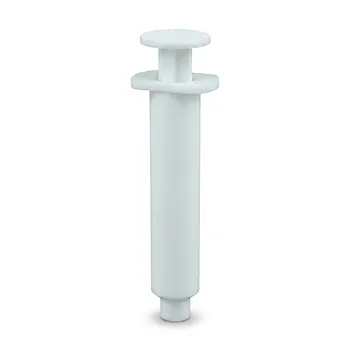
High Purity PTFE Syringe Sampling Barrel Customizable Corrosion Resistant Teflon Labware
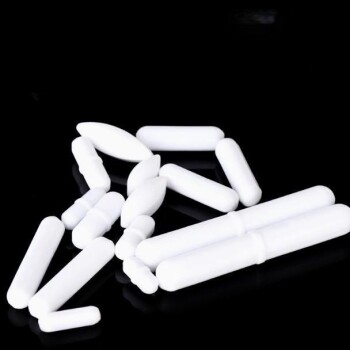
Custom PTFE Teflon Parts Manufacturer PTFE Magnetic Stirring Bar
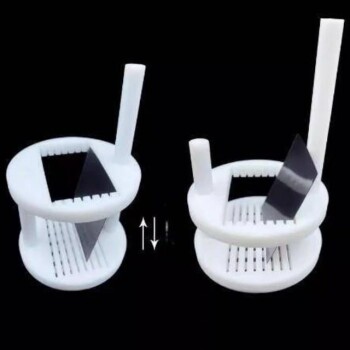
Custom PTFE Teflon Parts Manufacturer Adjustable Height Flower Basket
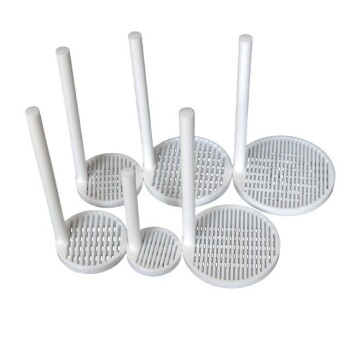
Custom PTFE Teflon Parts Manufacturer PTFE Cleaning Rack
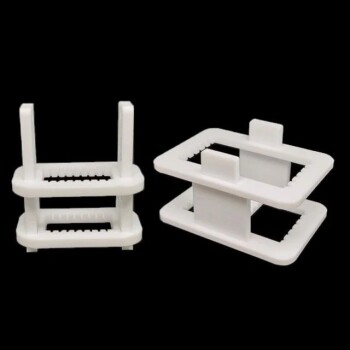
Custom PTFE Teflon Parts Manufacturer Conductive Glass Substrate Cleaning Rack
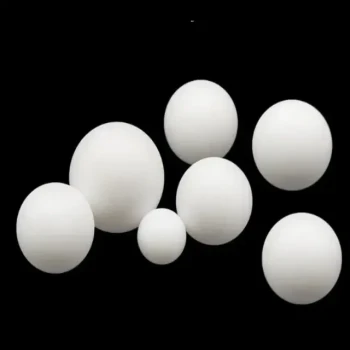
Custom PTFE Teflon Balls for Advanced Industrial Applications
$30.00