All Questions
How Do The Chemical Resistance And Thermal Processing Limits Of Pctfe Compare To Traditional Fluoropolymers? Pctfe Vs Ptfe/Pfa: Key Differences Explained
Compare PCTFE vs PTFE/PFA on chemical resistance, thermal limits, and processing. Learn which is best for your lab equipment.
What Are The Key Performance Differences Between Pvdf Homopolymers And Pvdf Copolymers When Choosing Fluoropolymer Materials For Laboratory Fluid Tubing And Components?
Discover how PVDF homopolymers offer rigidity and creep resistance, while copolymers provide flexibility and toughness for lab tubing and components.
Why Are Pvdf Fluoropolymers Preferred For High-Purity Fluid Handling, Filtration Housings, And Storage Vessels In Semiconductor And Pharmaceutical Applications? Discover The Key Benefits For Contamination Control.
Learn why PVDF is chosen for high-purity applications: low extractables, smooth surfaces, chemical resistance, and mechanical strength.
What Are The Chemical Compatibility Capabilities And Key Limitations Of Pvdf? Discover Critical Data For Safe Fluid Handling
Learn PVDF's chemical compatibility, temperature limits, and key limitations vs. PTFE/PFA for safe fluid transfer and containment.
How Do Pvdf's Mechanical Strength And Density Compare To Ptfe/Pfa? Key Differences Explained
Compare PVDF vs PTFE/PFA: PVDF offers higher strength and lower density, but PTFE/PFA excel in chemical resistance and temperature.
Why Presintered Ptfe Resins For Ram Extrusion? Achieve Reliable, Uniform Tubing And Thin Rods
Discover why presintered PTFE resins are preferred for ram extruded tubing and rods, ensuring uniform compaction, fewer defects, and stronger parts.
How Do Design Parameters Such As Spacing Ratio (D*) And Robustness Factor (A*) Impact The Liquid Repellency And Breakthrough Resistance Of Fluoropolymer Fluid Transfer Components And Labware? Optimize Performance With High D* And A*
Learn how D* and A* affect liquid repellency and breakthrough resistance in fluoropolymer labware. Optimize for low adhesion and pressure stability.
How Do The Structural Atomic Characteristics Of Fluoropolymers Like Ptfe And Pfa Contribute To Superior Hydrocarbon Barrier Performance In Laboratory Storage Bottles And Fluid Transfer Tubing?
Learn how PTFE and PFA's fluorine-shielded carbon backbone reduces hydrocarbon permeation, ensuring purity and retention in lab storage and tubing.
How Do Fluoropolymers Compare To Conventional Polymers Like Pa-12 And Hdpe For Chemical Resistance And Permeation?
Compare PTFE, PFA, FEP vs PA-12, HDPE for chemical resistance and permeation in fluid transfer components.
How Does The Gas Permeability Of Pvdf Compare With Ptfe And Pfa? Discover Lower Gas Ingress For Sensitive Fluids
Compare gas permeability of PVDF vs PTFE and PFA: PVDF offers much lower oxygen/nitrogen transmission, ideal for gas-sensitive applications.
How Does Operational Temperature Affect Gas Permeability Coefficients In Fluoropolymer Tubing And Membrane Systems? Key Insights & Data
Learn how temperature impacts gas permeability in fluoropolymer tubing and membranes, including diffusion, sorption, and practical design implications.
How Does The Solubility-Diffusion Model Govern Gas Permeation Through Fluoropolymer Fluid Transfer Tubing And Laboratory Vessels? Understanding P=D×S For Effective Material Selection.
Learn how gas permeation through PTFE/PFA components works via the solubility-diffusion model, including key factors and design trade-offs.
How Are Reactor Conditioning And Reagent Introduction Performed During High-Pressure Radical Copolymerization Of Fluoroalkenes? Key Steps For Safe, Reproducible Operations
Learn the critical steps for reactor conditioning and reagent introduction in fluoroalkene copolymerization, and why PTFE/PFA components are vital.
How Do Extrusion Variables Affect The Wall Structure And Differential Porosity Of Dual-Porosity Eptfe Tubing Components? Key Process Tips
Learn how mandrel position, speed, and lubricant control differential porosity in ePTFE tubing, ensuring optimal performance.
What Manufacturing And Processing Steps Are Required To Transform Raw Ptfe Resin Into Dimensionally Stable, Highly Porous Eptfe Tubing? Learn The 5 Essential Stages For Optimal Performance.
Discover the 5 key steps to manufacture dimensionally stable ePTFE tubing: paste extrusion, lubricant removal, controlled expansion, constrained sintering, and quality verification.
How Is The Maximum Pore Size Of Porous Eptfe Tubing Determined? Master The Bubble Point Method For Reliable Fluoropolymer Filtration.
Learn how the bubble point method reveals the maximum pore size in ePTFE tubing, ensuring filtration integrity and barrier performance.
How Do Eptfe Tensile Strength And Thermal Shrinkage Compare To Matrix-Spun Ptfe? Superior Strength And Stability.
Compare ePTFE vs matrix-spun PTFE: ePTFE offers >4 g/denier tensile strength and 3-5% thermal shrinkage, ideal for demanding applications.
What Thermoforming Process Is Used To Shape Expanded Ptfe (Eptfe) Tubing Into Complex Three-Dimensional Custom Components Or Reinforced Tubular Structures? Discover The Radial Expansion And Heat-Shrink Method.
Learn the key thermoforming process for ePTFE tubing: radial expansion and heat contraction over a mandrel to create complex, reinforced tubular components.
How Do Extrusion Parameters Control Ptfe Tubing Porosity? Optimize Structure For Performance
Learn how lubricant %, expansion ratio, and temperature tune PTFE tubing porosity. Expert guide for superior microstructure.
Why Do Fluoropolymers Tend To Accumulate Static Electricity? Effective Solutions For Fluid Handling
Discover why fluoropolymers generate static and learn how conductive grades and grounding manage electrostatic risks.
How Do Ptfe, Pfa, And Fep Compare In Gas And Moisture Permeability? Choose The Right Fluoropolymer For Your Chemical Storage And Fluid Transfer.
Compare PTFE, PFA, and FEP permeability for chemical storage and fluid transfer. Learn key differences and select the best material.
Which Material Properties Make Ptfe And Etfe Optimal For Specialized Tubing, Guide Catheters, And Flexible Sheathing Applications? Explore Key Traits For Reliability.
Discover why PTFE and ETFE excel in tubing, catheters, and sheathing: flexibility, chemical inertness, durability, and more.
How Do Fluoropolymer-Lined Flexible Hoses And Tubing Perform Under Severe Chemical Exposure And Vibration, And How Can Space-Saving Designs Be Implemented? Explore Key Factors For Reliable Performance.
Learn how PTFE/PFA hoses resist aggressive chemicals, handle vibration, and enable compact layouts with preformed bends.
How Do Fluoropolymers Compare To Standard Plastics Like Pvc In Terms Of Thermal Stability And Safety For Protective Tubing And Wire Insulation? Discover Why Fluoropolymers Outperform Pvc
Fluoropolymers offer higher thermal stability and safety margins compared to PVC for tubing and wire insulation. Learn key differences.
How Does A Core-Shell Structure In Ptfe Fine Powders Improve The Quality Of Extruded Fluoropolymer Tubing And Wire Insulation? Discover The Key Benefits For Your Manufacturing
Learn how core-shell PTFE fine powders improve processability, reduce defects, and enhance tubing and wire insulation quality.
What Are The Structural Advantages Of Presintered Ptfe Resins When Extruding Thin-Walled Tubing And Solid Rods? Achieve Superior Extrusion Quality And Reliability
Discover how presintered PTFE resins enhance structural integrity, reduce voids, and improve dimensional uniformity in thin-walled tubing and solid rods.
What Is The Impact Of Operational Temperature On The Gas Permeation Rate And Selectivity Of Fluoropolymer Fluid Transfer Tubing And Reaction Apparatus Components? Optimize Performance With Thermal Data
Learn how temperature affects gas permeation and selectivity in fluoropolymer components, and why using temperature-specific data is crucial.
How Does The Incorporation Of Fluorinated Groups Affect Gas Permeability? Key Factors And Trade-Offs Explained
Learn how fluorinated groups increase free volume, boosting gas permeability and diffusivity in fluoropolymers for fluid handling and filtration.
How Do 6F Groups Affect Gas Permeability In Fluoropolymers? Unlock Tailored Tubing Selection For Your Lab's Gas Control Needs
Discover how 6F groups increase gas permeability and learn to choose fluoropolymer tubing for optimal barrier or transport performance.
How Do Ptfe And Pfa Compare In Terms Of Maximum Continuous Operating Temperature, Chemical Resistance, And Coefficient Of Friction When Selecting Materials For High-Purity Fluid Handling Equipment? Choose The Right Fluoropolymer For Your Application
Discover key differences between PTFE and PFA for high-purity fluid handling: temperature, chemical resistance, friction, and manufacturing advantages.
What Are The Primary Thermal And Mechanical Trade-Offs Between Fep And Pfa When Choosing Fluoropolymer Materials For Chemical Fluid Handling?
Compare PFA vs FEP for chemical fluid handling: thermal limits, mechanical strength, and trade-offs to guide your material selection.
Why Is Pfa Often Preferred Over Standard Ptfe For Complex High-Temperature Laboratory Fluid Components And Custom Vessels, And How Do Their Material Properties Compare? Discover The Key Differences In Manufacturing, Thermal Stability, And Mechanical Performance.
Compare PFA vs PTFE for high-temperature lab components. Learn why PFA's melt-processability makes it ideal for complex shapes and where PTFE excels.
Ptfe Vs Pfa: High-Temperature & Mechanical Comparison
Compare PTFE vs PFA: max operating temps, tensile strength, elongation, friction, and fabrication differences for lab equipment.
What Advantages Do Ptfe And Pfa Tubing Offer For Organic Solvents? Superior Chemical Resistance, Purity, And High-Temperature Stability.
PTFE & PFA tubing resist aggressive organic solvents, preventing swelling, leaching, and contamination. Ideal for high-purity and high-temp applications.
What Handling Techniques Are Used To Overcome Mechanical Weakness During The Thermal Processing Of Small-Diameter Unsintered Ptfe Tubing? Master Cold Threading And Rapid Heating
Discover the key techniques for handling small-diameter unsintered PTFE tubing during thermal processing, including cold threading and rapid heating.
How Does Die Design And Core Pin Arrangement Impact Ptfe Tubing Accuracy?
Learn how die design and core pin alignment ensure uniform walls and precise dimensions in high-purity PTFE tubing.
What Are The Primary Processing Considerations When Manufacturing Fluoropolymer Tubing? Key Factors For Labs & Chemical Processes.
Learn how to control extrusion, temperature, purity, and dimensions to produce reliable PTFE and PFA tubing.
Why Are Fluoropolymers Critical For Semiconductor Fluid Handling? Safeguard Purity With Ptfe & Pfa
Discover why PTFE and PFA are essential for semiconductor tubing and chemical equipment, ensuring purity and reliability.
What Is The Structural Difference Between Thermosetting And Thermoplastic Fluoropolymers, And How Does This Impact Material Selection For High-Temperature Laboratory Fluid Transfer Components?
Learn how cross-linking affects thermal stability, creep, and fabrication in PTFE, PFA, FEP, and thermosets for lab fluid systems.
What Is The Reduction Ratio (Rr) In Ptfe Paste Extrusion? Master Pressure & Fibrillation
Learn how Reduction Ratio influences PTFE extrusion pressure and product quality. Optimize your process for better tubing and insulation.
How Do Die Wall Angles And Guide Tube Clearances Impact Surface Smoothness In Ptfe Paste Extrusion? Optimize Your Process With Precision Machining
Learn how die angle and clearance affect PTFE surface quality, why precision matters, and how to achieve smooth extrusion.
How Do Key Physical And Chemical Properties Like Chemical Resistance, Water Vapor Permeability, And Coefficient Of Friction Compare Among Fluoropolymers Such As Ptfe, Pfa, And Fep When Selecting Materials For Laboratory Fluid Transfer And High-Purity Containment?
Compare PTFE, PFA, FEP for lab fluid handling: chemical resistance, water-vapor permeability, friction, and more.
Why Is Ptfe Ideal For High-Purity Fluid Transfer And Corrosive Chemical Containment Compared To Other Organic Polymers?
Discover PTFE's unique chemical inertness, low surface energy, and low friction for pure fluid handling and corrosive containment.
How Does The Reduction Ratio (Rr) In Ptfe Paste Extrusion Influence Manufacturing Pressures And The Quality Of Thin-Walled Fluoropolymer Components?
Learn how RR affects extrusion pressure and PTFE tubing quality, with tips on balancing process variables for optimal results.
What Are The Main Dimensional Categories, Wall Thicknesses, And Application Fields For Extruded Ptfe Tubing Used In Fluid Handling And Laboratory Equipment? Choose The Right Ptfe Tubing For Your Application.
Learn about PTFE tubing sizes: spaghetti, pressure hose, and pipe liners. Find the right tube for your lab or industrial needs.
What Shear Rate Ranges Are Typical For Fluid Handling Processes Like Pumping, Mixing, And Spraying? Understand The Impact On Ptfe/Pfa Component Selection.
Learn typical shear rates for pumping, mixing, spraying, and why they matter for selecting fluoropolymer components.
What Structural Defects Can Arise In Ptfe Fluid Transfer Lines If The Raw Material Undergoes Premature Shear Stress Prior To Processing? Learn How To Prevent Weak Zones
Discover how premature shear stress causes micro-cracks, leaks, pressure loss, and dielectric failure in PTFE lines.
What Is The Significance Of The Reduction Ratio (Rr) When Fabricating Thin-Walled Ptfe Tubing Or Custom Fluoropolymer Profiles? Optimize Your Extrusion Process For Superior Results
Learn how Reduction Ratio impacts PTFE extrusion quality, pressure, and strength. Essential for thin-wall tubing and custom profiles.
How Does Paste Extrusion Impart Structural Integrity To Unsintered Ptfe Lab Tubing?
Discover how paste extrusion creates a fibrillar network, giving PTFE tubing green strength before sintering.
Why Is Strict Temperature Control Below 19°C Critical During The Storage And Handling Of Fine Powder Ptfe Resins Used For Manufacturing High-Purity Laboratory Tubing And Fluid Transfer Components?
Understand the crystalline phase transition at 19°C, preventing premature fibrillation to ensure leak-free, high-purity PTFE components.
What Key Material Properties Must Be Considered When Selecting An Extrusion Lubricant For Processing Ptfe Fine Powder Into Fluid Transfer Tubing Or Labware? Discover Essential Factors For Optimal Performance.
Learn the critical lubricant properties for PTFE paste extrusion: low surface tension, volatility, purity, and safety for tubing and labware.
What Effect Does Modifying Ptfe With Comonomers Such As Ppve Or Ctfe Have On The Physical Properties And Paste Extrusion Performance Of Fluoropolymer Resins?
Learn how PPVE/CTFE modification affects PTFE's crystallinity, toughness, and extrusion pressure, and how to choose the right resin for your application.
How Do Polar Aprotic Solvents Affect Fluoropolymers Like Pvdf, And Why Are Ptfe/Pfa Preferred?
Learn why PVDF swells or dissolves in polar aprotic solvents, while PTFE/PFA remain stable, preserving chemical resistance and purity.
What Are The Structural Advantages Of Core-Shell Modified Ptfe Resin In Manufacturing Fluoropolymer Tubing Requiring High Reduction Ratios? Achieve Defect-Free Thin-Walled Tubing With Extreme Reduction Ratios.
Discover how core-shell modified PTFE enables extreme reduction ratios for thin-walled tubing with fewer defects.
How Does Chemical Modification During Ptfe Emulsion Polymerization Prevent Flaws In Thin-Walled Tubing? Unlock Superior Extrusion Control
Discover how chemical modification reduces extrusion pressure by 20-50%, preventing defects in thin-walled PTFE tubing while preserving strength.
Why Are Comonomers Like Hexafluoropropylene (Hfp) Incorporated During Fluoropolymer Synthesis For Laboratory Fluid Transfer And Containment Equipment? Discover The Key Benefits For Lab Components.
Learn why HFP comonomers enhance fluoropolymers for lab equipment, improving processability, flexibility, and thermal stability while maintaining chemical resistance.
How Does High-Purity Pfa Tubing Maintain Reagent Purity? Achieve Ultra-Smooth, Zero-Contamination Fluid Transfer
Learn how high-purity PFA tubing uses internal smoothness and anti-permeation to prevent reagent contamination and leaching in lab fluid systems.
What Are The Technical Advantages Of High-Quality Pfa Tubing? Achieve Ultimate Purity And Precision In Fluid Handling
Discover how high-quality PFA tubing and fittings enhance lab performance with superior chemical resistance, smooth flow, and absolute purity.
What Is The Benefit Of Implementing Customized Pfa Manifolds And Tubing? Optimize Flow And Purity In Precision Systems
Discover how custom PFA manifolds reduce dead volume, prevent contamination, and enhance precision in laboratory fluid control and automated systems.
What Role Do Pfa Tubing And Valves Play In High-Precision Laboratory Fluid Transfer Systems? Ensure Ultra-Pure Results
Learn how PFA tubing and valves provide chemical inertness, zero contamination, and precise flow control for high-purity laboratory fluid systems.
What Are The Technical Advantages Of High-Precision Pfa Tubing In Mxene Production? Maximize Purity And Yield.
Enhance MXene synthesis with high-precision PFA tubing. Explore benefits like chemical resistance, zero contamination, and anti-clogging performance.
What Technical Advantages Do Pfa Tubing And Fittings Offer? Master Precision Fluid Transfer And Flow Chemistry
Discover why PFA tubing and fittings are the gold standard for high-purity fluidics, offering chemical inertness and zero cross-contamination.
How Do High-Precision Pfa Fluid Transfer Components, Such As Tubing And Fittings, Affect The Results Of Continuous-Flow Synthesis?
Discover how PFA components optimize continuous-flow synthesis by ensuring stable flow rates, ultra-pure fluid paths, and superior batch consistency.
What Factors Must Be Considered When Selecting Ptfe Tubing For High-Pressure Or High-Temperature Applications? - A Guide
Master PTFE tubing selection for extreme environments. Learn about pressure derating, thermal expansion, and mechanical reinforcement for lab safety.
How Does Ptfe Tubing Ensure Purity In Food, Beverage, And Semiconductor Manufacturing? Achieve Ultra-High Purity Flow
Learn how PTFE tubing prevents contamination, eliminates flavor carry-over, and resists aggressive chemicals in high-purity manufacturing processes.
What Advantages Does Ptfe Tubing Provide In Power Generation And Water Treatment Applications? Enhanced Purity & Safety
Discover why PTFE tubing is vital for power and water systems, offering high-chloride corrosion resistance, 500°F stability, and sample purity.
How Does Ptfe Tubing Contribute To The Accuracy Of Laboratory And Analytical Instrumentation? Ensure Purity & Precision
Discover how PTFE tubing enhances analytical accuracy by providing a chemically inert, low-friction path that prevents contamination and ensures precision.
What Electrical Properties Make Ptfe Tubing Suitable For The Electronics Industry? Superior Insulation & High-Frequency Performance
Discover how PTFE tubing's high dielectric strength and low dielectric constant provide superior insulation and signal integrity for electronics.
Why Is Ptfe Tubing Considered Essential For Medical And Pharmaceutical Devices? Unmatched Purity And Biocompatibility
Discover why PTFE tubing is vital for medical and pharmaceutical apps, featuring chemical inertness, biocompatibility, and sterilization resistance.
What Role Does Ptfe Tubing Play In Automotive Engineering And Electric Vehicle Systems? Boost Ev Safety And Reliability
Discover why PTFE tubing is critical for EV battery isolation, fuel systems, and thermal management in high-performance automotive engineering.
What Are The Benefits Of Using Ptfe Tubing In Aerospace And Defense Systems? Reliability In Extreme Conditions
Discover why PTFE tubing is essential for aerospace: extreme thermal stability, chemical resistance, and low outgassing for mission-critical systems.
How Does Ptfe Tubing Perform In Chemical Processing And Industrial Fluid Handling Environments? Unmatched Inertness.
Explore the benefits of PTFE tubing: exceptional chemical resistance, 260°C heat stability, and high purity for industrial fluid handling systems.
What Are The Primary Material Characteristics That Distinguish Ptfe Tubing For Industrial Use? Performance & Benefits
Learn about PTFE tubing characteristics like chemical inertness, -200°C to +260°C stability, and low friction for high-performance industrial use.
What Are The Primary Design Considerations Regarding Gas Permeation And Uv Exposure For Ptfe Tubing? Design Tips
Learn how to manage gas permeation and UV degradation in PTFE tubing systems. Discover strategies for barrier layers, shielding, and stability.
What Are The Electrical And Dielectric Properties Of Ptfe Tubing In High-Frequency Applications? Signal Integrity Guide
Discover how PTFE tubing ensures low signal loss and electrical stability in high-frequency applications with its unique dielectric properties.
How Does The Phenomenon Of Creep Or 'Cold Flow' Affect The Mechanical Application Of Ptfe Tubing? Engineering Guide
Learn how PTFE creep affects tubing integrity and discover engineering strategies like reinforcement and fillers to prevent cold flow and leaks.
What Occurs During The Sintering And Consolidation Phase Of Ptfe Tubing Manufacturing? Mastering Material Strength
Learn how the sintering phase transforms porous PTFE into dense, chemically resistant tubing through high-temperature molecular diffusion and cooling.
How Does The Paste Extrusion Process For Ptfe Tubing Differ From Traditional Plastic Extrusion? Key Process Comparisons
Understand the differences between PTFE paste extrusion and traditional plastic extrusion, focusing on cold-forming, lubrication, and sintering.
What Is The Operational Temperature Range For Ptfe Tubing? Stability And Performance From -268°C To 260°C
Learn about the -268°C to 260°C temperature range of PTFE tubing and the molecular engineering that ensures its thermal stability and safety.
What Causes The Low Coefficient Of Friction And Non-Stick Behavior In Ptfe Tubing? Explore The Molecular Secrets
Discover how fluorine atoms and low surface energy create the unique non-stick and low-friction properties of high-performance PTFE tubing.
Why Does Ptfe Tubing Exhibit Near-Universal Chemical Resistance And Inertness? The Power Of C-F Bonds Explained
Understand how C-F bond strength and high crystallinity make PTFE tubing the gold standard for resisting acids, solvents, and extreme environments.
What Is The Molecular Chemical Structure And Bonding Mechanism Of Ptfe Tubing? The Science Of The C-F Bond Shield.
Explore the molecular architecture of PTFE tubing, from the strong C-F bond mechanism to the protective fluorine shield ensuring chemical inertness.
What Medical Applications Benefit From Ptfe Liners With High Yield Strength? Enhance Precision In Complex Procedures
Discover how high yield strength PTFE liners improve catheter control, kink resistance, and device reliability in cardiovascular, neurovascular, and minimally invasive surgery.
How Does Wall Thickness Affect The Yield Strength And Flexibility Of Ptfe Liners? Optimize Performance For Your Application
Learn how PTFE liner wall thickness impacts load capacity vs. flexibility. Make the right engineering choice for medical, lab, or industrial designs.
What Are The Primary Manufacturing Processes For Ultra-Thin-Walled Ptfe Liners? Optimize Molecular Structure For Maximum Strength
Compare film casting, mandrel extrusion, and free extrusion for PTFE liners. Learn how each process affects molecular orientation and mechanical performance.
How Does The Free Extrusion Process Enhance The Yield Strength Of Ptfe Liners? Achieve Superior Axial Strength
Learn how free extrusion aligns PTFE molecular chains into fibrils to dramatically increase axial yield strength for demanding applications.
What Are The Advantages Of Ptfe Liners In Medical Catheter Applications? Enhance Performance & Patient Safety
Discover how PTFE liners provide superior lubricity, pushability, and biocompatibility for safer, more reliable medical catheters.
What Are The Key Advantages Of Ptfe Lined Pipes? Superior Corrosion Resistance & Cost-Effective Flow
Discover the key benefits of PTFE lined pipes: unmatched chemical inertness, low friction, and long-term cost savings for handling corrosive fluids.
How Is The Ptfe Lining Process Carried Out? A Guide To Flawless Corrosion Protection
Learn the PTFE lining process: interference fit, spray sintering, and skived sheet methods for superior chemical resistance in pipes, tanks, and valves.
What Are Ptfe Lined Pipes And Where Are They Used? A Complete Guide To Corrosion-Resistant Piping
Learn how PTFE lined pipes combine structural strength with chemical inertness for safe, cost-effective transport of corrosive fluids in demanding industries.
What Are Lined Pipes And How Do They Work? Achieve Superior Chemical Resistance At A Lower Cost
Discover how lined pipes combine a strong steel outer pipe with a corrosion-resistant inner liner to handle aggressive chemicals and abrasive materials efficiently.
What Are The Benefits Of Ptfe Industrial And Heavy Wall Tubing? Maximize Reliability In Harsh Environments
Discover the key benefits of PTFE tubing: superior chemical resistance, high-temp stability up to 500°F, and durability for demanding industrial applications.
What Is Ptfe Spiral Wrap And What Are Its Uses? Protect Cables In Extreme Environments
Learn how PTFE Spiral Wrap provides superior chemical, thermal, and abrasion resistance for protecting wires, cables, and hoses in demanding applications.
What Types Of Fluids Are Ptfe-Lined Pipes Suitable For Transporting? Handle Nearly Any Fluid With Confidence
PTFE-lined pipes offer near-universal chemical resistance, ideal for corrosive, high-purity, and hazardous fluids in demanding industrial applications.
In Which Industries Are Ptfe-Lined Piping Systems Commonly Used? Ensure Safety And Purity In Harsh Environments
Discover the key industries—chemical, pharmaceutical, semiconductor, and more—that rely on PTFE-lined piping for corrosion resistance and product purity.
What Are The Benefits Of Using Ptfe Lined Pipes? Achieve Unmatched Chemical Resistance And Flow Efficiency
Discover the key benefits of PTFE lined pipes: superior chemical resistance, non-stick surface for smooth flow, high purity, and long-term cost savings.
What Challenges Are Associated With Constructing Ptfe Umbilical Cords? Mastering Extreme Lengths Without Compromising Purity
Learn the key challenges of building long PTFE umbilicals, including contamination risks and the need for specialized welding to ensure purity and reliability.
What Is A Ptfe Umbilical Cord And How Is It Used In Refineries? Ensure Accurate Process Control & Safety
Learn how PTFE umbilical cords transport pure, unaltered gas samples in refineries for accurate lab analysis, ensuring process safety and efficiency.
In What Types Of Medical Devices Are Ptfe Liners Particularly Useful? Enhance Minimally Invasive Procedures With Superior Lubricity
Discover why PTFE liners are critical for catheters, guidewires, and stents due to their extreme lubricity, biocompatibility, and durability for safer medical procedures.
What Are The Benefits Of Using Ptfe Liners In Medical Procedures? Enhance Safety & Performance
Discover how PTFE liners improve medical devices with low friction, biocompatibility, and durability for safer procedures and reliable implants.
Related Products
High Purity PFA Coiled Tubing Custom PTFE Machining PFA Welding and Precision Bending Solutions
High Performance PFA Coiled Spring Tubing and Custom PTFE Fabrication Services with Welded Fittings and Precision Bent Components
Custom PTFE Dissolution Bottle 50ml with PFA Ultra Fine Tubing Corrosion Resistant No Leaching
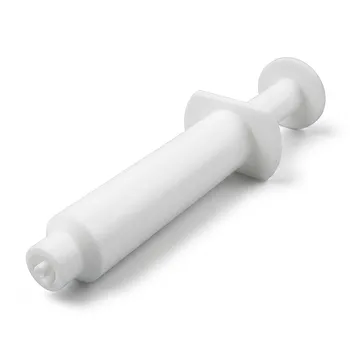
Virgin PTFE Precision Syringe for Chemical Dispensing and Syringe Pump Integration with FEP Tubing Compatibility
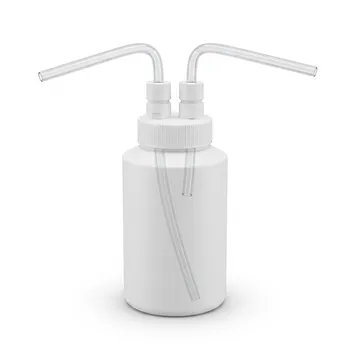
Custom PTFE Gas Washing Bottle Corrosion Resistant Chemical Absorption Vessel with Quarter Inch Tubing Connections