PTFE is ideal when chemical purity and containment reliability matter more than material cost or mechanical strength. Its fully fluorinated structure gives it exceptional resistance to strong acids, bases, oxidizers, and organic solvents, while its extremely low surface energy minimizes sample adhesion and cross-contamination. Compared with polymers such as polyethylene, PTFE is far less likely to swell, dissolve, degrade, or introduce extractable contaminants under aggressive chemical and high-temperature conditions.
The central advantage of PTFE is the combination of chemical inertness, low surface energy, and low friction. It protects both the fluid and the equipment: the fluid remains purer, while tubing, valves, fittings, seals, and lined vessels resist chemical attack and mechanical wear.
Why PTFE Resists Aggressive Chemicals
Strong carbon–fluorine bonds provide chemical stability
PTFE’s polymer backbone is fully fluorinated, with carbon–fluorine bonds that are highly resistant to chemical attack. This makes PTFE effectively insoluble in virtually all common organic solvents, strong acids, and strong bases below its service limits.
As a result, PTFE generally does not dissolve, swell significantly, or degrade when exposed to chemicals that attack conventional plastics.
It protects against corrosion and leaching
Chemical resistance is important for more than equipment lifespan. If a polymer degrades, it can release extractables into the fluid or lose enough strength to leak.
PTFE minimizes both risks. It maintains structural integrity in highly corrosive environments and helps prevent impurities from entering the process stream—an essential requirement for trace analysis, semiconductor processing, laboratory sample preparation, and aggressive chemical containment.
It performs where polyethylene may fail
Polyethylene is useful and economical, but it is not universally resistant. In particular, some polyethylene grades can swell or dissolve when exposed to hot hydrocarbons and other demanding media.
PTFE has no known organic solvents below its melting point of approximately 327°C, although practical operating temperature limits are lower and depend on the component design, pressure, and application. This gives PTFE a substantially broader chemical operating range than many conventional organic polymers.
Why PTFE Supports High-Purity Fluid Transfer
Low surface energy reduces sample adhesion
PTFE has an exceptionally low surface energy, approximately 18 dynes/cm. Fluids, particles, and biological or chemical residues are less likely to adhere strongly to its surface.
This is valuable in tubing, valves, fittings, bellows, and processing equipment because less material remains behind after transfer or cleaning. Reduced adhesion lowers the risk of carryover and cross-contamination between samples or process batches.
Smooth surfaces limit particulate buildup
A smooth PTFE surface provides fewer opportunities for particulates and residues to become trapped. In components such as PTFE bellows and fluid-transfer tubing, this helps reduce contamination sources within the system.
The benefit is especially important where even small amounts of residue can affect analytical accuracy or compromise a high-purity manufacturing process.
PTFE does not readily contaminate the fluid
Because PTFE is chemically inert and resistant to dissolution, it is unlikely to contribute significant polymer-derived contaminants under normal service conditions. This supports accurate sample preservation during digestion, reagent handling, filtration, and chemical analysis.
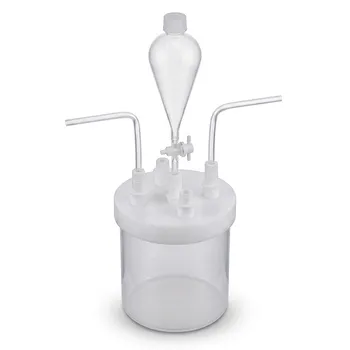
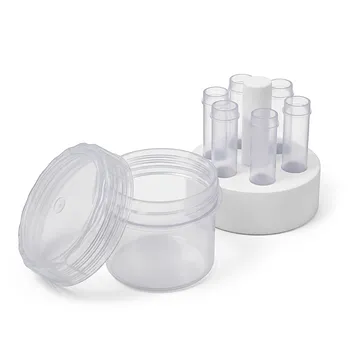
PTFE is also commonly selected for components such as reagent bottles, digestion vessels, crucibles, valves, seals, and custom-machined fluid-handling parts when maintaining the original chemistry of the fluid is critical.
Why Low Friction Matters in Fluidic Components
Low friction reduces mechanical wear
PTFE has a very low dynamic coefficient of friction. The reference comparison gives approximately 0.04 for PTFE versus 0.33 for polyethylene, although actual values vary with load, speed, surface finish, temperature, and mating materials.
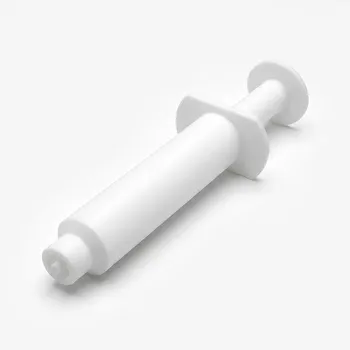
Lower friction reduces resistance in moving components such as valve parts, seals, plungers, and bellows. It also reduces rubbing and wear that could otherwise generate particles or shorten component life.
It improves reliability in moving systems
In a corrosive fluid system, mechanical wear can become a chemical-containment problem. A worn seal or valve surface can leak, shed particles, or create dead spaces where residues accumulate.
PTFE’s low-friction behavior helps components move smoothly while preserving sealing performance and reducing the likelihood of wear-related contamination.
Why PTFE Is Effective for Corrosive Chemical Containment
It maintains a stable chemical barrier
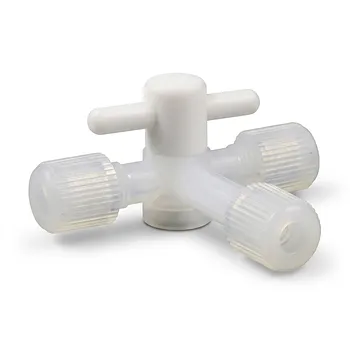
PTFE can act as a chemically resistant barrier between aggressive media and structural equipment. This is why PTFE liners, tubing, fittings, valves, seals, and vessels are used in systems exposed to concentrated acids, strong bases, oxidizing chemicals, and reactive fluorinated compounds.
The barrier function prevents chemical attack on the underlying equipment and reduces the possibility of leakage caused by polymer degradation.
It tolerates demanding thermal environments
PTFE retains its chemical resistance across a broad temperature range and is used in harsh environments where many standard polymers lose strength or become chemically vulnerable.
However, chemical resistance does not eliminate thermal and mechanical design constraints. Pressure, temperature, wall thickness, creep, and component geometry must still be evaluated for the specific application.
Its inertness has been demonstrated in severe service
PTFE’s resistance has supported applications involving extremely reactive compounds, including uranium hexafluoride. That history illustrates the material’s capability, but it should not be interpreted as universal suitability for every chemical or operating condition.
Application-specific compatibility testing remains necessary, especially for unusual fluorinating agents, elevated pressures, and high temperatures.
Understanding the Trade-offs
PTFE is not the strongest organic polymer
PTFE’s low friction and chemical inertness come with mechanical compromises. It has relatively low stiffness compared with some engineering polymers and can deform or creep under sustained load, particularly at elevated temperatures.
For pressure-containing components, designers may use PTFE as a liner, seal, or chemically resistant wetted surface supported by another material rather than relying on unsupported PTFE for all structural loads.
Temperature limits still apply
PTFE melts at approximately 327°C, but a component should not be operated near its melting point simply because the polymer remains chemically resistant. Long-term service temperature, pressure, dimensional stability, and creep must all be considered.
The appropriate limit depends on the component design and service conditions, not just the material’s melting temperature.
PTFE is not immune to every chemical
PTFE has extremely broad compatibility, but “chemically inert” does not mean universally indestructible. Important exceptions can include molten alkali metals, elemental fluorine under severe conditions, and certain specialized fluorinating compounds.
The exact chemical concentration, temperature, pressure, exposure time, and presence of mechanical stress can change compatibility.
Cost and processing may be higher
PTFE components can cost more than polyethylene or other commodity-polymer alternatives. PTFE can also be more difficult to process and may require specialized fabrication, machining, lining, or sealing techniques.
Those costs are justified when failure, contamination, or chemical incompatibility would be more expensive than the initial material difference.
Making the Right Choice for Your Goal
Select PTFE based on the consequence of contamination, chemical attack, and component failure—not simply on its purchase price.
- If your primary focus is ultra-high-purity fluid transfer: Choose PTFE for wetted tubing, valves, fittings, bellows, and vessels where low adhesion, low extractables, and reduced cross-contamination are critical.
- If your primary focus is corrosive chemical containment: Use PTFE where strong acids, bases, oxidizers, or organic solvents could degrade conventional polymers or metals.
- If your primary focus is moving fluidic components: Favor PTFE where low friction and reduced wear can improve valve, seal, or bellows reliability.
- If your primary focus is pressure-bearing structural strength: Consider PTFE as a liner, seal, or wetted barrier supported by a structurally stronger material, and verify creep and pressure performance.
- If your primary focus is an unusual or extreme chemical service: Confirm compatibility against the exact chemical, concentration, temperature, pressure, and exposure duration before specifying PTFE.
PTFE is the preferred organic polymer when preserving chemical purity and resisting aggressive media are the dominant design requirements.
Summary Table:
| Factor | PTFE | Polyethylene |
|---|---|---|
| Chemical resistance | Excellent against acids, bases, oxidizers, solvents | Limited, swells in some organic solvents |
| Surface energy | ~18 dynes/cm, low adhesion | Higher, more adhesion |
| Coefficient of friction | ~0.04 | ~0.33 |
| Maximum service temperature | ~260°C continuous (melts at 327°C) | ~80-100°C |
| Extractables | Minimal | Can leach additives |
| Mechanical strength | Lower, prone to creep | Good for common uses |
| Cost | Higher | Lower |
Ensure the highest purity and safety in your fluid handling with KINTEK's precision PTFE and PFA labware, tubing, valves, and custom-machined components. Our materials are designed for aggressive chemicals and trace analysis. Contact us today to discuss your application and get a quote – Contact KINTEK.
Related Products
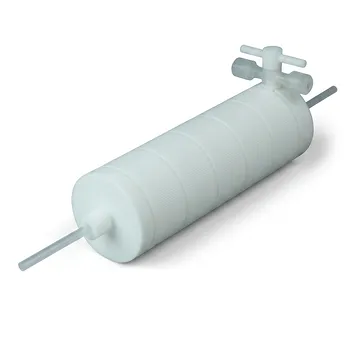
- High Purity PTFE Filter with PFA Valve Connections and Integrated Sieve Plate for Corrosive Fluid Processing
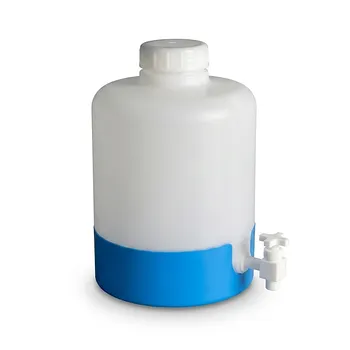
- High Corrosion Resistant PTFE Faucet Polytetrafluoroethylene Valve for Chemical Storage Drums and Fluid Transfer Systems Customizable Industrial Grade
- Custom PFA Reaction Bottles High Purity PTFE Reaction Vessels Corrosion Resistant Petrochemical Containers
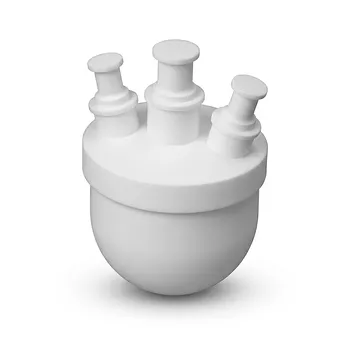
- Custom PTFE Flask Large Volume 18L Corrosion Resistant Low Background High Purity Chemical Vessel
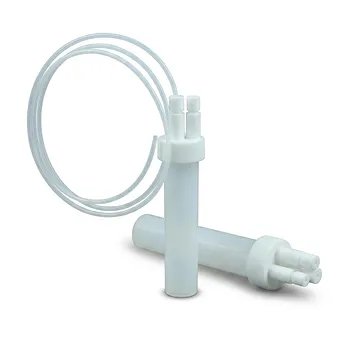
- High Purity PFA Reaction Vessel for Biopharmaceutical Synthesis and Corrosive Chemical Fluid Handling with Customizable Tube Fittings
People Also Ask
- Which chemicals are fully compatible with PTFE filters? Discover Unmatched Chemical Resistance
- What steps are involved in selecting the proper PTFE filter? A 4-Step Guide to Optimal Filtration
- What sizes and pore options are available for PTFE filters? Choose the Right Filter for Your Application
- How does the hydrophobicity of PTFE filters benefit their use? Ensure Uninterrupted Gas Flow and Solvent Filtration
- What temperature resistance do PTFE filters offer? Unmatched Thermal Stability from -200°C to +260°C