Fluoropolymers generally outperform PVC in thermal stability and high-temperature electrical reliability. Materials such as PTFE, FEP, and ETFE can support continuous service from approximately 200°C to 260°C, with some grades tolerating short-term peaks near 300°C, while PVC typically has a much narrower operating range. Fluoropolymers also offer strong flame resistance, low smoke, high dielectric strength, and excellent chemical resistance, but it is inaccurate to assume they produce no hazardous fumes when overheated or ignited.
For protective tubing and wire insulation exposed to heat, chemicals, or demanding electrical conditions, fluoropolymers provide a substantially larger safety and performance margin than standard PVC. Their main limitation is cost, processing difficulty, and the fact that severe overheating can still generate hazardous decomposition products.
Why Fluoropolymers Handle Heat Better
Higher continuous-use temperatures
PTFE and PFA can support continuous-use temperatures of approximately 260°C, while FEP and ETFE provide high-temperature performance that is generally below PTFE and PFA but still well above ordinary PVC.
PVC formulations vary, but standard PVC insulation and tubing are typically intended for substantially lower operating temperatures. Prolonged exposure near or above their rated limits can cause softening, embrittlement, deformation, and loss of electrical performance.
Better thermal-cycling resistance
Fluoropolymers tolerate repeated transitions between sub-zero conditions and elevated temperatures more effectively than PVC. The primary reference identifies service ranges extending from approximately -65°C to 200°C-260°C, depending on the fluoropolymer and application.
This matters in protective tubing and wire insulation because repeated expansion, contraction, and heating can create cracks, gaps, or loss of mechanical protection. A material that survives the peak temperature but fails after repeated cycling may still be unsuitable.
More stable under severe heat
The strength of the carbon-fluorine bond helps fluorinated polymer structures resist thermal and chemical attack. Supplementary data indicates that PVDF exposed to 275°C for five minutes can show only slight discoloration with little or no loss of mechanical properties, while PVC and PVDC can undergo severe degradation and leave carbonaceous residue.
The exact result depends on formulation, exposure time, oxygen availability, and material grade. These results should be treated as comparative evidence of thermal margin, not as a universal operating specification for every fluoropolymer product.
How Safety Characteristics Compare
Flame resistance and oxygen index
Fluoropolymers are generally difficult to ignite and tend to resist flame propagation. The primary reference cites a Limiting Oxygen Index of 95% for the referenced fluoropolymer materials, indicating very strong resistance to sustained combustion under that test method.
PVC can also be flame-resistant because of its chlorine content and the additives used in many formulations. However, flame resistance alone does not determine total fire safety; smoke generation, corrosive gases, formulation, geometry, and the surrounding materials also matter.
Combustion and overheating products
The claim that fluoropolymers emit no toxic fumes if ignited requires qualification. Fluoropolymers often generate less smoke and less readily combustible material than many conventional plastics, but overheating or pyrolysis can produce hazardous compounds.
For example, overheated fluoropolymer systems may release carbonyl fluoride, hydrogen fluoride, particulate matter, or other decomposition products, depending on the polymer, temperature, and environment. PTFE processing and overheating incidents are associated with fumes that can cause polymer-fume fever.
PVC presents a different hazard profile. When burned or severely overheated, it can release hydrogen chloride, corrosive acid gases, smoke, and other combustion byproducts. Therefore, neither material should be considered harmless during a fire, and ventilation, fire detection, material selection, and application-specific testing remain necessary.
Electrical insulation reliability
Fluoropolymers provide high dielectric strength, electrical resistivity, and resistance to moisture and chemical permeation. These properties help preserve insulation performance when wires operate near heat sources or in chemically aggressive environments.
PVC can provide effective electrical insulation in ordinary service, but heat, plasticizer migration, chemicals, and aging can reduce flexibility and dielectric reliability over time. Fluoropolymers are usually selected when insulation failure would create a significant safety, maintenance, or reliability problem.
Why Chemical Resistance Matters
Protection from aggressive fluids
PTFE, PFA, FEP, and related fluoropolymers resist many acids, bases, solvents, and other chemicals. The fluorinated structure creates a protective barrier around the polymer backbone, making it difficult for many reagents to attack or penetrate the material.
PVC is compatible with a useful range of fluids, but its performance is more formulation-dependent. Plasticizers, stabilizers, fillers, and the specific chemical exposure can materially change its resistance.
Reduced permeation and contamination
For tubing, chemical resistance is not only about visible swelling or cracking. Permeation through the wall can allow fluids, vapors, or contaminants to pass through even when the tubing appears intact.
Fluoropolymer tubing generally offers lower chemical permeation and reduced risk of contamination in demanding fluid-handling applications. This is valuable in analytical, laboratory, semiconductor, medical, and industrial systems where fluid purity or containment is important.
Selecting Among Fluoropolymer Types
PTFE
PTFE offers the highest thermal margin among the commonly used options discussed here, with a melting point near 342°C and continuous-use capability around 260°C. It also has very low friction and excellent chemical resistance.
Its main manufacturing limitation is that PTFE is difficult to melt-process into complex shapes. Tubing and insulation designs may therefore require specialized processing, and dimensional control can differ from melt-processable alternatives.
PFA
PFA provides near-PTFE chemical and thermal performance, including continuous-use temperatures up to approximately 260°C. Its lower melt viscosity allows it to be melt-processed into intricate, transparent, high-purity shapes.
At extreme temperatures, supplementary data indicates that PFA can lose mass faster than PTFE because of its perfluoroalkyl ether side chains. That distinction usually matters only in unusually severe thermal environments, but it should be considered for high-temperature or vacuum applications.
FEP and ETFE
FEP offers strong chemical resistance, electrical insulation, and high-temperature performance while being melt-processable. ETFE combines fluoropolymer resistance with comparatively strong mechanical performance and is often useful where abrasion or toughness matters.
Their temperature ratings are not identical to PTFE or PFA. The specific grade, wall thickness, electrical load, mechanical stress, and exposure environment must determine the final selection.
PVDF
PVDF provides stronger thermal and chemical performance than PVC and can retain useful mechanical properties under elevated-temperature exposure. It may be appropriate when a balance of toughness, chemical resistance, processability, and thermal stability is needed.
PVDF is not interchangeable with PTFE or PFA for every extreme-temperature or chemical application. Its operating limits and compatibility should be checked against the actual fluid and temperature profile.
Understanding the Trade-offs
Higher cost and more specialized processing
Fluoropolymer tubing and insulation usually cost more than PVC products. Manufacturing can also be more demanding, particularly for PTFE, which is not conventionally melt-processed like PVC, FEP, or PFA.
The additional cost is justified when thermal margin, chemical containment, electrical reliability, or reduced maintenance has high value. It may not be justified for low-temperature, non-corrosive, mechanically undemanding service.
Mechanical properties are not uniformly superior
Fluoropolymers excel in thermal and chemical resistance, but they are not automatically stronger or stiffer than PVC in every design. Some grades can be relatively soft, susceptible to creep under load, or less resistant to abrasion than a mechanically reinforced alternative.
The tubing or insulation must be evaluated under pressure, bending, tensile loading, compression, vibration, and installation conditions, not only temperature.
Fire safety claims must be specific
A material's flame rating, limiting oxygen index, smoke behavior, and decomposition chemistry are different properties. A high oxygen index does not mean the material is safe to breathe when overheated.
For safety-critical installations, review the product's fire, smoke, toxicity, and electrical certifications rather than relying on the generic name “fluoropolymer” or “PVC.”
Temperature ratings are application-specific
A published maximum temperature is not a guarantee under every combination of voltage, pressure, mechanical stress, vacuum, chemical exposure, and duration. Continuous service, short-term peaks, processing temperatures, and decomposition temperatures must be distinguished.
The correct comparison is between complete, rated products rather than between resin names alone.
Making the Right Choice for Your Goal
The material should be selected against the full operating profile, including temperature cycling, chemicals, voltage, mechanical stress, fire requirements, and cost.
- If your primary focus is maximum thermal stability: Choose a suitably rated PTFE or PFA product, particularly for continuous service near 200°C-260°C or for severe thermal cycling.
- If your primary focus is general-purpose, lower-cost protection: Choose properly rated PVC when temperatures, chemicals, and fire requirements remain within its documented limits.
- If your primary focus is electrical reliability in harsh environments: Favor fluoropolymer insulation because its dielectric performance and chemical resistance are more likely to remain stable as conditions become severe.
- If your primary focus is fire and personnel safety: Compare certified flame, smoke, and decomposition data, and do not assume either fluoropolymers or PVC produce harmless fumes during a fire.
- If your primary focus is chemical containment or fluid purity: Favor PTFE, PFA, FEP, or PVDF according to the specific chemical, temperature, permeation, and mechanical requirements.
For high-temperature, chemically aggressive, or safety-critical service, fluoropolymers usually provide the stronger protection margin, while PVC remains practical when its lower operating limits are clearly respected.
Summary Table:
| Property | Fluoropolymers (PTFE, PFA, FEP, ETFE) | PVC |
|---|---|---|
| Continuous Use Temperature | Up to 260°C (500°F) | Typically lower, often <105°C |
| Flame Resistance | Excellent (LOI up to 95%) | Good but can produce HCl |
| Chemical Resistance | Outstanding | Formulation-dependent |
| Electrical Insulation | High dielectric strength | Adequate for standard use |
| Smoke and Toxicity | Low smoke, but can release HF when overheated | Releases HCl and smoke |
| Cost | Higher | Lower |
| Processing | More specialized | Easier |
For high-performance fluoropolymer tubing and insulation solutions, trust KINTEK. Our PTFE and PFA products deliver superior thermal stability and safety for demanding applications. Contact us today to discuss your requirements and experience the KINTEK advantage. Contact us now!
Related Products
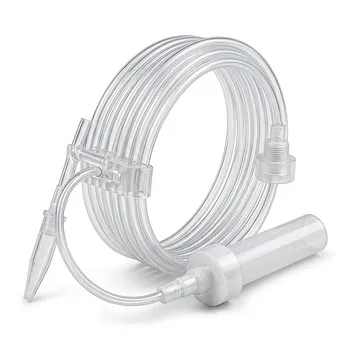
- Custom PFA Tubing 1/4 Inch High Purity Corrosion Resistant Fluoropolymer Tube with Welding and Machining Services
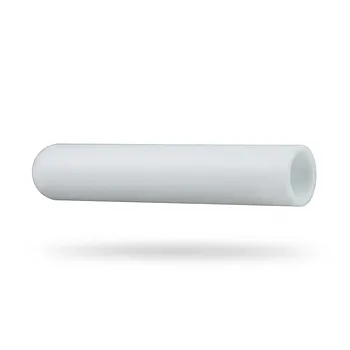
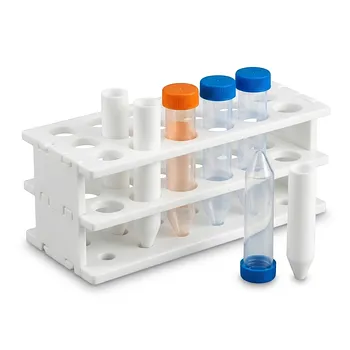
- Custom PTFE Test Tubes Corrosion Resistant Low Background Fluoropolymer Labware 50ml 30ml
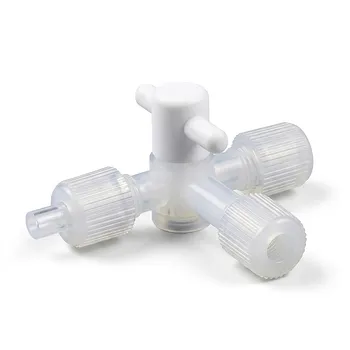
- Corrosion Resistant High Purity PFA Valve and Weldable Transparent Tubing for Semiconductor Fluid Transfer
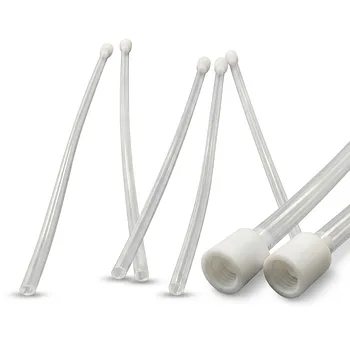
- High Purity PFA NMR Sample Tubes with PTFE Caps Corrosion Resistant Fluoropolymer Labware
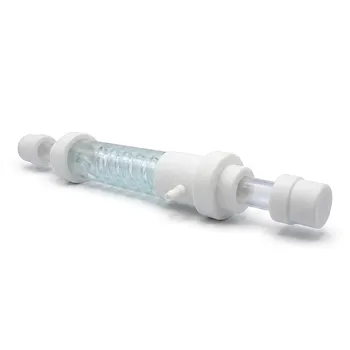
- Custom PTFE Condenser Tube 100ml Serpentine and Straight Fluoropolymer Laboratory Heat Exchanger with Flask Adapters
People Also Ask
- How does high-purity PFA tubing maintain reagent purity? Achieve Ultra-Smooth, Zero-Contamination Fluid Transfer
- What are the primary processing considerations when manufacturing fluoropolymer tubing? Key factors for labs & chemical processes.
- How do 6F groups affect gas permeability in fluoropolymers? Unlock tailored tubing selection for your lab's gas control needs
- How does the incorporation of comonomers such as perfluoropropyl vinyl ether (PPVE) alter the molecular structure and processing characteristics of TFE-based fluoropolymers like PFA compared to standard PTFE?
- What are the key properties of PFA (PerFluoroAlkoxy)? A Guide to Extreme Chemical and Thermal Resistance