PTFE creep, or cold flow, is the permanent, time-dependent deformation of the material when subjected to sustained mechanical stress. This phenomenon occurs because PTFE lacks molecular cross-linking, allowing its polymer chains to slide past one another even under constant loads. In tubing and sealing applications, this results in wall thinning, loss of connection integrity, and potential leakage as the material "flows" away from the point of pressure.
While PTFE offers exceptional chemical resistance and thermal stability, its inherent susceptibility to cold flow requires specific engineering interventions—such as mechanical reinforcement or material fillers—to ensure long-term structural reliability.
The Mechanics of Cold Flow in PTFE
The Lack of Molecular Cross-linking
Unlike many elastomers, PTFE is a thermoplastic that does not possess strong intermolecular bonds or cross-links. This lack of "molecular memory" means that when a load is applied, the material has no internal mechanism to pull itself back to its original shape.
Time-Dependent Plastic Deformation
Creep is not an immediate failure but a progressive deformation that occurs over hours, days, or months. Because PTFE is viscoelastic, it behaves somewhat like a very thick fluid under pressure, slowly changing its dimensions until the stress is removed or the material fails.
The Role of Temperature
While cold flow can occur at room temperature, the rate of deformation increases significantly as temperatures rise. For applications exceeding 100 degrees Celsius, the material becomes significantly softer, making creep the primary concern for mechanical failure.
Impact on Tubing and Sealing Applications
Loss of Preload and Connector Failure
In mechanical joints, PTFE often flows away from high-pressure contact points, such as under a bolt or within a fitting. This causes a relaxation of bolt preload, which reduces the clamping force and eventually allows fluids to bypass the seal.
Dimensional Changes and Radial Extrusion
Under continuous internal pressure, PTFE tubing may experience radial extrusion, where the walls thin out and the tubing expands outward. This change in geometry can lead to a "ballooning" effect, eventually causing the tube to burst or slip out of its designated housing.
Seal Integrity in Valves and Gaskets
In valves, creep can cause the PTFE liner or seat to shift, creating gaps that lead to internal leakage. In gasket applications, the material may thin to the point where the metal surfaces of the flange meet, losing the "spring" required to maintain a leak-proof interface.
Engineering Strategies to Mitigate Creep
Structural Reinforcement and Wall Thickness
Increasing the wall thickness of the tubing is a primary method for maintaining structural integrity in laboratory and industrial settings. For high-pressure environments, adding external reinforcements like stainless steel braiding or high-strength jacketing provides the necessary support to prevent the PTFE from expanding.
Material Enhancements and Fillers
Engineers often use reinforced PTFE grades filled with materials like glass fiber, carbon, or bronze to improve structural stability. These fillers act as internal "anchors" that obstruct the movement of polymer chains, significantly reducing the rate of cold flow.
Mechanical Compensation Systems
In sealing applications, designers utilize live-loading components such as Belleville washers or spring-loaded mechanisms. These components automatically adjust and apply constant pressure to the seal, compensating for any material that has moved due to creep.
Understanding the Trade-offs
Purity vs. Mechanical Stability
While adding fillers like glass or carbon reduces creep, it can compromise the chemical purity and dielectric properties of virgin PTFE. This is a critical consideration in semiconductor or medical applications where leaching or contamination must be avoided at all costs.
Flexibility vs. Pressure Rating
Adding external braiding or increasing wall thickness significantly increases the minimum bend radius of the tubing. Designers must balance the need for high-pressure resistance with the physical routing requirements of the system.
Cost and Complexity
Implementing "live-loading" systems or two-ferrule connectors increases the initial cost and complexity of the assembly. However, failing to account for creep often leads to higher long-term costs due to maintenance, downtime, and potential environmental hazards from leaks.
How to Apply This to Your Project
- If your primary focus is high-temperature chemical transport: Use thick-walled PTFE tubing reinforced with an external stainless steel braid to prevent burst failures.
- If your primary focus is maintaining a leak-proof seal over time: Incorporate Belleville washers or live-loaded glands to provide constant compensation for material cold flow.
- If your primary focus is high-purity applications: Stick with virgin PTFE but utilize precision-machined two-ferrule fittings to distribute gripping and sealing forces more effectively.
- If your primary focus is maximum structural stability under load: Select a PTFE grade filled with 15-25% glass fiber to minimize dimensional changes.
By understanding that PTFE is a dynamic material that moves under pressure, you can design systems that remain secure and functional throughout their entire service life.
Summary Table:
| Aspect of Creep | Impact on Application | Mitigation Strategy |
|---|---|---|
| Connection Integrity | Relaxation of bolt preload and clamping force; causes leakage. | Use live-loading mechanisms (e.g., Belleville washers). |
| Tubing Geometry | Wall thinning and radial extrusion (ballooning effect). | Increase wall thickness or add stainless steel braiding. |
| Seal Stability | Valve liners/seats shift, creating internal gaps. | Utilize reinforced PTFE grades with fillers (glass/carbon). |
| Thermal Stress | Accelerated deformation at temperatures >100°C. | Mechanical reinforcement and precision-machined fittings. |
Master High-Performance Sealing with KINTEK
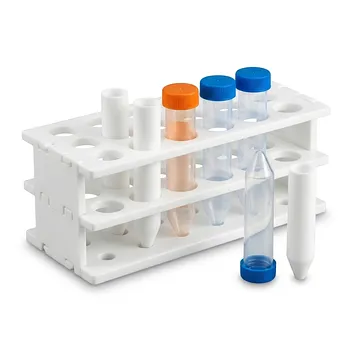
PTFE’s susceptibility to cold flow requires more than just standard parts—it demands precision engineering. At KINTEK, we specialize exclusively in high-performance fluoropolymers, providing everything from everyday basic labware (beakers, crucibles, reagent bottles, centrifuge tubes) to comprehensive fluid transfer components like custom PTFE/PFA tubing, fittings, and valves.
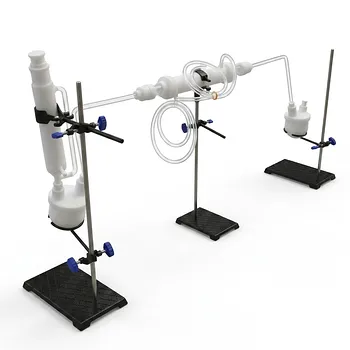
Our expertise extends to advanced reaction apparatus, including electrochemical cells, microwave digestion vessels, and microchannel reactors. Backed by end-to-end custom CNC fabrication, we deliver everything from complex non-standard machined parts to high-volume orders, ensuring your setup maintains structural reliability under the most demanding conditions.
Don’t let material creep compromise your research or industrial applications. Contact us today to discuss your custom project and leverage KINTEK’s absolute focus on high-performance fluoropolymer excellence.
Related Products
- Corrosion Resistant PTFE Digestion Tubes for Graphite Digestion Systems with Reflux Caps and Customizable Dimensions
- Corrosion Resistant PTFE Digestion Tubes for Graphite Block Systems with Acid Reflux Caps Custom Dimensions
- High Purity PTFE Digestion Tubes and Custom Centrifuge Tubes 100ml for Trace Analysis and Chemical Digestion
- High Performance PFA Coiled Spring Tubing and Custom PTFE Fabrication Services with Welded Fittings and Precision Bent Components
- Custom PTFE Digestion Tubes and Corrosion Resistant Centrifuge Tube Racks for Low Background Trace Analysis
People Also Ask
- How do PTFE digestion tubes assist in pharmaceutical and biological sample preparation? Ensure High Recovery & Purity
- What is the primary function of PTFE digestion tubes in a laboratory setting? Essential for Pure Sample Mineralization
- How do PTFE digestion tubes minimize contamination during ultra-trace elemental analysis? Achieve high-purity results.
- What are the common capacities and physical configurations available for PTFE digestion tubes? Expert Selection Guide
- How do PTFE digestion tubes facilitate the analysis of food and agricultural products? Ensure High-Purity Mineralization