PCTFE is the specialist choice, not the universal one. It withstands exceptionally harsh oxidizing environments—including fuming oxidizing acids, liquid oxygen, and ozone—and offers greater rigidity, lower creep, and much lower gas permeability than PTFE. However, traditional fully fluorinated polymers such as PTFE and PFA provide broader chemical resistance and a much wider thermal-processing window, making them safer defaults for highly aggressive or high-temperature fluid handling.
Choose PCTFE when dimensional stability, low gas transmission, optical clarity, or oxidizer resistance is the priority. Choose PTFE or PFA when maximum chemical inertness, solvent compatibility, and high-temperature endurance are more important.
Chemical Resistance: Where PCTFE Fits
PCTFE excels in harsh oxidizing environments
PCTFE has outstanding resistance to fuming oxidizing acids, liquid oxygen, and ozone. This makes it valuable for specialty seals, valves, sample containers, and components exposed to strong oxidizing service.
Its chemical resistance is still substantial because the polymer remains highly fluorinated and has near-zero moisture absorption.
PTFE and PFA provide broader compatibility
Compared with PCTFE, PTFE and PFA tolerate a wider range of solvents, concentrated acids, and aggressive process chemicals. Fully fluorinated polymers are generally preferred when the chemical composition may vary or when exposure to mixed chemical streams is difficult to predict.
PCTFE can be attacked by certain organic materials and solvents, so its compatibility must be checked against the exact fluid, concentration, temperature, exposure time, and mechanical stress.
Chemical compatibility is temperature-dependent
A chemical that is compatible with PCTFE at room temperature may cause swelling, softening, or loss of strength at elevated temperature. This is particularly important for organic and polar solvents.
For critical equipment, compatibility testing or validated chemical-resistance data should take precedence over general polymer rankings.
Thermal Limits and Processing Behavior
PCTFE has a narrower thermal operating range
PCTFE is commonly selected for service temperatures approximately within −255°C to +150°C, especially where low cold flow and mechanical stiffness are required. Its useful operating range is therefore substantially narrower than that of PTFE or PFA.
PCTFE also becomes thermally sensitive during melt processing. Processing above roughly 277–296°C can cause molecular-weight degradation and a corresponding reduction in mechanical strength.
PTFE and PFA tolerate higher service temperatures
PTFE and PFA can provide maximum continuous service temperatures of approximately 260°C, depending on grade, design, load, and environment. They are therefore better suited to high-temperature laboratory vessels, tubing, seals, and chemical-processing components.
Thermal degradation testing further illustrates the difference: a 25% weight-loss threshold occurs at approximately 494°C for PTFE in vacuum and 482°C in oxygen, compared with approximately 349°C for PCTFE in vacuum and 355°C in oxygen.
These figures are degradation benchmarks, not recommended operating temperatures. They show that PTFE retains a much larger thermal endurance margin.
Processing methods differ significantly
The chlorine atom in PCTFE lowers its melt viscosity, allowing fabrication by processes such as extrusion and injection molding. That enables efficient production of precise, rigid components and complex geometries.
PTFE has a higher melting point—approximately 327°C—but is generally non-melt-processable because it does not flow conventionally in the molten state. It is typically compression-molded and then machined.
PFA melts at approximately 305°C and is melt-processable, combining PTFE-like chemical and thermal performance with the ability to produce smooth, complex molded parts.
Processing control is essential for PCTFE
PCTFE’s melt-processability is an advantage only when temperature, residence time, shear, and equipment conditions are tightly controlled. Excessive thermal exposure can reduce molecular weight before the component is formed.
The result may be lower tensile strength, reduced toughness, and compromised long-term dimensional integrity. A PCTFE design should therefore specify validated processing conditions rather than relying only on its nominal melting or service temperature.
Why PCTFE Can Still Be the Better Material
PCTFE offers superior rigidity and creep resistance
Compared with PTFE, PCTFE generally provides higher mechanical strength, greater stiffness, and better resistance to cold flow under compression. This is valuable for seals, valve seats, fittings, and components that must maintain tight dimensions over time.
PTFE’s low friction is an advantage in moving or sliding applications, but its greater tendency to creep can be a disadvantage under sustained compressive load.
PCTFE provides an effective gas and vapor barrier
PCTFE has exceptionally low permeability to water vapor and gases such as nitrogen, oxygen, and carbon dioxide. This makes it useful for sample containment, fluid transfer, and systems where atmospheric ingress or volatile loss must be minimized.
PTFE and PFA may be chemically more inert, but PCTFE can offer better containment performance when permeability is the dominant design concern.
PCTFE can improve visibility
Thin PCTFE sections can provide optical clarity, reportedly up to approximately 3.2 mm in thickness under suitable conditions. This can help with visual inspection of samples or fluid flow.
The benefit is application-specific: wall thickness, grade, processing quality, and chemical exposure can affect transparency.
Understanding the Trade-offs
Do not equate oxidizer resistance with universal chemical resistance
PCTFE’s excellent performance with liquid oxygen, ozone, and fuming oxidizers does not mean it is resistant to every solvent. Its susceptibility to some organic materials is the key chemical limitation relative to PTFE and PFA.
Material selection must distinguish between oxidizing-environment resistance and broad-spectrum solvent compatibility.
Do not use degradation temperatures as operating limits
The reported PTFE and PCTFE weight-loss temperatures indicate when significant thermal decomposition occurs under test conditions. They are not safe continuous-use temperatures.
Likewise, PCTFE’s processing threshold near 277–296°C should not be treated as a target melt-processing range. It signals the need to minimize thermal exposure and confirm the actual processing window for the selected grade.
PCTFE’s barrier performance may introduce design constraints
Low gas permeability is valuable for containment, but rigid PCTFE may be less suitable than PTFE for applications requiring very low friction, extensive flexing, or highly conformable sealing.
A component that benefits from PCTFE’s stiffness may still need a different material or geometry for dynamic motion.
PFA may bridge the performance gap
When the application requires PTFE-like chemical and thermal resistance plus melt-processable fabrication, PFA is often a stronger candidate than PCTFE. It is particularly useful for high-purity tubing, bottles, valves, fittings, and other complex laboratory components.
PCTFE remains preferable when its rigidity, low creep, gas barrier, or optical properties provide a decisive functional benefit.
Making the Right Choice for Your Goal
Use the application’s actual chemical exposure, temperature profile, mechanical loading, and fabrication method to make the final selection.
- If your primary focus is maximum chemical compatibility: Choose PTFE or PFA, particularly when concentrated acids, broad solvent exposure, or uncertain chemical streams are involved.
- If your primary focus is extreme oxidizing service: Consider PCTFE for applications involving fuming oxidizers, liquid oxygen, or ozone, subject to validated compatibility data.
- If your primary focus is high-temperature operation: Prefer PTFE or PFA because they offer approximately 260°C maximum continuous service capability and substantially greater thermal stability.
- If your primary focus is dimensional stability and low creep: Consider PCTFE, especially for compressive seals, rigid fittings, and precision components operating within its lower temperature range.
- If your primary focus is gas or vapor containment: Consider PCTFE because its very low permeability can outperform many conventional fluoropolymers.
- If your primary focus is complex melt-fabricated laboratory equipment: Evaluate PFA first, while using PCTFE when its stiffness, transparency, or barrier performance is more important.
The best choice is not the most chemically resistant polymer in isolation, but the polymer whose chemical, thermal, mechanical, and processing limits match the complete service environment.
Summary Table:
| Property | PCTFE | PTFE | PFA |
|---|---|---|---|
| Maximum continuous service temperature | ~150°C | ~260°C | ~260°C |
| Chemical resistance | Excellent vs. oxidizers, but limited with some solvents | Excellent broad chemical resistance | Excellent broad chemical resistance |
| Gas permeability | Very low | Higher than PCTFE | Higher than PCTFE |
| Mechanical properties | Rigid, low creep | Soft, high creep | Similar to PTFE |
| Processability | Melt-processable (extrusion, injection molding) | Non-melt-processable (compression molding + machining) | Melt-processable |
Ready to choose the right fluoropolymer for your lab? Trust KINTEK for expert guidance and high-performance PTFE/PFA labware. Contact us today for a solution tailored to your needs!
Related Products
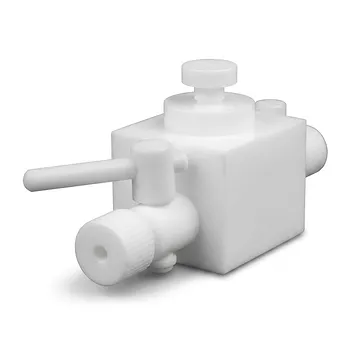
- High Corrosion Resistant PTFE Faucet Polytetrafluoroethylene Valve for Chemical Storage Drums and Fluid Transfer Systems Customizable Industrial Grade
- Custom PTFE Filtration System Acid Resistant High Purity Semiconductor Grade Chemical Processing Filter
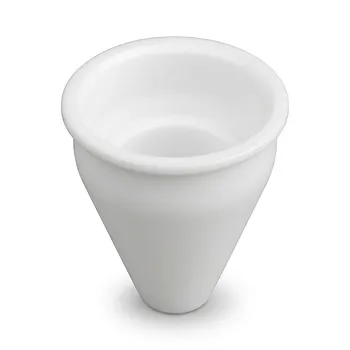
- Custom Machined PTFE Conical Sample Cell Corrosion Resistant Triangular Fluoropolymer Container for Trace Analysis
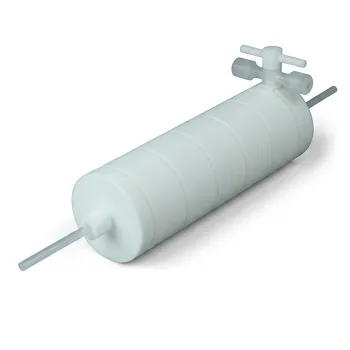
- High Purity PTFE Filter with PFA Valve Connections and Integrated Sieve Plate for Corrosive Fluid Processing
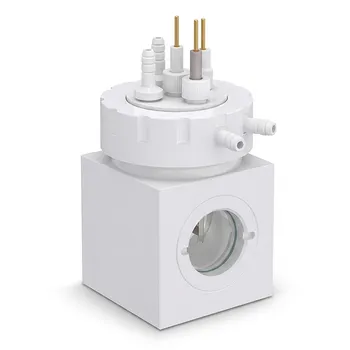
- Corrosion Resistant PTFE Photoelectrochemical Cell High Purity All PTFE Three Electrode Test Cell with Quartz Window
People Also Ask
- What is the typical operating temperature and pressure range for PTFE valves? Key Specs for Optimal Performance
- What industries commonly use PTFE valves and components? Essential for Chemical & Purity Applications
- What specific advantages do PTFE valves offer? Unmatched Corrosion Resistance for Industrial Chemical Handling
- How do PTFE valves and components support high-purity liquid transfer? Ensure Product Integrity with Inert Materials
- What are the key properties of PTFE valves? Ensure Purity, Safety, and Reliability in Demanding Processes