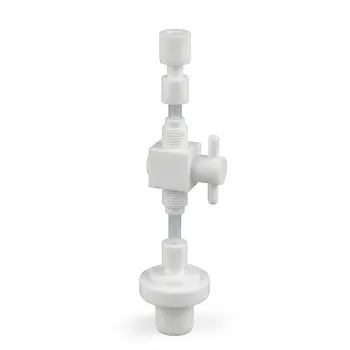
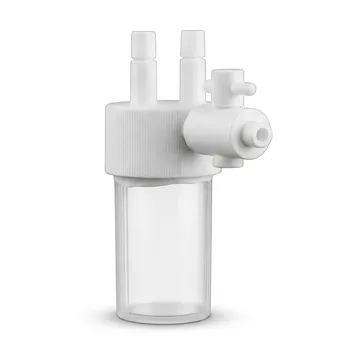
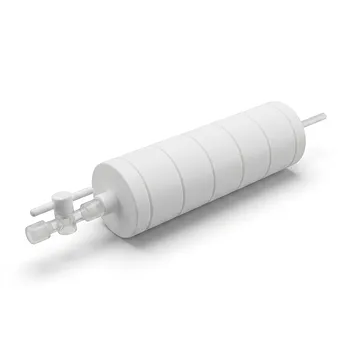
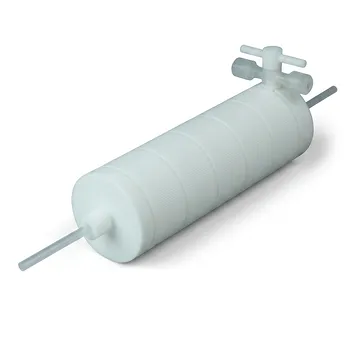
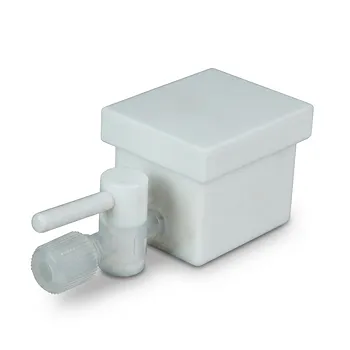
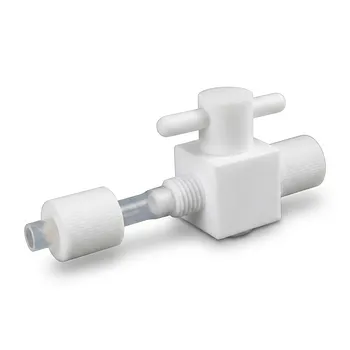
Standard PTFE valves typically operate within a temperature range of –29°C to 204°C (–20°F to 400°F), with pressure ratings determined by ASME B16.34 standards. While the raw material can withstand extremes from cryogenic levels up to 260°C (500°F), the mechanical assembly of a valve usually necessitates a more conservative operational window to ensure long-term sealing integrity.
Core Takeaway: While PTFE as a material is stable up to 260°C, PTFE valves are generally rated for a tighter range—typically up to 204°C—to account for mechanical "creep" and pressure-related deformation that can compromise the valve's seal.
The Relationship Between Temperature and Material Stability
Thermal Limits of the PTFE Material
Pure PTFE is a remarkably stable fluoropolymer that does not begin to decompose until it reaches approximately 260°C (500°F). Its melting point is significantly higher, at roughly 327°C (621°F), allowing it to maintain its chemical identity in high-heat environments.
Practical Valve Operating Ranges
In industrial valve applications, the recommended service range is often capped at 204°C (400°F). This lower limit is a safety margin designed to prevent the material from softening to a point where it can no longer maintain a bubble-tight seal under pressure.
Cryogenic and Low-Temperature Performance
PTFE is one of the few materials that remains functional in extreme cold, with some specialized designs operating as low as -200°C. However, standard industrial valves are more commonly rated to -29°C (-20°F) unless specifically engineered for cryogenic service.
Pressure Ratings and Structural Integrity
Alignment with ASME B16.34
The pressure-containing capability of a PTFE valve is not a static number; it is governed by ASME B16.34 standards. These standards define how much pressure a valve body and its internal components can withstand at specific temperatures.
The Impact of Temperature on Pressure
As the operating temperature increases, the allowable working pressure of the valve decreases. This "pressure-temperature rating" ensures that the PTFE components do not fail or deform as the material becomes more ductile at higher temperatures.
Mechanical Reinforcements for High Pressure
Because PTFE is a "soft" seating material, many designs incorporate Belleville washers (live-loading springs). These components maintain a constant load on the seals, compensating for material expansion or contraction during thermal cycling.
Understanding the Trade-offs
The Challenge of "Cold Flow" (Creep)
The primary limitation of PTFE is its tendency to creep, or "cold flow," under a sustained load. Over time, the material may migrate away from the sealing surface, potentially leading to leaks if the valve is not designed with self-adjusting mechanisms.
Chemical Resistance vs. Mechanical Strength
While PTFE offers near-universal chemical resistance, it lacks the mechanical strength of metal or reinforced polymer seals. Users must often choose between the inertness of PTFE and the high-pressure durability of harder, more rigid materials.
Filler and Energizer Variations
The performance limits can shift depending on whether the PTFE is "virgin" or "filled." Adding glass fiber, carbon, or bronze can improve thermal conductivity and wear resistance, but these additives may slightly reduce the material's chemical compatibility.
Making the Right Choice for Your Goal
When selecting a PTFE valve, your specific application requirements will dictate which performance specifications take priority.
- If your primary focus is Chemical Compatibility: Prioritize virgin PTFE-lined valves, ensuring your operating temperature stays below 204°C to prevent liner collapse.
- If your primary focus is High-Temperature Sealing: Look for valves utilizing reinforced (filled) PTFE and live-loaded packing (Belleville washers) to manage material expansion.
- If your primary focus is Cryogenic Service: Select valves specifically tested for temperatures below -75°C, as standard seals may become too brittle for reliable operation.
- If your primary focus is High-Pressure Regulation: Ensure the valve's ASME B16.34 rating is verified for your specific operating temperature, as pressure limits drop significantly as you approach 200°C.
By balancing the exceptional chemical inertness of PTFE with its mechanical temperature limits, you can ensure a safe and long-lasting installation.
Summary Table:
| Parameter | Standard Operating Range | Material Stability Limit | Governing Standards |
|---|---|---|---|
| Temperature | -29°C to 204°C (-20°F to 400°F) | Up to 260°C (500°F) | ASME B16.34 |
| Pressure | Varies by Temperature | Decreases as Temp Rises | ASME B16.34 |
| Cryogenic | Down to -200°C (Specialized) | N/A | Application Specific |
| Key Risks | Cold Flow (Creep) | Thermal Decomposition | Mechanical Deformation |
Elevate Your Lab Precision with KINTEK Fluoropolymer Solutions
Need laboratory equipment that thrives in extreme chemical and thermal environments? KINTEK is your premier partner for high-performance fluoropolymer products.
From everyday basic labware like beakers, crucibles, and reagent bottles to high-purity trace analysis tools and comprehensive fluid transfer components (tubing, fittings, and valves), we provide the durability your research demands. Our expertise extends to advanced reaction apparatus, including electrochemical cells, microwave digestion vessels, and custom microchannel reactors.
Why choose KINTEK?
- Expert Fabrication: End-to-end custom CNC machining for complex, non-standard parts.
- Total Customization: Bespoke laboratory setups tailored to your specific pressure and temperature requirements.
- Material Excellence: Absolute focus on premium PTFE and PFA for maximum chemical inertness.
Don't settle for standard when you can have precision-engineered reliability. Contact KINTEK today to discuss your custom project or bulk order!
Related Products
- High Corrosion Resistant PTFE Faucet Polytetrafluoroethylene Valve for Chemical Storage Drums and Fluid Transfer Systems Customizable Industrial Grade
- Corrosion Resistant PTFE Polytetrafluoroethylene Valve and Customizable Laboratory Fluid Dispensing Faucet for Aggressive Chemical Handling in Industrial Storage Tanks and Plastic Drums
- High Purity PTFE Faucet Corrosion Resistant Polytetrafluoroethylene Drum Valve Customizable Lab Chemical Fluid Control
- Custom PTFE Valve 2-Way 3-Way Corrosion Resistant Low Background Virgin Fluoropolymer Industrial Fluid Control
- Corrosion Resistant PTFE Valves Customizable 2 Way 3 Way 4 Way High Temperature Teflon Fluid Control Solutions
People Also Ask
- How do PTFE valves and components support high-purity liquid transfer? Ensure Product Integrity with Inert Materials
- What industries commonly use PTFE valves and components? Essential for Chemical & Purity Applications
- What specific advantages do PTFE valves offer? Unmatched Corrosion Resistance for Industrial Chemical Handling
- What are the key properties of PTFE valves? Ensure Purity, Safety, and Reliability in Demanding Processes
- What factors influence the design variations of PTFE valves? Select the Perfect Valve for Your Application