For laboratory fluid transfer and high-purity containment, PTFE, PFA, and FEP are all highly resistant fluoropolymers, but they are not interchangeable. PTFE is the best choice when the lowest friction and strongest non-stick behavior matter most. PFA generally offers the best balance of high-purity containment, mechanical durability, and melt-processable fabrication, while FEP provides strong chemical resistance, low water-vapor permeability, and useful dielectric and processing characteristics.
The practical choice is usually PTFE for maximum lubricity, PFA for demanding high-purity containment and robust fittings, and FEP when barrier performance, release behavior, transparency, or fabrication flexibility is especially important.
How the Three Materials Compare
Chemical resistance
All three materials provide top-tier resistance to corrosive chemicals, including many acids, bases, hydrocarbons, chlorinated solvents, esters, and ketones. Their highly fluorinated molecular structures resist chemical attack, swelling, degradation, and contaminant leaching.
PTFE and PFA are particularly associated with maximum chemical inertness and high-purity service. FEP also offers excellent resistance, although the final suitability should be checked against the specific reagent, temperature, concentration, and exposure time.
Why fluorination improves resistance
Replacing hydrogen with fluorine lowers polymer surface energy and strengthens resistance to chemical attack, solvents, weathering, and elevated temperatures. It also contributes to the low-friction and non-stick behavior expected from perfluorinated materials.
This makes PTFE, PFA, and FEP suitable for corrosive-reagent tubing, valve seats, liners, gaskets, fittings, storage vessels, and digestion components.
High-purity implications
PTFE and PFA exhibit minimal water absorption and low risk of chemical uptake. PTFE has been reported at 0% water absorption over a 24-hour exposure, while PFA is reported at less than 0.03%.
These characteristics help reduce swelling, cross-contamination, and retention of trace chemicals—important considerations for analytical vessels, reagent storage, and ultra-clean fluid paths.
Water-Vapor Permeability and Barrier Performance
Relative permeability
At 25°C, the cited water-vapor permeability values are approximately:
| Material | Water-vapor permeability* | Relative performance |
|---|---|---|
| PFA | 13 × 10⁻¹³ cm³·cm/(cm²·s·Pa) | Lowest of the three |
| FEP | 13 × 10⁻¹³ cm³·cm/(cm²·s·Pa) | Lowest of the three |
| PTFE | 25 × 10⁻¹³ cm³·cm/(cm²·s·Pa) | Slightly higher permeability |
*Values depend on temperature, test method, thickness, crystallinity, and processing history.
What the difference means in practice
PFA and FEP provide a stronger water-vapor barrier than PTFE under the cited conditions. The difference is not normally a reason to reject PTFE for ordinary fluid transfer, but it can matter in long-term storage, moisture-sensitive processes, or systems exposed to corrosive vapors.
Lower permeability helps limit moisture ingress and vapor migration through tubing, containers, and liners. It can also reduce the risk of moisture-related contamination or osmotic blistering in multilayer or coated components.
Barrier performance is not the same as chemical compatibility
A low permeability value does not automatically guarantee compatibility with every chemical. Permeation depends on the chemical species, temperature, pressure, wall thickness, and exposure time, so critical applications require material-specific permeation data.
Coefficient of Friction and Surface Behavior
PTFE: best for sliding and dynamic motion
PTFE generally has the lowest coefficient of friction among the three. A cited static coefficient is approximately 0.04, making PTFE particularly effective for dry lubrication, sliding components, stopcocks, valve seats, and dynamic seals.
Its low friction reduces actuation force and helps prevent sticking during repeated movement. This is the strongest differentiator for PTFE when a component must move against another surface without liquid lubrication.
PFA and FEP: higher friction, still non-stick
PFA and FEP have higher friction than PTFE; the cited static values are approximately 0.50. They remain low-surface-energy materials, but they are not equivalent to PTFE for dry sliding or low-force dynamic sealing.
Therefore, PFA and FEP are usually selected for their chemical, barrier, purity, or fabrication advantages rather than for minimum mechanical friction.
Release performance is a different measurement
Non-stick release behavior and coefficient of friction should not be treated as identical properties. The cited release-performance order is FEP > PFA > PTFE, based on surface behavior such as liquid contact angle, while dry-slip performance is generally PTFE > PFA ≈ FEP.
In other words, FEP may release certain liquids very effectively, while PTFE may still be the better material for a moving seal or sliding laboratory mechanism.
Fabrication and Mechanical Differences
PFA: strongest all-around containment option
PFA combines PTFE-like chemical resistance with melt processability, allowing it to be molded, extruded, welded, and formed into precise tubing, fittings, containers, and complex fluid-path components.
It also offers strong mechanical performance. The cited comparison ranks abrasion resistance and toughness approximately as PFA > PTFE > FEP, with PFA having a Shore hardness around D60 compared with approximately D55 for FEP.
PTFE: excellent performance with processing constraints
PTFE provides exceptional chemical resistance, thermal stability, and low friction, but it requires special non-melt processing. This can limit the geometries, joining methods, and manufacturing approaches available for complex components.
PTFE is therefore highly effective for machined parts, seals, liners, and sliding components, but PFA may be easier to use when a design requires intricate molded or welded fluid paths.
FEP: useful processing and electrical properties
FEP offers high chemical resistance, low water-vapor permeability, and excellent dielectric properties. It is also melt-processable, which supports extrusion and fabrication of tubing, films, liners, and other components.
Compared with PFA, FEP generally provides lower mechanical toughness and abrasion resistance. Its suitability is strongest where chemical protection, release behavior, electrical insulation, or processability outweigh the need for maximum mechanical durability.
Matching Properties to Laboratory Applications
Fluid transfer tubing and fittings
For tubing and fittings carrying aggressive reagents, all three materials can be viable. PFA is often the most balanced choice for high-purity systems because it combines chemical inertness, low absorption, low permeability, mechanical durability, and precise fabrication.
PTFE remains attractive for flexible or machined components where low friction is important. FEP is useful when low permeability, dielectric performance, or particular extrusion and release characteristics are priorities.
Valves, stopcocks, and dynamic seals
PTFE is generally preferred for moving interfaces because its coefficient of friction is substantially lower. This can improve sealing action, reduce torque, and limit sticking during repeated operation.
PFA can be appropriate for static seats, liners, or rigid high-purity components, but its higher friction makes it less attractive for dry sliding interfaces.
Containers and trace-analysis vessels
PFA is particularly well suited to high-purity containers and sample-handling components. Its low moisture absorption, excellent chemical resistance, mechanical toughness, and melt processability support reliable production of precise vessels and complex fittings.
PTFE is also highly inert and essentially non-absorbing, but its processing limitations may make PFA more practical for certain container designs.
Moisture-sensitive or vapor-sensitive systems
PFA and FEP have the advantage when water-vapor barrier performance is central. Their cited permeability is roughly half that of PTFE under the stated test conditions.
The final design should still consider wall thickness, temperature, pressure, exposure duration, and the permeability of the specific chemical—not only water vapor.
Understanding the Trade-offs
No single material leads in every property
PTFE leads in low friction and dry-slip performance. PFA leads in the combined balance of mechanical durability, high-purity containment, and fabrication flexibility. FEP is competitive in barrier performance, liquid release, dielectric behavior, and melt processing.
Selecting only by chemical-resistance ratings can therefore produce a suboptimal design. The fluid path may be chemically compatible but mechanically difficult to operate, too permeable, or unnecessarily difficult to manufacture.
Temperature and mechanical loading matter
Fluoropolymers retain excellent chemical performance at demanding temperatures, but mechanical strength, creep, dimensional stability, and pressure capability still depend on temperature and design stress.
PFA's stronger toughness and abrasion resistance can be valuable in fittings and repeated-use components. PTFE may require careful support or anti-creep design under sustained load.
Avoid relying on generic compatibility charts alone
Compatibility ratings are screening tools rather than complete engineering validation. A reagent that is compatible at room temperature may produce different swelling, permeation, or creep behavior at elevated temperature or under pressure.
For critical systems, verify the exact polymer grade, operating temperature, concentration, pressure, wall thickness, cleaning chemistry, and expected service life.
Making the Right Choice for Your Goal
The best selection depends on which failure mode would be most costly in the laboratory system.
- If your primary focus is minimum friction: Choose PTFE for stopcocks, dynamic seals, sliding components, and dry-lubrication applications.
- If your primary focus is high-purity containment: Choose PFA for precise fittings, sample containers, reagent vessels, and complex fluid paths requiring chemical inertness and low absorption.
- If your primary focus is lower water-vapor permeability: Consider PFA or FEP, which show approximately 13 × 10⁻¹³ cm³·cm/(cm²·s·Pa) at 25°C in the cited comparison, versus approximately 25 × 10⁻¹³ for PTFE.
- If your primary focus is liquid release or dielectric performance: Consider FEP, particularly for films, tubing, liners, and electrically insulating components.
- If your primary focus is mechanical durability: Favor PFA, which generally provides better toughness and abrasion resistance than PTFE and FEP.
- If your primary focus is complex melt fabrication: Favor PFA or FEP, since both are melt-processable while PTFE requires specialized processing.
A sound fluoropolymer selection balances chemical inertness with friction, permeability, mechanical loading, temperature, and manufacturability rather than choosing solely by chemical-resistance rank.
Summary Table:
| Property | PTFE | PFA | FEP |
|---|---|---|---|
| Chemical Resistance | Excellent | Excellent | Excellent |
| Water Vapor Permeability (×10⁻¹³ cm³·cm/(cm²·s·Pa)) | 25 | 13 | 13 |
| Coefficient of Friction (Static) | ~0.04 | ~0.50 | ~0.50 |
| Water Absorption | 0% (24h) | <0.03% | Low |
| Relative Abrasion Resistance | Medium | High | Low |
| Melt Processability | No | Yes | Yes |
| Typical Best Use | Sliding parts, seals, liners | High-purity containers, fittings | Films, tubing, dielectrics |
Get Expert Guidance on High-Performance Fluoropolymer Solutions
At KINTEK, we specialize in high-performance PTFE and PFA labware and custom components. Whether you need low-friction PTFE stopcocks, high-purity PFA vessels, or custom-machined parts for your fluid transfer systems, our team can help you select the ideal material for your application.
Contact us today to discuss your requirements and benefit from our end-to-end CNC machining capabilities and comprehensive range of products, from standard labware to bespoke assemblies.
Related Products
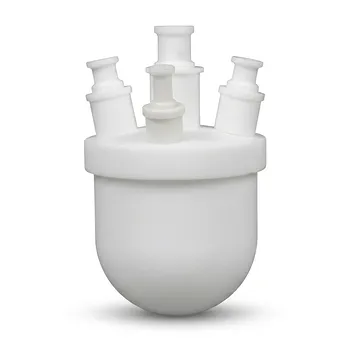
- Custom PTFE Flask 250ml High Purity Fluoropolymer Laboratory Vessel for Chemical Research
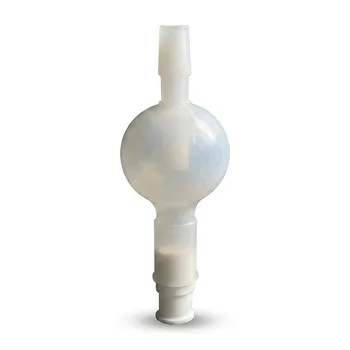
- High Purity PFA Chromatography Column with Collection Bottle Corrosion Resistant Fluoropolymer Filtration System for Trace Analysis
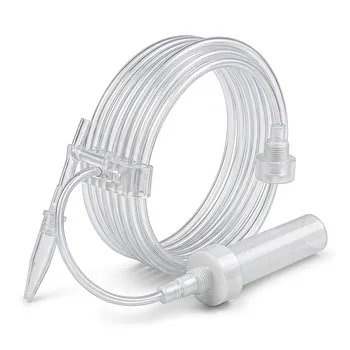
- Custom PFA Tubing 1/4 Inch High Purity Corrosion Resistant Fluoropolymer Tube with Welding and Machining Services
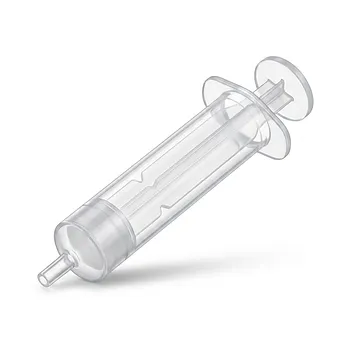
- Corrosion Resistant PFA Syringe Translucent Visual Fluoropolymer Labware 10ml Chemical Handling Tool
- Custom PTFE Reaction Tank Corrosion Resistant Fluoropolymer Chemical Processing Barrel 10L 20L 30L
People Also Ask
- What are the key steps for structural integrity in molded PTFE lab reaction vessels? Master fine powder processing.
- Why Are High-Purity Fluoropolymer Vessels and Tubing Critical for Trace Analysis? Prevent Contamination Reliably
- Why do PTFE fluoropolymer laboratory vessels and containers exhibit superior chemical resistance against harsh solvents and corrosive acids compared to standard plastic labware? Discover the molecular secrets
- How do choice of solvent and chain transfer activity affect molecular weight during vinylidene fluoride (VDF) radical polymerization? Learn Key Factors for High-MW PVDF
- Why are fluoropolymer reaction vessels essential for SnO2/rGO synthesis? The Key to High-Performance Composites