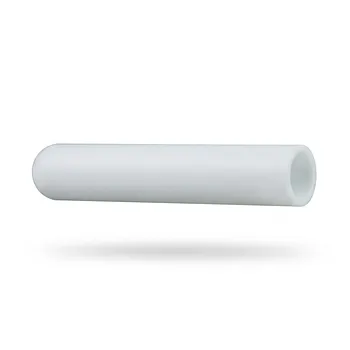
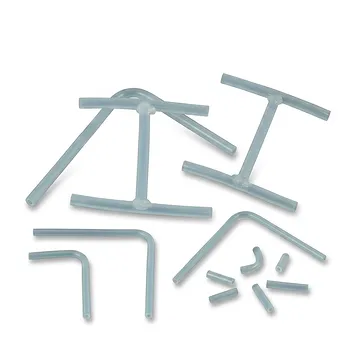
PTFE tubing is the premier choice for aggressive chemical environments because it is virtually inert, resisting almost all acids, bases, and organic solvents. It operates reliably across an extreme temperature range from cryogenic levels up to 260 °C (500 °F). This material ensures process purity by preventing ion leaching and minimizes maintenance through its naturally non-stick surface.
Core Takeaway: PTFE tubing provides a near-universal solution for transporting corrosive fluids where metal or glass would fail. While its chemical and thermal resistance are unmatched, engineers must account for its mechanical properties to ensure long-term structural integrity in high-pressure systems.
Exceptional Chemical and Thermal Resilience
The Fluorine Sheath Advantage
The performance of PTFE is rooted in its molecular structure, where a protective fluorine sheath surrounds a carbon backbone. This configuration makes the tubing virtually non-reactive with oxidizers and corrosive media that typically degrade other polymers.
Resistance to Aggressive Media
PTFE acts as a primary conduit for the most challenging substances, including hydrofluoric acid, strong bases, and high-purity reagents. Unlike metals, it does not corrode or rust, ensuring that the fluid remains uncontaminated by material degradation.
Thermal Stability in Extreme Flows
This material supports continuous operation from cryogenic temperatures up to a high-heat threshold of 260 °C. This makes it uniquely suited for industrial processes that involve hot chemical streams or extreme cooling requirements.
Efficiency and Purity in Fluid Handling
Flow Dynamics and Pressure Management
The exceptionally low friction coefficient of PTFE reduces pressure drops across the fluid system. This efficiency allows for more consistent flow rates and can reduce the energy requirements of pumping systems.
Minimizing Residue and Maintenance
The non-stick surface of the tubing minimizes the buildup of residues and "scaling" inside the lines. This property significantly reduces maintenance downtime and prevents cross-contamination between different chemical batches.
Prevention of Ion Leaching
In high-purity applications, such as semiconductor or pharmaceutical manufacturing, avoiding leached ions is critical. PTFE does not shed particles or chemicals into the fluid stream, preserving the integrity of sensitive reagents.
Understanding the Trade-offs
Mechanical Strength and "Cold Flow"
While PTFE is chemically robust, it is a relatively soft fluoropolymer compared to metal piping. Under constant high pressure or mechanical stress, it can experience creep (also known as "cold flow"), where the material slowly deforms over time.
Permeability Considerations
PTFE is slightly porous at a microscopic level, which can allow certain gases to permeate through the tube wall over long periods. In applications involving highly volatile gases or vacuum systems, this permeability must be factored into the system design.
Structural Support Requirements
Because it is less rigid than traditional materials, PTFE tubing often requires external support or braiding (such as stainless steel) in high-pressure environments. This ensures the tubing maintains its shape and prevents bursting or kinking.
How to Apply This to Your Project
When integrating PTFE tubing into your fluid handling system, your specific goal should dictate the configuration and grade of the material used.
- If your primary focus is handling highly corrosive acids (like Hydrofluoric acid): Utilize pure PTFE capillary or standard tubing to take advantage of its complete chemical inertness and prevent pipe degradation.
- If your primary focus is maintaining high-purity reagents: Prioritize PTFE for its non-leaching characteristics to ensure that no material ions or particles contaminate your process stream.
- If your primary focus is high-temperature fluid transfer: Ensure the tubing is rated for continuous use at 260 °C and consider external reinforcement if the fluid is also under significant pressure.
- If your primary focus is reducing system maintenance: Leverage the non-stick properties of PTFE to prevent residue buildup and simplify the cleaning-in-place (CIP) process.
By matching the unique inertness and thermal range of PTFE to your specific chemical environment, you can build a fluid handling system that is both safe and exceptionally durable.
Summary Table:
| Feature | Performance Benefit |
|---|---|
| Chemical Resistance | Virtually inert; resists almost all acids, bases, and organic solvents. |
| Thermal Stability | Reliable operation from cryogenic levels up to 260°C (500°F). |
| Surface Properties | Non-stick and low friction; prevents residue buildup and scaling. |
| Process Purity | Prevents ion leaching and particle shedding; ideal for high-purity reagents. |
| Corrosion Resistance | Will not rust or degrade like metal or glass in aggressive media. |
Elevate Your Fluid Handling with KINTEK’s High-Performance Fluoropolymer Solutions
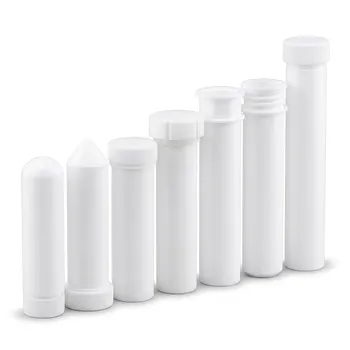
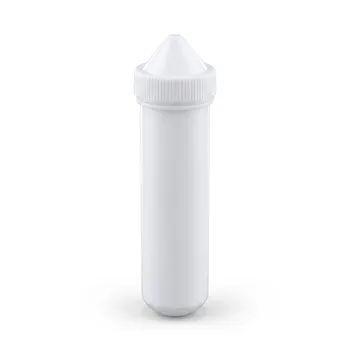
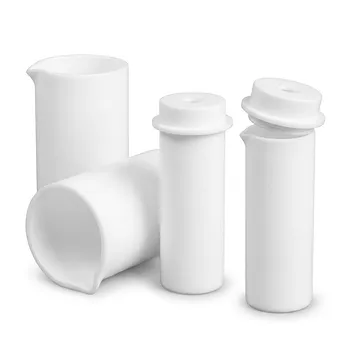
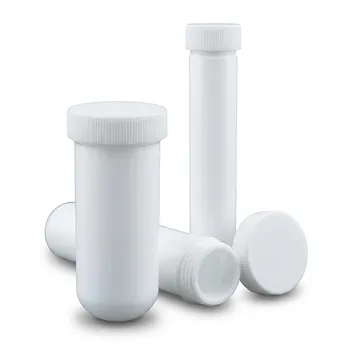
At KINTEK, we specialize in high-performance fluoropolymer materials designed to withstand the most demanding chemical environments. From everyday basic labware like PTFE beakers, crucibles, and digestion tubes to comprehensive fluid transfer components such as high-purity tubing, fittings, and valves, we provide the precision your lab requires.
Whether you are performing high-purity trace analysis or managing complex industrial flows, our extensive range—including sample prep tools, filtration instruments, and advanced reaction apparatus like custom electrochemical cells and hydrothermal synthesis liners—ensures zero contamination and maximum durability. Backed by end-to-end custom CNC fabrication, KINTEK is equipped to deliver everything from bespoke laboratory setups and complex non-standard machined parts to high-volume orders with an absolute focus on quality.
Ready to optimize your process purity and system longevity? Contact our experts today to discover how our tailored PTFE and PFA solutions can meet your exact specifications.
Related Products
- Custom High Purity PTFE Digestion Tubes and Centrifuge Tubes for Trace Metal Analysis
- High Purity PTFE Digestion Tubes and Custom Centrifuge Tubes 100ml for Trace Analysis and Chemical Digestion
- Corrosion Resistant PTFE Digestion Tubes for Graphite Block Systems with Acid Reflux Caps Custom Dimensions
- Custom PTFE Digestion Tube Double Sided Openable High Temperature Corrosion Resistant Low Background
- Custom PTFE Condenser Tube 100ml Serpentine and Straight Fluoropolymer Laboratory Heat Exchanger with Flask Adapters
People Also Ask
- What are the common capacities and physical configurations available for PTFE digestion tubes? Expert Selection Guide
- How do PTFE digestion tubes minimize contamination during ultra-trace elemental analysis? Achieve high-purity results.
- What is the primary function of PTFE digestion tubes in a laboratory setting? Essential for Pure Sample Mineralization
- How do PTFE digestion tubes assist in pharmaceutical and biological sample preparation? Ensure High Recovery & Purity
- How does the synergy of pressure and temperature within a PTFE digestion tube improve digestion efficiency? Accelerate Sample Prep