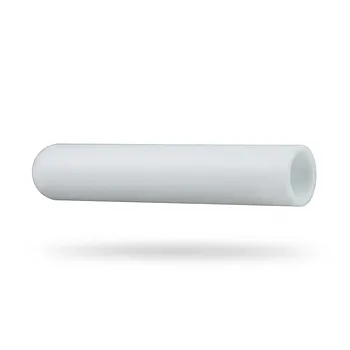
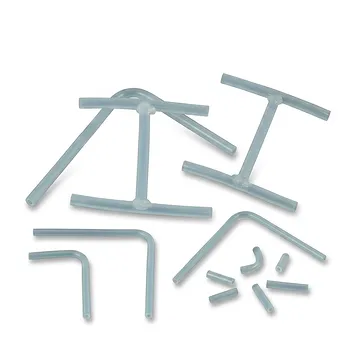
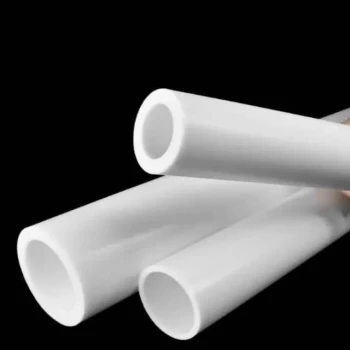
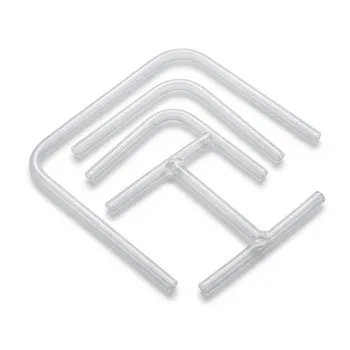
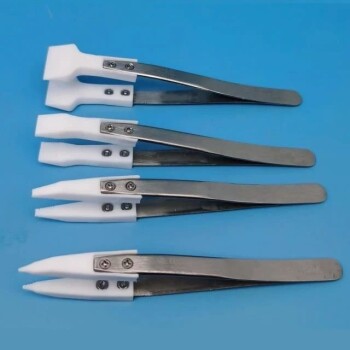
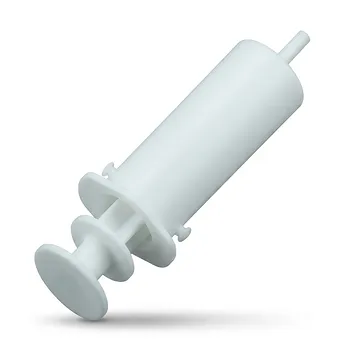
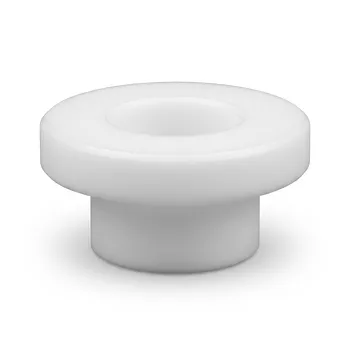
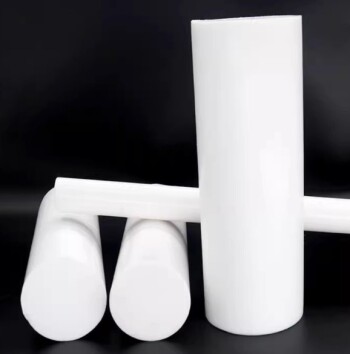
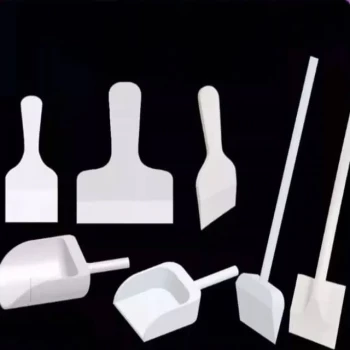
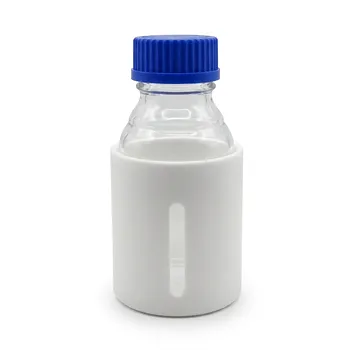
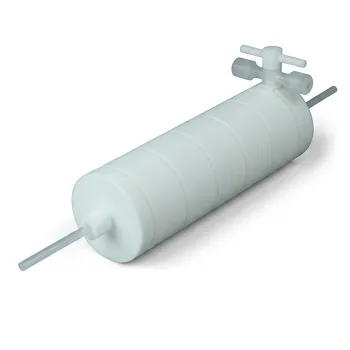
PTFE and ETFE are optimal for specialized tubing, guide catheters, and flexible sheathing because they combine flexibility, chemical inertness, electrical insulation, and durability in demanding environments. PTFE is especially valuable when low friction and non-stick performance are critical, allowing wires, probes, and secondary devices to pass smoothly through narrow tubing. ETFE adds greater abrasion resistance, mechanical toughness, and resilience under high-voltage exposure, making it well suited to protective sheathing and components subject to repeated handling.
The central advantage is property balance: PTFE prioritizes lubricity, chemical resistance, and thermal stability, while ETFE contributes toughness, abrasion resistance, and high dielectric performance. Together, these characteristics support reliable, low-profile tubular components that must flex, insulate, and withstand harsh operating conditions.
Why Fluoropolymers Suit Demanding Tubular Components
They withstand aggressive chemical environments
PTFE has a carbon-fluorine backbone that gives it near-universal chemical inertness. It resists acids, bases, solvents, oxidizers, moisture, and corrosive exposure that can degrade conventional plastics or elastomers.
This matters in tubing and catheters because the material may contact process chemicals, cleaning agents, bodily fluids, or other environments where contamination and material degradation are unacceptable.
They retain performance across broad temperatures
PTFE provides excellent thermal stability across a very wide operating range. The supplied references describe useful performance from approximately -250°F to above 500°F, with some specifications extending from roughly -325°F to +500°F.
This stability helps tubing maintain its insulating, flexible, and chemically resistant characteristics during temperature changes, sterilization-related exposure, or demanding industrial service.
They resist repeated flexing
Both PTFE and ETFE provide strong flex fatigue resistance, which is essential when tubing or sheathing must bend repeatedly without cracking or losing functional integrity.
Flexible components often experience routing, manipulation, insertion, withdrawal, and cyclic movement. Resistance to fatigue allows fluoropolymer tubing to support these motions over longer service intervals.
PTFE: The Choice for Smooth Internal Movement
Its low friction reduces insertion resistance
PTFE has an exceptionally low coefficient of friction, commonly reported in the range of 0.05 to 0.10 against steel. This is one of its most important advantages in thin-walled tubing and guide-catheter liners.
A low-friction internal surface allows wires, probes, and secondary devices to move smoothly through the tube. That can reduce drag, simplify insertion and withdrawal, and help preserve precise control during operation.
Its non-stick surface resists buildup
PTFE is naturally non-adhesive and hydrophobic. Materials are less likely to stick to its surface, which helps reduce buildup, contamination, and cleaning difficulty.
For fluid paths and device interiors, this surface behavior can support more consistent performance by limiting residue accumulation and unwanted adhesion.
It provides stable electrical insulation
PTFE offers high electrical resistance and strong dielectric performance, including at high radio frequencies. This makes it suitable for tubing and insulation around electrically sensitive components.
Its insulating behavior is particularly useful when a flexible tube must protect conductors, isolate signals, or prevent unintended electrical contact.
It tolerates demanding exposure
PTFE resists ultraviolet radiation, water, weathering, corrosion, and environmental aging. It also does not readily become brittle under ordinary environmental exposure.
These characteristics support long-term reliability when flexible tubing is exposed to moisture, outdoor conditions, cleaning processes, or corrosive surroundings.
ETFE: The Choice for Tough, Abrasion-Resistant Protection
It provides greater mechanical toughness
ETFE contributes mechanical toughness and resilience while retaining the chemical and electrical advantages associated with fluoropolymers.
This makes it useful where a flexible sheath or tube may be pulled, handled, compressed, or exposed to mechanical contact during installation and use.
It resists abrasion
ETFE's high abrasion resistance helps protect the tubular component when it rubs against adjacent parts or is repeatedly manipulated.
That property is valuable for flexible sheathing, where the material must remain intact despite friction from routing, movement, or contact with other surfaces.
It withstands high-voltage exposure
ETFE provides strong dielectric performance and resilience in high-voltage environments. It can therefore serve as protective insulation around components that require electrical separation without sacrificing flexibility.
For specialized sheathing, this combination of electrical resistance and mechanical durability is often more important than achieving the absolute lowest possible friction.
How the Properties Work Together
Flexibility supports precise routing
Tubing and sheathing frequently need to follow curved paths or fit into confined spaces. Flex fatigue resistance allows PTFE and ETFE components to bend while maintaining a stable tubular form.
This supports compact designs without requiring the component to be rigid or oversized.
Chemical inertness protects the surrounding system
A chemically stable tube is less likely to react with the transported fluid, exposed environment, or nearby components. That reduces the risk of corrosion, contamination, swelling, or premature material failure.
PTFE is particularly strong when broad chemical compatibility is the primary requirement.
Dielectric strength adds electrical protection
High dielectric strength allows these fluoropolymers to function as electrical barriers while remaining thin and flexible. This is important in systems where insulation must be integrated into a compact tubular geometry.
Surface behavior supports cleanliness and reliability
PTFE's low adhesion and water resistance help limit material buildup and simplify cleaning. In applications involving narrow passages, that can help preserve internal clearance and consistent device movement.
Understanding the Trade-offs
PTFE is lubricious but not the toughest option
PTFE's very low friction is a major advantage, but applications that involve substantial abrasion or mechanical abuse may place greater value on ETFE's toughness and wear resistance.
Material selection should therefore distinguish between internal sliding performance and external mechanical protection.
ETFE may be preferable for protective sheathing
ETFE is well suited to applications where the material must withstand handling, abrasion, and high-voltage exposure. It may be the better choice when sheath durability is more important than minimizing friction inside the tube.
Temperature and design limits still matter
Fluoropolymer resistance does not remove the need to verify the actual operating envelope. Temperature, pressure, wall thickness, flex radius, chemical exposure, and sterilization or cleaning conditions can all affect performance.
The broad temperature and chemical-resistance descriptions should be treated as material-level guidance, not as a substitute for application-specific qualification.
Fabrication must match the geometry
PTFE can be machined into intricate forms and complex geometries, which supports specialized designs. However, the final performance depends on processing, dimensional control, wall thickness, and the selected grade or construction.
A material with excellent intrinsic properties can still fail to meet requirements if the tube is poorly sized or subjected to loads outside its design assumptions.
Making the Right Choice for Your Goal
The most appropriate fluoropolymer depends on which performance requirement dominates the application.
- If your primary focus is low-friction device passage: Choose PTFE for its exceptionally lubricious, non-stick internal surface and its ability to support smooth movement of wires, probes, and secondary devices.
- If your primary focus is chemical compatibility: Choose PTFE for its broad resistance to acids, bases, solvents, oxidizers, moisture, and corrosive environments.
- If your primary focus is abrasion and mechanical durability: Consider ETFE for its toughness and resistance to wear during handling, routing, and repeated contact.
- If your primary focus is electrical insulation: Use PTFE or ETFE where high dielectric strength, electrical resistance, and flexible construction are required.
- If your primary focus is repeated bending: Select the fluoropolymer and construction that best combine flex fatigue resistance with the application's abrasion, temperature, and dimensional requirements.
PTFE and ETFE enable compact, reliable tubular designs by combining flexibility, environmental resistance, electrical insulation, and application-specific mechanical performance.
Summary Table:
| Property | PTFE | ETFE |
|---|---|---|
| Chemical resistance | Superior | Good |
| Coefficient of friction | Very low (0.05-0.10) | Moderate |
| Abrasion resistance | Moderate | High |
| Mechanical toughness | Fair | Excellent |
| Thermal stability | Wide range (-250°F to 500°F+) | Similar |
| Electrical insulation | Excellent | Excellent |
| Flex fatigue resistance | Good | Good |
| Non-stick surface | Excellent | Good |
| Best for | Low friction, chemical resistance | Abrasion, mechanical durability, high voltage |
Ready to enhance your tubular components with top-tier PTFE or ETFE? At KINTEK, we specialize in high-performance fluoropolymers, offering everything from custom tubing and sheathing to full CNC machining. Our engineered solutions ensure optimal performance for your demanding applications. Contact us today to discuss your requirements and get a quote!
Related Products
- Custom PTFE Digestion Tubes and High Purity Polytetrafluoroethylene Centrifuge Vessels 60ml for Trace Analysis
- High Purity PTFE Digestion Tubes and Custom Centrifuge Tubes 100ml for Trace Analysis and Chemical Digestion
- Industrial High Purity PTFE Digestion Tubes Chemical Resistant Teflon Labware Custom Fabricated Trace Analysis Vessels
- Custom PTFE Condenser Tube Hydrofluoric Acid Resistant Reflux Device Constant Pressure Separatory Funnel
- Custom PTFE Digestion Tube Double Sided Openable High Temperature Corrosion Resistant Low Background
People Also Ask
- What is the primary function of PTFE digestion tubes in a laboratory setting? Essential for Pure Sample Mineralization
- How do PTFE digestion tubes minimize contamination during ultra-trace elemental analysis? Achieve high-purity results.
- What are the common capacities and physical configurations available for PTFE digestion tubes? Expert Selection Guide
- How do PTFE digestion tubes assist in pharmaceutical and biological sample preparation? Ensure High Recovery & Purity
- How do PTFE digestion tubes facilitate the analysis of food and agricultural products? Ensure High-Purity Mineralization