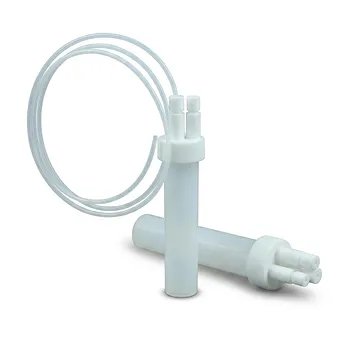
PFA is often preferred when component complexity matters as much as chemical and thermal resistance. Both PFA and standard PTFE provide exceptional chemical inertness and continuous service temperatures up to approximately 260°C (500°F-550°F). The decisive difference is manufacturing: PFA can be melt-processed through extrusion or injection molding, while PTFE cannot be conventionally melt-processed and generally requires compression or suspension molding followed by machining.
PFA delivers PTFE-like chemical and high-temperature performance with far greater design flexibility. That makes it especially useful for intricate, seamless, high-purity vessels, fittings, valves, and fluid-transfer components where machining PTFE would be difficult, costly, or unable to produce the required geometry.
Why Complex Laboratory Components Favor PFA
Melt-Processing Enables Intricate Shapes
PTFE forms a stiff, non-flowing gel above its approximate 340°C melting point rather than becoming a conventional moldable melt. As a result, PTFE components are typically produced through suspension or compression molding and then finished with CNC machining.
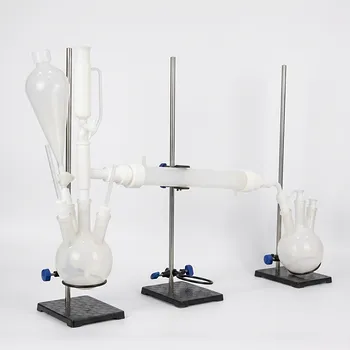
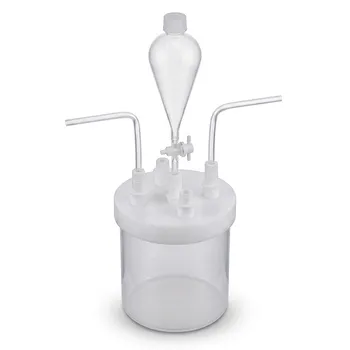
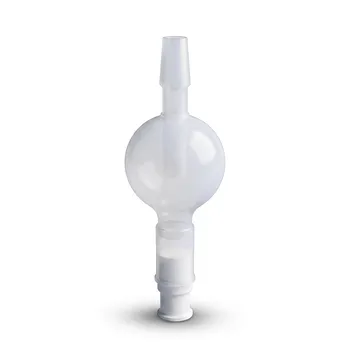
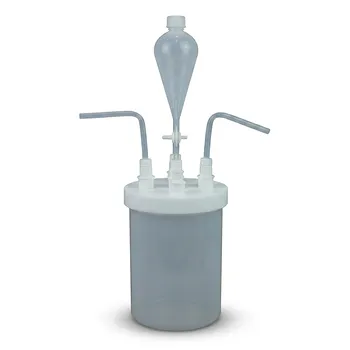
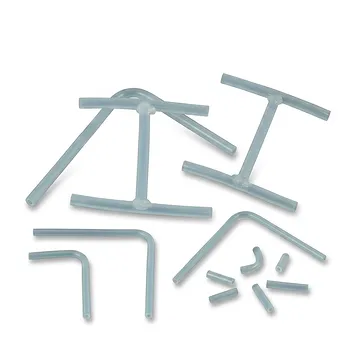
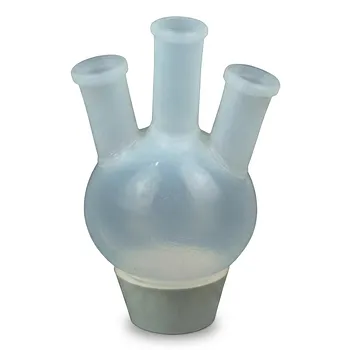
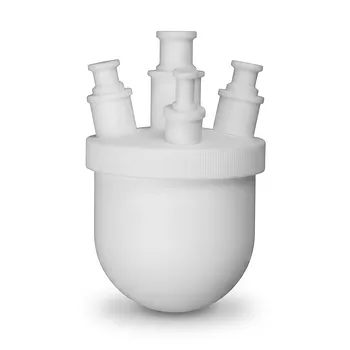
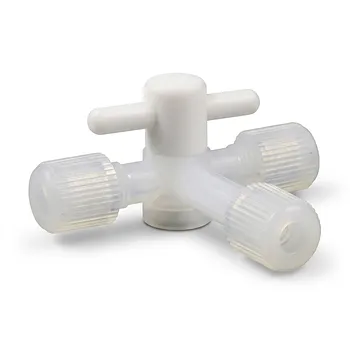
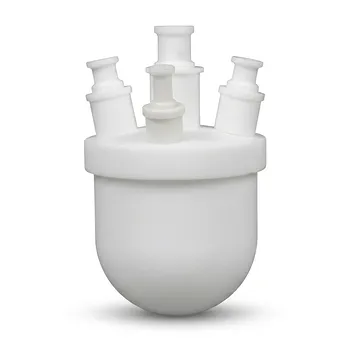
PFA is specifically formulated to be melt-processible. It can be extruded or injection molded into complex geometries, including seamless passages, intricate valve bodies, precision fittings, and custom reaction vessels.
Molding Reduces Design and Manufacturing Constraints
For complicated PTFE parts, machining may require multiple operations, assembled pieces, or specialized tooling. Each additional interface can introduce potential leakage paths, dimensional variation, or contamination concerns.
Melt-molded PFA can consolidate complex features into a single component. This supports tight-tolerance fluid paths and specialized vessels while reducing the need for joints and secondary assembly.
PFA Supports High-Purity Fluid Handling
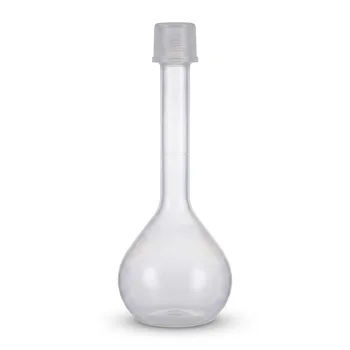
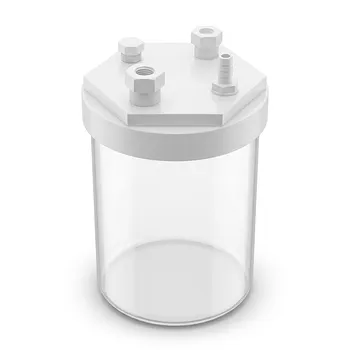
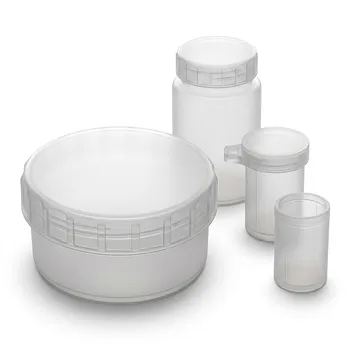
PFA is available in translucent or transparent forms, allowing operators to observe fluid levels, bubbles, flow, or reaction behavior. Its low permeability and high purity are valuable in trace analysis, aggressive chemical handling, and contamination-sensitive laboratory systems.
The ability to mold PFA into seamless components is particularly important when the apparatus must minimize crevices where residues or contaminants could collect.
How PFA and PTFE Material Properties Compare
Chemical Resistance
Both materials provide exceptional resistance to aggressive acids, solvents, and broad chemical environments. For many laboratory applications, neither material has a meaningful advantage in general chemical inertness.
Material compatibility still depends on the specific chemical, concentration, temperature, pressure, and exposure duration. A general fluoropolymer ranking should not replace application-specific compatibility testing.
Continuous Temperature Capability
PFA and standard PTFE have broadly equivalent continuous upper service temperatures of approximately 260°C (500°F). This makes both suitable for demanding high-temperature laboratory fluid components when the application remains within the material and design limits.
Their behavior at substantially higher temperatures differs. PTFE generally offers better thermal stability during prolonged exposure near extreme temperatures, while PFA can tolerate short-term processing temperatures around 425°C because higher temperatures reduce its melt viscosity.
Mechanical Strength and Dimensional Stability
PFA offers high tensile strength, cited in the reference at approximately 4,500 psi, along with good toughness and low permeability. Its molecular structure also helps reduce chain slippage under load compared with standard PTFE.
Standard PTFE is well known for cold flow, or creep deformation under continuous mechanical or thermal load. This can affect dimensions, sealing force, and long-term fit in valves, fittings, and pressure-containing parts.
Creep and Seal Integrity
PFA incorporates perfluoropropylvinyl ether comonomers into the polymer chain. These side groups act as obstacles that limit movement between polymer chains, improving resistance to cold flow relative to standard PTFE.
That difference can help PFA maintain the geometry of tight-sealing fittings and valves over time. PTFE may still be the better choice where its lower friction and non-stick behavior are the dominant requirements.
Friction and Non-Stick Behavior
PTFE generally has the lowest coefficient of friction among fluoropolymers. It is therefore advantageous for sliding seals, stir bars, low-friction interfaces, and applications where non-stick performance is the primary objective.
PFA also has a low coefficient of friction, but it typically follows PTFE rather than matching it. The difference may be unimportant in a molded vessel but significant in a moving or sliding component.
Electrical Insulation
Both PFA and PTFE provide excellent electrical insulation and very low dielectric properties. This makes either material suitable for components used near electrochemical cells, sensors, and analytical instrumentation where electrical interference must be minimized.
The choice between them is more often determined by geometry, mechanical behavior, and processing requirements than by basic dielectric performance.
Low-Temperature Performance
PTFE retains structural integrity to approximately -267°C (-450°F), making it especially suitable for cryogenic containment and very low-temperature laboratory systems.
PFA remains useful across a broad temperature range, but PTFE has the clearer advantage when cryogenic performance is the governing requirement.
Understanding the Trade-offs
PFA Is Not Automatically the Better Material
PFA's melt-processability solves a manufacturing problem, not every materials problem. If a part is simple to fabricate, requires the lowest possible friction, or must withstand prolonged exposure at exceptionally high temperatures, standard PTFE may remain the more appropriate choice.
Material selection should account for geometry, load, pressure, temperature cycling, seal requirements, purity, and fabrication method together.
PTFE Offers Stronger Extreme-Temperature Stability
At sustained temperatures between approximately 400°C and 425°C, PTFE demonstrates substantially lower weight loss than PFA in the cited comparison. This indicates better thermal stability for prolonged exposure at those extreme temperatures.
Neither material should be treated as a routine continuous-use material at those temperatures simply because it can tolerate short-term exposure. The approximately 260°C continuous service limit remains the more relevant design benchmark for typical laboratory components.
PFA Molding Does Not Eliminate Design Controls
Injection molding can produce complex PFA geometries, but the component still requires appropriate wall thickness, tolerances, thermal expansion allowances, and pressure-rated design. High temperature can also affect stiffness and sealing behavior even when the polymer remains chemically stable.
A molded part must therefore be evaluated as a complete engineered component, not only by its resin datasheet.
Chemical Inertness Does Not Mean Zero Contamination Risk
PFA and PTFE are highly resistant and suitable for high-purity work, but contamination can still arise from manufacturing residues, additives, handling, cleaning, or upstream equipment. Trace-analysis systems should specify the required resin grade and validate the finished component's cleanliness.
Making the Right Choice for Your Goal
The practical decision is usually driven by the interaction between component geometry and operating conditions.
- If your primary focus is complex molded geometry: Choose PFA when seamless, intricate vessels, fittings, valves, or fluid paths are difficult to produce economically or reliably from PTFE.
- If your primary focus is maximum chemical and continuous-temperature resistance: Either material may be suitable up to approximately 260°C, subject to the specific chemical and mechanical conditions.
- If your primary focus is low friction and non-stick performance: Favor PTFE for sliding seals, stir bars, and interfaces where its lower coefficient of friction provides a functional advantage.
- If your primary focus is reduced creep and dimensional retention: Favor PFA for tight-sealing, thermally stressed components where lower cold flow and molded structural integrity are important.
- If your primary focus is cryogenic service or prolonged extreme-temperature exposure: Favor PTFE after confirming the complete design meets the required mechanical and thermal limits.
PFA is the stronger general choice for complex, high-purity, high-temperature laboratory fluid components when manufacturability and dimensional stability are critical, while PTFE remains preferable for simpler parts, lowest-friction applications, cryogenic service, and prolonged exposure to extreme temperatures.
Summary Table:
| Property | PFA | PTFE |
|---|---|---|
| Chemical Resistance | Exceptional | Exceptional |
| Continuous Service Temp | ~260°C | ~260°C |
| Melting/Processing | Melt-processible (injection molding, extrusion) | Not melt-processible (compression/suspension molding + machining) |
| Complex Geometry Capability | High (molded into intricate, seamless shapes) | Limited (machining constraints) |
| Tensile Strength | ~4,500 psi (high) | Good but lower than PFA |
| Creep Resistance | Better (lower cold flow) | Poor (significant cold flow) |
| Friction Coefficient | Low | Extremely low (best non-stick) |
| Electrical Insulation | Excellent | Excellent |
| Low-Temperature Performance | Good | Excellent down to -267°C |
| High-Temperature Stability (>400°C) | Lower weight loss | Lower weight loss (better extreme-temperature stability) |
| Typical Applications | Complex vessels, fittings, valves, high-purity systems | Seals, bearings, cryogenic equipment, non-stick surfaces |
Looking for precision-machined PFA or PTFE components for your lab? At KINTEK, we specialize in high-performance fluoropolymers, offering custom CNC machining of complex PTFE/PFA parts, from standard labware to bespoke electrochemical cells and microwave digestion vessels. Whether you need intricate PFA molded components or robust PTFE parts, our team ensures high purity, tight tolerances, and reliable supply. Contact us today to discuss your specific application and get a tailored solution!
Related Products
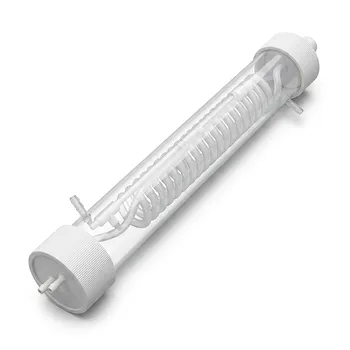
- High Purity PFA Constant Pressure Condensation Reaction System Acid Resistant High Temperature Customizable Teflon Labware
- High Purity PFA Reaction Vessel for Biopharmaceutical Synthesis and Corrosive Chemical Fluid Handling with Customizable Tube Fittings
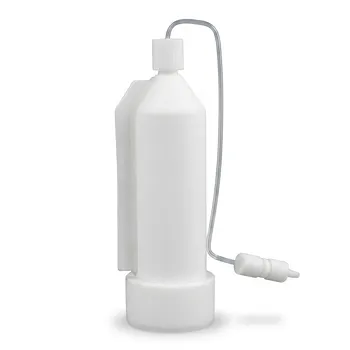
- PFA Anti Splash Ball High Temperature HF Resistant Laboratory Buffer Vessel for Distillation and Trace Analysis
- Corrosion Resistant PFA Translucent Reaction Bottle with PTFE Screw Cap and Standard 19 24 Ground Joint Neck for High Temperature Lab Applications
- High Purity PFA Volumetric Flask 1000ml 2000ml Constant Volume Bottle Acid Resistant Trace Analysis Custom Laboratory Labware
People Also Ask
- Why is high-purity PFA labware preferred when preparing mixed solutions? Prevent Trace-Metal Leaching & Contamination
- What are the core advantages of high-purity PFA labware? Achieve Unmatched Precision in Trace Analysis
- Why Is High-Purity PFA Preferred for Trace Analysis and Synthesis? Achieve Unmatched Analytical Precision
- Why use PFA labware for LiFePO4 precursor preparation? Ensure Trace Metal Purity & Superior Battery Performance.
- What technical advantages does high-purity PFA labware provide in trace fluorescence detection? Ensure Peak Sensitivity