Customized PFA manifolds and tubing optimize laboratory fluid control by aligning flow path geometry with specific experimental workflows to eliminate dead volume and fluid retention. These systems leverage the extreme chemical inertness and low-friction properties of perfluoroalkoxy (PFA) to ensure reagent purity, improve dosing precision, and extend the maintenance cycles of automated distribution systems.
Customizing PFA components transforms a generic fluid path into a precision-engineered system that minimizes cross-contamination and mechanical resistance. By tailoring the manifold architecture, labs can achieve superior flow stability and chemical integrity in highly demanding applications.
Optimizing Flow Path Architecture
Eliminating Dead Volume and Retention
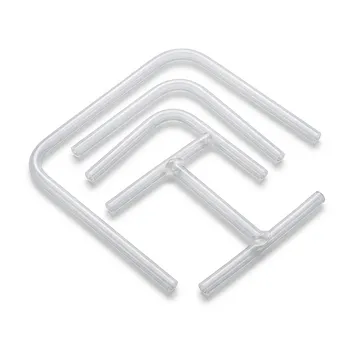
Standard off-the-shelf components often create "dead zones" where fluids stagnate, leading to cross-contamination and inaccurate results. Customized PFA manifolds allow for internal channels to be bored or molded to exact specifications, ensuring that every microliter of reagent moves through the system without getting trapped in unnecessary pockets.
Enhancing Precision in Automated Systems
The ability to customize the layout of fluid paths directly impacts the timing and volume accuracy of automated dispensers. By reducing the overall length of the fluid path and optimizing junction angles, you minimize pressure drops and ensure that the system responds instantaneously to pump commands.
Improving Handling of Viscous Reagents
PFA’s extremely low coefficient of friction and anti-adhesion properties are critical when working with viscous or easily precipitated chemicals. Customizing the internal diameter of tubing and manifold ports ensures that flow resistance is minimized, preventing the motor strain and clogs common in lower-quality plastic systems.
Ensuring Absolute Chemical Purity
Superior Chemical and Permeation Resistance
PFA is virtually inert to almost all chemicals, including aggressive acids and bases used in semiconductor manufacturing and trace analysis. This material prevents leaching and ion contamination, ensuring that the chemical composition of your reagents remains stable from the storage bottle to the reaction vessel.
Prevention of Biofilms and Crystallization
The molecularly smooth internal walls of PFA components prevent microorganisms and crystalline residues from gaining a foothold. This "ultra-smooth" surface profile is essential for maintaining high-purity fluid paths and preventing the gradual buildup of biofilms that can compromise biological assays or sensitive chemical reactions.
Real-Time Visual Monitoring
Unlike opaque fluoropolymers, PFA is translucent, allowing technicians to visually verify fluid levels, detect bubbles, or observe reagent color changes. This transparency provides an extra layer of process control, enabling immediate intervention if a fluid path is compromised or if a reagent is depleted.
Understanding the Trade-offs
Material and Customization Costs
Implementing a fully customized PFA system involves a higher initial investment compared to standard PTFE or PE components. The cost reflects the specialized machining or molding processes required to create complex manifold geometries while maintaining the material's structural integrity.
Thermal and Pressure Limitations
While PFA offers excellent temperature resistance, it is still a polymer and may not match the burst pressure ratings of stainless steel in ultra-high-pressure applications. Engineers must carefully balance the need for chemical inertness with the mechanical stresses of the specific experimental environment.
Integration Complexity
Customized manifolds require precise upfront design and engineering to ensure compatibility with existing hardware. Any error in the initial design phase can lead to integration delays, as these components cannot always be easily modified once they are fabricated.
How to Apply This to Your Project
To maximize the benefits of PFA in your laboratory, align your component choices with your specific performance requirements.
- If your primary focus is Trace Analysis or Semiconductor Chemistry: Prioritize high-purity PFA grades and customized manifolds to eliminate metallic ion contamination and ensure zero-leakage connections.
- If your primary focus is Automated High-Throughput Screening: Focus on customized manifold designs that minimize dead volume to reduce reagent waste and prevent cross-contamination between different assay cycles.
- If your primary focus is Handling Corrosive or Crystallizing Reagents: Utilize PFA tubing with the smoothest available internal finish and customized routing to prevent clogs and extend the intervals between system cleanings.
By integrating customized PFA components, you move beyond basic fluid transport toward a high-performance system defined by chemical stability and architectural precision.
Summary Table:
| Key Benefit | Impact on Laboratory Performance |
|---|---|
| Zero Dead Volume | Eliminates fluid stagnation and prevents cross-contamination. |
| Chemical Inertness | Prevents leaching and ion contamination in trace analysis. |
| Low Friction Surface | Enhances flow of viscous reagents and prevents clogging/residue. |
| Translucency | Enables real-time visual monitoring of reagents and bubbles. |
| Custom Geometry | Optimizes fluid path length for faster automated system response. |
Elevate Your Fluid Precision with KINTEK Custom Fluoropolymers
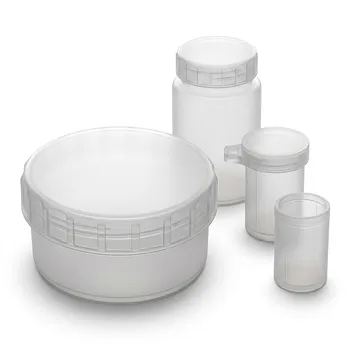
Maximize the accuracy and chemical integrity of your laboratory workflows with KINTEK’s high-performance solutions. From everyday basic labware like beakers, crucibles, and reagent bottles to specialized fluid transfer components—including customized PFA tubing, fittings, and valves—we provide the architectural precision your research demands.
Our expertise extends across the full spectrum of laboratory needs:
- Trace Analysis & Sample Prep: High-purity instruments, filters, and digestion tubes.
- General Consumables: Stirring bars, O-rings, and high-performance seal tapes.
- Advanced Apparatus: Custom electrochemical cells, battery testing fixtures, and microwave digestion vessels.
Backed by end-to-end custom CNC fabrication, KINTEK is equipped to deliver everything from complex non-standard machined parts to high-volume orders with an absolute focus on PTFE and PFA excellence.
Ready to eliminate dead volume and ensure absolute reagent purity? Contact us today to discuss your custom project!
References
- Xinyi Li, Dandan Ma. Rational Fabrication of One‐Dimensional TiO <sub>2</sub> Nanowires for Enhanced Supercapacitor and Rechargeable Lithium Ion Battery. DOI: 10.1002/slct.202500115
This article is also based on technical information from Kintek Knowledge Base .
Related Products
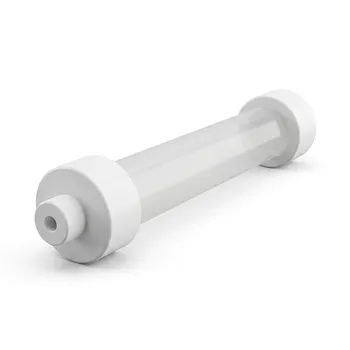
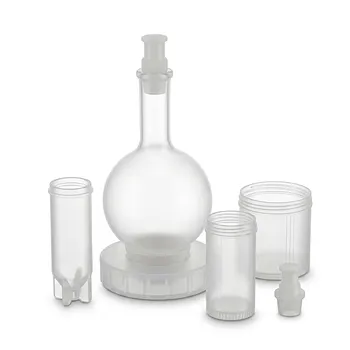
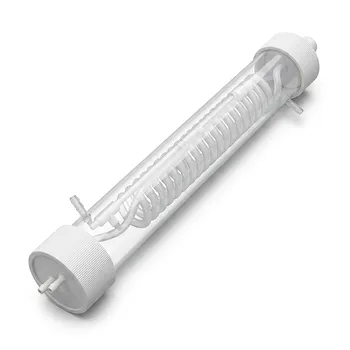
- High Purity PFA Chromatography Column with Collection Bottle Corrosion Resistant Fluoropolymer Filtration System for Trace Analysis
- High Purity PFA Chromatography Columns and Collection Bottles Corrosion Resistant Fluoropolymer Filtration Systems for Trace Analysis
- High Purity PFA Chromatography Column Double Layer Constant Pressure Filtration System with Sieve Plate for Strong Acid Resistance
- High Purity PFA Chromatography Microcolumn Corrosion Resistant Resin Column with Sieve Plate for Trace Analysis
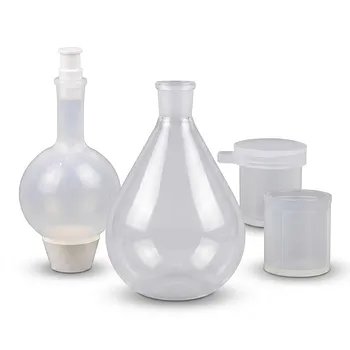
- PFA Eggplant Flask Custom Molded Pear Shaped Laboratory Flask Corrosion Resistant Glass Alternative
People Also Ask
- What are the primary functional and temperature differences between PFA and FEP when selecting melt-processible fluoropolymers for custom laboratory apparatus?
- Why is the chemical stability of polymer endgroups critical when selecting melt-processible fluoropolymers like PFA for high-purity laboratory apparatus? Choose Stable Endgroups for Reliable Performance
- What are the characteristics of PFA material? A Guide to Its High-Performance Balance
- Why is Perfluoroalkoxy alkane (PFA) preferred over glass or stainless steel in pharmaceutical process development? Pure Yield
- Why is PFA superior for cleaning and preventing cross-contamination? The Gold Standard for Ultra-Trace Lab Hygiene