PTFE generally has the edge in maximum continuous temperature and coefficient of friction, while PFA matches it closely in chemical resistance. PTFE is commonly rated for continuous service up to approximately 550°F (288°C), compared with about 500°F (260°C) for PFA. Both provide top-tier resistance to aggressive acids, solvents, and other chemicals, but PFA offers important manufacturing advantages because it is melt-processible and can be molded into complex, seamless, high-purity components.
Choose PTFE when maximum temperature capability, lowest friction, or flex-fatigue resistance is the priority. Choose PFA when chemical purity is equally important but the design requires complex molding, translucency, welding, or lower permeation.
How PTFE and PFA Compare
Maximum Continuous Operating Temperature
PTFE provides slightly greater thermal headroom, with a commonly cited maximum continuous operating temperature of 550°F (288°C). PFA is typically rated at approximately 500°F (260°C).
These values are material-level guidelines, not guarantees for every component. Actual limits depend on the specific resin grade, pressure, mechanical loading, wall thickness, sealing design, and exposure time.
Some PFA product specifications list a continuous-use limit of 260°C, which is consistent with the approximate 500°F rating. Equipment designers should therefore use the manufacturer’s datasheet for the exact grade and component geometry.
Chemical Resistance
Both materials provide exceptional chemical resistance and are generally ranked at the highest level among fluoropolymers. Their fully fluorinated structures make them resistant to many aggressive acids, solvents, and corrosive process fluids.
For high-purity fluid handling, the practical difference in chemical inertness is usually negligible. Both PTFE and PFA are used for tubing, valves, fittings, vessel liners, digestion vessels, and laboratory containers where contamination control is critical.
PFA can be especially attractive for ultra-pure systems because properly molded components can be void-free and may provide lower permeation than standard PTFE. Modified PTFE grades can also improve creep and permeation performance, so the comparison must account for the specific material formulation.
Coefficient of Friction
PTFE has the lowest coefficient of friction among the common fluoropolymers. The supplied comparative data rates PTFE at approximately 1 and PFA at approximately 2, indicating that PFA has slightly more friction.
This makes PTFE advantageous for sliding interfaces, low-friction seals, mechanical guides, and components that must move repeatedly with minimal resistance.
PFA still offers exceptionally low friction compared with most engineering plastics. Its somewhat higher friction is often acceptable when its processability, purity, or molded geometry provides greater value than PTFE’s friction advantage.
Why Manufacturing Changes the Decision
PTFE Requires Specialized Fabrication
Standard PTFE is non-melt-processible. Above its melting point, it does not flow like a conventional thermoplastic, so parts are typically produced through sintering or compression molding, followed by machining when precise or complex geometries are required.
This process supports robust custom components but can increase machining time, material waste, and design constraints.
PFA Supports Complex Molded Shapes
PFA is melt-processible, allowing it to be injection molded, extruded, heat-welded, and formed into intricate fluid paths. This is useful for complex valve bodies, fittings, tubing assemblies, reagent containers, and seamless vessels.
PFA can also provide translucent components, allowing operators to observe fluid levels, bubbles, or contamination without opening the system.
Purity and Permeation Matter
For ultra-pure acid and solvent distribution, molded PFA can provide a strong combination of chemical inertness, low contamination risk, and reduced permeation.
However, material cleanliness, molding quality, joining methods, surface finish, and system assembly can influence purity as much as the polymer choice itself.
Understanding the Trade-offs
PTFE’s Main Limitations
PTFE’s higher temperature rating and lower friction do not eliminate its design limitations. Standard PTFE can exhibit creep under sustained load and usually requires more involved fabrication than PFA.
Its opacity can also be a disadvantage when visual inspection of the fluid or internal condition of the component is important.
PFA’s Main Limitations
PFA generally has a lower maximum continuous temperature rating and slightly higher friction than PTFE. It also typically carries a higher raw-material cost.
Although PFA can be molded efficiently, its performance depends heavily on controlled processing. Poor molding or welding practices can compromise dimensional stability, cleanliness, and long-term seal integrity.
Temperature Ratings Must Be Applied Carefully
A maximum continuous temperature is not the same as a maximum temperature under all operating conditions. Pressure, mechanical stress, thermal cycling, chemical exposure, and component dimensions can reduce the usable limit.
Designers should evaluate the complete operating envelope rather than selecting a material from temperature alone.
Dynamic Components Need Separate Evaluation
PTFE offers excellent flex-fatigue resistance and is often preferred for components exposed to repeated flexing, such as valve bellows and flexible diaphragms.
For static vessels, molded fittings, and complex fluid paths, PFA’s processability may be more important than PTFE’s mechanical advantages.
Selecting the Right Material
The best choice depends on whether the dominant constraint is thermal margin and friction or manufacturing complexity and purity control.
- If your primary focus is maximum continuous temperature: Select PTFE when the application benefits from approximately 550°F (288°C) capability, subject to the supplier’s grade-specific rating.
- If your primary focus is chemical resistance: Either material is suitable because both provide top-tier resistance to aggressive chemicals; confirm compatibility with the exact process fluid and temperature.
- If your primary focus is low friction or repeated motion: Prefer PTFE for sliding interfaces, low-friction seals, and flexing components.
- If your primary focus is complex molded geometry: Prefer PFA because it can be melt-processed into intricate, seamless shapes with less secondary machining.
- If your primary focus is ultra-high purity and visual inspection: Consider PFA for void-free molded components, lower permeation potential, translucency, and weldable fluid assemblies.
- If your primary focus is custom heavy-duty labware: Consider PTFE when machining flexibility, structural robustness, and higher thermal headroom outweigh process complexity and material waste.
For high-purity fluid handling, select between PTFE and PFA by balancing thermal and friction performance against the component’s geometry, purity requirements, fabrication method, and validated operating conditions.
Summary Table:
| Property | PTFE | PFA |
|---|---|---|
| Max continuous temp | ~550°F (288°C) | ~500°F (260°C) |
| Chemical resistance | Exceptional | Exceptional (similar) |
| Coefficient of friction | Very low (lower) | Low (slightly higher) |
| Processability | Non-melt-processible; requires sintering/machining | Melt-processible; injection molding, extrusion, welding |
| Typical applications | Sliding seals, gaskets, bellows | Complex molded components, tubing, translucent parts |
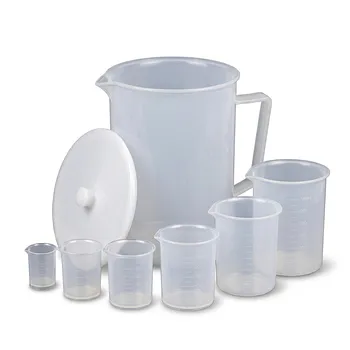
Selecting the ideal fluoropolymer for your high-purity fluid handling is critical. KINTEK, a specialist in high-performance fluoropolymers, offers premium PTFE and PFA labware and custom components. From basic beakers to intricate electrochemical cells, we provide tailored solutions backed by end-to-end machining and molding expertise. Contact our team today to optimize your material choice and manufacturing approach—get in touch now.
Related Products
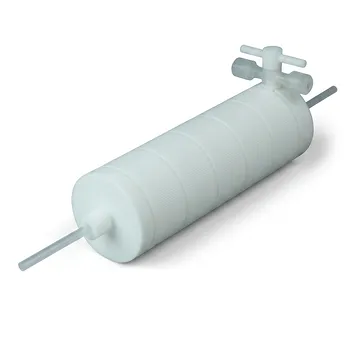
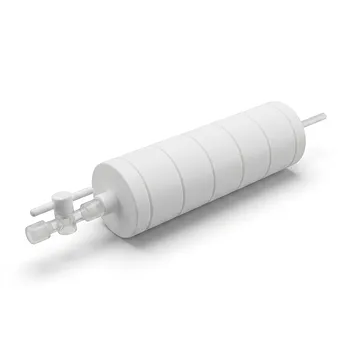
- High Purity PTFE Filter with PFA Valve Connections and Integrated Sieve Plate for Corrosive Fluid Processing
- PTFE Corrosion Resistant Filter with PFA Valve Connections and Integrated Sieve Plate
- PTFE PFA Vacuum Filtration System Corrosion Resistant Customizable Shatterproof Laboratory Device
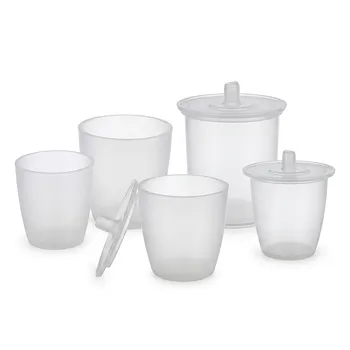
- High Purity PFA Crucible and Corrosion Resistant PTFE Beaker for Trace Analysis and Custom Laboratory Applications
- Custom PTFE Constant Pressure Separatory Funnel Corrosion Resistant Low Background Labware for PFA Flasks
People Also Ask
- Which chemicals are fully compatible with PTFE filters? Discover Unmatched Chemical Resistance
- What steps are involved in selecting the proper PTFE filter? A 4-Step Guide to Optimal Filtration
- What sizes and pore options are available for PTFE filters? Choose the Right Filter for Your Application
- What temperature resistance do PTFE filters offer? Unmatched Thermal Stability from -200°C to +260°C
- How does the hydrophobicity of PTFE filters benefit their use? Ensure Uninterrupted Gas Flow and Solvent Filtration