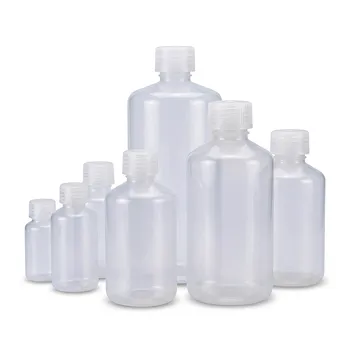
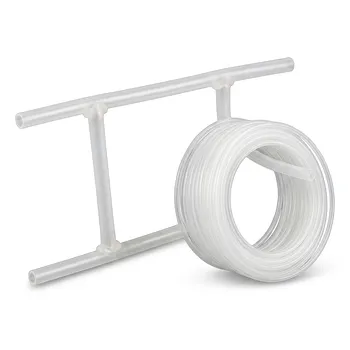
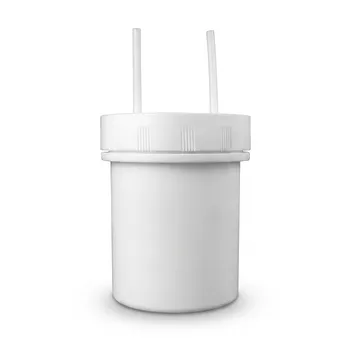
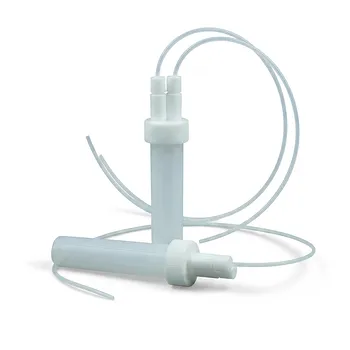
PTFE and PFA resist hydrocarbon permeation because their carbon backbones are tightly shielded by fluorine atoms. The strong, highly polar C–F bonds create a chemically stable, low-surface-energy structure with relatively low affinity for many hydrocarbons and organic solvents. This reduces both the tendency of hydrocarbon molecules to dissolve into the polymer and their ability to diffuse through it, helping bottles retain volatile solvents and tubing preserve fluid purity.
The barrier is a molecular and transport advantage, not simply a sign of chemical inertness. A fluorinated backbone lowers hydrocarbon sorption and slows molecular diffusion; actual performance also depends on polymer morphology, wall thickness, temperature, solvent, and exposure time.
Why the Fluorinated Backbone Creates a Barrier
Fluorine forms a dense protective sheath
PTFE and PFA are fully fluorinated or highly fluorinated polymers. Their carbon backbones are enveloped by fluorine atoms, which shield the underlying carbon-carbon framework from direct interaction with chemical species.
Fluorine has a larger atomic and van der Waals radius than hydrogen. Its placement around the backbone therefore creates a dense outer region that makes it more difficult for incoming molecules to approach and interact with the carbon chain.
This structure is often described as a fluorine sheath. It is not an impermeable metallic coating, but it substantially changes the chemical environment presented to hydrocarbons.
Strong C–F bonds resist chemical disruption
The carbon-fluorine bond is exceptionally strong and highly polar. Because the fluorinated chain is difficult to chemically attack, the polymer is unlikely to break down, swell substantially, or generate degradation products when exposed to many aggressive solvents and reagents.
That stability is important for barrier performance. A polymer that is chemically attacked can develop swelling, defects, or altered transport pathways; PTFE and PFA largely avoid those failure mechanisms under their intended conditions.
Fluorine changes the polymer’s surface chemistry
Fluorinated surfaces have very low surface energy and critical surface tension. Many water-based and organic liquids therefore spread poorly or adhere weakly to them.
This mainly improves surface retention and cleanability, rather than serving as the sole explanation for bulk permeation resistance. Less liquid adhering to a bottle wall or tubing surface means less residual material, droplet retention, and cross-contamination during transfer.
How the Atomic Structure Reduces Hydrocarbon Transport
Permeation requires both solubility and diffusion
Hydrocarbon transport through a polymer generally depends on two linked processes:
- Sorption or solubility: The hydrocarbon enters and dissolves in the polymer.
- Diffusion: The dissolved molecules move through the polymer matrix.
A useful conceptual relationship is:
Permeability ≈ solubility × diffusivity
Fluorination can reduce both terms for many hydrocarbons. The fluorinated environment offers relatively low chemical affinity for nonfluorinated hydrocarbon molecules, reducing their uptake, while the tightly shielded and stable matrix restricts their movement.
The polymer is less easily plasticized
Some solvents penetrate a polymer and increase the mobility of its chains. This is called plasticization. Increased chain mobility can accelerate diffusion and may cause swelling or loss of dimensional stability.
The rigid, strongly bonded structure of PTFE and PFA is resistant to this type of chemical disruption across a broad range of laboratory exposures. As a result, the tubing or bottle is less likely to become a progressively easier pathway for solvent transport.
The structure limits chemical interaction with the carbon chain
Hydrocarbons can permeate ordinary polymers partly because they interact favorably with the polymer’s hydrocarbon-like backbone. In PTFE and PFA, that backbone is covered by fluorine rather than exposed hydrogen.
The result is a material with a very different polarity, surface energy, and intermolecular interaction profile. Hydrocarbons may still contact the surface, but they generally have less favorable access to and compatibility with the underlying chain structure.
What This Means for Laboratory Bottles
Reduced solvent loss through the bottle wall
For storage bottles, the relevant concern is often outward permeation and evaporation. A solvent that dissolves into the bottle wall and diffuses outward can gradually escape even when the closure is properly sealed.
PTFE and PFA reduce this wall-mediated transport for many hydrocarbons and organic solvents. They therefore help maintain solvent volume and composition, particularly where small losses could affect concentration or analytical results.
The closure remains critical. A fluoropolymer bottle cannot compensate for a poorly sealed cap, incompatible gasket, or repeated opening that allows vapor loss through the container opening.
Better preservation of sample composition
Permeation is not limited to solvent leaving the bottle. Atmospheric moisture, oxygen, or external organic vapors can also migrate through some container materials and alter sensitive samples.
The low sorption and diffusion characteristics of fluoropolymers help reduce these exchanges. This is valuable for trace analysis, standards, volatile reagents, and samples whose concentration must remain stable over time.
Lower risk of extractables and leachables
Because PTFE and PFA are chemically inert and resistant to degradation, they generally contribute fewer unwanted species to stored samples than materials that are more susceptible to solvent attack.
This does not mean that every fluoropolymer component is automatically contamination-free. Processing residues, additives, pigments, machining debris, and closure materials must still be controlled, especially in high-purity applications.
What This Means for Fluid Transfer Tubing
The tubing wall becomes a slower transport pathway
In tubing, hydrocarbon permeation can occur in either direction. The process fluid may migrate outward through the wall, or contaminants from the surrounding environment may migrate inward.
The fluorinated molecular structure reduces this wall transport for many chemicals. This helps preserve the composition of the transferred fluid and limits solvent vapor release into the laboratory or surrounding equipment.
Low surface energy reduces residual hold-up
The same fluorinated surface that repels many liquids also reduces adhesion to the tube wall. Less liquid remains as a persistent film or collection of droplets after draining or flushing.
This can reduce sample carryover, cross-contamination, and material loss, although flow conditions, tubing geometry, surface condition, and cleaning procedure still matter.
Chemical stability preserves tubing performance
Tubing exposed to aggressive solvents can soften, swell, embrittle, crack, or release degradation products if its polymer is incompatible. PTFE and PFA resist these chemical changes across demanding laboratory conditions.
Maintaining the original wall structure is important because cracks, swelling, and defects can create new leakage or permeation pathways. Their broad thermal stability also helps when the system must tolerate elevated temperatures or repeated cleaning cycles.
PTFE and PFA: Similar Molecular Advantage, Different Practical Roles
PTFE provides a highly fluorinated, chemically inert matrix
PTFE consists of a carbon backbone surrounded by fluorine atoms and is recognized for exceptional chemical resistance, low surface energy, and high-temperature capability.
It is widely used where chemical inertness and low contamination are more important than ease of melt processing. Conventional PTFE components are commonly formed by specialized processing methods rather than ordinary melt extrusion.
PFA retains fluorinated shielding while improving processability
PFA is also a highly fluorinated polymer, but it contains perfluoroalkoxy side groups. This modification allows it to be melt processed while preserving the key chemical advantages associated with a fluorinated backbone.
PFA is therefore useful for clear, weldable, continuously manufactured tubing and bottles. Its practical barrier performance remains application-dependent; the presence of fluorine alone does not make PTFE and PFA identical in permeability.
Barrier selection must be application-specific
PTFE and PFA should not be treated as interchangeable in every design. Differences in crystallinity, processing history, wall thickness, flexibility, transparency, and temperature exposure can affect actual hydrocarbon transport.
For a critical application, the correct choice should be based on data for the specific solvent, temperature, component geometry, and exposure duration.
Understanding the Trade-offs
Fluoropolymers are highly resistant, not absolutely impermeable
No polymer is a perfect barrier to every molecule. Small, volatile, or highly compatible chemicals can eventually diffuse through fluoropolymer walls, especially at elevated temperatures or over long storage periods.
“Chemical inertness” primarily describes resistance to reaction and degradation. It should not be interpreted as zero permeability.
Surface repellency does not equal bulk barrier performance
A liquid may bead on a fluoropolymer surface yet still permeate slowly through the wall. Surface energy influences wetting and residue, while bulk permeation depends on sorption, molecular diffusion, morphology, thickness, and temperature.
These are related properties, but they should be evaluated separately.
Thickness and temperature remain decisive
A thicker wall generally provides a longer diffusion path and reduces the transmission rate. Higher temperature usually increases molecular mobility and can accelerate permeation, even when the polymer remains chemically stable.
Storage duration and pressure gradients also matter. A component that performs well for short-term transfer may not provide the same protection during long-term storage of volatile hydrocarbons.
Closures and connections can dominate the result
The bottle wall may have excellent barrier properties while the cap liner, seal, fitting, or connection leaks or permeates readily. Tubing systems can likewise fail at fittings, welds, valves, or improperly specified elastomeric seals.
The complete fluid-contact assembly—not just the PTFE or PFA section—must be evaluated.
How to Apply This to Your Project
The molecular explanation is useful, but the final decision should connect material structure to the actual solvent and operating conditions.
- If your primary focus is long-term hydrocarbon storage: Choose a fluoropolymer container based on solvent-specific permeation data, wall thickness, temperature, and closure compatibility rather than material name alone.
- If your primary focus is fluid transfer purity: Use PTFE or PFA tubing to reduce sorption, residual hold-up, and wall permeation, while separately qualifying fittings, seals, and cleaning procedures.
- If your primary focus is volatile-solvent retention: Evaluate the entire bottle-and-closure system, because cap and gasket leakage can exceed transport through the fluoropolymer wall.
- If your primary focus is trace analysis: Select clean, additive-controlled fluoropolymer components and verify extractables, leachables, and lot cleanliness in addition to hydrocarbon barrier performance.
- If your primary focus is high-temperature service: Confirm the specific continuous-use temperature and permeation behavior of the chosen grade, since thermal exposure can increase transport even without visible degradation.
The central advantage of PTFE and PFA is that their fluorine-shielded carbon backbones make hydrocarbons less able to enter, move through, or remain attached to the material—providing a strong, though application-dependent, barrier for laboratory storage and fluid handling.
Summary Table:
| Factor | PTFE | PFA |
|---|---|---|
| Fluorination | Fully fluorinated | Highly fluorinated with perfluoroalkoxy side groups |
| Processability | Not melt-processable, specialized forming | Melt-processable, clear/weldable |
| Chemical resistance | Excellent | Excellent |
| Surface energy | Very low | Very low |
| Barrier mechanism | Fluorine sheath reduces sorption/diffusion | Similar, with slightly different morphology |
| Applications | Wide chemical compatibility | Tubing, bottles requiring transparency/weldability |
| Consideration | Thicker walls for long-term storage | Verify specific permeation data for solvents |
Optimize your laboratory’s storage and fluid handling with high-purity PTFE and PFA components from KINTEK. Our fluoropolymer bottles, tubing, fittings, and custom machined parts are designed to minimize permeation and contamination, preserving the integrity of your hydrocarbons and solvents. Whether you need standard labware, high-purity trace analysis tools, or bespoke apparatus, our end-to-end CNC machining ensures a perfect fit. Don’t compromise on purity—contact our specialists today to discuss your application and benefit from reliable, long-lasting performance.
Related Products
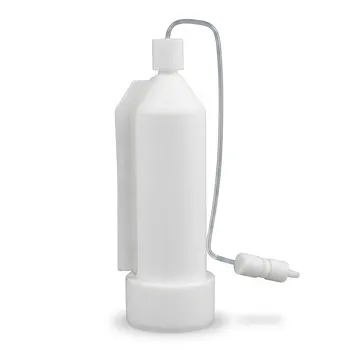
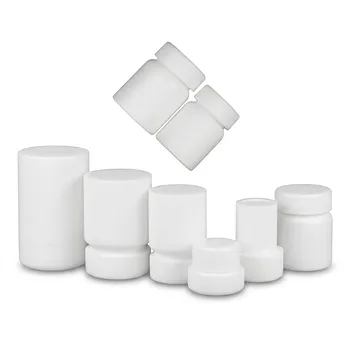
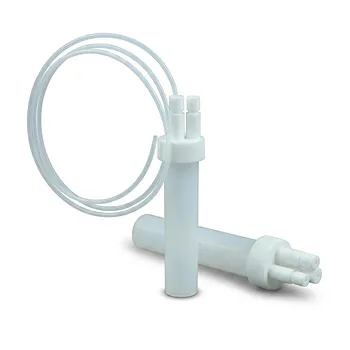
- Custom PTFE Dissolution Bottle 50ml with PFA Ultra Fine Tubing Corrosion Resistant No Leaching
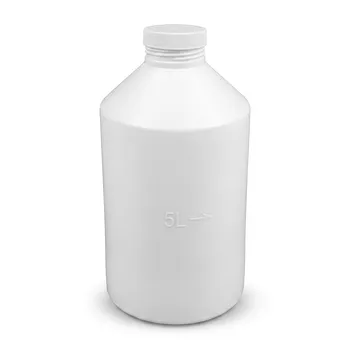
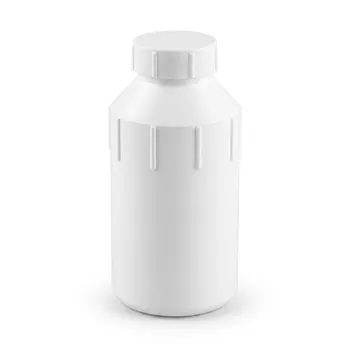
- Large Capacity 5L PTFE Storage Tank and Custom Reagent Bottle Corrosion Resistant Leakproof Screw Seal Laboratory Container with PTFE Cap
- Corrosion Resistant High Purity PFA Valve and Weldable Transparent Tubing for Semiconductor Fluid Transfer
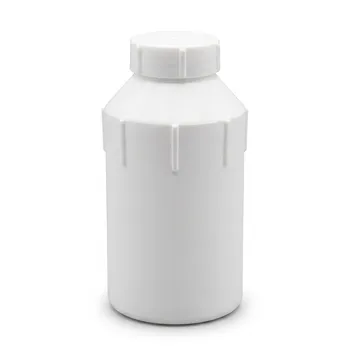
- PTFE Fluoropolymer Reagent Bottles and Sampling Containers for Corrosion Resistant Low Background Chemical Storage
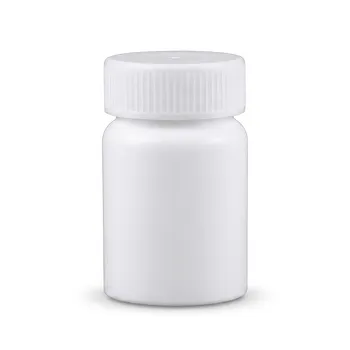
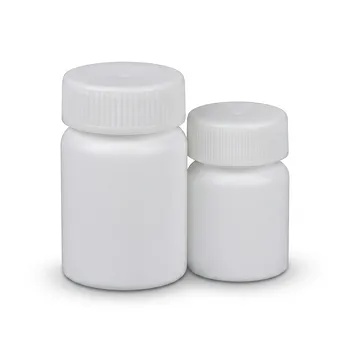
- Corrosion Resistant PTFE Small Reagent Bottle for Biopharmaceutical High Purity Sample Storage Non Stick Easy Clean Teflon Container
People Also Ask
- What are the temperature limits for the PTFE bottle? Ensure Safety from -200°C to 260°C
- What are the advantages of the PTFE bottle's non-stick surface? Ensure Purity and Efficiency in Your Lab
- What are the key applications of the PTFE bottle? Ensure Chemical Safety and Sample Purity
- Is the PTFE bottle suitable for ultra-pure applications? Ensure Absolute Sample Integrity
- What makes the PTFE bottle durable? Unmatched Chemical & Thermal Stability for Demanding Applications