Comonomers such as hexafluoropropylene (HFP) are added to fluoropolymers to make them easier to process and better suited to demanding laboratory components. HFP disrupts the highly regular structure of polymers based on tetrafluoroethylene (TFE), reducing crystallinity and changing properties such as melt viscosity, flexibility, and recrystallization behavior. The result can be a fluoropolymer that retains broad chemical inertness, thermal stability, and extremely low moisture uptake while also supporting melt fabrication or more flexible tubing designs.
The central purpose of HFP is controlled property modification: it helps convert an exceptionally inert but difficult-to-process fluoropolymer into a material that can be manufactured into reliable tubing, fittings, valves, vessels, and other laboratory fluid-handling components.
Why Pure PTFE Can Be Difficult to Process
High crystallinity limits fabrication
Polytetrafluoroethylene (PTFE) has a highly regular molecular structure and high crystallinity. This structure contributes to its outstanding chemical and thermal performance, but it also makes PTFE difficult or impossible to process using conventional melt techniques.
PTFE is generally shaped through specialized methods such as compression molding, paste extrusion, or machining rather than ordinary injection molding or melt extrusion.
Complex laboratory parts need manufacturing flexibility
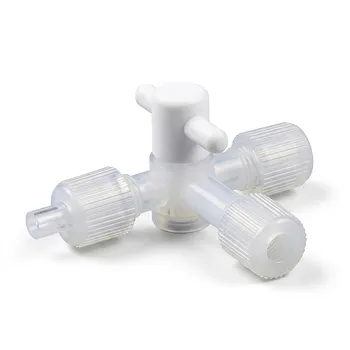
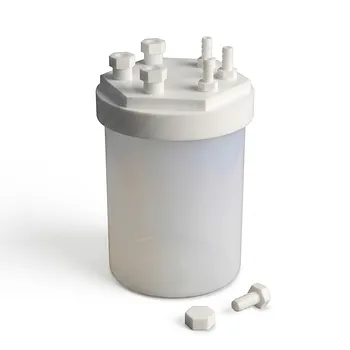
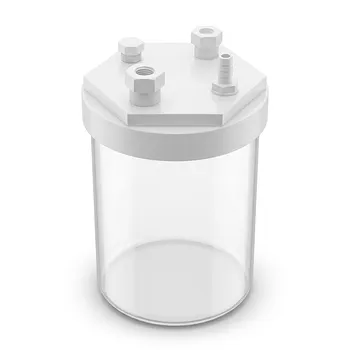
Laboratory fluid-transfer and containment systems often require more than straight tubing. They may include custom fittings, valve bodies, manifolds, vessels, and components with precise internal passages.
A material that can be melt-processed or machined more predictably makes these geometries easier to manufacture, particularly when consistent dimensions and repeatable production are important.
How HFP Changes the Polymer Structure
HFP disrupts molecular regularity
HFP introduces structural irregularity into a TFE-based polymer chain. This interferes with the close packing and recrystallization behavior associated with a highly regular PTFE structure.
The degree of modification is controlled during synthesis. The objective is to change selected physical and processing characteristics without removing the fluorinated structure responsible for chemical resistance.
It can reduce crystallinity and recrystallization
Controlled comonomer incorporation can reduce the rate and extent of recrystallization. This supports the development of modified fluoropolymers with more manageable processing behavior and, in suitable compositions, melt-processable resins such as fluorinated ethylene propylene (FEP).
The exact result depends on the comonomer, its concentration, and the polymerization process. HFP and perfluoroalkylvinyl ethers (PAVEs) are related tools for achieving different property profiles.
Which Properties Matter in Laboratory Equipment
Melt viscosity affects fabrication
Comonomers can alter melt viscosity and flow behavior. This matters when tubing, fittings, or molded components must be formed with controlled dimensions and intricate features.
Improved melt-processability can also support more consistent production of customized or high-volume parts.
Flexibility affects fluid transfer
A rigid fluoropolymer may be ideal for dimensional stability but inconvenient when tubing must be routed, connected, or repeatedly handled. Comonomer modification can provide a more useful balance between flexibility and structural integrity.
This is especially relevant for laboratory assemblies where tubing must connect fixed equipment without imposing excessive force on fittings or ports.
Endgroup chemistry can affect performance
Comonomer selection and polymerization conditions can influence polymer endgroup chemistry. Endgroups are present at chain ends rather than throughout the main fluorinated backbone, so they must be considered as one part of the material design rather than as the primary source of chemical resistance.
For fluid-handling applications, the bulk fluoropolymer structure remains central to the material's resistance to aggressive chemicals and low moisture uptake.
Why Chemical Resistance Is Still Preserved
The fluorinated backbone remains the foundation
HFP is used to modify the polymer rather than replace its fundamental fluorinated character. Properly designed copolymers retain the low reactivity and broad chemical inertness expected from high-performance fluoropolymers.
This allows manufacturers to improve fabrication or mechanical behavior while maintaining the containment reliability required for laboratory chemicals and process fluids.
Low moisture uptake supports clean fluid handling
Fluoropolymers are valued for extremely low moisture absorption. That property helps reduce water-related dimensional changes and limits interactions between the component and sensitive fluids.
The practical benefit is greater dimensional and material stability in tubing, fittings, and containment vessels exposed to humid environments or aqueous and nonaqueous chemicals.
Understanding the Trade-offs
More processability does not mean identical PTFE performance
Pure PTFE remains the reference point when maximum chemical inertness and the characteristic properties of an uncompromised PTFE structure are the priority. A modified or melt-processable fluoropolymer may offer easier fabrication but should not be assumed to match every PTFE property.
Material selection must therefore consider the actual chemical, thermal, mechanical, and manufacturing requirements.
Comonomer content must be controlled
Too little comonomer may provide insufficient improvement in processability or flexibility. Too much can change crystallinity, stiffness, strength, permeability, or temperature performance beyond what the application permits.
The relevant composition is application-specific. HFP concentrations should not be generalized across all fluoropolymer families, because different resins use different comonomer levels and manufacturing strategies.
Chemical compatibility still requires verification
“Fluoropolymer” is not a complete specification. Temperature, pressure, concentration, exposure time, mechanical stress, permeation requirements, and component geometry all influence performance.
For critical laboratory containment, the selected resin and finished component should be verified against the actual fluid and operating conditions.
How to Apply This to Laboratory Components
The right comonomer-modified fluoropolymer depends on whether the primary challenge is chemical exposure, fabrication complexity, flexibility, or dimensional reliability.
- If your primary focus is maximum chemical resistance: Start with a highly inert fluoropolymer such as PTFE, then verify its suitability for the specific fluid, temperature, and mechanical conditions.
- If your primary focus is melt fabrication: Consider a suitable melt-processable copolymer, such as an HFP-containing fluoropolymer, when molded or extruded geometries are required.
- If your primary focus is flexible tubing: Select a formulation whose comonomer modification provides the needed flexibility without compromising pressure, temperature, or permeation performance.
- If your primary focus is custom fittings or vessels: Evaluate modified fluoropolymers for their ability to support precision molding or machining while retaining the required chemical and thermal stability.
Comonomer incorporation gives engineers a controlled way to balance fluoropolymer inertness with the manufacturing and mechanical properties that real laboratory equipment requires.
Summary Table:
| Benefit | Description |
|---|---|
| Enhanced Processability | HFP reduces crystallinity, allowing melt processing and easier molding of complex components. |
| Improved Flexibility | Reduces stiffness, making tubing easier to route and install without compromising integrity. |
| Controlled Property Modification | Adjusts mechanical and thermal properties while preserving chemical inertness and low moisture uptake. |
| Design Versatility | Enables fabrication of custom fittings, valves, and vessels with precise dimensions. |
Optimize your lab's fluid handling with KINTEK's high-performance fluoropolymers. Our PTFE and PFA products are engineered for superior chemical resistance, processability, and flexibility. Whether you need custom tubing, fittings, or complex components, our end-to-end CNC machining ensures precision and reliability. Streamline your operations and enhance performance — contact us today to discuss your requirements and get a quote tailored to your lab's needs.
Related Products
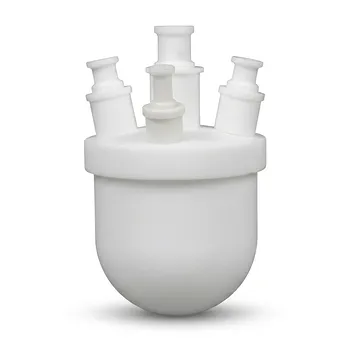
- Custom PTFE Flask 250ml High Purity Fluoropolymer Laboratory Vessel for Chemical Research
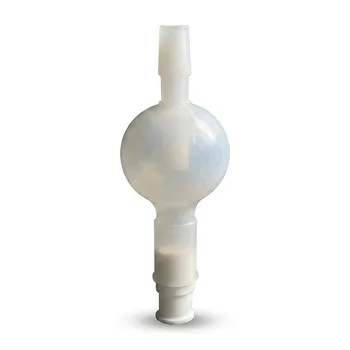
- High Purity PFA Chromatography Column with Collection Bottle Corrosion Resistant Fluoropolymer Filtration System for Trace Analysis
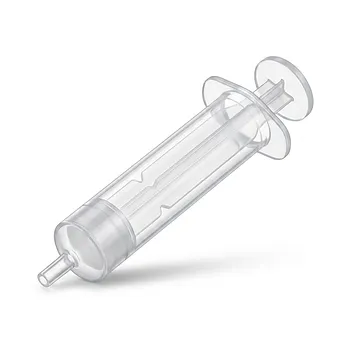
- Corrosion Resistant PFA Syringe Translucent Visual Fluoropolymer Labware 10ml Chemical Handling Tool
- Custom PTFE Reaction Tank Corrosion Resistant Fluoropolymer Chemical Processing Barrel 10L 20L 30L
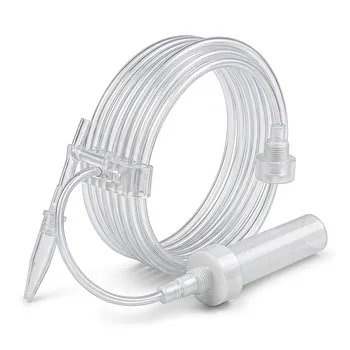
- Custom PFA Tubing 1/4 Inch High Purity Corrosion Resistant Fluoropolymer Tube with Welding and Machining Services
People Also Ask
- What are the key steps for structural integrity in molded PTFE lab reaction vessels? Master fine powder processing.
- When synthesizing TFVE monomers involving reactive organometallic reagents and aggressive polar solvents, what material performance characteristics are required? Ensure purity with PTFE/PFA.
- Why Are High-Purity Fluoropolymer Vessels and Tubing Critical for Trace Analysis? Prevent Contamination Reliably
- Why do PTFE fluoropolymer laboratory vessels and containers exhibit superior chemical resistance against harsh solvents and corrosive acids compared to standard plastic labware? Discover the molecular secrets
- How do choice of solvent and chain transfer activity affect molecular weight during vinylidene fluoride (VDF) radical polymerization? Learn Key Factors for High-MW PVDF