Polytetrafluoroethylene (PTFE) is a linear homopolymer characterized by a repeating carbon-chain backbone entirely enveloped by fluorine atoms. Its molecular structure is defined by the formula $-(CF_2-CF_2)_n-$, where every hydrogen atom found in a typical hydrocarbon is replaced by a fluorine atom. This configuration, held together by the exceptionally strong Carbon-Fluorine (C–F) bond, creates a dense, protective electron shield that renders the material nearly immune to chemical attack and thermal degradation.
The Core Takeaway: The unique properties of PTFE tubing arise from the synergy between the high bond energy of C–F linkages and the "sheathing" effect of fluorine atoms. This arrangement creates a chemically inert, high-molecular-weight barrier that isolates the carbon backbone from its environment.
The Architecture of the Fluorocarbon Chain
The Repeating Monomer Unit
At its most fundamental level, PTFE consists of a long chain of carbon atoms where each carbon is covalently bonded to two fluorine atoms. This linear homopolymer structure repeats the $-(CF_2-CF_2)-$ unit thousands of times, resulting in a high molecular weight molecule.
The Substitution of Hydrogen for Fluorine
In a standard plastic molecule, the carbon chain is typically bonded to hydrogen atoms. In PTFE, these are replaced by fluorine atoms, which are larger and significantly more electronegative.
High Crystallinity and Chain Length
PTFE is a solid fluorocarbon with a high degree of crystallinity, typically ranging between 50% and 70%. The long, unbranched chains allow the molecules to pack tightly, contributing to the material's structural integrity and density.
The Bonding Mechanism: Strength and Stability
The Power of the C–F Bond
The Carbon-Fluorine (C–F) bond is recognized as one of the strongest in organic chemistry. With a bond energy of approximately 485 kJ/mol, it requires a massive amount of thermal or chemical energy to break.
Electronegativity and Electron Density
Fluorine is the most electronegative element, meaning it has a powerful attraction for electrons. This creates a dense electron cloud around the carbon backbone, which effectively hides the carbon atoms from potential reactants.
Low Polarizability and Inertness
Because fluorine holds its electrons so tightly, the molecule has low polarizability. This suppression of intermolecular interactions is why PTFE is famous for its non-stick properties and chemical inertness.
Physical Shielding and the "Sheath" Effect
The Protective Fluorine Sheath
The size of the fluorine atoms is perfectly suited to form a uniform and continuous sheath around the carbon-carbon bonds. This geometric arrangement acts as a physical armor, preventing corrosive chemicals from reaching the carbon spine.
Steric Hindrance and Stability
The dense packing of fluorine atoms creates steric hindrance, meaning there is no physical room for other molecules to penetrate the chain. This provides the tubing with remarkable electrical inertness and stability across a wide range of temperatures.
Impact on Material Performance
This molecular "shield" is the primary reason PTFE tubing can transport aggressive acids and bases without degrading. It also explains the material’s ability to maintain its mechanical properties in extreme environments.
Understanding the Trade-offs and Limitations
Mechanical Creep and Cold Flow
While the molecular bonds are strong, the lack of strong intermolecular forces between the chains means PTFE is prone to creep or "cold flow." Under a constant load, the polymer chains can slide past each other, leading to permanent deformation over time.
Processing Difficulties
Due to its high molecular weight and high melt viscosity, PTFE cannot be processed using standard injection molding. It must be formed using sintering and compression techniques, which can limit the complexity of the shapes that can be manufactured.
Limited Wear Resistance
The same low intermolecular friction that makes PTFE "slippery" also makes it relatively soft. In high-abrasion environments, PTFE tubing may wear down faster than harder engineering plastics unless it is reinforced with fillers.
How to Apply This to Your Project
Making the Right Choice for Your Goal
- If your primary focus is Chemical Transport: Use PTFE because its fluorine sheath prevents virtually all reactive species from attacking the carbon backbone.
- If your primary focus is High-Temperature Stability: Rely on the 485 kJ/mol C-F bond energy, which allows the tubing to operate continuously at temperatures where other plastics would melt or char.
- If your primary focus is Low Friction/Non-Stick: Leverage the low polarizability of the fluorine atoms, which ensures that very few substances can chemically or physically adhere to the surface.
The molecular perfection of the Carbon-Fluorine bond makes PTFE the definitive solution for the most demanding chemical and thermal challenges in modern engineering.
Summary Table:
| Feature | Molecular Detail | Practical Benefit |
|---|---|---|
| Monomer Unit | $(CF_2-CF_2)_n$ | High molecular weight & structural stability |
| Bonding Mechanism | Carbon-Fluorine (C–F) | Exceptional bond energy (485 kJ/mol) |
| Structural Shield | Fluorine "Sheath" | Protects carbon backbone from chemical attack |
| Surface Energy | Low Polarizability | Superior non-stick and low-friction properties |
| Morphology | 50% - 70% Crystallinity | High density and resistance to thermal degradation |
Optimize Your Lab with KINTEK’s Fluoropolymer Expertise
Unlock the full potential of high-performance materials in your research. KINTEK specializes in the manufacture of virtually all laboratory supplies crafted from PTFE and PFA, ensuring your equipment withstands the most aggressive chemical and thermal environments.
Our extensive range includes:
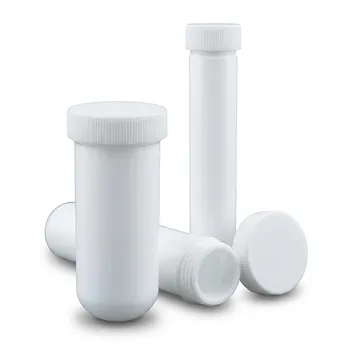
- Everyday Labware: Beakers, cylinders, crucibles, reagent bottles, and centrifuge tubes.
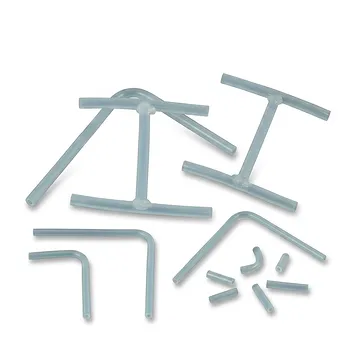
- Fluid Transfer: Precision tubing, fittings, valves, and manifold components.
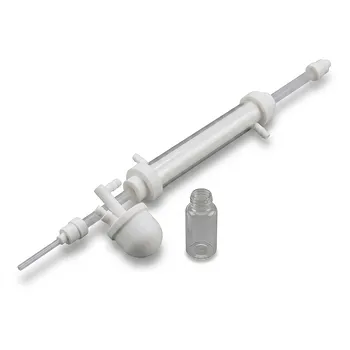
- Sample Prep: Separatory funnels, filters, pipettes, and tweezers.
- Advanced Apparatus: Custom electrochemical cells, hydrothermal synthesis liners, and microchannel reactors.
Whether you need high-volume consumables or bespoke, non-standard machined parts via our end-to-end CNC fabrication, KINTEK delivers precision-engineered solutions tailored to your specific requirements.
Ready to upgrade your laboratory setup? Contact our technical experts today to discuss your custom project!
Related Products
- Custom High Purity PTFE Digestion Tubes and Centrifuge Tubes for Trace Metal Analysis
- High Purity PTFE Digestion Tubes and Custom Centrifuge Tubes 100ml for Trace Analysis and Chemical Digestion
- Corrosion Resistant PTFE Digestion Tubes for Graphite Block Systems with Acid Reflux Caps Custom Dimensions
- Custom PTFE Digestion Tube Double Sided Openable High Temperature Corrosion Resistant Low Background
- Custom PTFE Condenser Tube 100ml Serpentine and Straight Fluoropolymer Laboratory Heat Exchanger with Flask Adapters
People Also Ask
- What are the common capacities and physical configurations available for PTFE digestion tubes? Expert Selection Guide
- How do PTFE digestion tubes minimize contamination during ultra-trace elemental analysis? Achieve high-purity results.
- What is the primary function of PTFE digestion tubes in a laboratory setting? Essential for Pure Sample Mineralization
- How do PTFE digestion tubes assist in pharmaceutical and biological sample preparation? Ensure High Recovery & Purity
- How does the synergy of pressure and temperature within a PTFE digestion tube improve digestion efficiency? Accelerate Sample Prep