Polar aprotic solvents can swell, soften, or dissolve PVDF, while PTFE and PFA generally retain their dimensions and chemical stability. Solvents such as DMF, DMAc, NMP, and DMSO interact strongly with the polar regions of PVDF’s partially fluorinated carbon chain. Depending on the solvent, temperature, exposure time, crystallinity, and mechanical stress, that interaction can cause swelling, loss of stiffness, dimensional distortion, or complete dissolution.
PVDF is chemically useful but not universally solvent-resistant. Its partially fluorinated structure leaves it vulnerable to certain polar aprotic solvents, ketones, esters, amines, and hot carbonate solvents. PTFE and PFA are preferred in laboratory fluid paths because their fully fluorinated backbones provide substantially greater resistance to solvent attack, dimensional change, leaching, and contamination.
Why Polar Aprotic Solvents Attack PVDF
The Role of PVDF’s Partially Fluorinated Structure
PVDF contains repeating carbon-fluorine and carbon-hydrogen units. Unlike PTFE and PFA, it is not fully shielded by fluorine, so portions of the polymer chain remain accessible to strong solvent-polymer interactions.
The carbon-hydrogen segments are particularly important. They give PVDF greater polarity and provide sites that polar solvents can interact with, making the material more susceptible to solvent penetration than fully fluorinated polymers.
How Polar Aprotic Solvents Interact
Polar aprotic solvents contain strongly polar functional groups, including carbonyl, sulfoxide, and amide groups. DMF, DMAc, NMP, and DMSO can therefore interact favorably with the polar sequences in PVDF.
The solvent molecules enter the polymer matrix and reduce the cohesive forces holding polymer chains together. The practical result may be swelling and softening first, followed by partial or complete dissolution under sufficiently favorable conditions.
Why Temperature Matters
Solvent compatibility is not a fixed yes-or-no property. Increasing temperature generally accelerates solvent diffusion and weakens the effective resistance of the polymer matrix.
Carbonate solvents illustrate this behavior. Dimethyl carbonate, propylene carbonate, and ethylene carbonate may cause substantial PVDF swelling at moderate temperatures and can dissolve PVDF at higher temperatures. A PVDF component that appears stable during brief room-temperature contact may therefore fail during heated processing.
What Structural Damage Looks Like in Practice
Swelling and Dimensional Change
Swelling increases the volume of the polymer and can alter the dimensions of tubing, seals, valve components, and vessel liners. Even when the material does not dissolve completely, this dimensional change can compromise connections, flow rates, sealing pressure, and calibrated internal volumes.
Swelling can also reduce mechanical strength. A softened tube or valve component may deform under pressure, clamp force, or repeated cycling.
Softening and Loss of Mechanical Integrity
Solvent uptake can lower the stiffness of PVDF and make it more flexible or rubbery. Under load, the material may creep, buckle, or lose its original shape.
This is especially important in fluid-transfer systems, where a chemically attacked component can fail without visibly dissolving. The first indication may be leakage, restricted flow, or a changed fit between tubing and fittings.
Dissolution and Process Contamination
For strongly compatible solvents, PVDF can dissolve even at room temperature. Dissolution removes material from the component and can release polymer-derived material into the process stream.
That creates two risks: loss of containment and sample contamination. In synthesis or purification workflows, even small amounts of extracted or degraded material can interfere with analytical results or downstream processing.
Why PTFE and PFA Are Preferred
Fluorine Shields the Polymer Backbone
PTFE and PFA are fully fluorinated materials. Their carbon chains are extensively shielded by fluorine atoms, and their strong carbon-fluorine bonds resist attack by many concentrated acids, bases, and aggressive organic solvents.
This structure makes them far less prone to solvent-induced swelling, softening, or dissolution than PVDF. Their resistance remains valuable across a broad temperature range, although compatibility must still be checked for the specific solvent, temperature, pressure, and exposure duration.
They Preserve Dimensional Stability
PTFE and PFA generally maintain their shape and mechanical function when exposed to polar organic solvents that can compromise PVDF. Stable dimensions help preserve reliable flow, sealing, vessel volume, and connection integrity.
This stability is essential for components such as reagent bottles, tubing, fittings, valves, and reaction-vessel liners. It reduces the chance that solvent exposure will change how the system operates.
They Minimize Leachables
High-purity PTFE and PFA are also selected because they contribute very little extractable material to the process stream. This is important when handling solvents for trace analysis, biological extraction, metal digestion, or fluoropolymer synthesis and purification.
Avoiding leachables helps protect sample purity. It reduces the risk of interference from material-derived contaminants, including common plastic additives such as phthalates.
PFA Offers Manufacturing Advantages
PTFE has exceptional chemical resistance but extremely high melt viscosity, so it is commonly compression-molded or machined. This makes it well suited to machined components, liners, seals, and specialized laboratory parts.
PFA contains perfluoroalkylvinyl ether comonomers that improve melt flow while retaining chemical resistance comparable to PTFE. It can therefore be used for more complex melt-molded parts, including high-purity fittings, containers, and tubing assemblies.
Understanding the Trade-offs
PTFE and PFA Are Not Identical
PTFE and PFA provide similar high-level chemical resistance, but their processing characteristics and mechanical behavior differ. PFA is often more practical for transparent or complex molded components, while PTFE is widely used for machined parts and liners.
The correct choice depends on fabrication method, transparency requirements, flexibility, sealing needs, temperature, and mechanical loading.
“Chemically Inert” Is Not Unlimited
Neither PTFE nor PFA should be treated as immune to every chemical under every condition. Compatibility can change with elevated temperature, pressure, prolonged exposure, mechanical stress, impurities, and the presence of strong reactive species.
A compatibility chart is a starting point, not a substitute for testing the actual solvent mixture and operating conditions.
PVDF May Still Be Appropriate
PVDF remains useful where the chemical environment falls within its compatibility range. It offers good resistance to many inorganic acids, weak bases, halogens, oxidizing agents, and chlorinated solvents.
The mistake is treating PVDF as equivalent to a fully fluorinated polymer for aggressive polar organic solvents. Its suitability must be evaluated against the complete solvent and temperature profile rather than its general classification as a fluoropolymer.
Mechanical Design Still Matters
Chemical resistance does not eliminate mechanical or thermal design requirements. PTFE and PFA components must still be sized correctly, supported against pressure and creep, and selected for the required temperature and connection method.
A chemically compatible material can still fail if it is overstressed, improperly sealed, or exposed to conditions outside its rated operating envelope.
How to Apply This to Your Project
Material selection should begin with the solvent, temperature, exposure duration, pressure, purity requirement, and component geometry.
- If your primary focus is resistance to DMF, DMAc, NMP, DMSO, or hot carbonate solvents: Use PTFE or PFA for wetted tubing, fittings, valves, bottles, and vessel liners unless application-specific testing demonstrates that PVDF is suitable.
- If your primary focus is sample purity: Choose high-purity PTFE or PFA components to minimize solvent leaching, extractables, and contamination during synthesis, extraction, digestion, or purification.
- If your primary focus is complex molded laboratory hardware: Prefer PFA when its melt-processability, dimensional stability, or component geometry provides a practical advantage over machined PTFE.
- If your primary focus is cost or general chemical resistance: Consider PVDF only after confirming that the exact solvent and temperature conditions will not cause swelling, softening, dissolution, or degradation.
For aggressive polar solvent handling, matching the component material to the complete process environment is what preserves both equipment reliability and sample integrity.
Summary Table:
| Property | PVDF | PTFE | PFA |
|---|---|---|---|
| Fluorination | Partially fluorinated | Fully fluorinated | Fully fluorinated |
| Resistance to polar aprotic solvents | Swells, softens, dissolves | Excellent | Excellent |
| Dimensional stability | Poor | Good | Good |
| Leachables | Higher risk | Very low | Very low |
| Processability | Melt-processable | Poor (machined) | Excellent (melt-molded) |
| Typical lab use | Structural parts | Machined components | Molded fittings and containers |
Ensure solvent compatibility and sample purity in your lab. KINTEK specializes in high-performance PTFE and PFA laboratory supplies, including tubing, fittings, vessels, and custom machined parts. Contact our experts today to select the right fluoropolymer components for your chemical processing needs. Contact us for a consultation.
Related Products
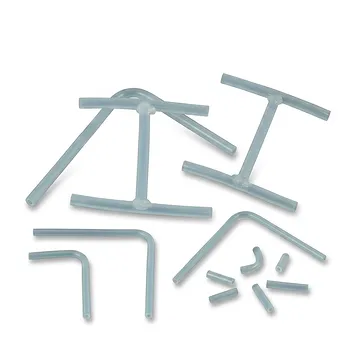
- High Performance PFA Coiled Spring Tubing and Custom PTFE Fabrication Services with Welded Fittings and Precision Bent Components
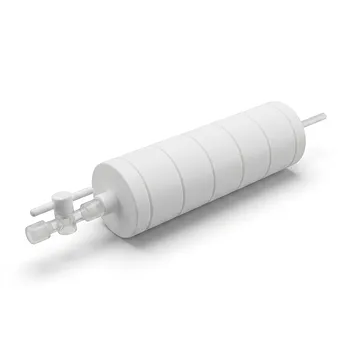
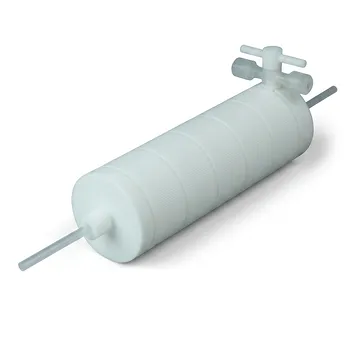
- PTFE Corrosion Resistant Filter with PFA Valve Connections and Integrated Sieve Plate
- High Purity PTFE Filter with PFA Valve Connections and Integrated Sieve Plate for Corrosive Fluid Processing
- PTFE PFA Vacuum Filtration System Corrosion Resistant Customizable Shatterproof Laboratory Device
- Custom PTFE Constant Pressure Separatory Funnel Corrosion Resistant Low Background Labware for PFA Flasks
People Also Ask
- What are the technical advantages of high-precision PFA tubing in MXene production? Maximize Purity and Yield.
- What technical advantages do PFA tubing and fittings offer? Master Precision Fluid Transfer and Flow Chemistry
- What are the technical advantages of high-quality PFA tubing? Achieve Ultimate Purity and Precision in Fluid Handling
- What are the key benefits of PTFE in custom fabrication? Unlock Performance in Extreme Conditions
- What fabrication services are available for PTFE? Shearing, Stamping, Laser Cutting, Molding & Machining