PTFE tubing ensures purity by acting as a chemically inert, non-stick conduit that prevents both the leaching of material into the process stream and the adhesion of contaminants to the tube walls. By maintaining an ultra-smooth surface and resisting degradation from aggressive chemicals, it eliminates the risk of flavor carry-over in food production and particle contamination in semiconductor fabrication. This unique combination of properties allows manufacturers to meet the most stringent regulatory and technical cleanliness standards.
PTFE (Polytetrafluoroethylene) serves as a critical safeguard for purity because it is molecularly stable, refusing to react with process fluids or harbor microscopic debris. Its performance rests on the dual pillars of extreme chemical resistance and a "low-energy" surface that inhibits bacterial and ionic accumulation.
Preventing Contamination through Surface Morphology
Non-Stick Properties and Biofilm Mitigation
The high-purity surface of PTFE is naturally hydrophobic and non-stick, which prevents bacterial adhesion and the formation of biofilms. This is vital in food and beverage manufacturing, where organic buildup can lead to spoilage or health risks.
Because substances cannot easily bond to the interior walls, the tubing allows for complete drainage and more effective cleaning cycles. This ensures that no residues remain to contaminate subsequent production runs.
Eliminating Cross-Contamination and Flavor Carry-over
In the food and beverage industry, "flavor carry-over" occurs when trace amounts of a previous batch affect the current one. PTFE’s non-porous nature ensures that pigments and aromatic compounds do not penetrate the material.
This characteristic allows manufacturers to switch between different products—such as moving from a dark juice to a light one—without the risk of color or taste migration. The result is a consistent product that meets brand quality standards.
Chemical Stability in Extreme Environments
Resistance to Aggressive Cleaning and Etching
Semiconductor manufacturing involves highly corrosive etchants like hydrofluoric acid and peroxides. PTFE tubing maintains its structural integrity and purity even when exposed to these aggressive chemicals, where other plastics would degrade.
Similarly, in food production, the tubing withstands Cleaning-in-Place (CIP) and Sterilize-in-Place (SIP) cycles. These processes involve high-temperature steam and caustic chemicals that would cause lesser materials to leach toxins or break down.
Thermal Integrity and Low Outgassing
PTFE remains stable across a massive temperature range, from cryogenic levels to extreme heat. This stability ensures the material does not become brittle or outgas volatile organic compounds (VOCs).
In vacuum-based semiconductor processes, preventing outgassing is essential to maintain the integrity of the environment. PTFE ensures that the delivery of process gases remains free of unwanted molecular interference.
Maintaining Ultra-High Purity Standards
Minimizing Extractables and Leachables
The material profile of PTFE is exceptionally clean, characterized by low extractables. This means it does not release metallic ions or organic chemicals into the fluid stream.
In semiconductor fabrication, maintaining sub-ppb (parts per billion) purity is a requirement for deionized water and chemical delivery. PTFE prevents ionic leaching, ensuring that metallic contamination stays below the 10 ppt (parts per trillion) thresholds required for modern 300 mm wafers.
Managing Particle Generation
Unlike metallic piping, PTFE does not corrode, and unlike lower-grade plastics, it does not fragment or shed particles over time. This particle-free performance is critical for preventing defects in delicate electronic components.
Even when exposed to plasma or high-velocity fluid flows, the material resists erosion. This long-term durability reduces the risk of microscopic debris entering the process stream and impacting production yields.
Understanding the Technical Trade-offs
Mechanical Limitations and "Creep"
While PTFE is chemically superior, it is physically softer than many metals. It is subject to "cold flow" or creep, meaning it can slowly deform under constant pressure or mechanical load.
Engineers must account for this by using appropriate supports and fittings. If the tubing is not properly secured, the seals may eventually leak as the material shifts over time.
Installation and Cost Considerations
PTFE has a larger bend radius compared to more flexible plastics like polyurethane. This makes it more difficult to route in tight spaces, often requiring precise planning or pre-molded shapes.
Furthermore, the high cost of raw materials and specialized manufacturing processes makes PTFE a premium option. It is typically reserved for critical paths where purity is non-negotiable rather than general-purpose plumbing.
Selecting the Right PTFE Solution for Your Application
How to Apply This to Your Project
To maximize the purity benefits of PTFE tubing, you must align the material grade with your specific environmental stressors.
- If your primary focus is Food and Beverage Safety: Select PTFE tubing that is explicitly FDA-compliant and USP Class VI certified to ensure zero flavor migration and easy sterilization.
- If your primary focus is Semiconductor Precision: Prioritize high-purity or "electronic grade" PTFE to minimize metallic ion leaching and ensure compatibility with ultra-pure deionized water systems.
- If your primary focus is Chemical Transport: Verify that the wall thickness and fitting types are rated for the specific pressures and temperatures of your aggressive etchants to prevent mechanical failure.
By leveraging the chemical inertness and non-stick surface of PTFE, you can achieve a level of process purity that ensures both regulatory compliance and peak product performance.
Summary Table:
| Purity Feature | Technical Benefit | Target Application |
|---|---|---|
| Chemically Inert | No leaching of metallic ions or organics | Semiconductor Fabrication |
| Non-Stick Surface | Prevents biofilm & flavor carry-over | Food & Beverage Production |
| Thermal Stability | Withstands CIP/SIP & cryogenic temps | Pharmaceutical & Industrial |
| Low Outgassing | Prevents VOC interference in vacuums | Electronics Manufacturing |
Secure Your Process Integrity with KINTEK
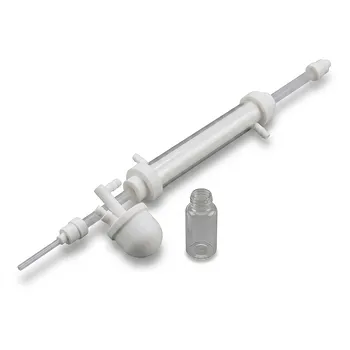
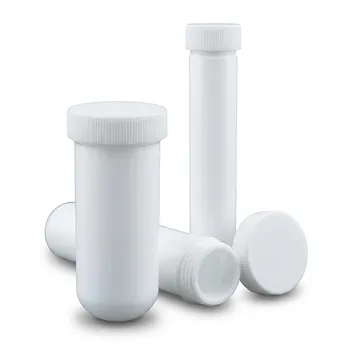
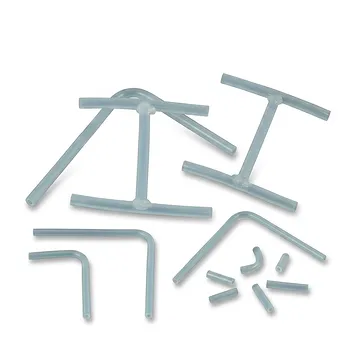
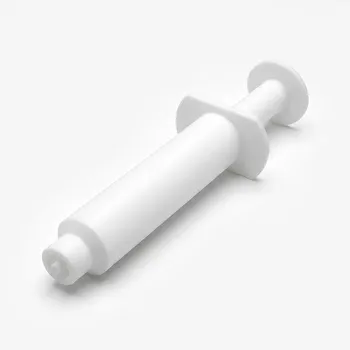
Ensure total production purity with KINTEK’s high-performance fluoropolymer solutions. From everyday basic labware (beakers, measuring cylinders, crucibles, dishes, reagent/wash bottles, centrifuge and digestion tubes) and fluid transfer components (tubing, fittings, valves) to advanced reaction apparatus like custom electrochemical cells, battery testing fixtures, and microwave digestion vessels, KINTEK manufactures virtually all imaginable laboratory supplies crafted from PTFE and PFA.
Backed by end-to-end custom CNC fabrication, we are equipped to deliver everything from complex non-standard machined parts to high-volume orders, maintaining an absolute focus on high-performance materials. Whether you need sample prep tools (filters, pipettes, tweezers) or general consumables (O-rings, gaskets, seal tapes), our expertise safeguards your workflow against contamination.
Contact our experts today to discuss your bespoke laboratory setup and discover the KINTEK advantage.
Related Products
- Custom High Purity PTFE Digestion Tubes and Centrifuge Tubes for Trace Metal Analysis
- High Purity PTFE Digestion Tubes and Custom Centrifuge Tubes 100ml for Trace Analysis and Chemical Digestion
- Corrosion Resistant PTFE Digestion Tubes for Graphite Block Systems with Acid Reflux Caps Custom Dimensions
- Custom PTFE Digestion Tube Double Sided Openable High Temperature Corrosion Resistant Low Background
- Custom PTFE Condenser Tube 100ml Serpentine and Straight Fluoropolymer Laboratory Heat Exchanger with Flask Adapters
People Also Ask
- What are the common capacities and physical configurations available for PTFE digestion tubes? Expert Selection Guide
- How do PTFE digestion tubes minimize contamination during ultra-trace elemental analysis? Achieve high-purity results.
- What is the primary function of PTFE digestion tubes in a laboratory setting? Essential for Pure Sample Mineralization
- How do PTFE digestion tubes assist in pharmaceutical and biological sample preparation? Ensure High Recovery & Purity
- How does the synergy of pressure and temperature within a PTFE digestion tube improve digestion efficiency? Accelerate Sample Prep