PFA is the better choice when thermal margin and mechanical durability are critical; FEP is often the more economical choice for moderate-temperature chemical handling. Both are melt-processable fluoropolymers with excellent chemical resistance, but PFA supports continuous service temperatures up to approximately 260°C (500°F) versus about 200–204°C (400°F) for FEP. PFA also provides higher tensile strength—approximately 4,500 psi versus 3,000 psi—and better flexural endurance, while FEP generally offers attractive clarity and lower material cost.
Core takeaway: Choose PFA for high-temperature, mechanically demanding, or critical fluid-handling systems. Choose FEP when operating temperatures remain moderate and transparency, adequate chemical resistance, and cost control are more important.
How the Thermal Difference Affects Material Selection
PFA preserves performance at higher temperatures
PFA has a maximum continuous operating temperature of approximately 260°C (500°F). This gives it substantially more thermal margin for hot acid transfer, digestion, sterilization, and elevated-temperature sample preparation.
PFA’s high-temperature capability is comparable to that of PTFE while retaining the processing advantages of a melt-processible thermoplastic.
FEP is suitable for moderate-temperature service
FEP typically supports continuous operation up to approximately 200–204°C (400°F). That is sufficient for many laboratory tubing, fittings, containers, and chemical-transfer applications.
However, FEP’s mechanical properties decline more rapidly as temperature approaches its upper service limit. A component that is adequate at room temperature may become more prone to deformation under load when operated near 200°C.
Thermal margin matters more than the nominal rating
The maximum temperature rating should not be treated as the normal design temperature. Pressure, exposure time, mechanical loading, thermal cycling, and the specific chemical environment can all reduce practical operating limits.
PFA is often justified not merely because the process reaches 260°C, but because it provides a larger safety margin against creep, distortion, and loss of dimensional stability.
How the Mechanical Difference Affects Fluid Components
PFA offers higher tensile strength
The cited tensile strengths are approximately:
- PFA: 4,500 psi
- FEP: 3,000 psi
This gives PFA greater resistance to tensile loading, deformation, and damage during installation or operation.
The difference is particularly relevant for tubing, fittings, vessels, and components exposed to pressure, mechanical restraint, or thermal expansion.
PFA provides better flexural endurance
PFA generally tolerates repeated bending and flexing better than FEP. This makes it more suitable for fluid lines that experience movement, vibration, thermal cycling, or repeated handling.
FEP remains useful where flexibility requirements are modest and the component is not exposed to severe mechanical cycling.
High temperature amplifies the mechanical gap
The mechanical distinction becomes more important at elevated temperature. Both materials soften relative to their room-temperature condition, but FEP loses useful mechanical strength sooner as it approaches its continuous-service limit.
PFA therefore provides better resistance to sagging, creep, and dimensional change in hot, loaded components.
Why FEP May Still Be the Better Practical Choice
FEP can provide strong visual clarity
FEP is commonly selected when users need to observe fluid movement, detect bubbles, inspect contamination, or verify a process visually. This can be valuable in laboratory and analytical fluid systems.
If the application is transparent, chemically resistant, and operates well below FEP’s temperature limit, PFA’s additional thermal capability may not deliver enough practical benefit to justify its use.
FEP can reduce material cost
FEP is generally chosen for moderate-temperature applications where its performance is adequate and controlling material cost is important.
The lower cost can be meaningful across long tubing runs, disposable or frequently replaced components, and systems that do not require PFA’s high-temperature or mechanical margin.
FEP remains chemically capable
Both FEP and PFA are highly chemically resistant fluoropolymers. The selection should therefore focus primarily on temperature, mechanical loading, fabrication requirements, visibility, and cost, rather than assuming that PFA is always necessary for chemical compatibility alone.
Actual compatibility must still be checked against the specific chemical, concentration, temperature, pressure, and exposure duration.
Understanding the Trade-offs
PFA trades cost for performance margin
PFA’s higher thermal rating and improved mechanical performance usually come with a higher material cost. For a low-temperature system, that added capability may be unnecessary.
Using PFA where FEP already satisfies the design requirements can increase procurement cost without improving process reliability.
FEP trades thermal margin for economy and visibility
FEP is more vulnerable to mechanical-property loss near its upper temperature range. It may also be less suitable for sustained loads, pressure, or repeated flexing at elevated temperature.
Its advantages are strongest when the system operates at moderate temperatures and benefits from transparency and lower cost.
Do not select by temperature alone
A fluid line operating below 200°C may still require PFA if it is pressurized, mechanically constrained, repeatedly flexed, or exposed to significant thermal cycling.
Conversely, a static, low-stress component may not require PFA even if occasional short-duration temperature excursions occur. The complete load and duty cycle must be evaluated.
Do not confuse melt-processability with identical performance
Both materials can be melt-processed into tubing, fittings, containers, and custom shapes. However, shared manufacturability does not mean they have the same continuous-use temperature or mechanical endurance.
PFA combines melt-processability with a thermal range closer to PTFE, while FEP offers easier justification when moderate-temperature service is the real requirement.
Making the Right Choice for Your Goal
The correct choice depends on the most demanding combination of temperature, stress, cycling, visibility, and cost.
- If your primary focus is maximum temperature capability: Choose PFA, especially for continuous operation approaching 260°C or for processes requiring substantial thermal margin.
- If your primary focus is mechanical durability under heat: Choose PFA for better tensile strength, flexural endurance, and resistance to deformation.
- If your primary focus is visual inspection: Choose FEP when its clarity supports process monitoring and the application remains within its approximately 200–204°C continuous-use range.
- If your primary focus is material cost: Choose FEP when temperature, pressure, flexing, and thermal cycling are moderate enough that PFA’s additional performance is not required.
- If your primary focus is hot acid transfer or digestion: Choose PFA because these applications combine elevated temperature with demanding chemical and mechanical conditions.
Select FEP when its performance envelope comfortably covers the application; select PFA when temperature and mechanical margin are central to reliability.
Summary Table:
| Property | PFA | FEP |
|---|---|---|
| Continuous Service Temperature | ~260°C (500°F) | ~200–204°C (400°F) |
| Tensile Strength | ~4,500 psi | ~3,000 psi |
| Flexural Endurance | Higher | Lower |
| Visual Clarity | Lower | Higher |
| Relative Cost | Higher | Lower |
| Best For | High temp, mechanical stress | Moderate temp, cost-sensitive, visibility |
Need expert guidance on selecting the right fluoropolymer for your fluid handling system? Contact KINTEK today to discuss your application requirements. As a leading manufacturer of high-performance PTFE and PFA labware, we offer a comprehensive range of products—from tubing and fittings to custom machined parts—all engineered to deliver superior performance and reliability. Our team can help you weigh the trade-offs between PFA and FEP to ensure optimal safety, efficiency, and cost-effectiveness. Get in touch with our specialists and let's optimize your lab's performance together.
Related Products
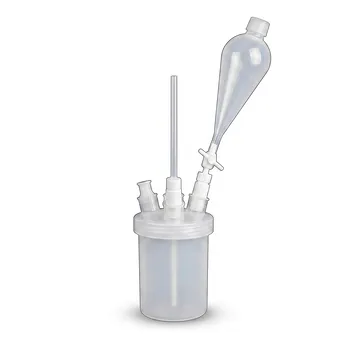
- Transparent PFA Thermometer Sleeve with Custom Stopper for Hydrogen Fluoride Condensing Systems Corrosion Resistant
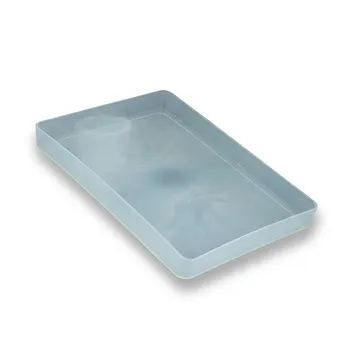
- Customizable PFA Square Tray Corrosion Resistant High Temperature Large Petri Dish Electrolytic Cell
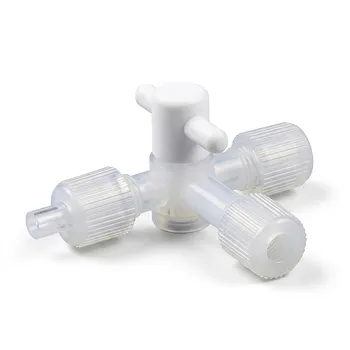
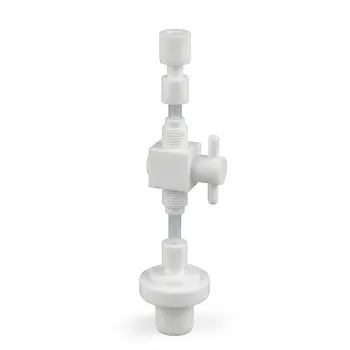
- Corrosion Resistant High Purity PFA Valve and Weldable Transparent Tubing for Semiconductor Fluid Transfer
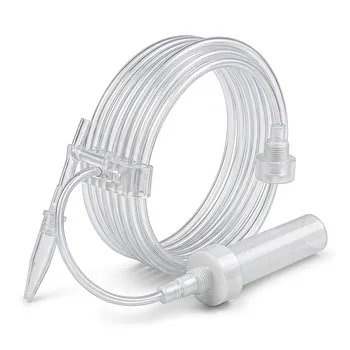
- Custom PFA Tubing 1/4 Inch High Purity Corrosion Resistant Fluoropolymer Tube with Welding and Machining Services
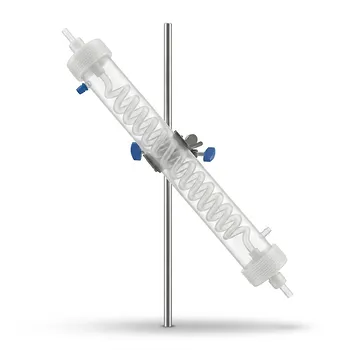
- High Purity PFA Chromatography Column with Collection Bottle Corrosion Resistant Fluoropolymer Filtration System for Trace Analysis
People Also Ask
- What fundamental properties of fluoropolymers make them ideal for lining chemical processing equipment, fittings, and laboratory reaction vessels? Discover key benefits for superior chemical resistance and purity.
- What is the function of high-purity PTFE or PFA liners in hydrothermal synthesis? Ensure Purity & Vessel Longevity
- Why is the use of high-quality PTFE or PFA liners critical for core-shell zeolite synthesis? Ensure Catalyst Purity
- What is the function of high-performance PTFE or PFA liners in hydrothermal synthesis? Ensure Purity & Safety
- Function of PTFE/PFA Liners in POM Synthesis? Ensure Chemical Purity and Reactor Protection