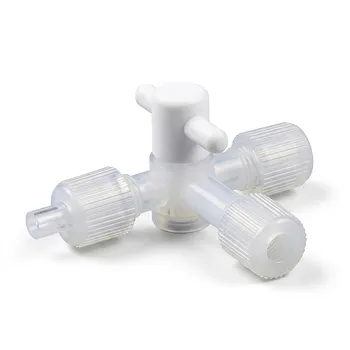
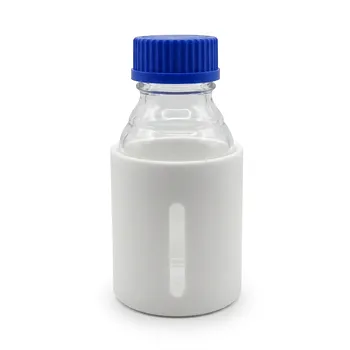
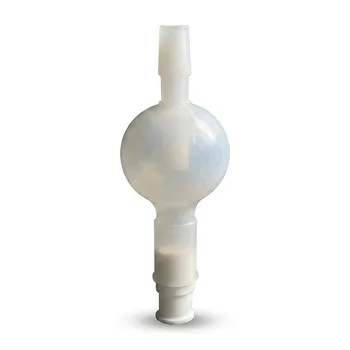
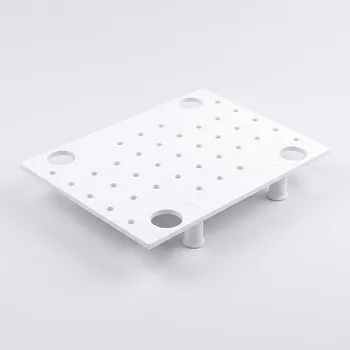
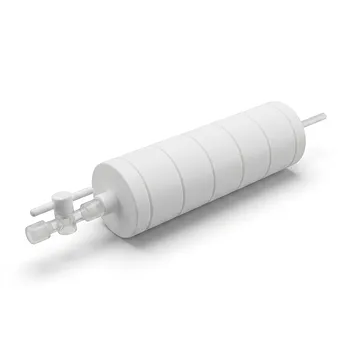
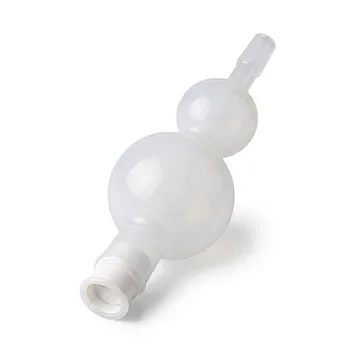
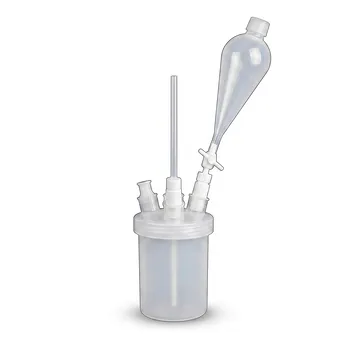
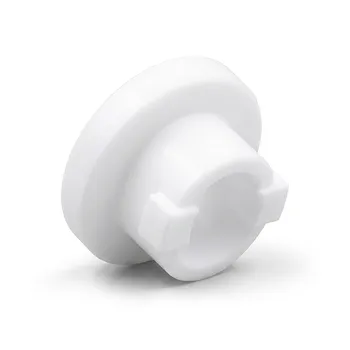
Fluoropolymers are ideal linings because they combine exceptional chemical inertness, thermal stability, and extremely low surface energy. Materials such as PTFE and PFA resist attack from strong acids, bases, oxidizing agents, and many organic solvents while remaining stable at elevated temperatures. Their nonstick, low-adhesion surfaces also reduce contamination, buildup, and sample loss, making them valuable for chemical processing equipment, fittings, and laboratory reaction vessels.
The key advantage is the combination of chemical resistance, temperature tolerance, and low contamination risk. A fluoropolymer lining creates a chemically stable barrier between aggressive media and the underlying equipment, extending service life while helping preserve reagent and sample purity.
Why Fluoropolymers Resist Chemical Attack
Strong carbon–fluorine bonds
The molecular structure of fluoropolymers is dominated by highly stable carbon–fluorine bonds. These bonds make the polymer backbone difficult for acids, bases, solvents, and oxidizing chemicals to break down.
This exceptional inertness helps prevent corrosion, swelling, embrittlement, and chemical degradation during prolonged exposure to aggressive process media.
Low chemical reactivity
PTFE and PFA generally do not participate readily in chemical reactions with the fluids they contain or transport. This makes them suitable for corrosive chemicals that would attack metals, glass, elastomers, or conventional plastics.
The result is a reliable barrier for pipes, valves, pumps, custom fittings, storage tanks, and reaction vessels.
Resistance to strong acids and solvents
Fluoropolymers are particularly valuable where equipment must handle strong acids, bases, halogenated chemicals, and many organic solvents. Their resistance reduces the need for frequent replacement or protective maintenance.
Compatibility must still be evaluated for the specific polymer, chemical concentration, temperature, pressure, and exposure time.
Why They Protect Purity and Reduce Contamination
Extremely low surface energy
Fluoropolymer surfaces have very low surface energy, which gives them strong nonstick and release characteristics. Many liquids, residues, and reaction products have difficulty wetting or adhering strongly to the surface.
This minimizes buildup inside tubing and vessels and makes equipment easier to drain, clean, and reuse.
Low adsorption and sample retention
Because fluoropolymers resist wetting and adhesion, they can reduce the retention of samples and reagents on vessel walls and fluid-contact surfaces. This is important in trace analysis, digestion procedures, and high-purity chemical handling.
Reduced surface interaction helps limit carryover between processes, although it does not eliminate the need for appropriate cleaning and validation.
Low leaching and absorption
PTFE and PFA have low water and solvent absorption compared with many other polymer classes. When properly selected and processed, they are unlikely to introduce significant extractables or react with sensitive contents.
This supports their use in high-purity fluid transfer, semiconductor processing, reagent storage, and laboratory reaction vessels.
Why They Perform at Elevated Temperatures
High thermal stability
Fluoropolymers maintain useful chemical and structural performance across a broad temperature range. Their resistance to thermal degradation allows them to handle heated reactions, hot corrosive fluids, and demanding cleaning cycles.
The exact operating limit depends on the grade and design. PFA and PTFE should not be treated as interchangeable, and the manufacturer’s temperature-pressure rating remains decisive.
Stability during thermal cycling
Chemical equipment often experiences repeated heating and cooling. Fluoropolymers can tolerate these conditions better than many conventional plastics because their molecular structure resists rapid thermal decomposition.
However, thermal expansion and contraction must be accounted for in lining design, especially where the fluoropolymer is bonded to a metal substrate.
Why They Work Well as Equipment Linings
A chemically resistant barrier
In lined equipment, the fluoropolymer does not necessarily provide the primary mechanical structure. Instead, it forms a chemically resistant wetted barrier over a stronger substrate such as steel or another structural material.
This approach combines the substrate’s mechanical strength with the fluoropolymer’s corrosion resistance.
Protection of fittings and complex flow paths
Fluoropolymer linings are useful in valves, elbows, connectors, and custom fittings because they protect difficult-to-reach internal surfaces from corrosive fluids. This reduces the risk that localized corrosion will compromise the assembly.
Smooth, low-adhesion surfaces can also help reduce deposits and flow restriction.
Compatibility with demanding laboratory vessels
Reaction vessels and digestion containers must resist both the chemical reagent and the operating temperature. PTFE and PFA provide a stable contact surface for aggressive digestion mixtures, high-purity reagents, and trace-level analytical work.
PFA is often selected where melt-processability, transparency, or fabrication flexibility is important, while PTFE is widely valued for its broad chemical resistance and low friction.
Additional Useful Properties
Low friction and wear
Fluoropolymers have a very low coefficient of friction. In moving components such as valve seats, seals, and sliding parts, this can reduce sticking and mechanical wear.
This property is secondary to chemical resistance in many lining applications, but it contributes to reliable operation.
Hydrophobic and oleophobic behavior
Their low surface energy gives fluoropolymers resistance to wetting by both water-based and many oil-based substances. This supports cleanability and reduces residue retention.
The degree of hydrophobicity or lipophobicity varies with surface condition and chemical exposure, so it should be viewed as a practical tendency rather than an absolute barrier.
Electrical insulation and flame resistance
Many fluoropolymers also provide strong electrical insulation and inherent flame resistance. These characteristics can be valuable in semiconductor, instrumentation, and electrically integrated process environments.
They are supporting benefits rather than the primary reason fluoropolymers are chosen for chemical containment.
Understanding the Trade-offs
Mechanical strength and creep
PTFE and related fluoropolymers are chemically robust but generally less stiff and mechanically strong than metals. Under sustained load or elevated temperature, they can undergo creep, or slow deformation.
For this reason, fluoropolymer linings commonly require a mechanically strong backing, proper support, and careful pressure-temperature design.
Permeation and permeability
Chemical resistance does not mean complete impermeability. Some chemicals can slowly permeate fluoropolymer walls or linings, particularly at elevated temperature or pressure.
Permeation should be assessed when handling volatile, toxic, or highly hazardous chemicals.
Thermal expansion
Fluoropolymers expand more than many metal substrates. Repeated thermal cycling can create stresses, gaps, or mechanical issues if the lining system is not designed to accommodate differential expansion.
Processing and fabrication limitations
PTFE has excellent chemical resistance but is difficult to melt-process compared with PFA. PFA offers greater fabrication flexibility, but material selection still depends on temperature, mechanical, purity, and regulatory requirements.
No fluoropolymer is universally compatible with every chemical or operating condition.
Making the Right Choice for Your Goal
The correct material depends on the chemical medium, temperature, pressure, purity requirement, geometry, and expected service life.
- If your primary focus is corrosion resistance: Use a properly specified PTFE or PFA lining to isolate aggressive acids, bases, oxidizers, and solvents from the structural equipment.
- If your primary focus is sample purity: Prioritize low-extractables, low-adsorption fluoropolymer grades and validated cleaning procedures.
- If your primary focus is high-temperature processing: Select the fluoropolymer grade and lining design according to the actual temperature-pressure envelope, including thermal cycling.
- If your primary focus is complex fittings or fabrication: Consider PFA where melt-processability, weldability, or transparent inspection is valuable.
- If your primary focus is long service life: Evaluate creep, permeation, thermal expansion, mechanical support, and chemical compatibility together rather than relying on chemical resistance alone.
Fluoropolymers are most effective when their chemical inertness, thermal stability, and low surface energy are matched to a properly engineered equipment design.
Summary Table:
| Property | Benefit |
|---|---|
| Strong carbon-fluorine bonds | Exceptional resistance to acids, bases, solvents, and oxidizers |
| Low surface energy | Nonstick, easy to clean, reduces buildup and contamination |
| High thermal stability | Operates at elevated temperatures, withstands thermal cycling |
| Low adsorption and leaching | Minimizes sample retention and extractables for high-purity applications |
| Low friction and wear | Reduces sticking and mechanical wear in moving parts |
| Hydrophobic and oleophobic | Resist wetting and clean easily |
| Electrical insulation and flame resistance | Valuable in sensitive environments |
| Trade-offs | Creep, permeation, thermal expansion, and fabrication constraints require careful design |
Ready to Enhance Your Equipment with Fluoropolymer Linings?
At KINTEK, we specialize in high-performance PTFE and PFA products, from laboratory ware to custom-machined parts. Our materials deliver exceptional chemical resistance, thermal stability, and purity, ensuring your operations run smoothly and safely. Whether you need corrosion-resistant linings, high-purity vessels, or custom fittings, our expert team is here to help.
Contact us today to discuss your requirements and discover how our solutions can extend equipment life, reduce contamination, and boost productivity. Let's engineer a solution that meets your exact needs.
Related Products
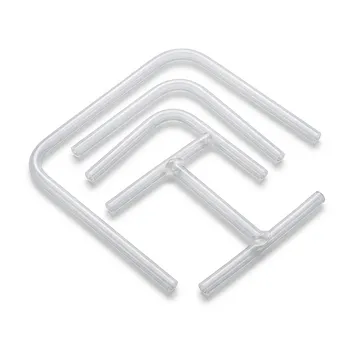
- High Purity PFA Coiled Tubing Custom PTFE Machining PFA Welding and Precision Bending Solutions
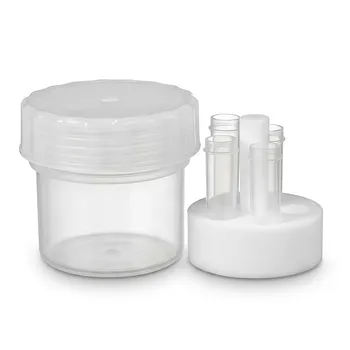
- Corrosion Resistant PTFE Support with PFA Transparent Reaction Tank and High Purity PFA Sampling Tube for Trace Analysis
- PTFE PFA Vacuum Filtration System Corrosion Resistant Customizable Shatterproof Laboratory Device
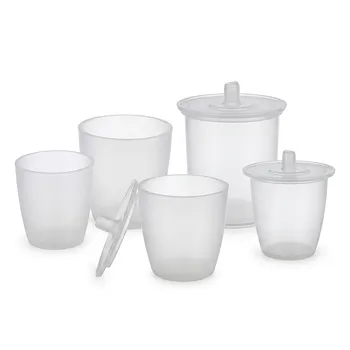
- High Purity PFA Crucible and Corrosion Resistant PTFE Beaker for Trace Analysis and Custom Laboratory Applications
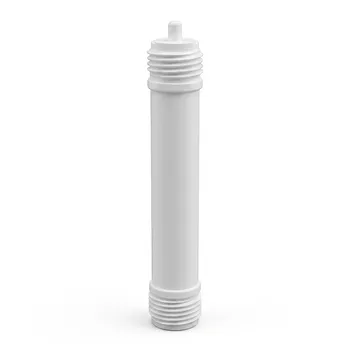
- High Purity PTFE Microwave Digestion Vessel for Soil and Food Analysis Acid Resistant Fluoropolymer Sample Preparation Liners
People Also Ask
- How does die design and core pin arrangement impact PTFE tubing accuracy?
- How has the elimination of ammonium perfluorooctanoate impacted the manufacturing and safety profile of fluoropolymer products? Key changes and what they mean for you
- What are the technical advantages of high-precision PFA tubing in MXene production? Maximize Purity and Yield.
- PTFE vs PFA: High-Temperature & Mechanical Comparison
- PTFE vs PFA: What are the key thermal and processing differences for lab apparatus?