The elimination of ammonium perfluorooctanoate (APFO) changed how fluoropolymers are manufactured without fundamentally changing what makes them useful. APFO, also known as PFOA or “C8” in this manufacturing context, was historically used as a processing surfactant during the aqueous polymerization of PTFE, PFA, and FEP. Because of its environmental persistence and bioaccumulation concerns, manufacturers phased it out and adopted alternative polymerization aids, allowing modern fluoropolymer products to retain their chemical inertness and high-temperature performance while reducing the risk of legacy surfactant residues.
The main impact was a change in polymerization chemistry and quality-control requirements, not a loss of product performance. Modern C8-free fluoropolymers generally provide a cleaner environmental and safety profile, although replacement surfactants must also be evaluated rather than assumed to be risk-free.
Why APFO Was Removed From Fluoropolymer Manufacturing
APFO's role in polymerization
APFO helped stabilize fluoropolymer particles during aqueous emulsion polymerization. This process was important for producing materials such as PTFE, PFA, and FEP with the properties required for laboratory, chemical-processing, and semiconductor applications.
The compound was primarily a manufacturing aid, rather than a structural ingredient intended to remain in the finished polymer.
Persistence and bioaccumulation concerns
APFO and related long-chain perfluorinated substances raised concern because they can persist in the environment and may accumulate in biological systems. These characteristics led regulators and manufacturers to restrict or eliminate their use.
The resulting phaseout was driven by the need to reduce emissions, worker exposure, environmental releases, and residual contamination associated with legacy C8 chemistry.
How Manufacturing Changed
Replacement surfactants and process redesign
Manufacturers transitioned to C8-free or shorter-chain polymerization technologies, including alternative surfactants and related process aids. Some replacement systems are commonly associated with GenX-type chemistry, although the exact formulation varies by manufacturer and product family.
This change required more than substituting one chemical for another. Polymerization conditions, dispersion stability, particle formation, purification, and waste-control procedures had to be revalidated.
Additional purification and residue control
The transition increased the importance of controlling residual processing aids in the resin and finished product. Manufacturers use process controls, washing, finishing, thermal treatment, and analytical testing to reduce unwanted chemical residues.
For solid products such as machined labware, tubing, fittings, and digestion vessels, downstream finishing generally removes most residual polymerization aids. The relevant safety question is therefore not only which surfactant was used, but also how effectively the material was purified and tested.
More demanding supply-chain documentation
Customers purchasing high-purity fluoropolymers increasingly require evidence that products are manufactured without legacy APFO or related substances. This has placed greater emphasis on supplier declarations, resin traceability, extractables testing, and regulatory documentation.
For critical applications, a specification stating “PTFE” or “PFA” alone may not fully describe the material's contamination profile. The manufacturing route and quality controls also matter.
What Changed in the Safety Profile
Lower concern about legacy C8 residues
The elimination of APFO reduces the likelihood that modern fluoropolymer products are associated with intentional use of that legacy processing aid. This is particularly relevant to trace-analysis vessels, digestion tubes, fluid fittings, and semiconductor components, where background contamination can affect results or process integrity.
Cleaner raw materials and controlled finishing can also help reduce hazardous chemical residues and extractable contaminants in sensitive workflows.
Chemical inertness remains largely intact
APFO was used during processing and is not what gives PTFE or PFA their characteristic resistance to acids, solvents, bases, and elevated temperatures. Consequently, removing APFO did not inherently eliminate the core performance properties of the finished fluoropolymer.
Modern products can therefore continue to provide the low reactivity, thermal stability, and low extractables expected from high-purity fluoropolymer components.
Safety is application-dependent
The phaseout improves the profile concerning APFO-related environmental and residue risks, but it does not make every fluoropolymer product universally risk-free. Safety still depends on temperature, chemical exposure, mechanical condition, cleanliness, and the specific grade and manufacturing history.
A fluoropolymer component can be chemically inert in one application while still requiring careful evaluation in another, especially where extreme temperatures, reactive chemicals, or ultra-trace analysis are involved.
Why This Matters for Laboratory and Industrial Users
Trace analysis requires low background contamination
In analytical laboratories, even small amounts of extractable material can interfere with measurements. C8-free manufacturing and improved purification help reduce the possibility that legacy surfactant residues contribute to analytical background.
This is important for vessels, tubing, wash bottles, and fittings used in trace-metal analysis, digestion, and high-purity fluid handling.
Semiconductor processing has strict purity requirements
Semiconductor manufacturing depends on controlling contamination at very low levels. Fluoropolymer components manufactured with modern surfactant systems and validated finishing processes can support those requirements more reliably than materials associated with uncontrolled legacy residues.
Procurement teams should still review the supplier's actual purity data rather than relying only on a generic material designation.
Performance continuity reduces operational disruption
The industry was able to replace APFO without abandoning PTFE, PFA, or FEP. This allowed laboratories and manufacturers to preserve established equipment designs, chemical-resistance expectations, and temperature limits.
The practical result was a manufacturing transition with limited impact on the intended performance envelope of well-qualified products.
Understanding the Trade-offs
Replacement chemicals require independent evaluation
“C8-free” does not mean “free of all environmental concern.” Some replacement surfactants, including GenX-related substances, have also received regulatory and scientific scrutiny.
Manufacturers must evaluate the full life cycle of the replacement chemistry, including emissions, worker exposure, persistence, degradation products, and residual levels in finished materials.
Product claims can be narrower than they appear
A claim that a product is manufactured without APFO may not specify whether it is free of all PFAS-related substances, whether it contains measurable extractables, or which replacement technology was used.
Users with stringent contamination limits should request a precise material declaration and relevant extractables or leachables data.
Dispersion products and solid products differ
The amount of residual processing aid can depend heavily on the product form. Finished solid fluoropolymer products typically undergo additional processing that can remove much of the residual surfactant, while some dispersion-based products may require different controls and assessment.
Safety conclusions should therefore be based on the specific product, grade, and manufacturing process, not on the polymer family alone.
Regulatory compliance does not replace qualification
A compliant material can still be unsuitable for a particular chemical, temperature, or analytical method. Users should verify compatibility, cleanliness, extractables, and performance under actual operating conditions.
Making the Right Choice for Your Goal
Select products based on both their fluoropolymer properties and the controls used to manage processing residues.
- If your primary focus is environmental compliance: Specify APFO- or PFOA-free manufacturing and request documentation identifying the replacement polymerization technology and applicable regulatory status.
- If your primary focus is trace analytical accuracy: Prioritize high-purity grades supported by extractables, leachables, and background-contamination data for the intended analytical workflow.
- If your primary focus is chemical and thermal performance: Confirm the product's grade-specific temperature limits, chemical compatibility, and mechanical requirements; APFO elimination does not by itself change the core performance of PTFE or PFA.
- If your primary focus is semiconductor or ultra-high-purity processing: Require resin traceability, controlled manufacturing, cleaning validation, and supplier data for ionic, organic, and particulate contamination.
- If your primary focus is worker and product safety: Evaluate the entire manufacturing and use profile, including replacement surfactants, residual levels, operating conditions, and end-of-life handling.
The phaseout of APFO made fluoropolymer manufacturing more controlled and environmentally responsible while preserving the performance that makes these materials valuable.
Summary Table:
| Aspect | Impact of APFO Elimination |
|---|---|
| Manufacturing Process | Shift to alternative surfactants, process redesign, and enhanced purification to control residues. |
| Product Performance | No fundamental change in chemical inertness, thermal stability, or mechanical properties of PTFE/PFA. |
| Safety Profile | Reduced concern about legacy C8 residues; replacement surfactants require separate evaluation. |
| Quality Control | Increased importance of residue testing, extractables data, and supplier documentation. |
| Regulatory Compliance | APFO-free status may not imply PFAS-free; regulatory status varies by region and product. |
| Application Considerations | High-purity grades for trace analysis, semiconductor, and chemical processing require specific data. |
Need high-performance fluoropolymer labware and components that meet modern safety and purity standards? At KINTEK, we exclusively use high-quality PTFE and PFA, manufactured without legacy APFO. Our products—from basic labware to advanced reaction apparatus—are designed for demanding applications, ensuring low extractables and reliable performance. Whether you're in analytical chemistry, semiconductor processing, or fluid handling, we have the right solution. Contact us today to discuss your specific requirements and let us help you choose the ideal fluoropolymer products for your lab. Get in touch with our experts.
Related Products
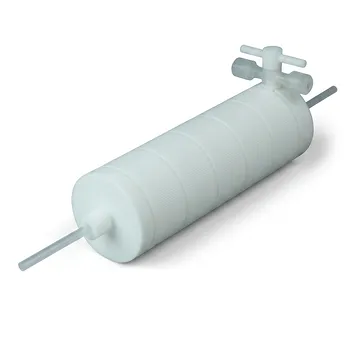
- High Purity PTFE Filter with PFA Valve Connections and Integrated Sieve Plate for Corrosive Fluid Processing
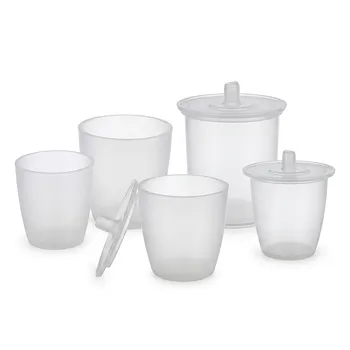
- High Purity PFA Crucible and Corrosion Resistant PTFE Beaker for Trace Analysis and Custom Laboratory Applications
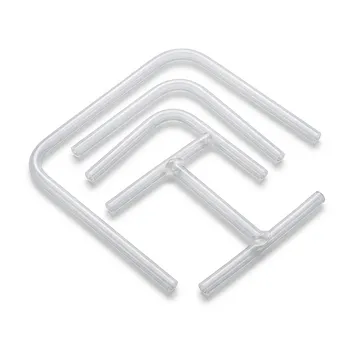
- High Purity PFA Coiled Tubing Custom PTFE Machining PFA Welding and Precision Bending Solutions
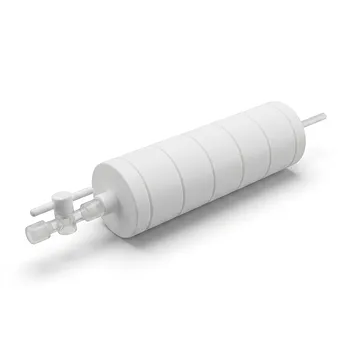
- PTFE Corrosion Resistant Filter with PFA Valve Connections and Integrated Sieve Plate
- Custom PFA Reaction Bottles High Purity PTFE Reaction Vessels Corrosion Resistant Petrochemical Containers
People Also Ask
- Which chemicals are fully compatible with PTFE filters? Discover Unmatched Chemical Resistance
- What sizes and pore options are available for PTFE filters? Choose the Right Filter for Your Application
- What steps are involved in selecting the proper PTFE filter? A 4-Step Guide to Optimal Filtration
- What temperature resistance do PTFE filters offer? Unmatched Thermal Stability from -200°C to +260°C
- How does the hydrophobicity of PTFE filters benefit their use? Ensure Uninterrupted Gas Flow and Solvent Filtration