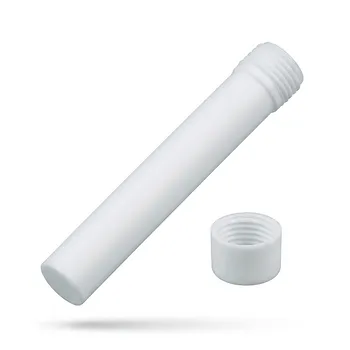
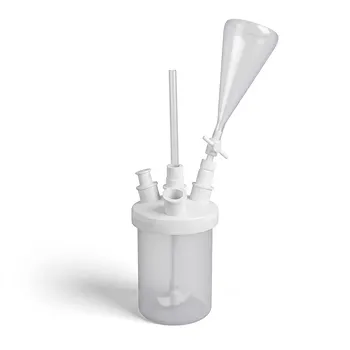
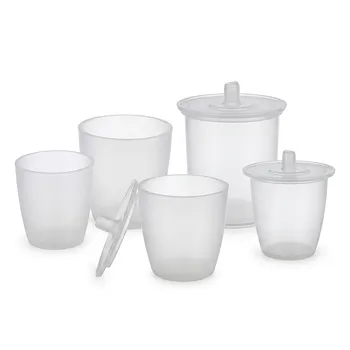
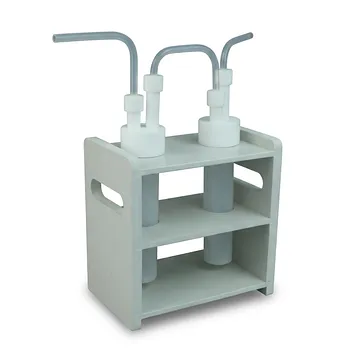
High-purity PTFE and PFA liners function as the primary chemical barrier and reaction vessel within a hydrothermal autoclave. These liners are engineered to withstand the extreme pressures and temperatures of synthesis while remaining chemically inert to aggressive acids and bases. Their core purpose is to prevent the introduction of impurities into the sample and protect the structural integrity of the outer metal vessel from corrosion.
The use of PTFE or PFA liners is essential for maintaining a high-purity, non-reactive environment that isolates the synthesis process from metal contaminants. This isolation ensures the structural and chemical consistency of advanced nanomaterials while extending the operational lifespan of the autoclave hardware.
Protecting the Integrity of the Reaction Environment
Chemical Inertness and Corrosion Resistance
High-purity polymers like Polytetrafluoroethylene (PTFE) and Perfluoroalkoxy (PFA) are chosen for their extraordinary resistance to chemical attack. During hydrothermal synthesis, reactants often include strong acids, bases, or organic solvents that would rapidly degrade most materials. These liners provide a stable, non-reactive surface that ensures the chemistry of the reaction remains focused solely on the intended precursors.
Prevention of Metal Ion Contamination
In a standard hydrothermal setup, the outer shell is typically constructed from high-strength stainless steel to handle pressure. The liner acts as a critical insulation layer, preventing the reaction liquid from interacting with this metal body. By isolating the reaction, the liner eliminates the risk of metal ion leaching, which is vital when synthesizing sensitive materials like quantum dots or single crystals.
Enhancing Synthesis Outcomes and Material Purity
Ensuring Low Impurity Leaching
The "high-purity" designation of these liners refers to their extremely low rates of impurity leaching. Because these polymers do not shed atoms or molecules into the solution, they maintain a "clean-room" environment within the vessel. This level of control is mandatory for preparing high-performance nanomaterials where even trace contaminants could alter morphology or functional properties.
Facilitating Product Recovery and Morphology
The inherently non-stick surface of PTFE and PFA prevents synthesized micro- and nano-powders from adhering to the vessel walls. This characteristic not only maximizes the yield of the recovered material but also ensures that crystal growth occurs uniformly in the bulk solution rather than on the container surface. This leads to more consistent particle sizes and uniform material morphology.
Understanding the Trade-offs and Limitations
Temperature and Pressure Constraints
While highly durable, PTFE liners have a definitive thermal ceiling, typically around 220°C. Exceeding these temperatures can cause the polymer to soften or deform, compromising the seal and potentially leading to vessel failure. Users must carefully match their thermal requirements with the specific grade of polymer liner to avoid mechanical deformation.
Physical Wear and Memory Effects
Repeated exposure to high-pressure cycles can lead to "creep" or permanent deformation of the liner over time. Additionally, certain organic molecules may be absorbed into the polymer matrix, leading to cross-contamination between different synthesis batches. Regular inspection for pitting, discoloration, or deformation is necessary to maintain the integrity of the synthesis environment.
Applying This to Your Research Goals
How to Choose the Right Liner for Your Project
Selecting the appropriate liner material depends heavily on the specific thermal and chemical requirements of your synthesis process.
- If your primary focus is standard nanomaterial synthesis below 220°C: Use PTFE liners for their excellent balance of chemical resistance, non-stick properties, and cost-effectiveness.
- If your primary focus is ultra-high purity or specialized single-crystal growth: Opt for high-purity PFA liners, which often offer superior clarity and even lower leaching profiles for sensitive electronic or optical materials.
- If your primary focus is high-temperature reactions exceeding 250°C: Consider alternative liner materials like PPL (Para-polyphenylene), as standard PTFE and PFA will fail structurally at these elevated temperatures.
By isolating the reaction from the autoclave’s metal shell, these liners serve as the definitive safeguard for material purity and equipment longevity.
Summary Table:
| Feature | PTFE Liners | PFA Liners | PPL Liners |
|---|---|---|---|
| Max Operating Temp | ~220°C | ~220°C - 260°C | Up to 280°C |
| Chemical Resistance | Excellent (Acids/Bases) | Superior (Ultra-Pure) | High |
| Contamination Risk | Very Low | Minimal (Lowest Leaching) | Low |
| Surface Property | Non-stick | Non-stick & High Clarity | Hardened Surface |
| Best Application | Standard Nanomaterials | Electronics & Optics | High-Temp Synthesis |
Elevate Your Lab’s Precision with KINTEK Fluoropolymer Excellence
Don’t let trace contaminants compromise your advanced material research. KINTEK specializes in the end-to-end custom CNC fabrication of high-performance fluoropolymer labware, ensuring your synthesis environment remains pristine and protected.
From everyday essentials like beakers, crucibles, and reagent bottles to specialized high-purity PTFE and PFA liners, we provide the critical barriers needed for successful hydrothermal synthesis. Our expertise extends to comprehensive fluid transfer components (tubing, valves), filtration tools, and advanced reaction apparatus, including electrochemical cells, battery testing fixtures, and custom microwave digestion vessels.
Whether you require complex non-standard machined parts or high-volume orders of standard consumables (O-rings, gaskets, stirring bars), KINTEK delivers unmatched durability and purity.
Ready to optimize your synthesis outcomes? Contact us today for bespoke laboratory setups and expert material guidance!
References
- Melena Groß, Hans‐Jürgen Meyer. Hydrothermal Synthesis and Characterization of the Melamine‐Based Second‐Harmonic Generation Material HgCl<sub>2</sub>(C<sub>3</sub>N<sub>6</sub>H<sub>6</sub>). DOI: 10.1002/ejic.202500256
This article is also based on technical information from Kintek Knowledge Base .
Related Products
- PTFE Lined High Pressure Digestion Vessel 50ml High Temperature Hydrothermal Synthesis Tank
- Custom TFM Reaction Vessel with Stainless Steel Jacket and PTFE Inner Cup for High Corrosion Resistance
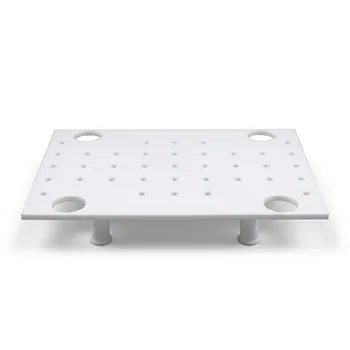
- Custom PTFE Acid Resistant Support Rack for PFA Hydrogen Absorption Systems Multi Hole Configurations
- High Purity PTFE Microwave Digestion Vessel for Soil and Food Analysis Acid Resistant Fluoropolymer Sample Preparation Liners
- High Purity PTFE Microwave Digestion Vessel Replacement Liner for Acid Sample Preparation and Trace Analysis
People Also Ask
- What are the benefits of using a PTFE-lined vessel for carbon-sulfur cathode treatment? Maximize Purity & Performance
- Why are PTFE-lined pressure digestion vessels required for the preparation of Ag/CeO2 catalysts? Purity & Performance
- What is the function of high-pressure PTFE digestion vessels in mineral analysis? Optimize Sample Mineralization
- What safety features are typically incorporated into high-pressure PTFE digestion vessel designs? Ensure Lab Safety
- What is the function of PTFE lined high-pressure vessels in g-C3N4 synthesis? Achieve High-Purity Material Growth