Keeping fine powder PTFE below 19°C is critical because this temperature marks a crystalline phase transition that makes the resin vulnerable to mechanical damage. Above approximately 19°C, the resin changes from a triclinic to a hexagonal lattice, becomes softer, and can fibrillate when exposed to ordinary friction, shear, vibration, or particle contact. That premature fibrillation damages the powder before processing and can cause leaks, weak points, and pressure-related failures in finished laboratory tubing and fluid-transfer components.
The 19°C threshold is a material-integrity limit, not merely a storage preference. Keeping the resin below it preserves the original particle morphology so controlled fibrillation occurs during paste extrusion, where it contributes to product strength rather than creating defects.
What Changes at 19°C
The crystalline phase transition
Fine powder PTFE homopolymers undergo a crystalline transition at approximately 19°C (66°F). Below this point, the particles retain a relatively stable structure that is more resistant to mechanical fibrillation during normal storage and handling.
Above the transition, the lattice becomes less tightly packed and the resin softens. This change increases the particles' sensitivity to mechanical forces that would otherwise be harmless.
Why temperature affects handling sensitivity
The transition does not mean that the resin immediately fails at 19°C. It means that the margin against damage becomes much smaller.
Particle-to-particle contact, drum movement, scooping, screening, vibration, and transportation can generate enough friction or shear to pull polymer fibrils from the particle surfaces. The warmer the resin and the more aggressive the handling, the greater the risk.
How Premature Fibrillation Damages the Resin
Fibrillation must occur at the right stage
In PTFE paste extrusion, fibrillation is a controlled processing mechanism. The resin is expected to develop a uniform fibril network under carefully controlled conditions.
When fibrillation occurs during storage or transfer, it happens before the resin has been properly blended, lubricated, and formed. The resulting powder no longer has the original particle morphology required for consistent processing.
Formation of abused particles and agglomerates
Prematurely fibrillated material is often described as abused resin. Damaged particles may form hard agglomerates or microscopic tangles that do not disperse and fibrillate correctly during subsequent processing.
These changes are effectively irreversible through ordinary handling. Screening or blending cannot reliably restore the original discrete-powder structure.
Processing consequences
Damaged resin can exhibit impaired flow and inconsistent lubricant distribution. During paste extrusion, this may produce excessively high extrusion pressures, unstable processing, and nonuniform consolidation.
The problem may not be visible as a major defect in the raw powder. Its impact can emerge later as variation in dimensions, density, surface quality, or mechanical performance.
Why High-Purity Laboratory Components Are Especially Sensitive
Small defects can become leak paths
Laboratory tubing and fluid-transfer components often carry corrosive, reactive, high-purity, or pressure-sensitive fluids. A localized structural flaw can become a pinhole, crack initiator, or leak path.
Because PTFE components are frequently used where contamination control is important, a failure may compromise both the process and the material being handled.
Pressure exposes weak regions
A uniform fibril structure helps distribute mechanical loads through the finished fluoropolymer. Irregular fibrillation creates localized weak points that can reduce tensile strength and pressure resistance.
A component may pass basic visual inspection yet fail prematurely when exposed to repeated pressure, bending, thermal cycling, or chemical service.
Surface and dimensional consistency matter
High-purity components require predictable internal surfaces, wall thickness, and flow behavior. Resin with altered morphology is more likely to produce nonuniform structures and process variation.
For precision tubing, fittings, vessels, and machined blanks, protecting the raw resin is therefore part of controlling the finished product's quality.
How Refrigerated Storage Protects Resin Quality
Maintain a margin below the transition
Storage and transport should remain below 19°C throughout the material's temperature history, including loading, staging, shipment, and production-floor handling.
A practical operating margin is commonly used rather than storing exactly at the transition point. Conditions below approximately 15°C (60°F) provide additional protection, while some applications or supplier specifications may require colder storage.
Control mechanical handling as well as temperature
Temperature control alone does not eliminate risk. Once the resin is warm, rough handling can cause damage more easily.
Use gentle transfer methods and avoid unnecessary impact, sharp scoops, aggressive agitation, unverified screening, and excessive vibration. Handling procedures should be consistent with the resin supplier's instructions.
Protect the cold chain
Temperature excursions can occur during receiving, warehouse staging, or transportation even when the main storage area is refrigerated. The material should be monitored and allowed to equilibrate under controlled conditions before demanding handling or blending operations.
The correct temperature target, packaging method, and maximum exposure time should be defined from the supplier's technical data and validated manufacturing procedures.
Understanding the Trade-offs
Refrigeration adds operational cost
Refrigerated storage requires energy, monitored equipment, maintenance, and procedures for temperature excursions. Transportation may also require insulated or temperature-controlled conditions.
These costs are generally justified when the alternative is scrap, unstable extrusion, product leakage, or failure of a high-value laboratory component.
Colder is not automatically better in every process
The key requirement is preventing the resin from entering the vulnerable phase-transition range during handling. Excessively cold material may require controlled conditioning before processing to prevent condensation or other environmental problems.
The process should therefore specify both a storage limit and an appropriate preparation condition rather than relying on the lowest possible temperature.
Temperature records do not replace handling controls
A resin can remain below 19°C and still be damaged by aggressive mechanical treatment. Receiving inspection, gentle transfer, controlled screening, and operator training remain necessary parts of resin preservation.
Likewise, a brief excursion above the limit should not be treated as harmless without evaluation. The risk depends on the resin temperature, duration, movement, and mechanical forces involved.
The 19°C value is not universal for every PTFE material
The cited transition applies to fine powder PTFE homopolymers and should not automatically be generalized to every fluoropolymer grade. Copolymers, modified resins, and other PTFE forms may have different handling requirements.
The supplier's specification remains the controlling reference for the exact resin being used.
Making the Right Choice for Your Goal
The correct control strategy depends on whether the priority is resin preservation, production consistency, or finished-component reliability.
- If your primary focus is preserving raw-material integrity: Keep fine powder PTFE below 19°C during storage, transport, staging, and handling, with a practical margin such as below 15°C where permitted by the supplier.
- If your primary focus is stable paste extrusion: Protect the original particle morphology and avoid friction, impact, vibration, and aggressive screening before blending.
- If your primary focus is leak-free laboratory tubing: Treat temperature history and handling history as quality variables because premature fibrillation can create hidden structural defects.
- If your primary focus is regulatory or process control: Define temperature limits, excursion response, monitoring, and supplier-specific requirements in documented operating procedures.
Maintaining the resin below its transition temperature preserves the controlled processing behavior needed for reliable, high-purity PTFE components.
Summary Table:
| Aspect | Below 19°C | Above 19°C |
|---|---|---|
| Crystal Structure | Triclinic (stable) | Hexagonal (softens) |
| Sensitivity to Mechanical Forces | Low | High |
| Fibrillation Risk | Minimal | Premature fibrillation |
| Processing Consistency | High | Variable |
| Finished Product Reliability | High | Risk of defects |
Ensure the highest quality and reliability for your laboratory tubing and fluid transfer components with our expertly handled PTFE resins. At KINTEK, we specialize in high-performance fluoropolymers, providing custom CNC machining and a full range of PTFE/PFA laboratory supplies. Contact us today to discuss your specific requirements and how we can help you maintain optimal resin integrity. Get in touch with our specialists to learn more about our solutions for your high-purity applications.
Related Products
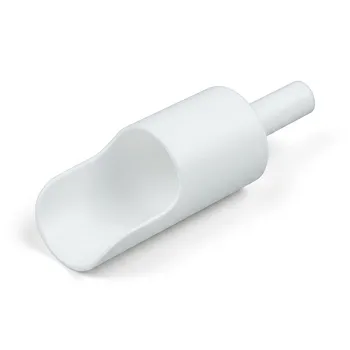
- Custom PTFE Pharmaceutical Sampling Scoop Low Leaching Cylindrical Chemical Powder Sampler Zero Contamination High Purity Laboratory Shovel
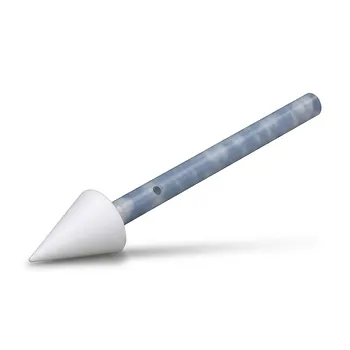
- High Temperature Resistant PTFE Solid Sampler Corrosion Resistant Non Leaching Reusable Biopharmaceutical White Powder Sampling Device
- High Purity Laboratory Grade PTFE Syringe Chemical Resistant Fluoropolymer Injector for Trace Analysis
- Custom PTFE Teflon Balls for Advanced Industrial Applications
- Custom Acid and Alkali Resistant PTFE Pharmacy Scoop High Temperature White Teflon Material Handling Scoop for Bio Pharmaceutical Lab Use
People Also Ask
- What factors should be considered when selecting a PTFE shovel for laboratory use? Ensure Chemical Inertness & Sample Integrity
- How does the durability of PTFE shovels compare to plastic shovels? Discover the Superior Choice for Harsh Conditions
- What are the advantages of PTFE shovels over metal shovels? Precision Handling for Sensitive Materials
- How does the ergonomic design of PTFE shovels benefit users? Reduce Strain and Boost Lab Efficiency
- What are some specific applications of PTFE shovels in the laboratory? Ensure Sample Purity and Safety