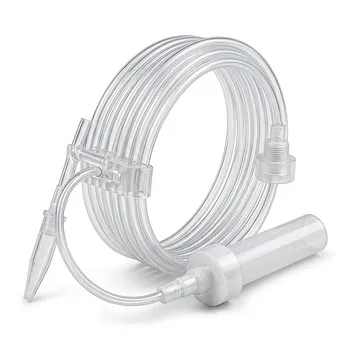
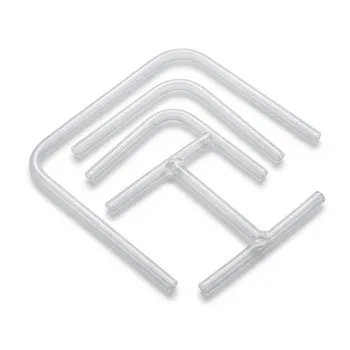
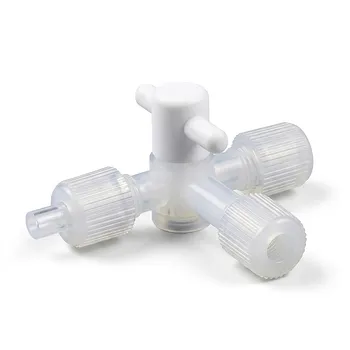
Fluoropolymer-lined flexible hoses are well suited to severe chemical service and high-vibration fluid transfer, provided the complete assembly is specified for the actual temperature, concentration, pressure, and permeation requirements. PTFE and related fluoropolymers resist concentrated acids, bases, solvents, halogens, oxidizers, synthetic oils, and coolants across a broad temperature range. Their flexibility also absorbs relative movement between connected components, while preformed hose assemblies can reduce bend space, eliminate unnecessary elbows, and lower system weight.
Fluoropolymer liners provide exceptional chemical protection and long-term storage stability, but reliable performance depends on treating the hose as a complete engineered assembly. Use verified material and temperature limits, account for permeation and vibration, and use preformed bends to create compact layouts without exceeding the hose’s minimum bend radius.
Why Fluoropolymer Liners Withstand Severe Chemicals
The fluorinated barrier limits chemical attack
Fluoropolymers protect their carbon backbone with a highly stable fluorinated structure. This gives PTFE, PFA, and related materials near-universal resistance to concentrated acids, strong bases, organic solvents, halogens, and strong oxidizers.
That resistance makes fluoropolymer-lined hoses suitable for aggressive chemical processing, laboratory transfer, high-purity fluid handling, and elevated-temperature oil or solvent service.
PTFE and PFA support different design priorities
PTFE is widely used where broad chemical resistance, low friction, and flexible hose construction are priorities. It generally shows very low absorption and swelling when handling water, alcohols, alkanes, toluene, and other hydrogen-containing solvents at room temperature.
PFA is especially valuable for high-purity and severe-temperature applications that require excellent chemical inertness, low extractables, and a smooth, non-stick internal surface. PFA components are used in fluid lines, reactor equipment, digestion vessels, and other systems where contamination and polymer build-up must be minimized.
Laboratory exposure data supports long-term stability
Fluoropolymer components have demonstrated strong resistance to halogens and halogenated hydrocarbons. Under tested conditions involving bromine, moist chlorine gas, carbon tetrachloride, and chloroform, samples showed minimal visual or weight change and retained more than 90% of their tensile strength.
The data does not mean every fluoropolymer product is suitable for every chemical condition. Material grade, wall thickness, temperature, exposure duration, and mechanical loading still need to be evaluated.
How the Hose Performs Under Vibration
Flexibility absorbs movement between components
Rigid piping transfers vibration and thermal movement directly into fittings, equipment nozzles, and joints. A flexible fluoropolymer-lined hose provides compliance between those components, reducing the mechanical stress caused by equipment movement and misalignment.
This is particularly useful around pumps, compressors, engines, laboratory equipment, and process skids where vibration is continuous or intermittent.
The liner is only one part of the vibration system
The fluoropolymer liner determines chemical compatibility, but the braid, cover, reinforcement, end fittings, and attachment method determine much of the assembly’s pressure and mechanical performance. A chemically compatible liner can still fail if the braid is unsuitable, the hose is over-bent, or the fittings transmit excessive loading to the connection.
The assembly should therefore be assessed for pressure, temperature, dynamic movement, vibration frequency, bend radius, routing, and support spacing as a single system.
Routing controls fatigue
A hose should be allowed to flex in the intended plane rather than twist around its longitudinal axis. Clamps and supports should prevent uncontrolled movement while leaving enough length for the expected displacement.
The hose should also be protected from abrasion, sharp edges, excessive heat, and contact with neighboring equipment. These mechanical factors can dominate service life even when the chemical liner remains unaffected.
How to Implement Space-Saving Designs
Use preformed hose assemblies
Preformed fluoropolymer hose assemblies can maintain a designed bend without forcing the installer to create a sharp field bend. This allows the hose to follow the equipment envelope more closely and can reduce the clearance required around pumps, valves, manifolds, and process vessels.
The result is a more compact fluid path with fewer routing compromises.
Eliminate unnecessary elbow fittings
A properly designed preformed bend can replace separate elbow fittings. This can reduce the number of joints, lower component count, reduce weight, and create fewer potential leakage points.
Removing elbows also reduces the space required around the connection. However, the preformed geometry must remain within the hose manufacturer’s allowable bend and installation limits.
Design from the connection points outward
Begin with the fixed connection locations, the required movement, and the allowable bend radius. Then define the hose path, bend orientation, and assembly length before selecting the final fittings.
This method prevents a compact layout from creating an unintended axial pull, twist, or side load at the equipment connection.
Use a three-dimensional routing envelope
For crowded systems, model the hose’s complete spatial envelope rather than checking only the centerline path. Include the hose’s outside diameter, braid or cover, fitting bodies, movement during operation, and access required for installation and maintenance.
This helps identify interference before fabrication and makes preformed assemblies more effective in compact equipment.
Managing Permeation and Diffusion
Chemical resistance does not eliminate vapor transmission
Fluoropolymers resist chemical attack, but small non-polar gas molecules can slowly permeate thin-walled polymer components. Permeation generally depends on wall thickness, operating temperature, material crystallinity, and the specific chemical.
For volatile, hazardous, or highly corrosive media, specify sufficient wall thickness and a suitable high-density fluoropolymer grade. This reduces vapor diffusion, cross-contamination, and exposure of nearby equipment to chemical fumes.
Choose containment based on the medium
A hose that is appropriate for liquid transfer may require additional consideration when used for vapor, gas, or volatile liquid service. The design should evaluate both chemical compatibility and the consequences of permeation over the intended service life.
Secondary containment or ventilation may also be appropriate where even low diffusion rates could create a safety or contamination concern.
Verifying Temperature and Chemical Limits
Concentration can change the allowable temperature
The same chemical may have different compatibility limits at different concentrations and temperatures. For example, fluoropolymer products can handle 30% hydrogen peroxide at temperatures up to approximately 120°C under the cited recommendations, while highly concentrated 90% hydrogen peroxide has a lower recommended maximum of approximately 65°C.
These values should be treated as application-specific limits, not universal ratings for every hose construction or assembly.
Extreme mixtures require specific verification
Fluoropolymers perform exceptionally well in many aggressive environments, but some high-temperature solvent mixtures can produce uncertain results. High-temperature chlorobenzene and benzene exposure, for example, requires careful verification before processing.
Temperature should therefore be checked at the actual hose wall and fluid interface, not only at a remote equipment sensor.
Understanding the Trade-offs
Chemical resistance does not guarantee mechanical compatibility
A PTFE or PFA liner may remain chemically stable while the reinforcement, cover, seal, gasket, or fitting is degraded by the same environment. The entire wetted path and all exposed assembly materials must be compatible with the fluid.
The specification should identify the liner, reinforcement, end fittings, seals, and any external protective materials.
Compact routing can increase mechanical stress
Reducing hose length or forcing a tighter path may save space but can limit movement absorption. A hose that is too short can transmit tension and bending loads into equipment connections.
Space savings should come from planned geometry and preformed bends, not from exceeding the minimum bend radius or compressing the hose into an installation position.
Swelling and permeation remain application variables
PTFE typically absorbs less than 1% by weight of many hydrogen-containing solvents at room temperature. Some non-hydrogenated halogenated or perfluorinated solvents can produce substantially greater uptake, particularly when temperature increases.
For unusual solvents, elevated temperatures, or thin-wall tubing, compatibility testing and manufacturer data are more reliable than a general statement that the material is chemically inert.
Storage life is not the same as installed service life
Fluoropolymer hoses can have practically unlimited storage life when stored correctly and protected from contamination, heat, sunlight, and mechanical damage. Once installed, service life depends on pressure cycling, vibration, flexing, temperature, chemical exposure, and maintenance conditions.
Storage stability should not be used as a substitute for an inspection and replacement program.
Making the Right Choice for Your Goal
Select the hose construction and routing method according to the dominant risk in the application.
- If your primary focus is chemical resistance: Choose a verified PTFE or PFA liner and confirm compatibility for the exact chemical, concentration, temperature, and exposure duration.
- If your primary focus is vibration isolation: Specify sufficient flexible length, correct bend orientation, suitable reinforcement, and routing that prevents twist and connection side loads.
- If your primary focus is space reduction: Use a preformed fluoropolymer assembly with engineered bend geometry to replace unnecessary elbows while respecting the minimum bend radius.
- If your primary focus is high-purity transfer: Select low-extractable fluoropolymer materials, smooth internal surfaces, and fittings that will not introduce contamination.
- If your primary focus is volatile or hazardous media: Evaluate permeation, wall thickness, material density, ventilation, and secondary containment in addition to liquid compatibility.
- If your primary focus is long-term reliability: Rate the complete assembly, inspect it under the actual vibration and temperature conditions, and replace it according to service history rather than storage-life assumptions.
A fluoropolymer-lined hose delivers its greatest value when chemical compatibility, dynamic loading, permeation control, and compact routing are designed as one integrated system.
Summary Table:
| Application Focus | Key Considerations |
|---|---|
| Chemical Resistance | Verify PTFE/PFA compatibility for exact chemical, concentration, temperature, and duration. |
| Vibration Isolation | Ensure sufficient flexible length, correct bend orientation, and avoid twisting or side loads. |
| Space Reduction | Use preformed bends to eliminate elbows while respecting minimum bend radius. |
| High-Purity Transfer | Choose low-extractable materials with smooth surfaces and clean fittings. |
| Volatile Media | Address permeation with thicker walls, proper material, and ventilation. |
| Long-Term Reliability | Inspect assembly under actual conditions and replace based on service history. |
Ensure your fluid transfer system withstands severe chemicals and vibration while maximizing space efficiency. KINTEK offers high-performance PTFE and PFA hoses, tubing, and custom preformed assemblies engineered to your exact specifications. Our experts can help you select the right materials, wall thickness, and routing to meet your application demands. Contact us today to discuss your requirements and get a tailored solution. Get in touch with KINTEK now.
Related Products
- Custom PFA Tubing 1/4 Inch High Purity Corrosion Resistant Fluoropolymer Tube with Welding and Machining Services
- High Purity PFA Coiled Tubing Custom PTFE Machining PFA Welding and Precision Bending Solutions
- Corrosion Resistant High Purity PFA Valve and Weldable Transparent Tubing for Semiconductor Fluid Transfer
- Laboratory PTFE Three Neck Reaction Flask Corrosion Resistant 2000ml Low Background Fluoropolymer Vessel
- Custom PTFE Condenser Tube 100ml Serpentine and Straight Fluoropolymer Laboratory Heat Exchanger with Flask Adapters
People Also Ask
- How does high-purity PFA tubing maintain reagent purity? Achieve Ultra-Smooth, Zero-Contamination Fluid Transfer
- What are the primary processing considerations when manufacturing fluoropolymer tubing? Key factors for labs & chemical processes.
- How do 6F groups affect gas permeability in fluoropolymers? Unlock tailored tubing selection for your lab's gas control needs
- How does the incorporation of comonomers such as perfluoropropyl vinyl ether (PPVE) alter the molecular structure and processing characteristics of TFE-based fluoropolymers like PFA compared to standard PTFE?
- What are the key properties of PFA (PerFluoroAlkoxy)? A Guide to Extreme Chemical and Thermal Resistance