Presintered PTFE resins provide the structural consistency needed for demanding ram-extruded shapes. Their higher bulk density and improved flowability create a more uniform resin charge, reducing bridging, voids, and pressure-related fractures during extrusion. For thin-walled tubing and small-diameter solid rods, this produces more uniform dimensions, stronger profiles, and better resistance to defects at charge interfaces.
The central advantage is not simply easier feeding; it is more reliable consolidation under high extrusion pressure. Presintered resin helps produce PTFE tubing and rods with fewer internal voids, stronger interlayer bonds, and greater resistance to fracture.
Why Presintered Resin Improves Extruded Structure
More Consistent Resin Feeding
Presintered PTFE is produced by melting polymerized PTFE, cooling it, and disintegrating it into relatively coarse particles, typically several hundred microns in size. This thermal conditioning increases bulk density and makes the resin more free-flowing than fine-cut granular PTFE.
During ram extrusion, the particles feed more consistently into the extrusion cylinder. A steady charge supports uniform compaction along the length of the tubing or rod.
Reduced Particle Bridging
Fine-cut PTFE powders can form bridges in the feed section or hopper, interrupting the resin supply. These interruptions may create inconsistent charge weights and localized differences in compaction.
Presintered resin flows more readily and is less likely to bridge. That helps maintain a continuous, uniform extrusion cycle, which is particularly important for small cross-sections where even minor feed variation can affect wall thickness or diameter.
Fewer Internal Voids
Thin-walled tubing and small-diameter rods have limited material volume around their center or wall structure. Incomplete filling or uneven compaction can therefore create voids that significantly weaken the finished profile.
The more uniform packing and consolidation associated with presintered resin reduce internal void formation. The result is a denser, more continuous structure with improved mechanical integrity.
Advantages for Thin-Walled PTFE Tubing
More Uniform Wall Thickness
Thin-walled tubing has little tolerance for uneven resin distribution. Variations in feeding or compaction can translate into thin spots, eccentric walls, or inconsistent dimensions.
Presintered resin supports steadier consolidation during ram extrusion. This improves wall uniformity and helps produce tubing suitable for controlled fluid transfer applications.
Better Resistance to Pressure-Induced Defects
Thin-wall extrusion can require substantial pressure because the resin must consolidate into a narrow profile. Presintered grades are better suited to these higher-pressure conditions than standard free-flowing grades intended for larger, thicker profiles.
Their resistance to inter-dose fracturing helps prevent defects at the interfaces between successive resin charges. This failure mode is commonly called poker chipping.
Improved Pressure-Retention Reliability
A tube with uniform walls and minimal voids is better able to withstand internal pressure and handling stresses. Presintered resin therefore contributes to more predictable pressure performance by reducing structural weak points.
The resin does not eliminate the need for proper tooling, compaction, and sintering control. It provides a more suitable starting material for achieving those results.
Advantages for Solid PTFE Rods
Higher Structural Integrity in Small Diameters
Small-diameter rods contain less material to distribute extrusion stresses. A void, charge mark, or fractured interface can occupy a meaningful portion of the cross-section and become a fracture origin.
Presintered PTFE helps maintain continuous consolidation through the rod. This is especially valuable for small rods used as precision stock for machining or as finished components.
Greater Resistance to Charge-Mark Fracturing
In ram extrusion, resin is added in successive charges. If the interface between charges does not consolidate properly, the rod may develop a weak plane that can fracture during extrusion, machining, or service.
Presintered grades are formulated to tolerate higher extrusion pressures and resist this interfacial fracturing. That improves the usable structural quality of the extruded rod.
More Reliable Machining Stock
Extruded rods with internal voids or weak charge interfaces may crack, chip, or reveal defects during machining. A more uniformly consolidated rod provides a more dependable raw material for precision custom machining.
This benefit is both structural and economic: fewer hidden defects mean less scrap and more predictable behavior during downstream fabrication.
How Thermal Conditioning Supports These Results
Lower Processing Transition Temperature
The presintering treatment reduces the PTFE melting point from approximately 342°C to 327°C. This changes the resin's processing behavior during subsequent extrusion and sintering.
The lower transition temperature is not, by itself, the main reason finished tubing or rods are stronger. Its importance is that it accompanies the particle-size, bulk-density, and flow characteristics that make the resin easier to process consistently.
Controlled Particle Morphology
Cooling and disintegrating the previously melted PTFE creates a controlled granular structure rather than the fine-cut morphology of untreated resin. The resulting particles handle and compact more predictably in the ram extrusion cylinder.
That predictability helps the extruder form a continuous profile rather than one containing unevenly compacted regions.
Higher-Pressure Processing Capability
The combination of improved flow and suitable particle structure allows presintered grades to perform under the higher pressures often required for thin walls and small diameters. This reduces the risk that successive charges will separate or fracture during consolidation.
Understanding the Trade-offs
The Resin Grade Must Match the Profile
Presintered PTFE is generally most advantageous for thin-walled tubing and small-diameter rods, where extrusion pressures and defect sensitivity are high. Standard free-flowing granular grades may be more appropriate for larger rods and thick-walled profiles.
Using a high-pressure grade for every geometry may add cost without providing a meaningful structural benefit.
Processing Control Still Matters
Presintered resin reduces feed and consolidation problems, but it cannot compensate for unsuitable extrusion pressure, poor tooling alignment, incorrect charge preparation, or an inadequate sintering cycle.
Dimensional control and structural integrity still depend on the complete process, including resin conditioning, ram extrusion, and final heat treatment.
Flowability Is Not the Same as Finished Strength
Improved powder flow primarily improves feeding and compaction consistency. The final strength and dimensional stability of PTFE also depend on the sintering history and the absence of defects introduced during extrusion.
The correct conclusion is that presintered resin improves the conditions required for strong, uniform parts; it does not independently determine every finished-property outcome.
Making the Right Choice for Your Goal
Select the resin grade according to the geometry, extrusion pressure, and defect tolerance of the part.
- If your primary focus is thin-walled tubing: Use a presintered grade to support steady feeding, uniform wall consolidation, and resistance to voids and charge-interface fracturing.
- If your primary focus is small-diameter solid rods: Use a high-pressure-tolerant presintered grade to improve structural continuity and reduce cracking during extrusion and machining.
- If your primary focus is large rods or thick-walled profiles: Evaluate a general-purpose free-flowing granular grade, since the lower pressure and larger material section may not justify presintered resin.
- If your primary focus is low defect rates: Prioritize resin flowability and bulk-density consistency, then validate the result through extrusion and sintering trials.
For demanding thin-wall and small-diameter PTFE shapes, presintered resin improves structural reliability by making uniform, high-pressure consolidation more achievable.
Summary Table:
| Aspect | Advantage |
|---|---|
| Resin Feeding | Consistent, free-flowing charge reduces bridging and ensures uniform compaction. |
| Internal Voids | Fewer voids due to better packing, leading to stronger profiles. |
| Thin-Walled Tubing | Uniform wall thickness and reduced pressure-induced defects. |
| Solid Rods | Higher structural integrity and resistance to charge-mark fracturing. |
| Machining Reliability | Fewer hidden defects, reducing scrap and improving downstream fabrication. |
Ready to enhance the reliability of your PTFE extrusion process? At KINTEK, we specialize in high-performance fluoropolymer solutions and custom PTFE/PFA machining. Our materials and expertise ensure your thin-wall tubing and solid rods meet the highest standards. Contact us today to discuss your project and discover how we can optimize your production.
Related Products
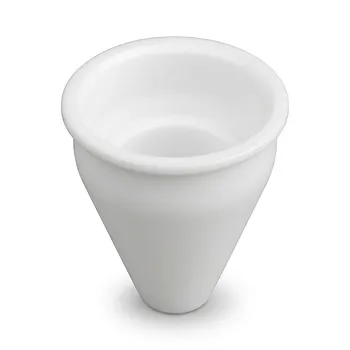
- Custom Machined PTFE Conical Sample Cell Corrosion Resistant Triangular Fluoropolymer Container for Trace Analysis
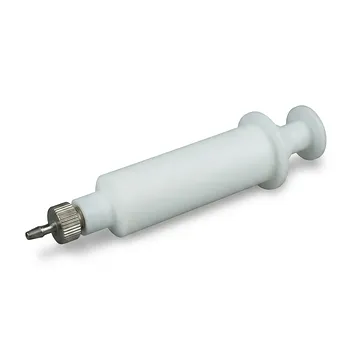
- High Temperature Chemical Resistant 50ml PTFE Syringe Customized Teflon Injector with Threaded Seal for Trace Analysis
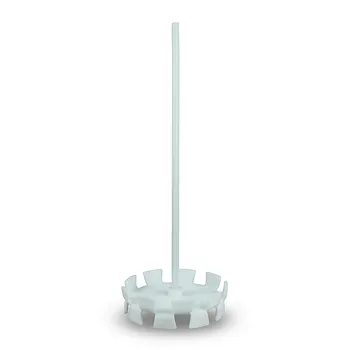
- Corrosion Resistant PTFE Dispersing Disc and High Temperature Propeller Stirring Paddle for Laboratory Chemical Mixing
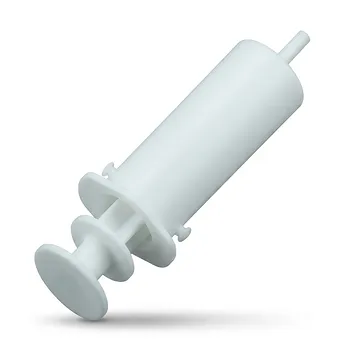
- High Purity Laboratory Grade PTFE Syringe Chemical Resistant Fluoropolymer Injector for Trace Analysis
- High Purity Virgin PTFE Syringe 20ml Chemical Resistant Liquid Handling for Syringe Pumps and PFA Tubing Integration
People Also Ask
- What customization options are available for PTFE materials? Tailor Performance for Your Application
- How do Polytetrafluoroethylene (PTFE) containers perform regarding gas permeation? Expert Insights on Solvent Absorption
- What are some common applications of machined PTFE? Leverage its Unique Properties for Demanding Applications
- How are PTFE laboratory containers and apparatus typically manufactured? Inside the Precision Machining Process
- What inherent material characteristics of non-melt-processable PTFE make it suitable for manufacturing high-purity laboratory containers and custom-machined apparatus?